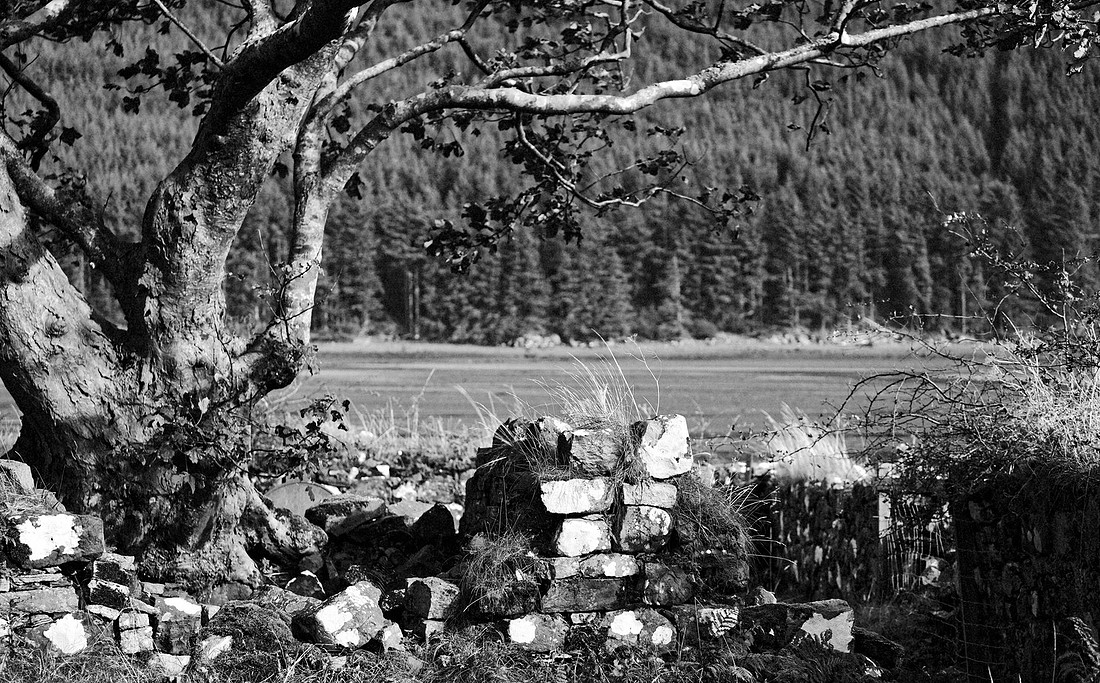
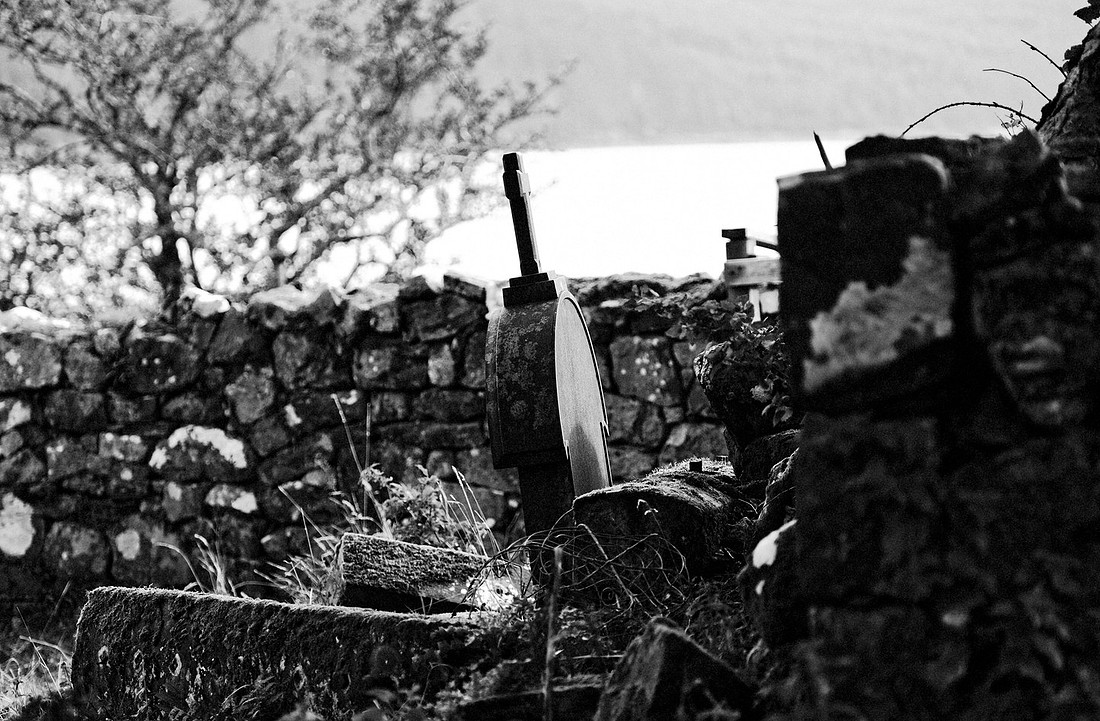
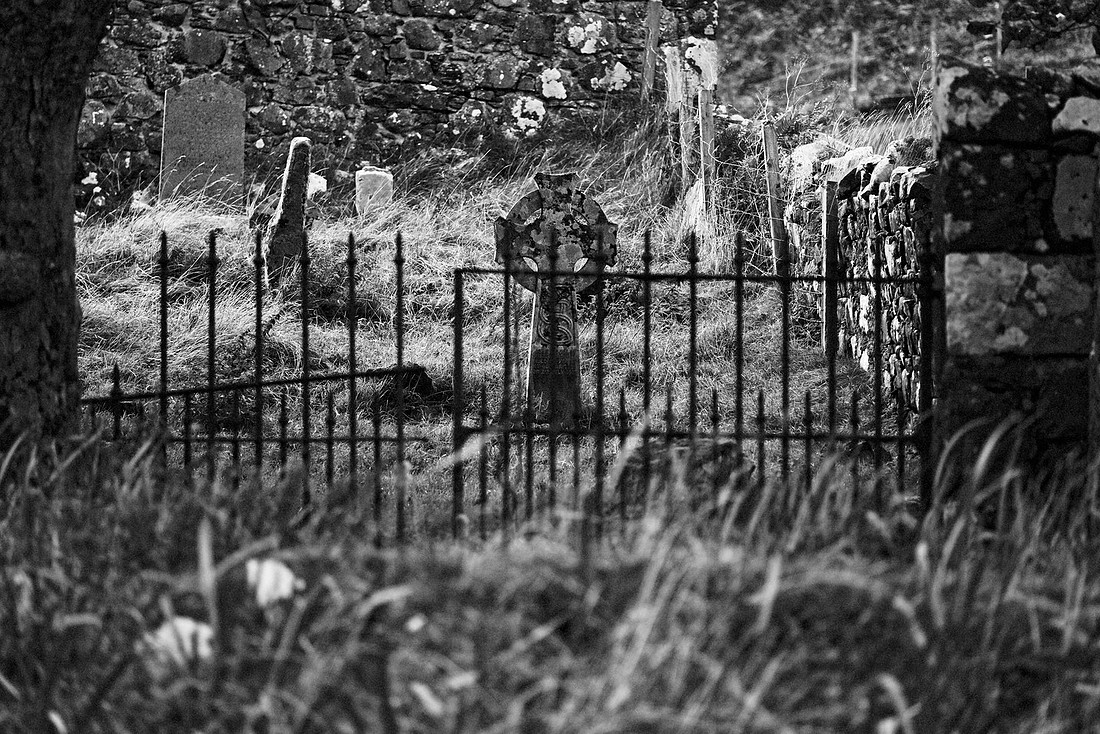
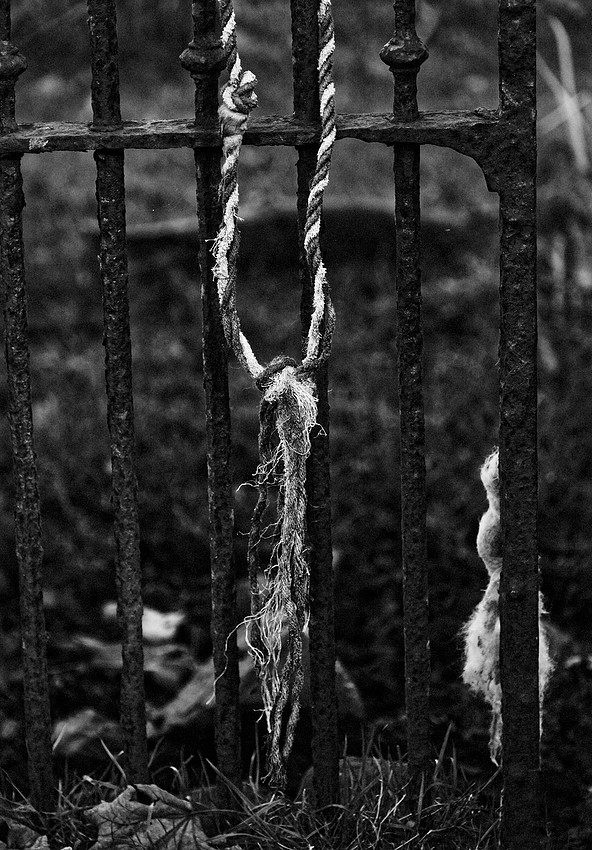
Spiorad aird nam Murchan Pt 33 Re-affirmation a longing for place

Spiorad Àird nam Murchan Part 33
Re-affirmation: A Longing for Place
Introduction: Finding the Way
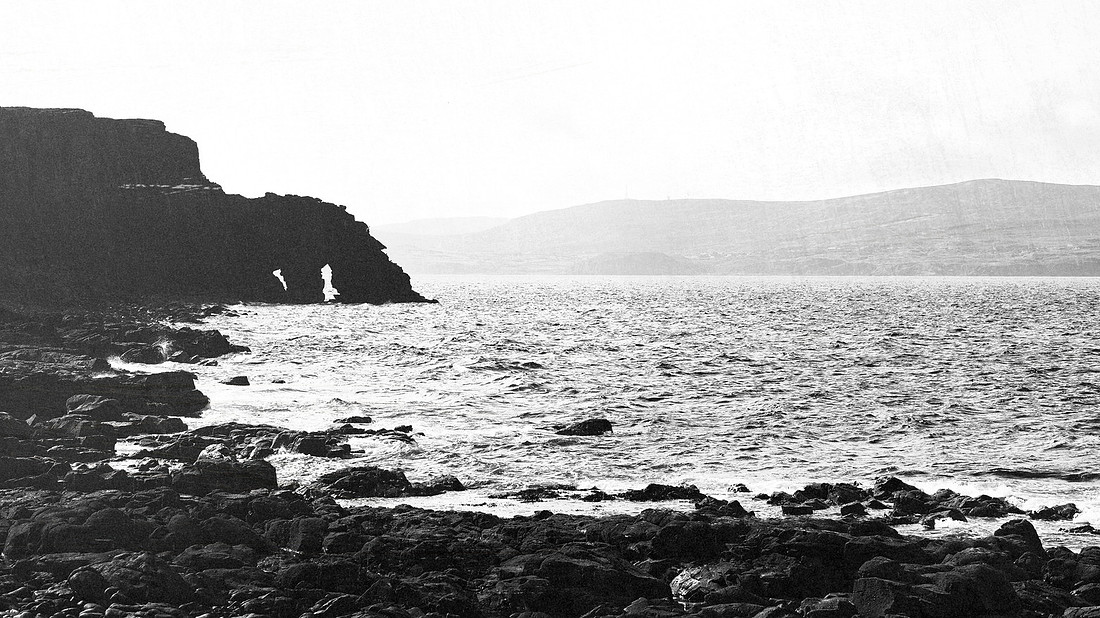
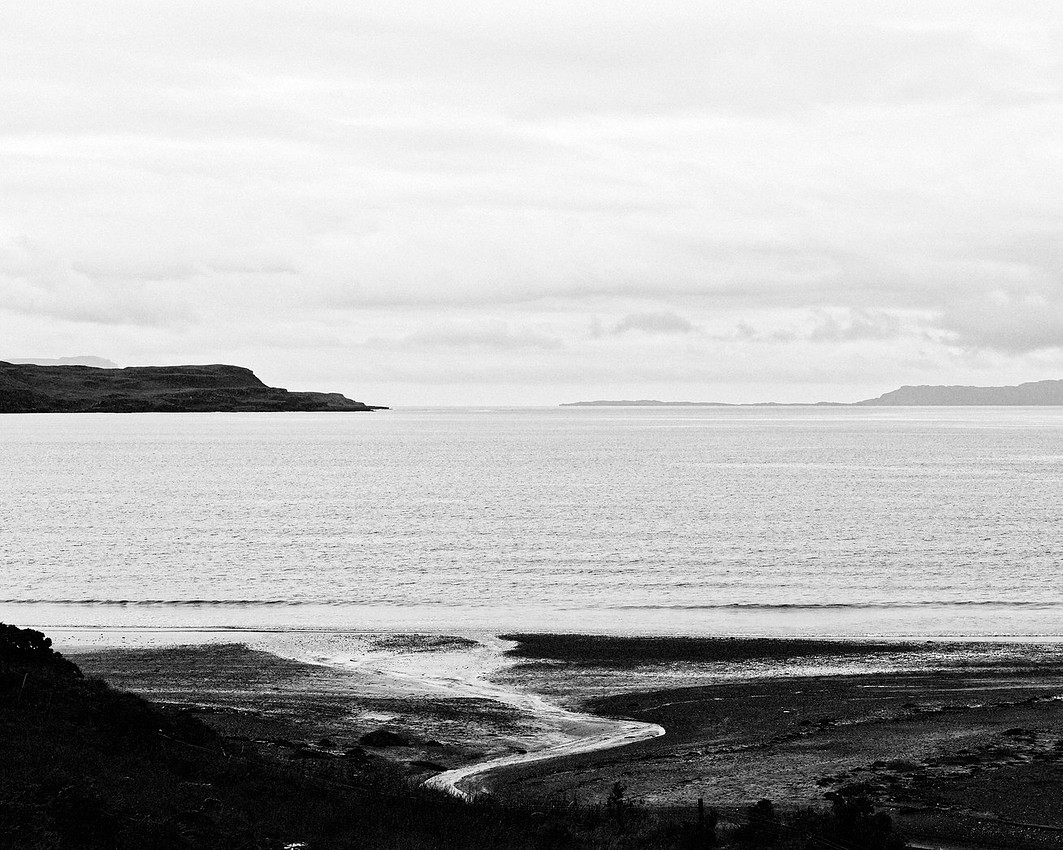
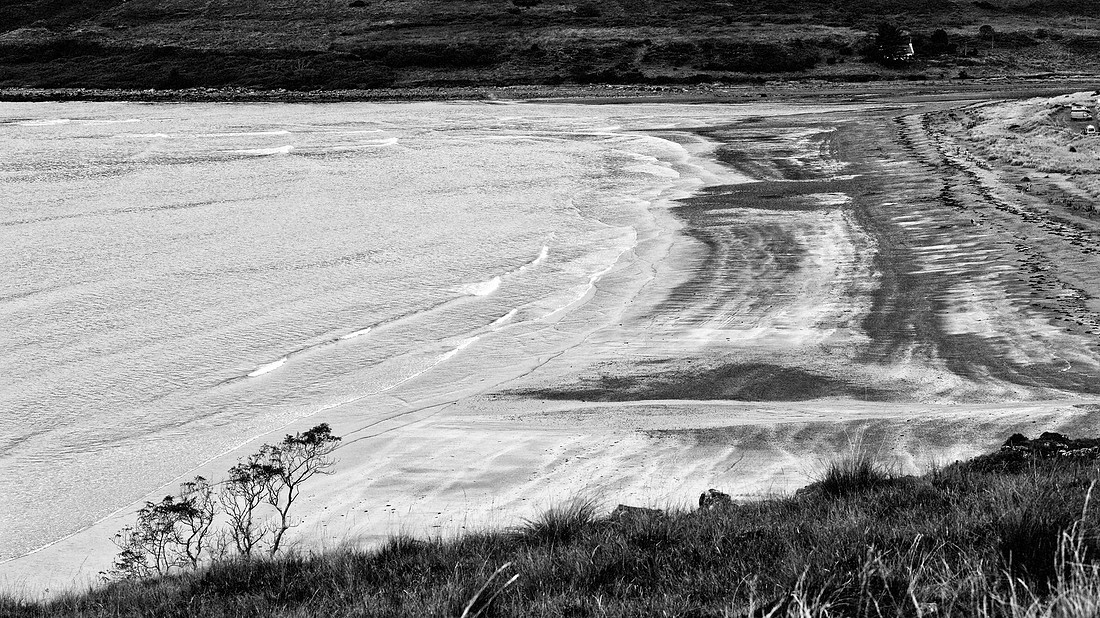
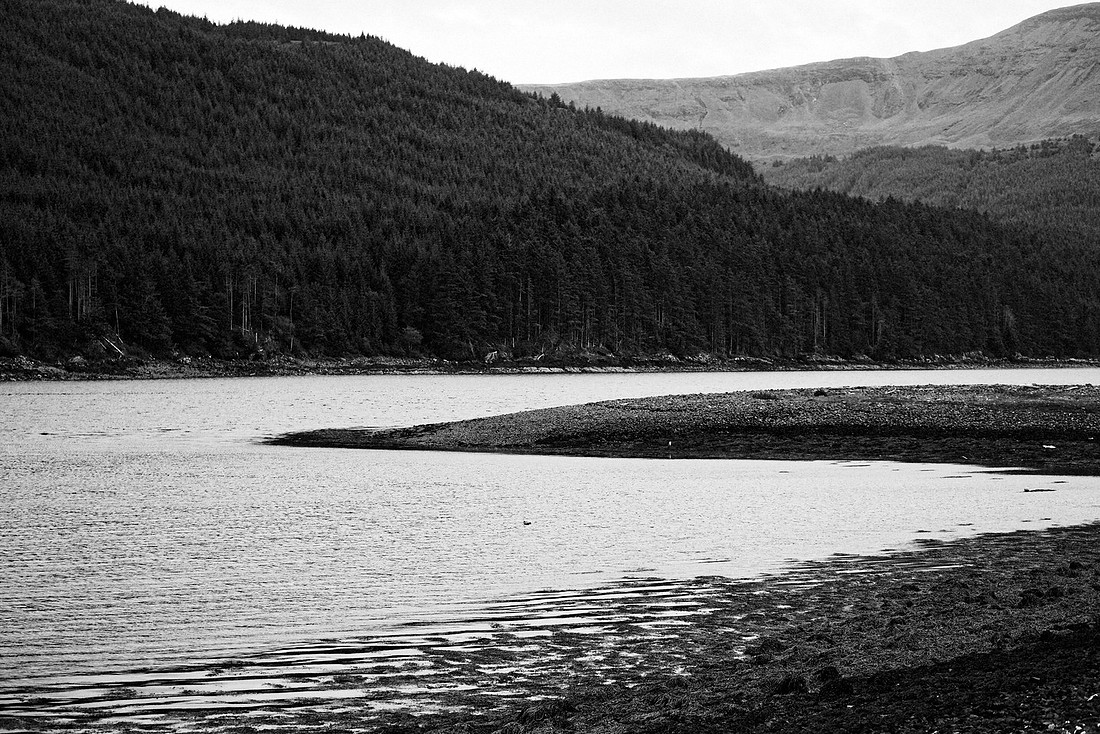
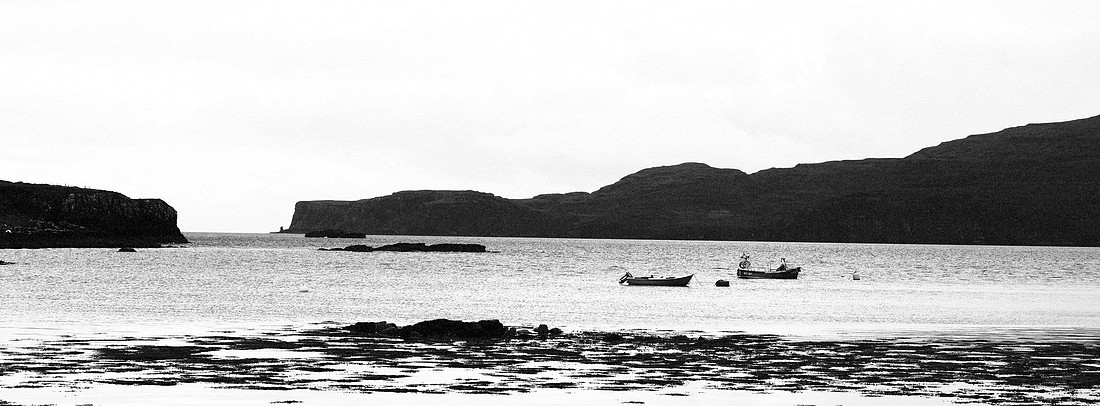
A recent journey to Skye began, as most journeys into an unfamiliar landscape do, with a mixture of expectation, curiosity and uncertainty, for although I had visited the island before and already knew something of its celebrated geography, I wanted to approach this particular visit as openly as possible, resisting the weight of all the photographs, descriptions and inherited impressions that gather around such a renowned place. We were staying on the Waternish Peninsula, a quieter and comparatively remote corner of the island, where crofting townships are gathered sparingly along the land and the sea is a constant presence beyond the low hills, yet even there I found myself searching for something that did not immediately reveal itself, a thread of connection through which the landscape might become more than scenery and begin to speak in a way that felt meaningful to me.
Skye is, of course, extraordinarily beautiful, yet beauty alone has never been sufficient to create the kind of bond I seek with a place. There are landscapes that impress us instantly, whose immense cliffs, mountains or dramatic skies encourage an almost involuntary response, but there are others that enter the imagination more quietly and, through repeated encounters, gradually become inseparable from our inner lives. Skye often seemed to present itself through the first of these modes, particularly in those well-known places where the visual drama has long been celebrated and photographed, though I remained uncertain whether I was responding to the island itself or to the accumulated image of Skye that already existed within my mind.
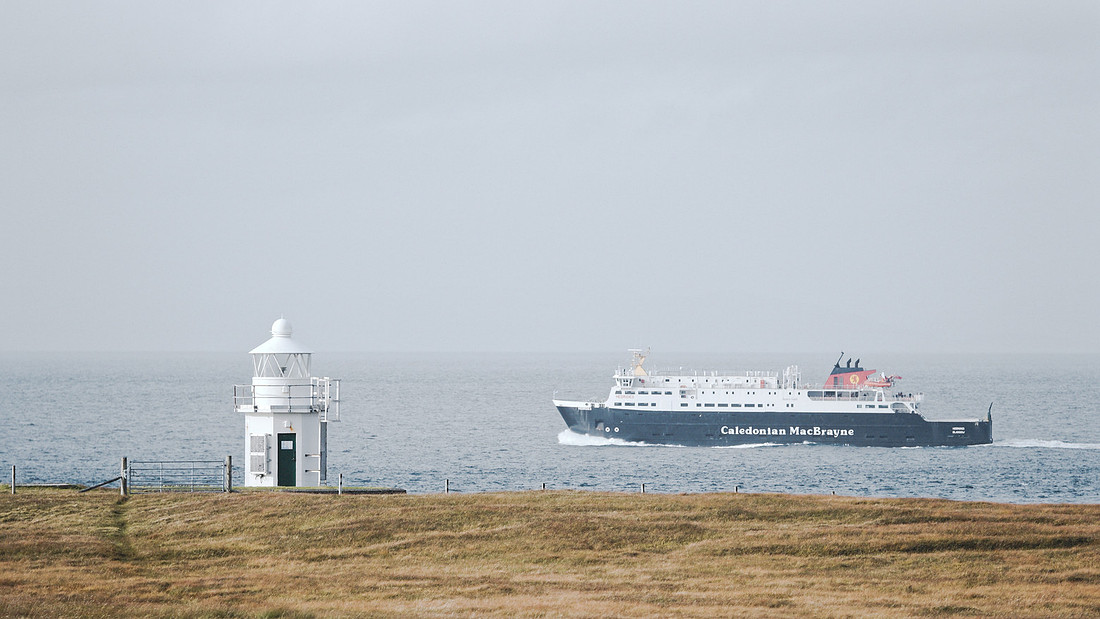
The island’s accessibility contributes to this complicated relationship. The bridge has unquestionably brought enormous benefits, allowing easier movement for residents, goods and services while assisting businesses and supporting an economy increasingly shaped by tourism, yet it has also altered the psychological experience of arriving. There is no pause upon the water, no anticipation gathered through the ritual of a ferry crossing, and no distinct moment when the mainland is released and the island accepted. The road simply continues, rising across the bridge before descending onto Skye with barely an interruption to the journey, and although the boundary remains geographically clear, its emotional significance feels less pronounced.
Ardnamurchan offers almost precisely the reverse experience. It is not an island, yet the journey west creates a powerful sense of separation, particularly as the roads narrow, the landscape opens and the distance from larger centres becomes increasingly apparent. Whether approached through Morvern and crossed by ferry or followed along the long, winding road beside Loch Sunart, the peninsula requires time, patience and a willingness to surrender the expectations of speed that govern so much modern travel. Somewhere during that westward journey, the world seems to contract into something both smaller and more expansive, bounded by sea and mountain yet opening into a deeper sense of space, until arrival becomes less a matter of reaching a destination than entering a distinctive state of attention.

Skye, despite being an island in the literal sense, often felt less island-like to me than Ardnamurchan, which remains connected to the mainland but possesses an intimacy, remoteness and psychological separateness that I have always found deeply affecting. This contrast should not be simplified into criticism, because the bridge has undoubtedly sustained opportunities and livelihoods, yet its economic benefits sit alongside increasing pressures upon landscape, housing, roads and communities. Skye’s global visibility draws people towards it from across the world, but that popularity can sometimes risk turning living places into collectable views, each visitor moving between familiar locations in pursuit of photographs already imagined before the landscape itself has been fully encountered.
I wanted to avoid approaching the island in this way, and so I arrived with no rigid plan beyond remaining receptive to whatever might emerge. I hoped to discover a creative strategy that would allow me to respond truthfully, rather than merely reproduce the visual language through which Skye is so often represented. During the first few days, however, that strategy remained elusive. I looked, walked, photographed and waited, but the deeper connection I had hoped for did not readily form.
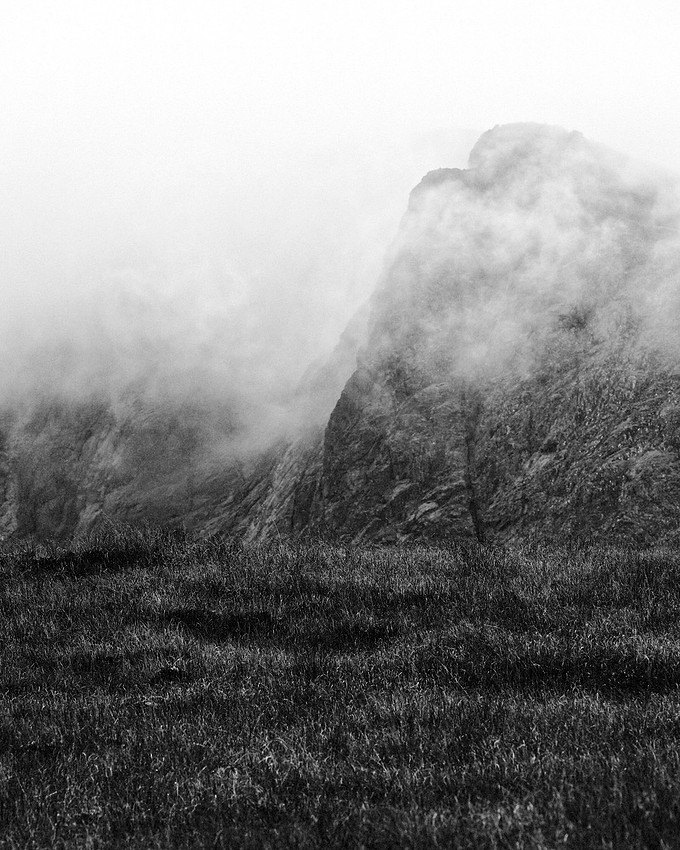
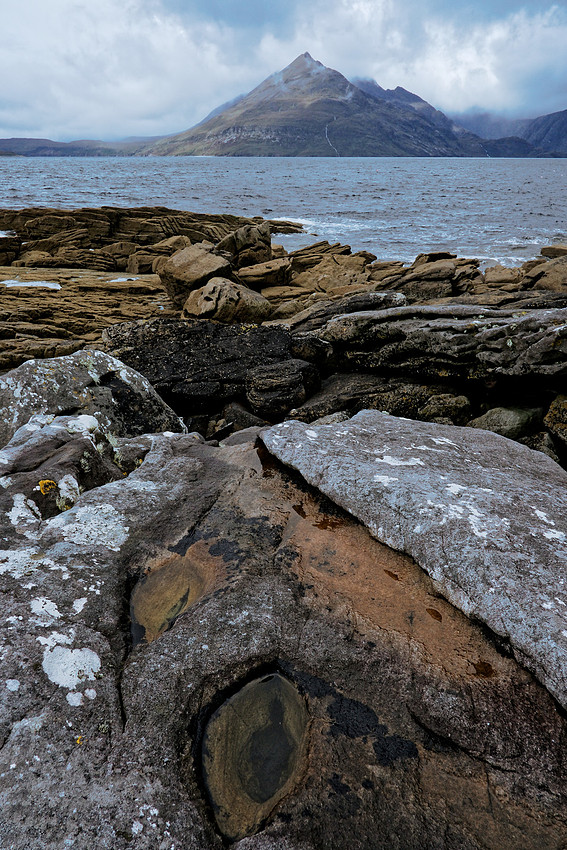
At Elgol I made several images that genuinely pleased me, particularly as changing weather moved through the Cuillin and the sea drew varying tones from the light, yet even the satisfaction of those photographs could not entirely conceal my uncertainty. The images worked formally and emotionally, but they still seemed to belong to the experience of visiting rather than to a deeper engagement with place. I was responding to light, structure, atmosphere and distance, yet I had not found the point through which Skye might begin to enter the more private and intuitive territory from which my most meaningful work tends to emerge.
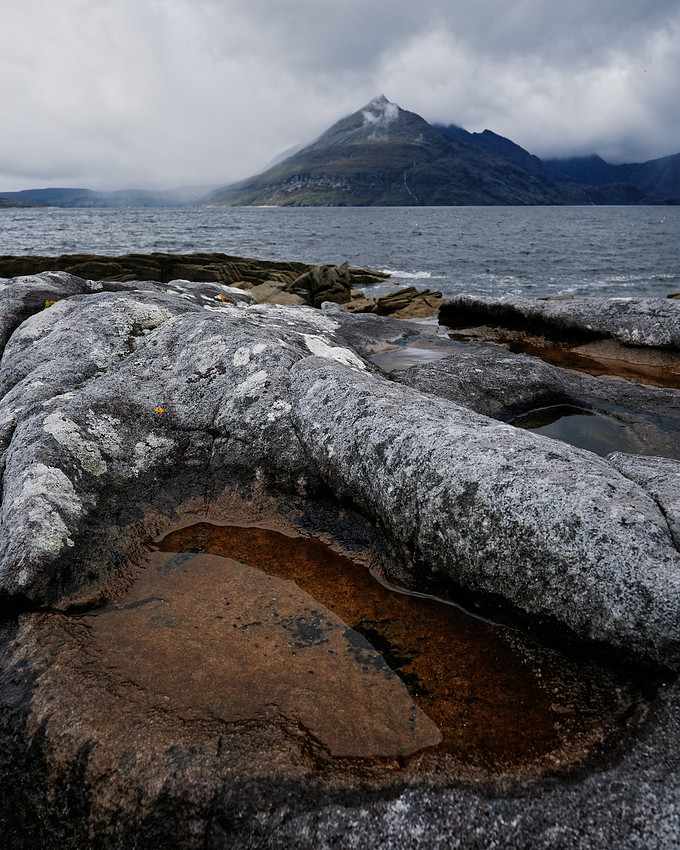
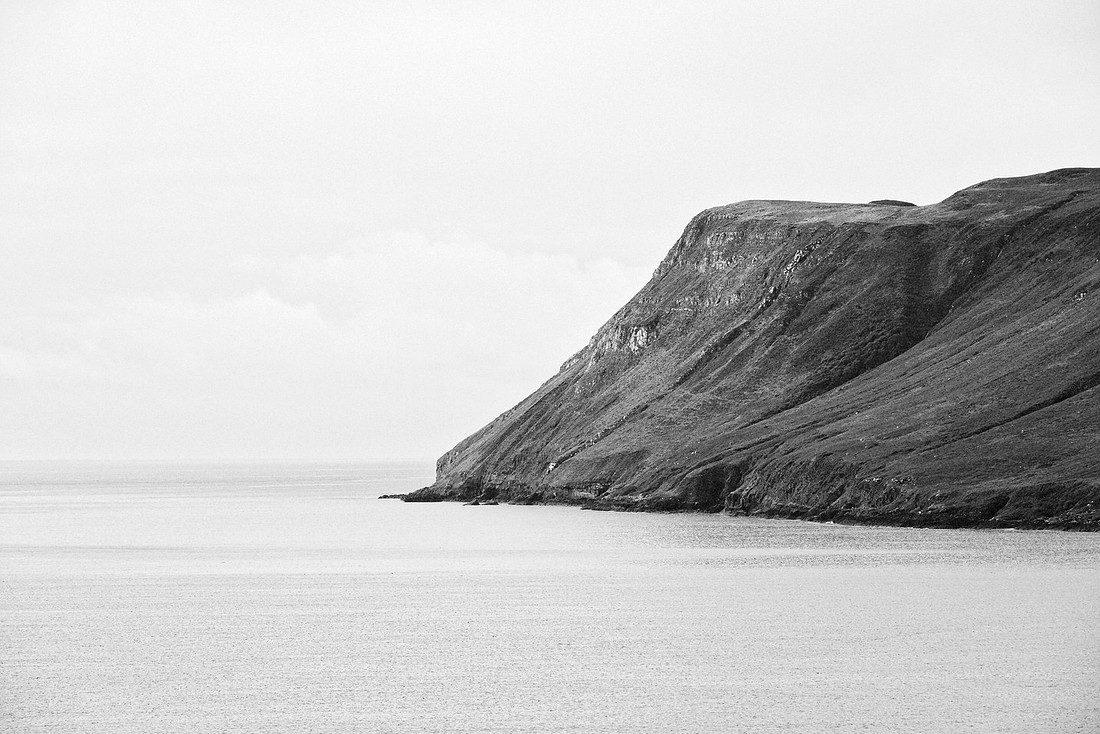
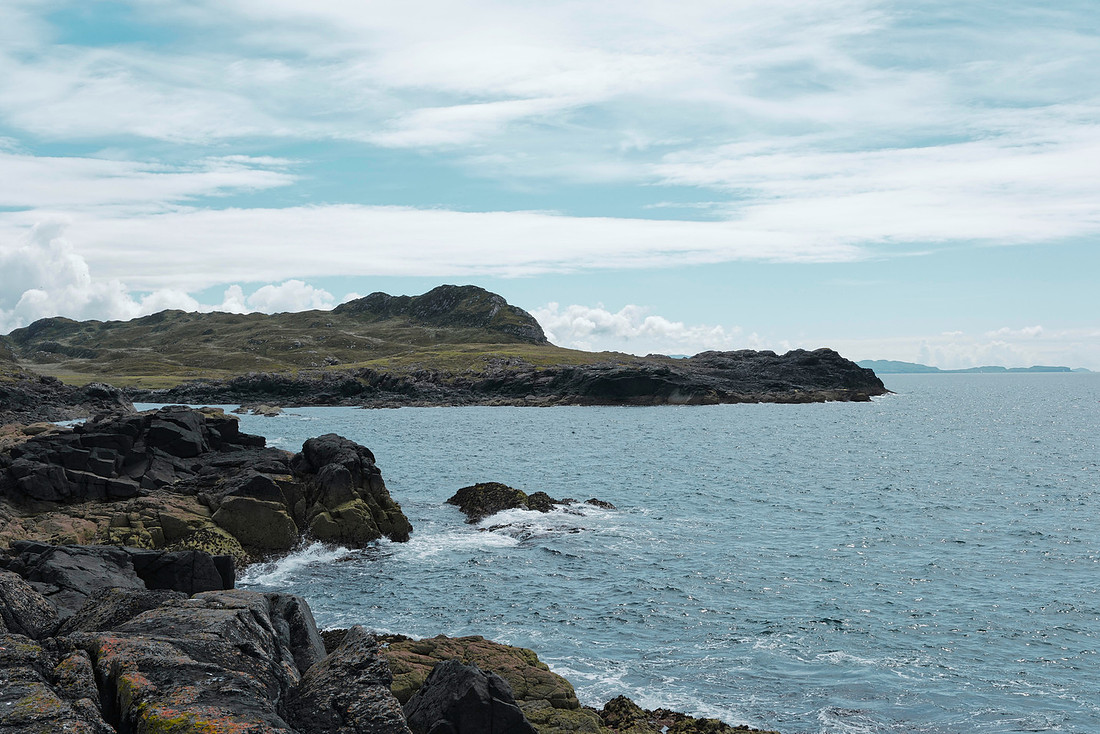
That point arrived unexpectedly as we explored the southern fringes of the island, leaving some of the busier routes behind and moving towards Glenbrittle, where the relationship between mountain, headland, sea and open moor began to feel increasingly familiar. The landscape there possessed less of the heightened theatricality that attracts so many visitors elsewhere, but its quieter geology, rough grasses and wind-shaped coast held a texture that felt closer to the landscapes through which I have wandered in Ardnamurchan. There was a recognisable conversation between rock and water, and between the exposed land and the weather moving across it, which slowly began to draw me beyond observation into something more instinctive.
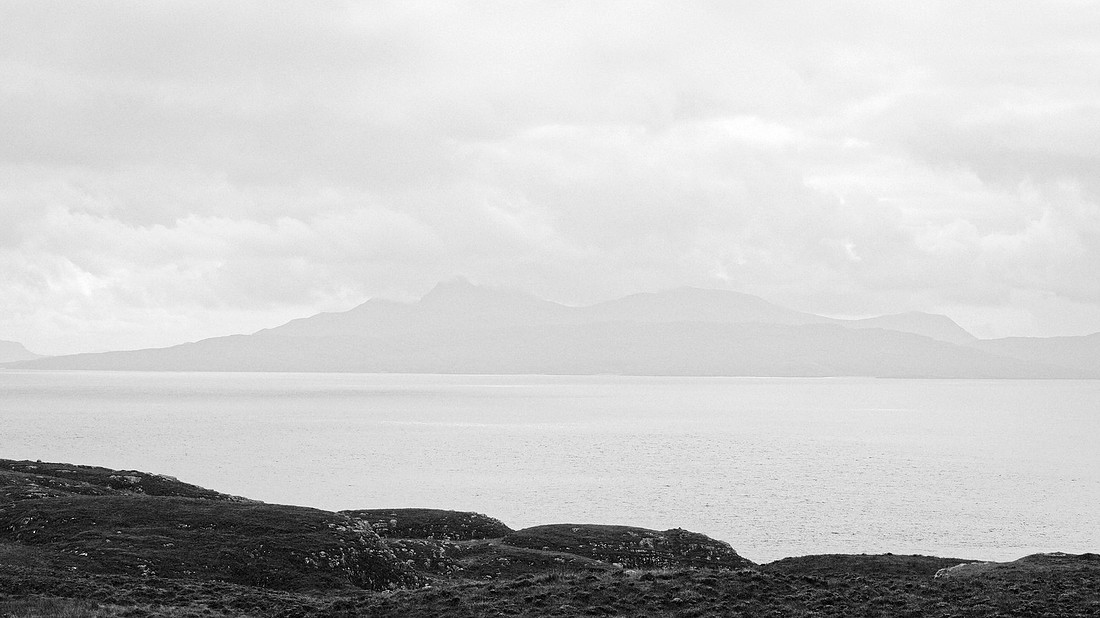
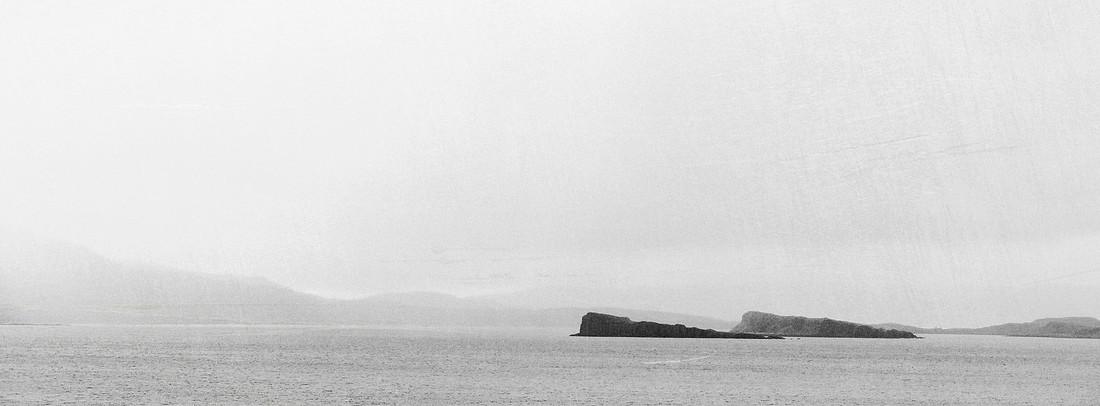
As we walked across the far end of the Glenbrittle headland and came over a rise, the horizon opened to reveal the unmistakable forms of Rum and Eigg resting across the sea. Their appearance was not dramatic in the conventional sense, yet the emotional response was immediate and unexpectedly powerful, for these were not anonymous islands but familiar sentinels that have accompanied so many of my experiences on Ardnamurchan. I had watched them gather and release the weather from Sanna, seen their outlines sharpen and dissolve beyond Portuairk, and photographed their changing forms as Atlantic light travelled between the peninsula and the Small Isles. From Skye, their orientation was altered, yet their presence remained intimately known.
At that moment the wider geography seemed to settle into place. Somewhere beyond those islands, hidden by distance and curvature, lay Ardnamurchan, the peninsula that has shaped so much of my photographic, emotional and creative life over almost a decade. Rum and Eigg became points upon an internal compass, and in recognising them I found not only my position in the landscape but also a way of understanding my difficulty in connecting with Skye. I had unconsciously been searching for the resonances through which an unfamiliar place might enter into conversation with the landscape I already carried inside me.
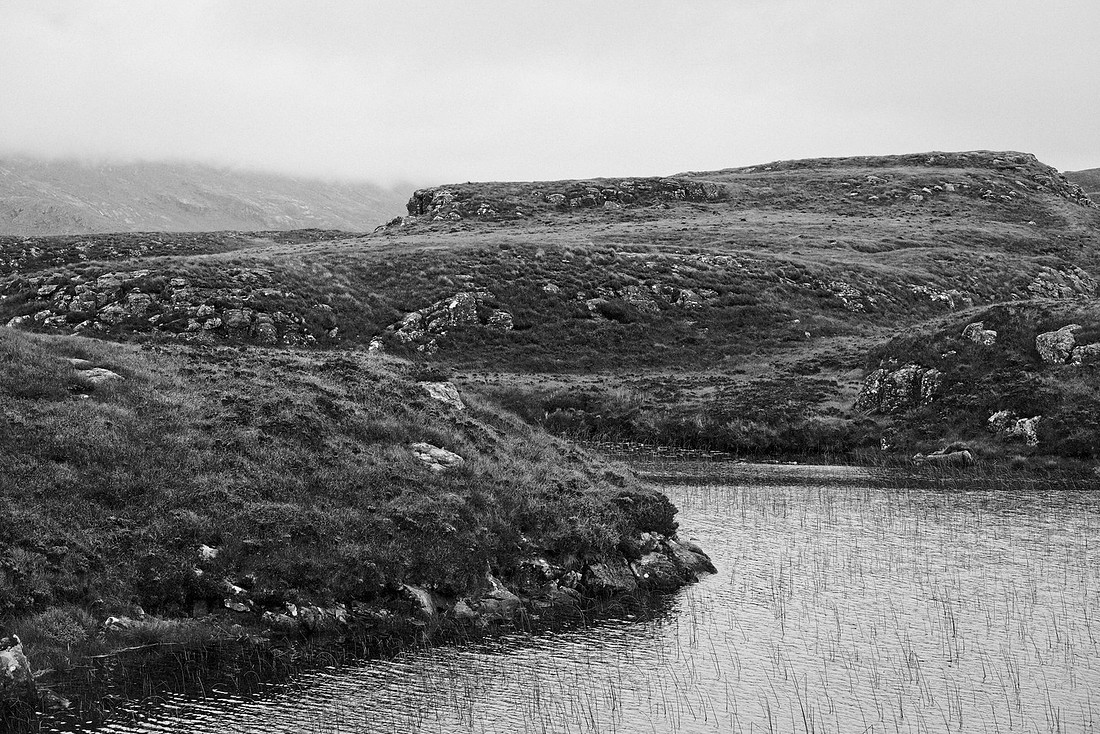
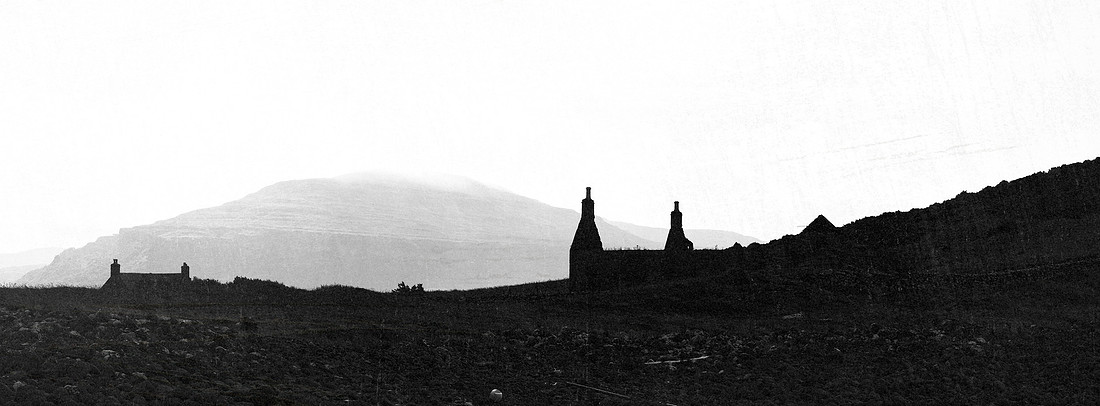
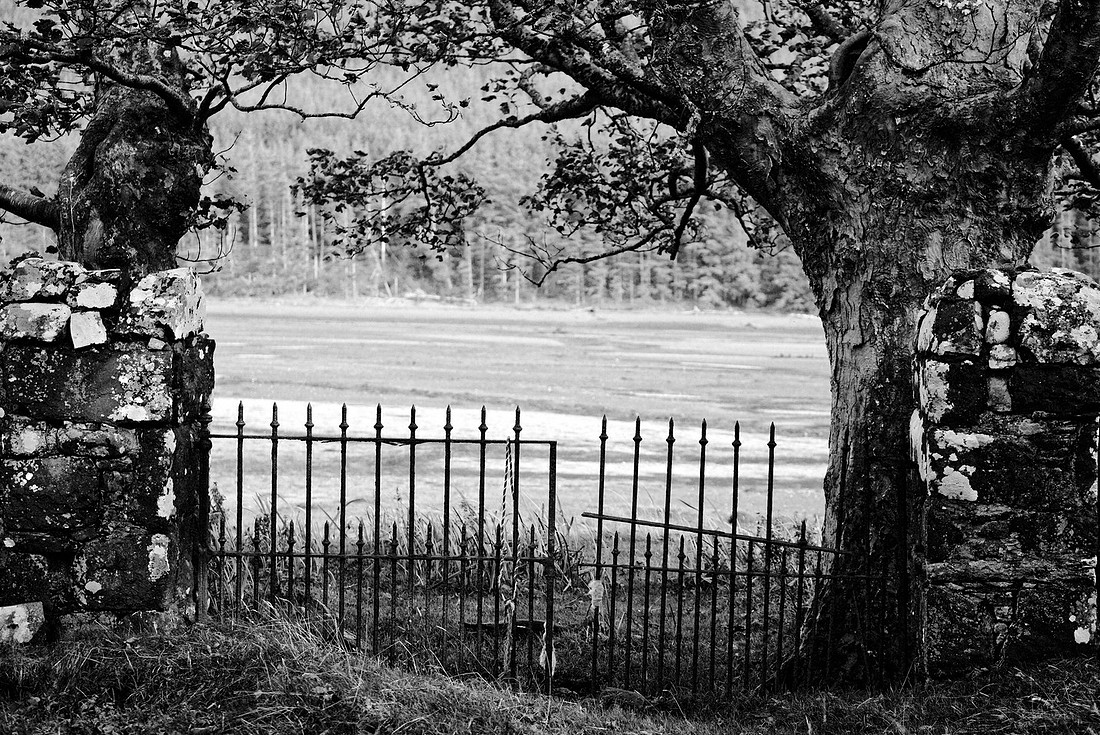
The recognition freed something within the remainder of the journey. The need to force an immediate attachment fell away, allowing quieter encounters to become meaningful on their own terms. At Loch Eynort, where the land folds around water with an understated gentleness, the remnants and memory of an ancient chapel brought human continuity into the landscape, while the surrounding glen carried traces of lives, journeys and devotions that could not be separated from the physical ground. Along the Harlosh Peninsula, smaller bays and crofting settlements offered an intimacy that had been harder to perceive elsewhere, and as we explored their histories, place names and connections to wider Gaelic traditions, including stories associated with Fingal and the volcanic landscapes of the Inner Hebrides, Skye began to feel less like an assemblage of famous views and more like a living network of communities, memories and relationships.
The island had not changed, but I had found a way of listening to it.
What remained most striking, however, was that this opening had been made possible by the sight of places connected so deeply to Ardnamurchan. Rather than making me question the strength of my relationship with the peninsula, the experience reaffirmed it with surprising clarity. It revealed that my creative heart is not simply attracted to western landscapes in a general sense, but is grounded in a particular geography, culture and community whose influence has become inseparable from the way I see.
I had known this already, at least intellectually, yet the journey gave that knowledge emotional substance. It reassured me that I am entirely comfortable with having found a creative home in Ardnamurchan, while intensifying the familiar ache that follows any prolonged absence from it. The longing was no longer an abstract desire to return to a beautiful landscape, but a pull towards relationships, memories and ways of being attentive that have become essential to me.
Soon I will follow that pull westward once again.
Anam Cara: Landscape and Spatial Resonance
The Gaelic concept of anam cara, often translated as “soul friend”, traditionally describes a relationship of profound trust, recognition and spiritual intimacy between people, yet during recent years I have increasingly wondered whether a landscape can fulfil a similar role. A soul friend is not simply someone whose company we enjoy, but someone in whose presence aspects of ourselves are recognised, reflected and sometimes more fully understood, and it seems possible that certain places can offer this same quality of encounter. They do not merely receive us as visitors, but help reveal the deeper contours of who we are.
In this sense, Ardnamurchan has become my landscape anam cara.
The connection is difficult to explain through any single quality, for it is not based solely upon scenic beauty, remoteness or photographic possibility, even though all of these are present. Many landscapes possess dramatic coastlines, ancient geology, mountains and changing weather, yet they do not all create the same response. The bond seems to arise from a rare alignment between the external character of the peninsula and something within my own emotional and creative temperament, as though I have encountered a geographic mirror whose reflections remain recognisable even while showing me aspects of myself that I had not previously understood.
This is why the idea of spatial resonance feels so useful. When two musical frequencies correspond, one can cause the other to vibrate sympathetically, allowing energy to pass between them without direct contact. Something similar seems to occur between a person and a place when the qualities of the landscape align with their internal rhythms. The experience is not mystical in any simple sense, though it may contain something that feels spiritual; rather, it emerges through the interaction of memory, sensory attention, emotion, imagination and repeated experience.
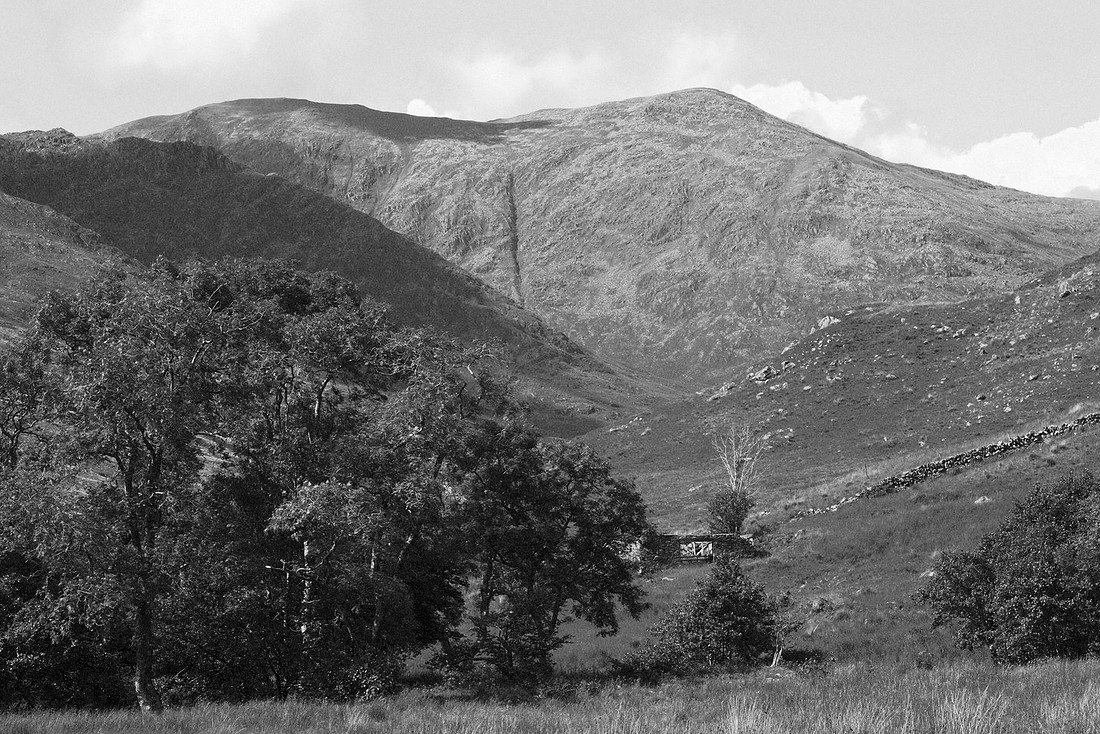
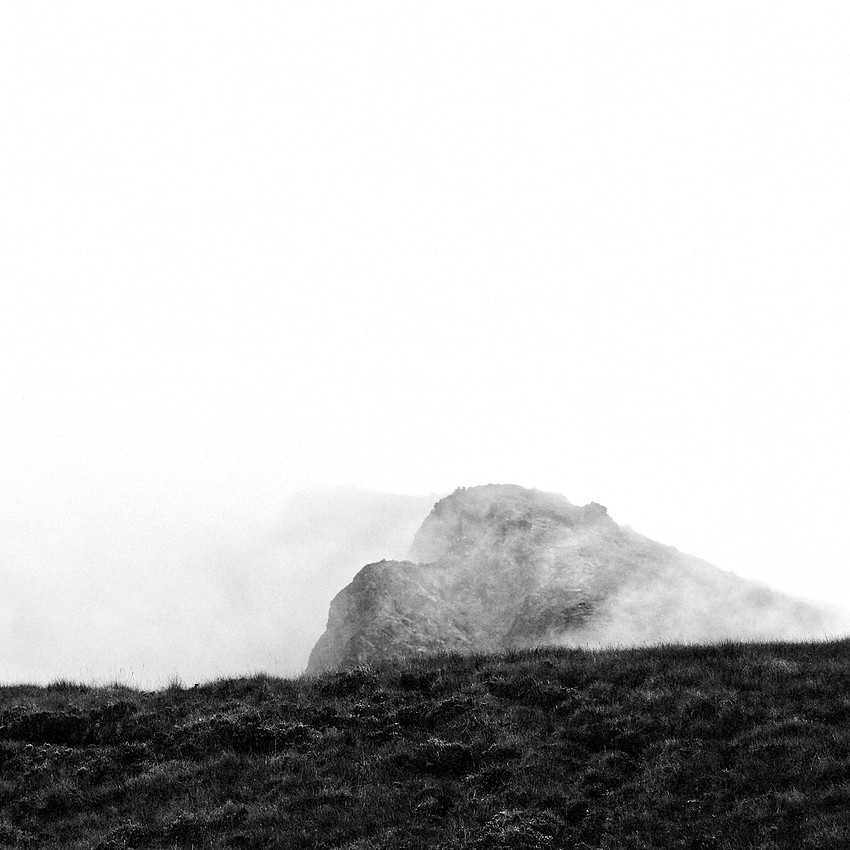
Ardnamurchan seems tuned to the frequency through which I most naturally encounter the world. Its weather changes too swiftly to permit settled assumptions, while its light is endlessly modified by sea, mountain and Atlantic air. Silence is rarely absolute, but is composed from small and meaningful sounds, including wind through grass, waves gathering upon rock, ravens calling across open ground, rain moving over a roof and the distant activity of human life. Even on clear days the landscape rarely feels static, for clouds cross the Small Isles, tides alter the edges of bays and the angle of light continually redraws familiar landforms.
Over time I have learned that these conditions encourage the kind of creative attention I value most. They resist haste and unsettle predetermined plans, requiring me to remain present and responsive rather than simply execute an image already imagined. A location visited many times can change completely through weather, season or mood, and this makes repetition not a failure of invention but a form of deepening. Each return carries previous encounters within it, yet the present moment remains irreducibly new.
The resonance is also inseparable from the people I have come to know. My experience of Ardnamurchan has never been confined to solitary encounters with landscape, because friendship, conversation and community have continually shaped what the place means to me. Stories offered generously by those who live there have altered the way I understand particular bays, settlements, paths and buildings, while time spent listening to memories and local knowledge has shown me how incomplete any purely visual response must inevitably be. The spirit I seek through Spiorad Àird nam Murchan inhabits the relationships between land and people, not one held separately from the other.
Yi-Fu Tuan used the term topophilia to describe the affective bond between people and place, encompassing the attachments created through experience, memory, perception and culture. My own relationship with Ardnamurchan might be understood as a form of adoptive topophilia or elective belonging, because it has not been inherited through birth but has grown through return, friendship, creative commitment and care. There is humility required in making that distinction, particularly in a landscape where many people hold ancestral, linguistic and familial connections far deeper than my own, yet an adopted attachment need not be shallow simply because its roots began later.
Perhaps many people pass through life without finding a place that resonates in this way, while others may possess several such places, each connected to a different period of their lives. When the bond does appear, it deserves to be cherished rather than taken for granted, because it can provide orientation during times of uncertainty and offer a ground from which identity, creativity and responsibility continue to develop. Such belonging is not a claim of ownership but a commitment to relationship, and relationship always brings obligations alongside its gifts.
My time on Skye brought this into sharper focus because the absence of immediate resonance revealed how rare it is. I could admire the island without yet feeling recognised by it, whereas Ardnamurchan has long given me the sensation that its weather, silence, geology and human stories correspond with something essential inside me. Skye required me to search for a pathway into connection; Ardnamurchan seems to have been meeting me within that territory from the beginning.
Through this recognition I have begun to understand, however partially and respectfully, why the Gaelic concepts of dùthchas and cianalas remain so important. They articulate relationships between people, identity and land for which English offers no complete equivalent, and although they belong to cultural and historical experiences that are not mine to appropriate, they illuminate the emotional intensity through which place can become part of a person’s understanding of self.
A Deep Resonance with Dùthchas and Cianalas
Dùthchas is sometimes rendered in English as belonging, inheritance, native place or hereditary connection, but none of these translations can carry the concept in its entirety. It gathers together relationships of kinship, community, culture, language, memory and responsibility, expressing an understanding in which people belong to the land more truthfully than the land belongs to them. Historically, the term has also held legal and social meanings connected with inherited rights and collective identity, but its contemporary resonance continues to suggest a form of belonging that reaches beyond possession and into obligation.
Through dùthchas, landscape is not an inert stage upon which human lives happen to unfold. It participates in identity. Hills, waters, grazing grounds, burial places, paths and settlements hold collective knowledge, while stories and place names preserve the ways in which generations have lived with them. Land, language and people become interdependent, not separate categories capable of being understood in isolation.
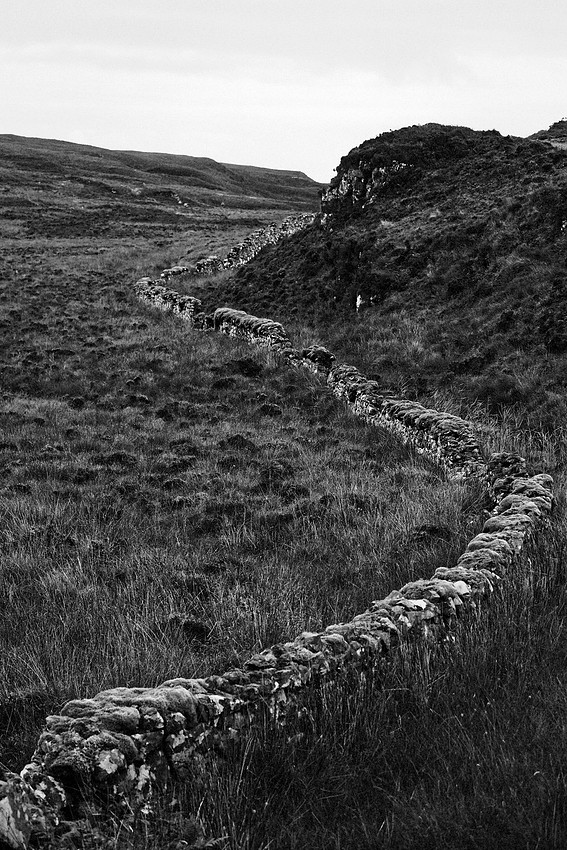
This interdependence matters profoundly in Ardnamurchan. The peninsula is not simply a beautiful western extremity awaiting artistic interpretation, but a lived place whose crofting history, Gaelic inheritance, patterns of migration, religious traditions and changing communities have given its landscapes meaning. A photographer can record the visible surface of a ruined township, a stone dyke or an abandoned structure, yet without attention to the lives connected with them, the resulting image risks transforming history into picturesque melancholy.
Friends in Ardnamurchan have spoken to me about belonging in ways that reveal its quiet complexity, describing not only affection for the land but the familiarity of weather, seasonal change, family association and communal memory. Such belonging does not require constant romantic declaration because it is woven into daily life, visible in practical knowledge and in the names through which landscape features are distinguished from one another. It continues through an understanding of where water gathers, how roads behave in winter, where particular plants flourish, which buildings once housed families and how the character of a bay changes with the wind.
Listening to these experiences has helped me understand why my own connection must be expressed carefully. Ardnamurchan is not the place of my birth, nor can I claim the ancestral relationship held by those whose families have belonged within its communities across generations. My physical home remains elsewhere, even if my creative and psychological sense of home has increasingly settled upon the peninsula. The distinction is important because affection alone does not grant the right to appropriate another culture’s inheritance.
Yet dùthchas resonates with me because it describes an ethical relationship I aspire to honour. If I cannot possess dùthchas in its inherited sense, I can nevertheless learn from the responsibilities it contains, approaching the peninsula not as scenery available for extraction but as a place with which I have entered an enduring relationship. Photography and writing then become acts of attention rather than acquisition, shaped by the knowledge that every image participates in how a place is represented and understood.
I have sometimes thought of this as a vicarious dùthchas, though even that phrase requires care. I do not mean that another person’s cultural belonging can be adopted simply through admiration, but that close friendship and repeated engagement can allow an outsider to understand something of its significance. Through years of returning, listening and contributing, I have developed an elective bond that remains distinct from inherited belonging while still possessing genuine emotional depth.
Cianalas offers another way of approaching this bond. Usually translated as homesickness, longing or nostalgia, the word contains shades of meaning that are difficult to reproduce in English. It suggests not only the pain of absence but the continuing presence of what is absent, an emotional geography carried within a person even when the physical landscape lies far away. Cianalas can be tender and consoling, but it may also possess the sharper edge of displacement, particularly in a Gaelic cultural history marked by clearance, emigration and the scattering of communities.
For that reason, my own longing for Ardnamurchan should never be equated too readily with the historical cianalas of people removed from ancestral lands through force, necessity or poverty. The circumstances are fundamentally different, and respect depends upon preserving that difference. Nevertheless, the concept helps me recognise how deeply a place can persist within consciousness after departure, and how longing may arise not only from memory but from an ongoing relationship that distance has interrupted rather than ended.
When I leave Ardnamurchan, the peninsula continues to accompany me through images, sounds and small sensory recollections. I remember the movement of light across a particular hillside, the smell of rain upon warm ground, the changing voice of the sea at Sanna and the familiar outline of islands on the horizon. I recall conversations, shared meals, community spaces and chance meetings upon narrow roads, all of which return not as isolated memories but as parts of a coherent emotional landscape.
This may be why the glimpse of Rum and Eigg from Glenbrittle carried such force. The islands acted as vessels of memory and orientation, collapsing the geographical distance between Skye and Ardnamurchan while awakening the longing created by absence. They reminded me that the peninsula was still present within the experience, not physically visible but emotionally near, and that my response to another landscape was being shaped by the depth of the connection I had already formed.
Dùthchas and cianalas therefore offer complementary perspectives. One speaks of belonging, inheritance and responsibility, while the other expresses the ache that distance can create. Together they illuminate the profound relationship between place and identity, reminding me that my creative engagement with Ardnamurchan should be grounded not only in affection but in humility, attentiveness and care.
Skye as a Creative Touchstone and Recalibration
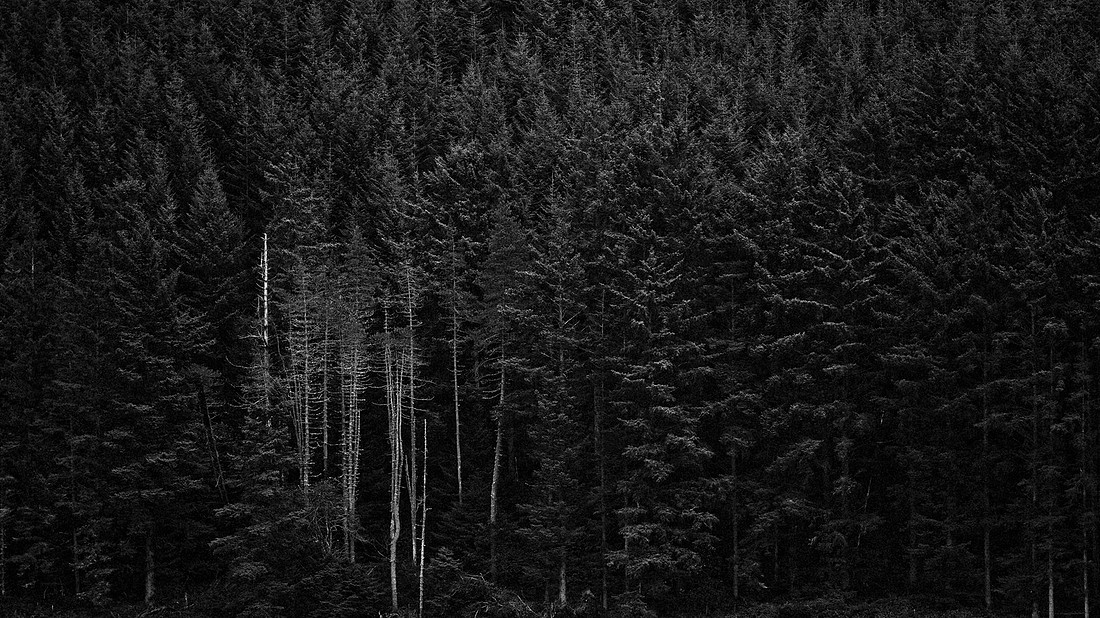
It would be easy, though entirely wrong, to regard my initial difficulty with Skye as a failure of creative response. The absence of immediate connection became one of the most valuable aspects of the journey because it disrupted my assumptions and forced me to examine how relationships with landscape actually form. Rather than providing another version of what I already knew, Skye became an important touchstone against which the depth of my attachment to Ardnamurchan could be more clearly understood.
Creative practice is often discussed in terms of discovery, novelty and forward movement, as though artists must continually seek unfamiliar places and new subjects to remain vital, yet depth is also created through repetition. Returning to one landscape over many years does not necessarily narrow vision; it can develop a form of understanding unavailable to the hurried visitor, because familiarity allows subtle changes to become visible and encourages the work to move beyond initial impressions.
My first encounters with Ardnamurchan were inevitably shaped by discovery. Everything appeared new, from the westward length of the road to the sudden opening of the Atlantic at Sanna, yet repetition has gradually transformed that visual excitement into something more enduring. Locations have accumulated seasons, weathers, friendships and memories, so that each return now exists alongside all those that preceded it. The landscape is familiar enough to provide grounding while remaining complex enough to resist completion.
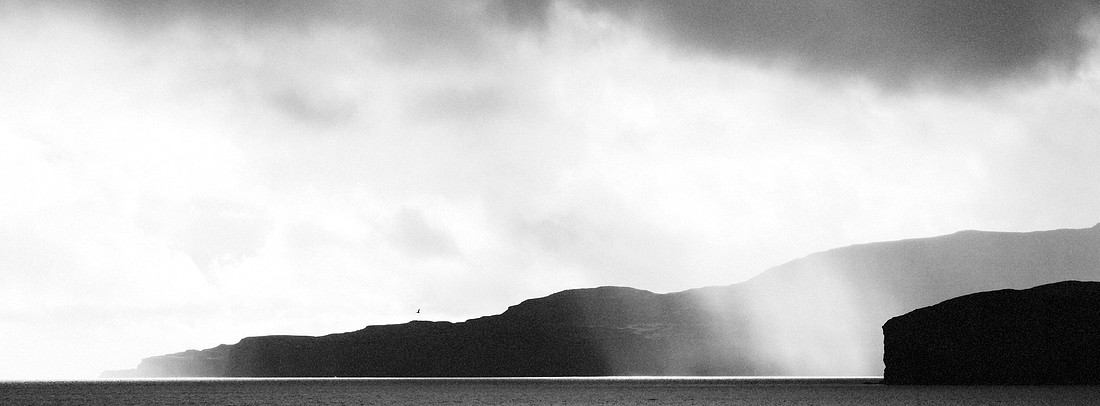
Skye placed me temporarily within a liminal internal space, between recognition and estrangement, where I could appreciate the island’s extraordinary qualities without assuming that appreciation must immediately become belonging. This was creatively healthy. It reminded me that meaningful work cannot always be summoned through intention and that connection may require the surrender of expectation.
Once Rum and Eigg appeared from the Glenbrittle headland, the island began to reveal itself through relationship rather than comparison. I recognised geological echoes between southern Skye, the Small Isles, Mull and Ardnamurchan, all shaped in different ways by the volcanic histories of the western seaboard. I also became more attentive to quieter crofting landscapes and settlements, where community and history were present without the heightened visibility of the island’s most photographed landmarks.
This recalibration has implications for the future of my work. It confirms that Ardnamurchan remains an unfinished creative territory, not because I have failed to see it clearly but because understanding deepens whenever previous knowledge encounters new experience. There are still place names to explore, histories to listen to, paths to follow and relationships between geology, culture and memory that I have only begun to comprehend.
Skye did not divert me from that work. It returned me to it with greater clarity.
The Thinness of Place, Deep Time and the Topographic Compass
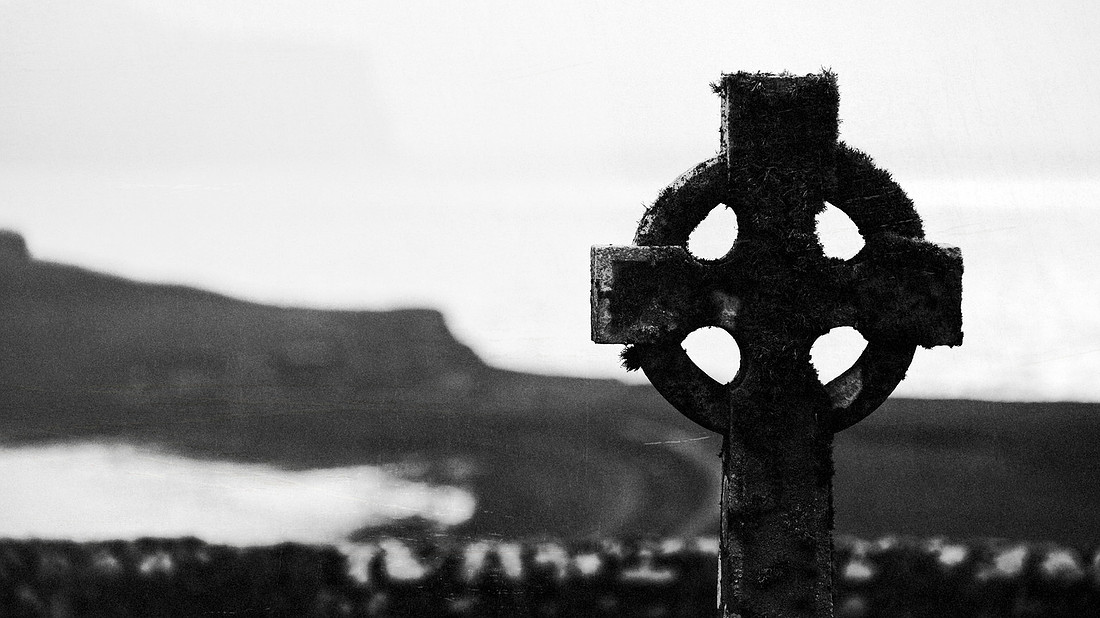
Certain locations in Ardnamurchan possess a quality often described within Celtic spirituality as thinness, suggesting that the boundaries between past and present, material and spiritual, or visible and unseen feel unusually permeable. The phrase can easily become romanticised, yet it remains useful when treated not as a supernatural claim but as an attempt to articulate the density of experience gathered within particular places.
At Camas nan Geall, the landscape holds traces of human presence across an immense span of time. The standing stone, burial ground, chapel remains and later histories of settlement coexist within a small physical area, creating an extraordinary concentration of memory beside the bay. Nothing there needs to announce its significance dramatically. The strength comes from the quiet proximity of these traces, each generation having entered into relationship with the same ground while understanding it through different beliefs, needs and customs.
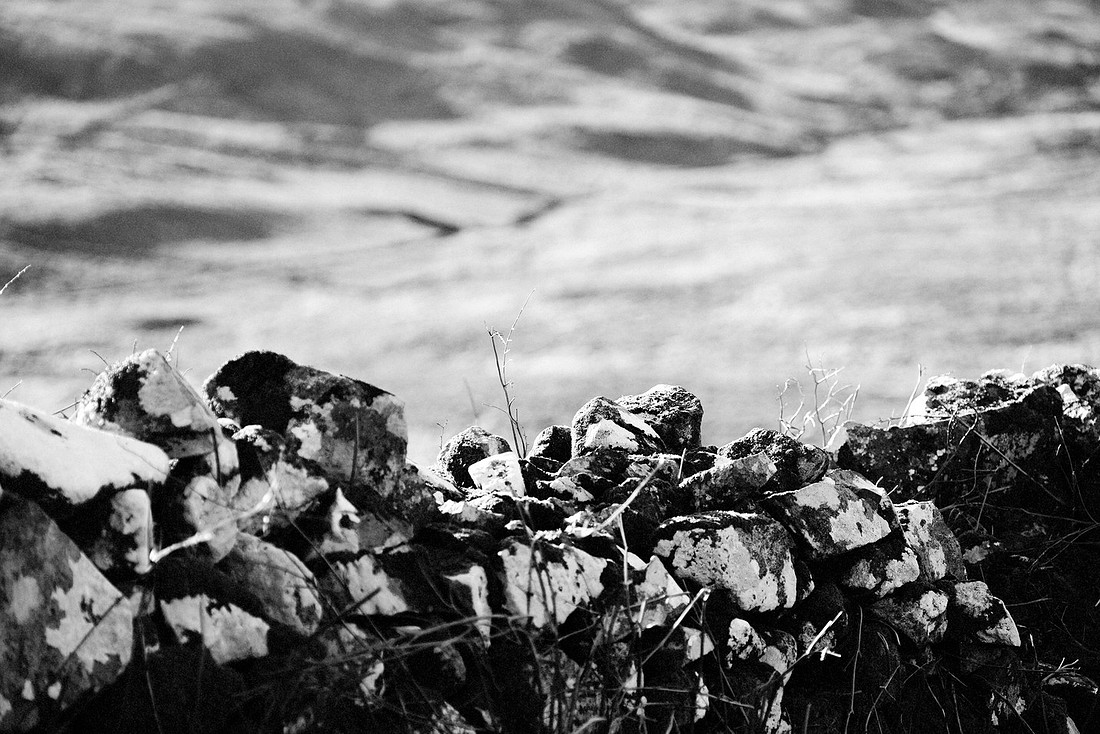
Bourblaige carries another form of thinness. The surviving stones of the abandoned settlement resist any simple transformation into romantic ruin because they retain the weight of lives once organised around them. Walls that now gather moss and weather once defined homes, fields and working spaces, and the silence surrounding them is inseparable from historical processes that changed the pattern of settlement throughout the Highlands. Returning there reminds me that absence is rarely empty; it can be crowded with memory, injustice, endurance and unanswered questions.
At Sanna, the thinness feels more elemental. Pale sands and turquoise water can create an image of apparent tranquillity, yet the bay remains fully exposed to Atlantic weather, and its beauty changes rapidly as light and storm pass across it. The geological complexity beneath its surface, shaped through volcanic activity and immense spans of erosion, places every human visit within a timescale almost beyond comprehension.
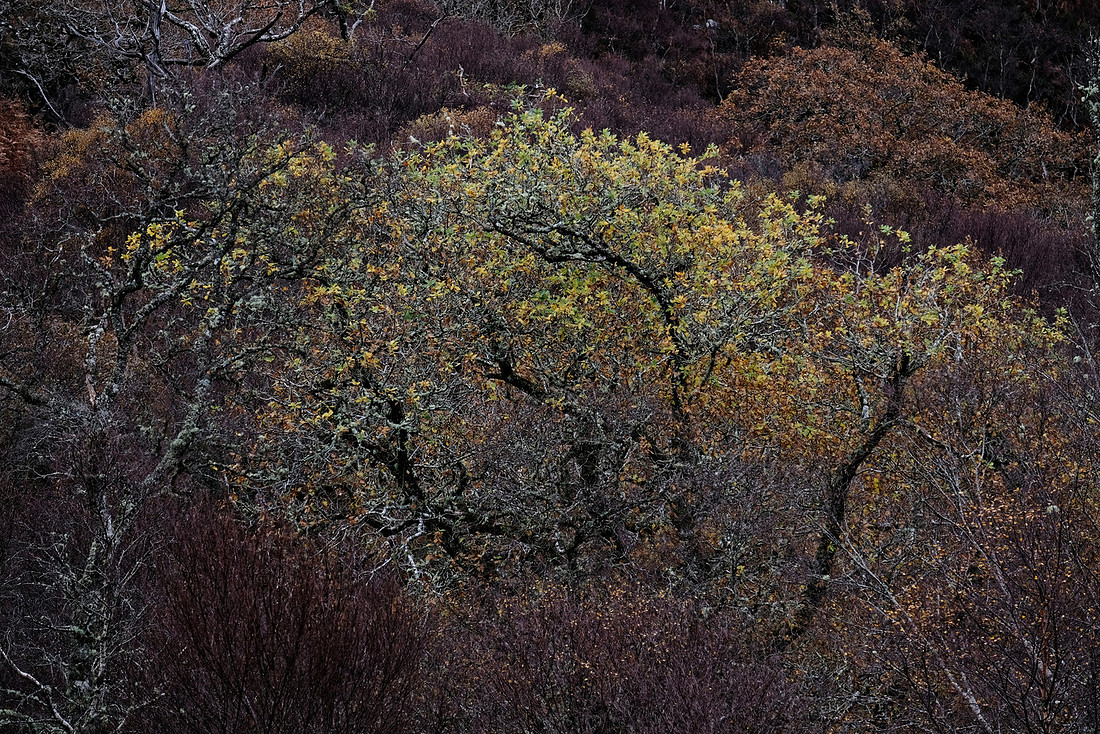
The Ariundle Oakwoods offer a different temporal experience, held beneath trees, mosses and the damp intricacy of the forest floor. Time there feels accumulated rather than exposed, present in slow growth, decay and renewal. Walking beneath the canopy, I become aware of countless forms of life continuing largely beyond human notice, each participating in an ecological relationship far older and more complex than any single visit can apprehend.
These places form part of an internal topographic compass. They orient me not only geographically but psychologically, because each encourages a distinct mode of attention. Sanna opens the imagination towards sea, weather and distance; Ariundle draws it inward towards intimacy and interdependence; Camas nan Geall gathers history into a single coastal space; Ardnamurchan Point offers the sensation of reaching a western threshold where land submits to the scale of the Atlantic.
Gaelic toponymy deepens this orientation because the names of the landscape often preserve observations, activities and relationships that are not immediately visible. Àird nam Murchan itself has attracted several interpretations, traditionally connected with meanings including the height or point of the great seas, sea hounds or mermaids, and the continuing uncertainty is revealing because it shows how language travels through time, gathering possibilities as pronunciations, spellings and cultural contexts change.
Other names speak with greater apparent directness. Beinn Bhuidhe, the yellow mountain, draws attention to colour; Beinn na Seilg, the mountain of the hunt, remembers use and activity; Lochan Dòbhrain, the little loch of the otter, records the presence of wildlife; and Camas nan Clachan Mòra, the bay of the large stones, anchors language in physical texture. These names do not merely label the landscape but reveal what earlier observers considered distinctive enough to preserve.
Camas nan Geall itself has attracted several possible interpretations, including the bay of pledges, promises, strangers or churches, and this ambiguity should not be treated as an inconvenience requiring premature resolution. It reminds us that place names are living historical artefacts whose meanings may have shifted or become obscured as language use declined. Their uncertainty can encourage deeper inquiry, drawing us towards archaeology, oral tradition, historical records and local knowledge rather than offering a single tidy answer.
Names such as Portuairk, Achosnich, Ormsaigbeg, Grigadale, Ockle, Kilmory and Fascadale have become emotionally familiar through repeated journeys, even while their linguistic histories require careful research. Spoken aloud, encountered on signs or traced across a map, they create a verbal geography through which the peninsula is remembered. Their sounds become associated with bends in roads, changes in weather, particular views and people known within or near them.
Gaelic place names help me understand that landscape is not mute until an artist arrives to interpret it. It has already been observed, described and narrated across generations. The language records a long attentiveness to physical character, animal life, cultivation, worship, danger, shelter and movement, so that learning even part of this toponymy changes the ethical position of the photographer. I am no longer naming the unnamed, but entering a conversation already ancient.
This knowledge continually drives the project onward. Each answer reveals further questions, while every researched name or revisited location opens another layer within the work. My passion for Ardnamurchan remains unwavering precisely because the peninsula cannot be exhausted by a decade of attention. Its geology extends into deep time, its human histories are multiple and sometimes contested, and its present communities continue to shape its meaning.
The internal compass points west not because I expect to find certainty there, but because the peninsula continually renews my desire to look, listen and learn.
The Honour and Responsibility of Belonging
This essay began on Skye, among unfamiliar roads and landscapes that initially seemed reluctant to offer me a way in, but it has led inevitably back to Ardnamurchan because the journey revealed how completely the peninsula has become woven into my creative and emotional life. Skye was not diminished by the comparison, nor did it fail to inspire; rather, it provided the necessary distance through which a bond formed elsewhere could be recognised more clearly.
The sight of Rum and Eigg from Glenbrittle brought that recognition into focus. Those familiar outlines carried years of memory and restored my internal orientation, reminding me that beyond them lay the creative home from which so much of my work has grown. The experience affirmed that my response to Ardnamurchan is not a passing fascination or the lingering excitement of discovery, but an enduring relationship strengthened by return.
I feel honoured that a place in which I was not born has offered me such profound creative and psychological grounding. That honour cannot be separated from responsibility, because loving a place should involve more than celebrating its visible beauty. It requires concern for the communities, language, environment, heritage and ordinary relationships that allow its distinctive spirit to endure.
Advocacy may take many forms. It can mean supporting local initiatives and businesses, listening to those whose lives are rooted within the peninsula, learning about its history without simplifying it, treating Gaelic culture with respect, and recognising that landscapes celebrated for their remoteness are also working places in which people need sustainable futures. Through photography and writing, it also means resisting the temptation to turn Ardnamurchan into an untouched romantic escape, because such representations can obscure the realities, challenges and resilience of the communities who live there.
The creative home I have found is therefore not a private sanctuary sealed away from change, but a living place towards which I feel an increasing sense of obligation. The more deeply I engage with it, the less comfortable I become with merely taking photographs and leaving. Attention must be accompanied by reciprocity, however modestly expressed, and the project must remain open to the voices, knowledge and experiences of others.
Perhaps this is the most important lesson contained within reaffirmation. A sense of place is not fixed at the moment of discovery, but grows through time, humility and repeated encounter. It can withstand distance because absence does not dissolve the relationship; instead, distance may reveal how fully the place has entered memory and identity.
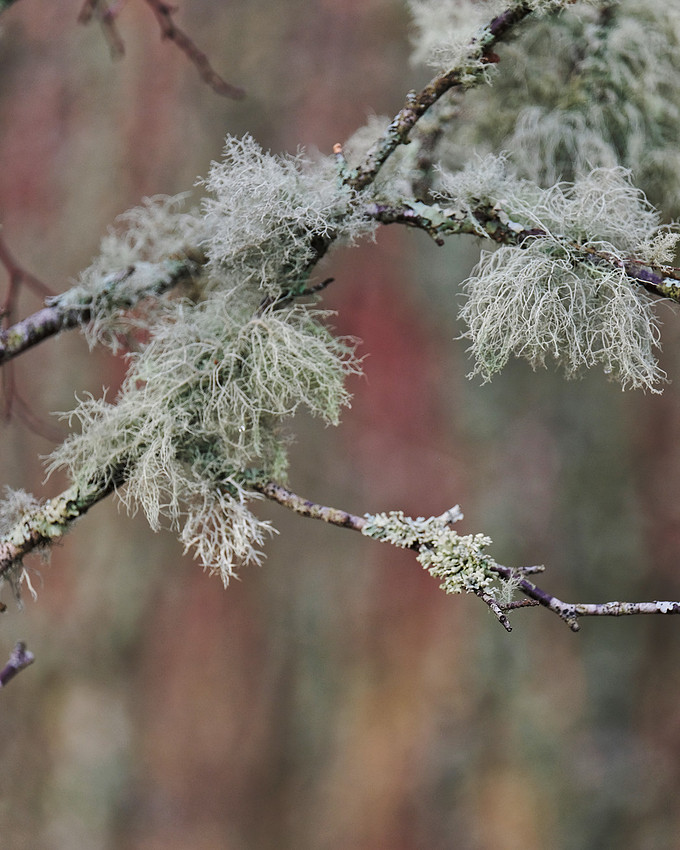
As I prepare to return, I feel the familiar longing gathering once more, not as impatience but as an awareness that part of my life has continued there while I have been elsewhere. The roads, shorelines, friendships and weather remain present within me, drawing my internal compass westward towards a landscape that continues to challenge, comfort and inspire.
I wonder where that compass points for others.
Is there a landscape in which your inner life seems to find an external form, where the patterns of weather, light and terrain correspond with something you recognise but cannot easily name?
Is there somewhere you return to not through habit but through a sense that each visit restores an essential alignment?
Have you ever encountered a place that felt familiar before you understood why, or discovered that absence had intensified an attachment you had previously taken for granted?
What memories, relationships, names and stories have shaped your understanding of home?
Does your own sense of belonging arise from birth and ancestry, or has it grown through choice, friendship and repeated acts of attention?
When you care deeply for a place, what responsibilities accompany that affection?
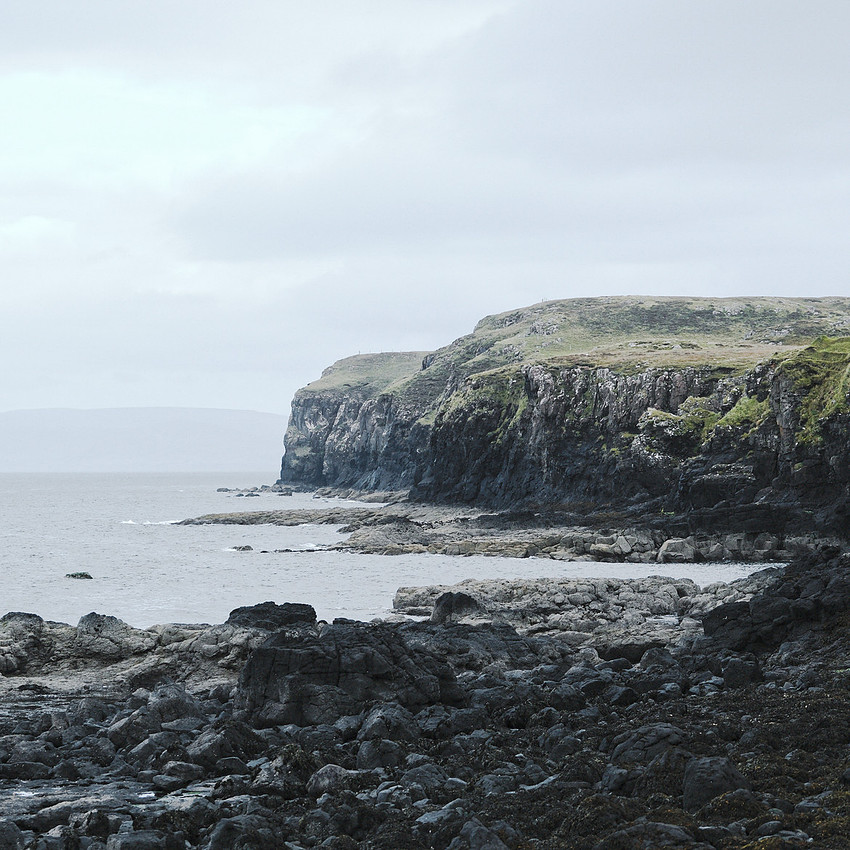
In the coming parts of this continually evolving series, I will explore more deeply some of the individual places and spaces that have created this bond, returning to the bays, headlands, glens, settlements, paths and less visible details through which my understanding of Ardnamurchan continues to develop. Each carries a different aspect of the longing I have tried to express here, an ache that English struggles to contain because it combines affection, gratitude, distance, memory and the desire to return.
Perhaps no single word can fully describe it.
Perhaps it is enough to recognise the pull when it comes, to follow the internal compass with openness and care, and to understand that finding a place capable of becoming a creative, psychological and spiritual home is among the rarest gifts a landscape can offer.
Ardnamurchan has given me that gift.
I can only hope that, through attention, friendship, advocacy and the continuing work of Spiorad Àird nam Murchan, I may honour it.
Bibliography and Further Reading
The following sources offer readers opportunities to explore the principal concepts within the essay, including dùthchas, topophilia, Gaelic relationships with land, Ardnamurchan’s heritage and the importance of place names as expressions of culture and environmental knowledge.
Ainmean-Àite na h-Alba (n.d.) Gaelic Place-Names of Scotland. Available at: https://www.ainmean-aite.scot.
Basso, K.H. (1996) Wisdom Sits in Places: Landscape and Language Among the Western Apache. Albuquerque: University of New Mexico Press.
Casey, E.S. (1993) Getting Back into Place: Toward a Renewed Understanding of the Place-World. Bloomington: Indiana University Press.
Dziadowiec, R.J. (2024) Dùthchas: Locating and Nourishing the Roots of Scotland’s Land Reform Revolution. Doctoral thesis. Coventry University. Available at: Read the Coventry University research record. [pureportal...ntry.ac.uk]
Historic Environment Scotland (n.d.) Historic Environment Scotland. Available at: https://www.historicenvironment.scot.
Macfarlane, R. (2015) Landmarks. London: Hamish Hamilton.
McFadyen, M. (n.d.) ‘Dùthchas’, A Fragile Correspondence. Available at: Read Mairi McFadyen on dùthchas. [afragileco...ndence.org]
Meighan, P.J. (2022) ‘Dùthchas, a Scottish Gaelic Methodology to Guide Self-Decolonization and Conceptualize a Kincentric and Relational Approach to Community-Led Research’, International Journal of Qualitative Methods, 21. Available at: https://research.universityofgalway.ie/en/publications/d%C3%B9thchas-a-scottish-gaelic-methodology-to-guide-self-decolonizati/. [research.u...fgalway.ie]
Relph, E. (1976) Place and Placelessness. London: Pion.
Tuan, Y.F. (1974) Topophilia: A Study of Environmental Perception, Attitudes, and Values. New York: Columbia University Press.
Tuan, Y.F. (1977) Space and Place: The Perspective of Experience. Minneapolis: University of Minnesota Press.