Spiorad Àird nam Murchan Pt 25 - The Edge of the Sea

Spiorad Àird nam Murchan - Part 25
The Edge of the Sea: Oir na Mara

Prelude: After the Sea Around Us
In The Sea Around Us, Rachel Carson asked us to lift our gaze from the shoreline and look outward, to currents, depths, planetary motion, and the slow, tidal memory of oceans older than land itself. In Ardnamurchan, that outward gaze is unavoidable. The sea is never a background here; it is a surrounding presence, pressing in from three sides, shaping roads, speech, weather, and patience.
And yet, after the immensity of the open water, there is a need to return. To come back to the place where foot meets stone, where tide leaves its brief annotations in weed and shell, where the human body can stand at the meeting point and feel both held and exposed.
This essay begins where the last one loosened its grip: not in the sea itself, but at its edge.
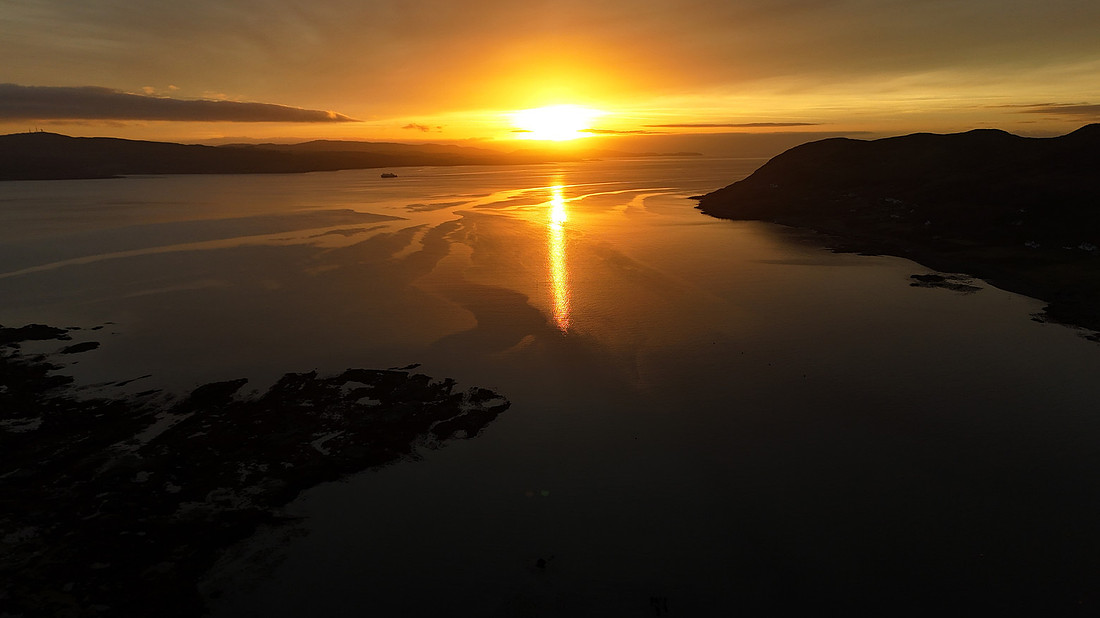
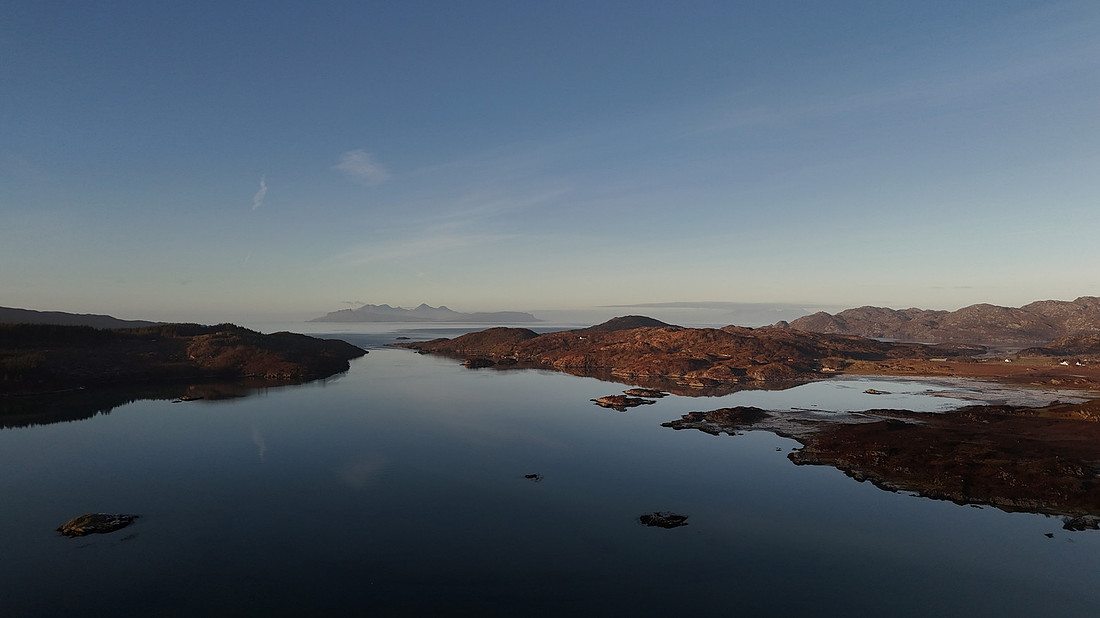
Rachel Carson called this place the marginal world; not marginal in importance, but in position: a boundary realm, restless and unfinished. Ardnamurchan is, in many ways, a peninsula living as an island, and nowhere is that more apparent than along its edges, where land and sea negotiate their terms day by day.
Oir na Mara: the edge of the sea….. is not a line here. It is a zone, a thickness, a breathing space. It is geology rising from ancient fire, shaped by ice, and combed endlessly by Atlantic water. It is also a psychological and cultural margin: a place where people have learned to live with arrival and departure, abundance and exposure, connection and separation.
To walk the shores of Ardnamurchan is to walk the seam of identities…. mainland and island, permanence and flux, silence and speech.
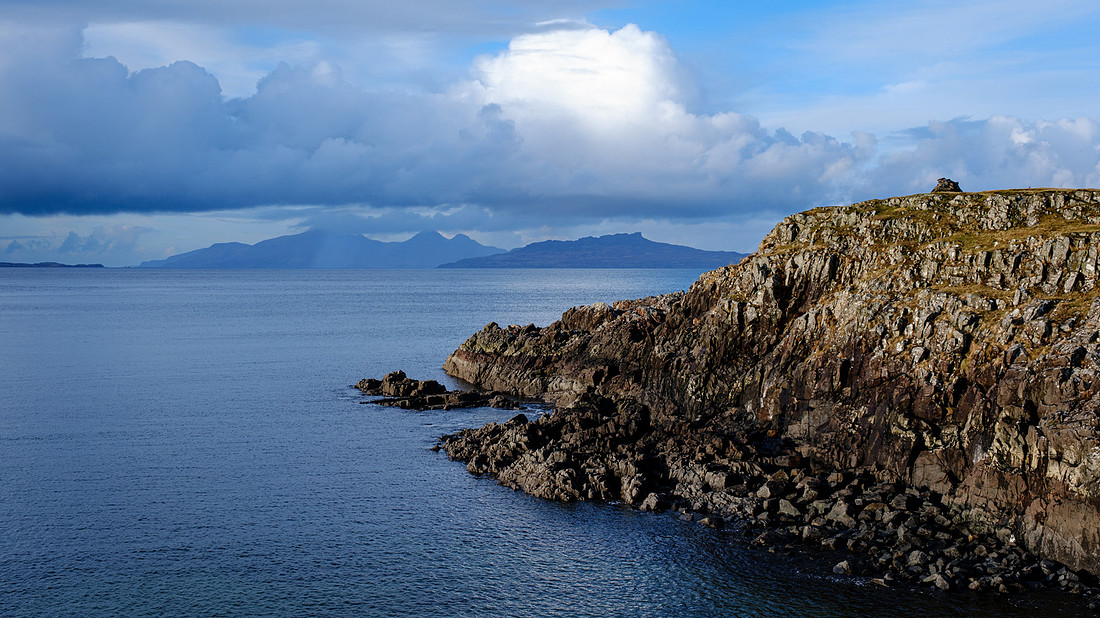
I. The Rocky Shore - Stone That Remembers Fire
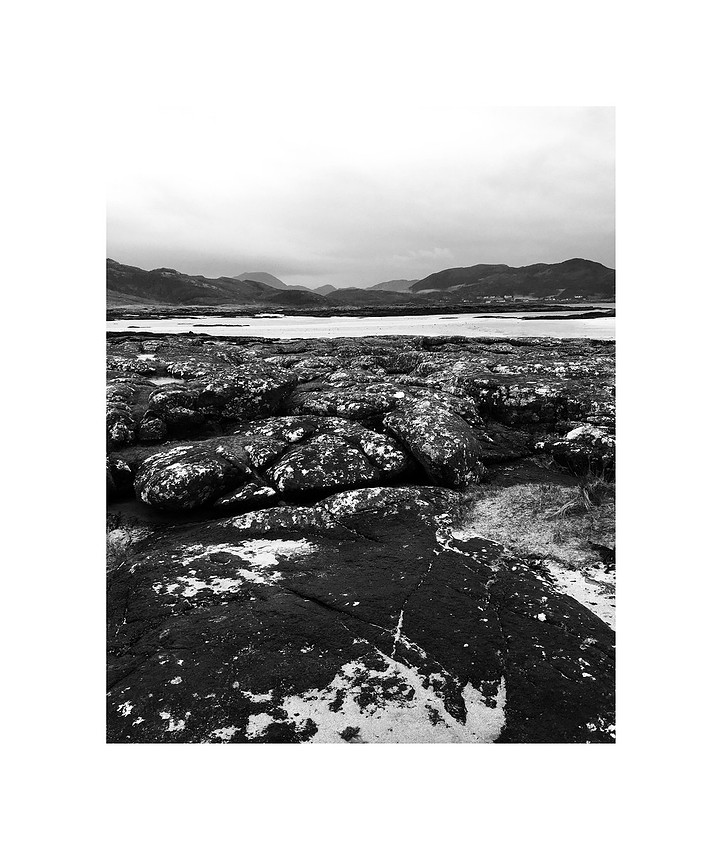
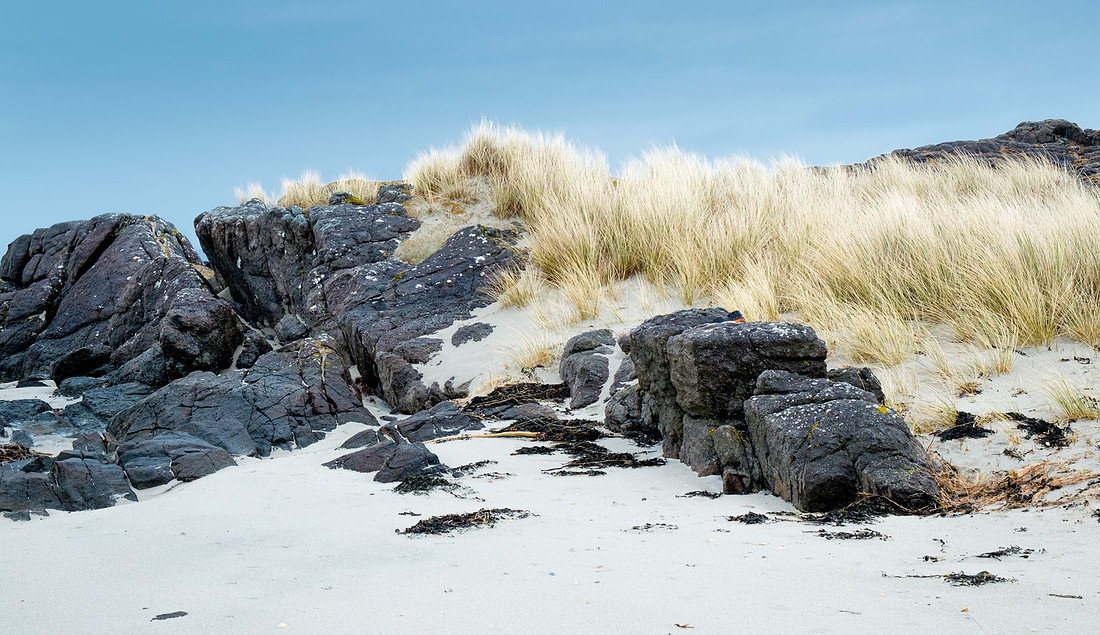
Much of Ardnamurchan’s coastline is hard, dark, and resolute. Gabbro, basalt, dolerite: rocks born not of sediment but of intrusion, uplift, and cooling magma. The peninsula is the exposed root system of a vast Palaeogene volcano, its concentric intrusions still legible in the land’s shape, its ancient violence now softened into a geography of bays, points, and reefs.
These rocks meet the sea without apology.
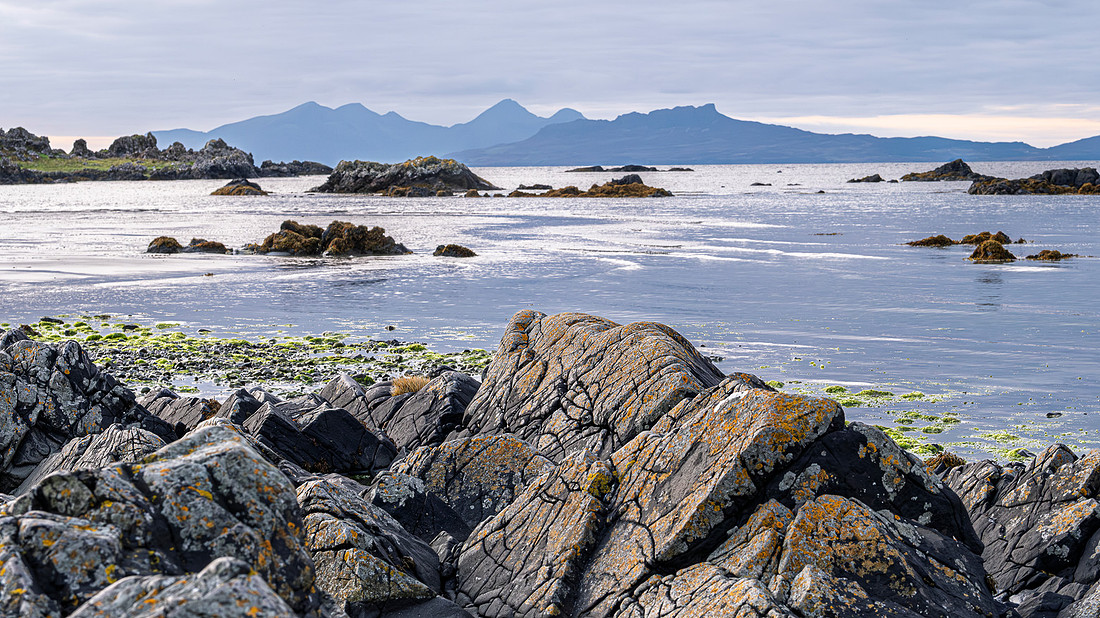
Along the western and northern edges at Sanna, Portuairk, Kilmory, Fascadale the shoreline is a choreography of platforms, skerries, and tide‑scoured shelves. Here, the sea does not merely lap; it tests. Every incoming wave rehearses the same question: What will remain?
And the answer, repeated for millennia, is adaptation.
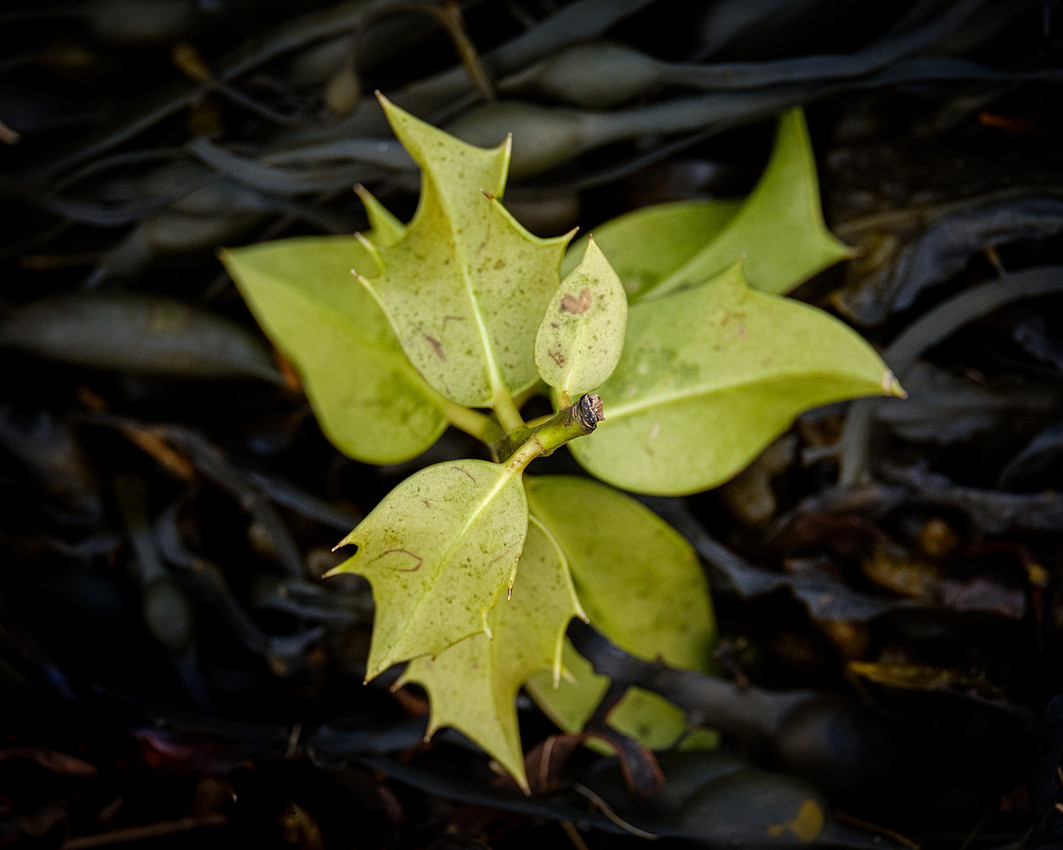
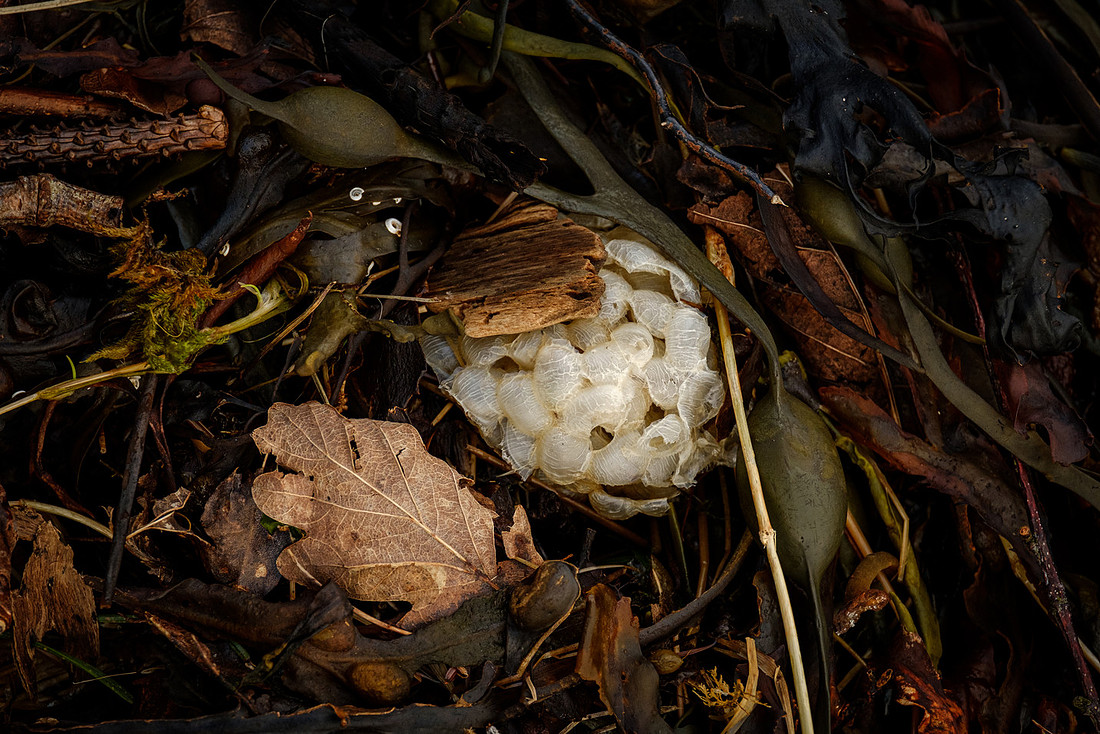
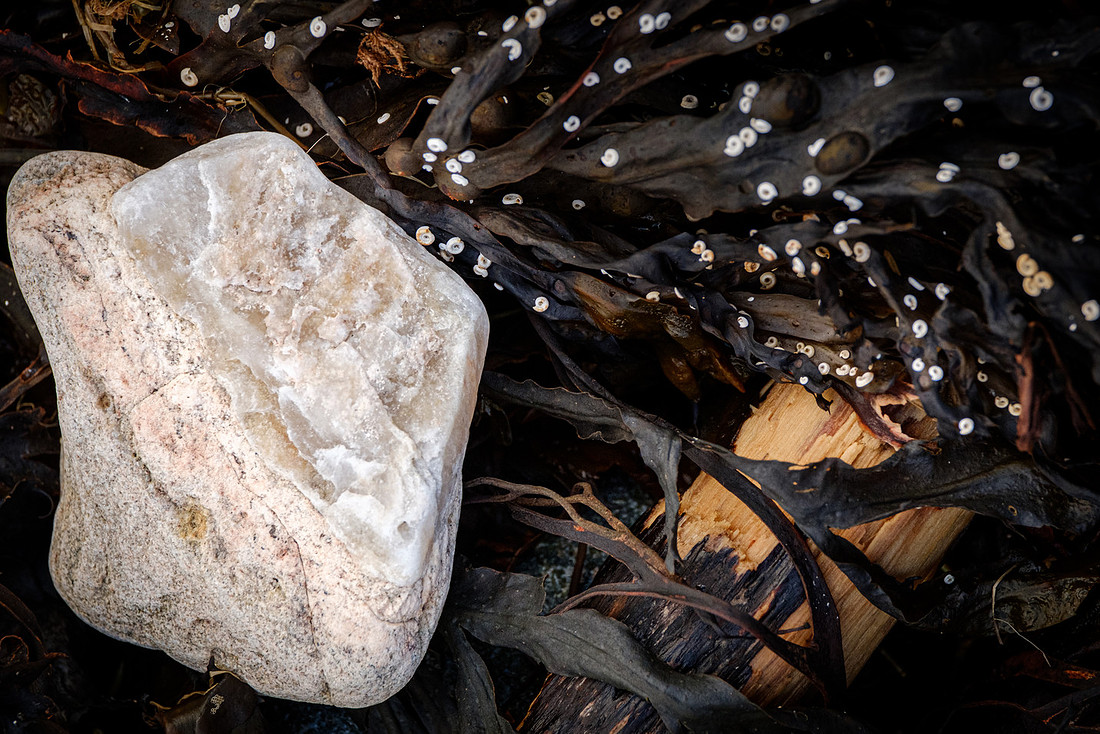
In rock pools left behind by the retreating tide, entire cosmologies persist for a few hours: bladderwrack slicked with salt, beadlet anemones sealed like clenched fists, periwinkles grazing patiently across stone that was once molten. These are not passive lives. They are lives engineered by constraint…. shaped by immersion and exposure, salinity and desiccation, wave shock and sunlight.
Rachel Carson wrote of tide pools as “seas in miniature.” On Ardnamurchan, they feel more like memory chambers: places where deep time becomes briefly visible. The same forces that emplaced ring dykes and cone sheets now set the limits of barnacle zonation. The same Atlantic swell that carried Viking longships still decides which algae can cling and which will be torn free.
There is something profoundly island‑like in this resilience. Islands, too, are shaped by limits of soil, of access, of weather…. and the rocky shores of Ardnamurchan echo that condition. Life survives here not by conquest, but by fit.
To stand on these rocks is to feel steadied and unsettled at once: grounded by the weight beneath your boots, and reminded that nothing here is ever fully at rest.
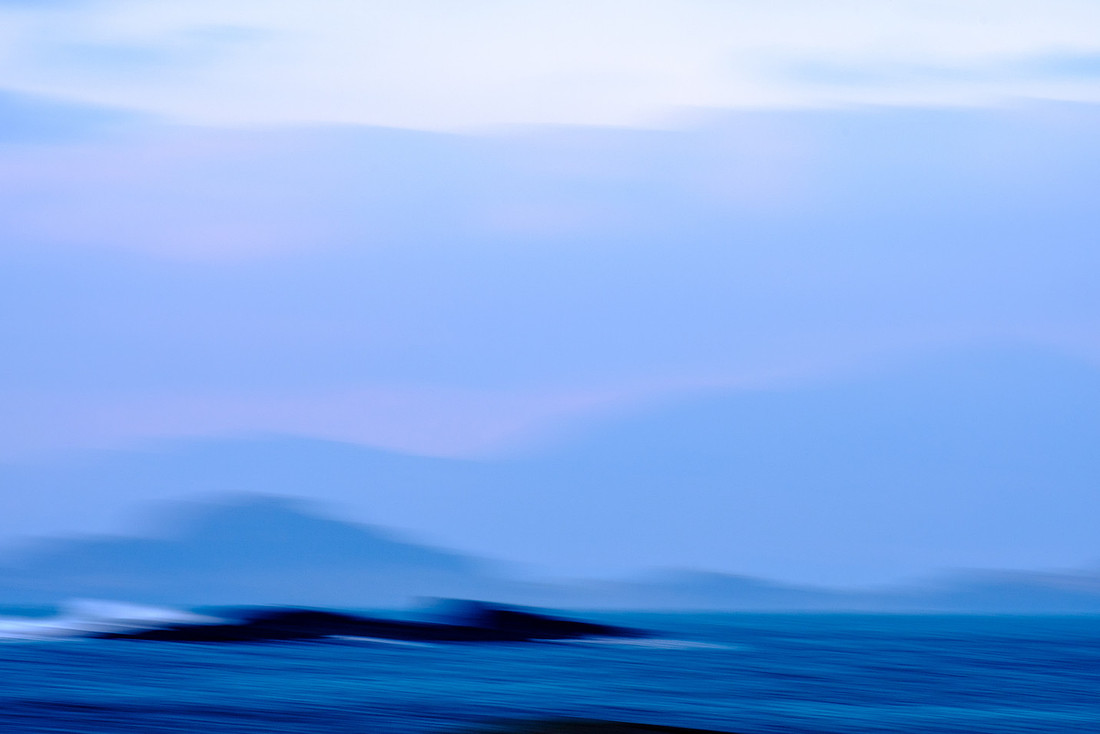
II. The Sandy and Shingle Shores - Motion Made Visible
If the rocky shore is Ardnamurchan’s memory of fire, the sandy and shingle beaches are its memory of movement.
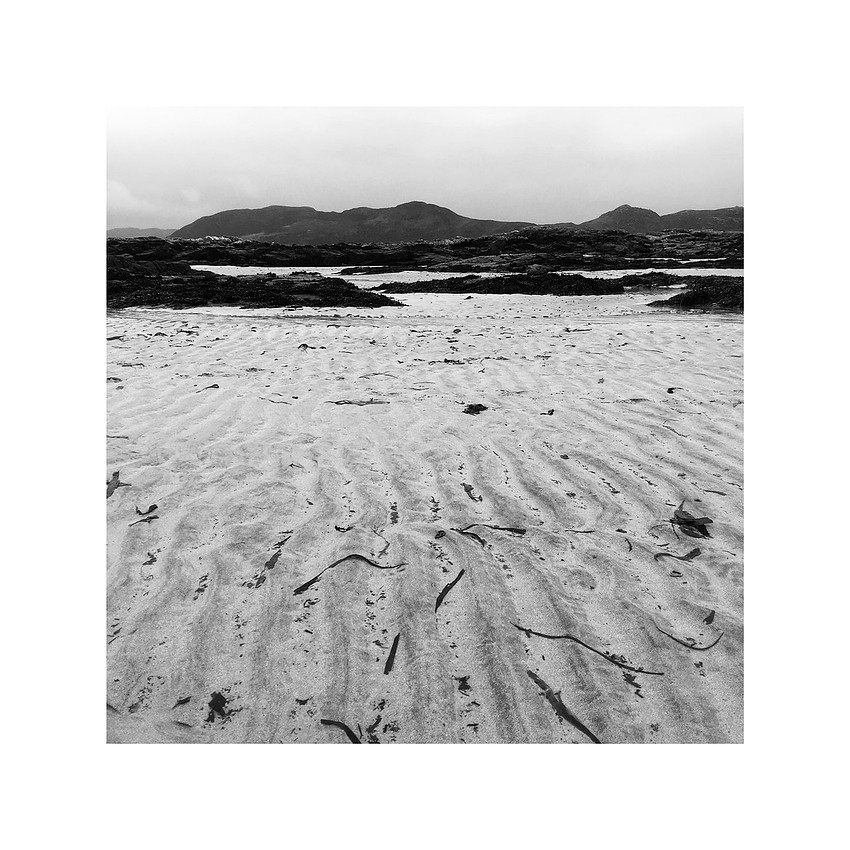
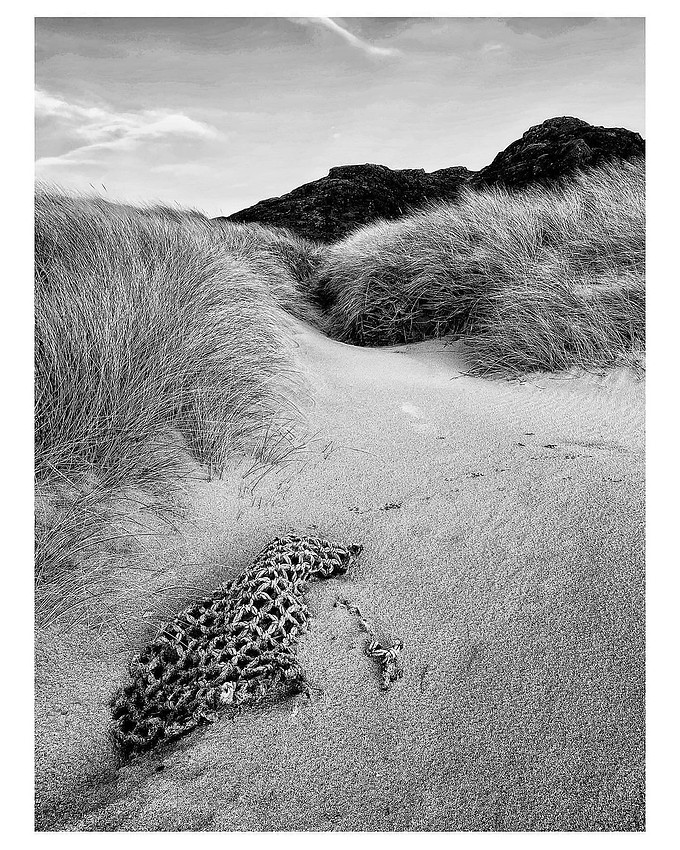
Sanna Bay, Camas nan Geall, Swordle, Ardtoe: these are edges that never settle. Each tide redraws them. Each storm edits their margins. What looks permanent from a distance reveals itself, on foot, as provisional.
Rachel Carson understood the sandy shore as a place of concealment, of life hidden beneath instability. Ardnamurchan’s beaches share this quality, though they are often braided with stone, shell, and machair grass, blurring any simple category.
Here, the island‑feeling intensifies.
These beaches face outward toward the Small Isles, toward the Atlantic and inward, toward croft land and grazing cattle. They are places of arrival and leaving: Norse landings, cleared communities forced to depart, modern ferries tracing familiar routes across water that once defined survival.
Underfoot, the sand is alive with absence: burrowing worms, molluscs retreating with the tide, traces erased almost as soon as they are made. The beach remembers nothing for long and that impermanence gives it a strange authority.
On Ardnamurchan, sandy shores are often where human and sea histories intersect most directly. Boat burials at Swordle Bay. Shell middens. Crofting townships built close enough to hear the tide but far enough to survive its storms.
These are edges that teach humility. They resist ownership. They belong to process.
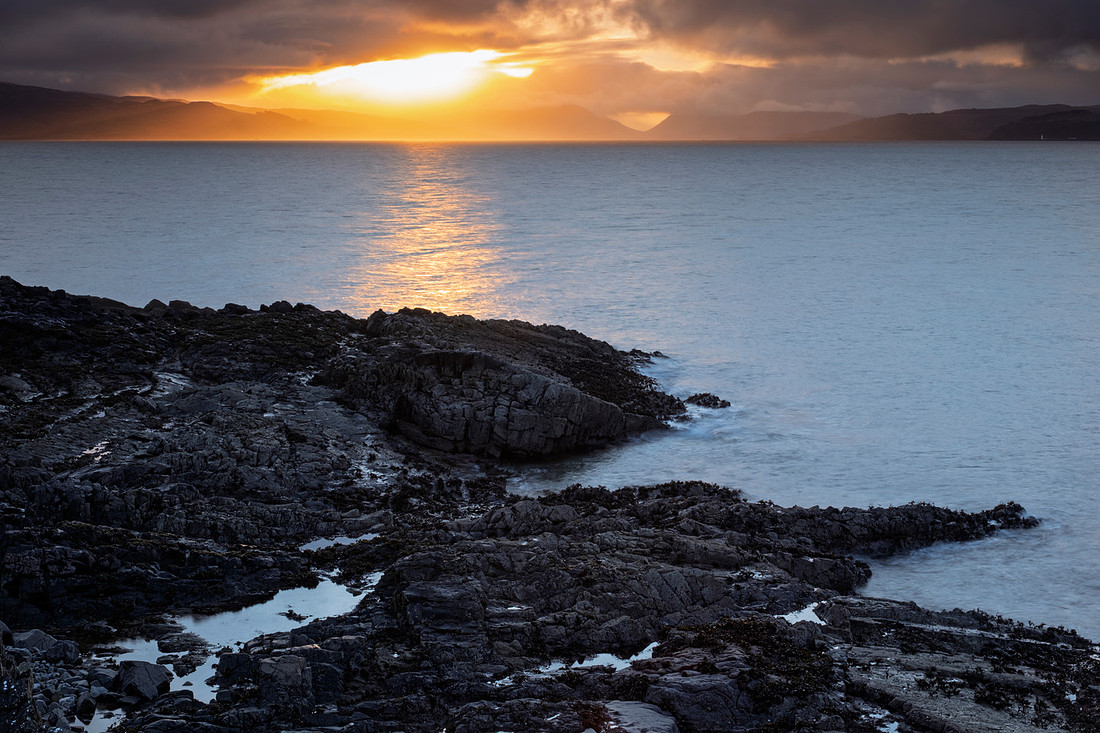
III. The Cold Atlantic “Coral” - Ardnamurchan’s Living Sea
Carson’s coral coast belongs to warmer latitudes, but the waters around Ardnamurchan are no less intricate or alive. Here, complexity takes a colder form.
Kelp forests, Laminaria, Saccharina rise and fall beneath the surface, building three‑dimensional habitats as architecturally significant as any reef. Cold‑water corals, sponges, maerl beds, and diverse invertebrate communities thrive offshore, sustained by clean, nutrient‑rich Atlantic currents.
These underwater structures matter profoundly to Ardnamurchan’s sense of itself. Fishing communities have long understood the sea not as emptiness, but as patterned ground…. a place of known marks, seasonal returns, and inherited knowledge. Gaelic language has a deep connection to the rhythms of land and tide…. And it is this deep connection that gives us insight into environmental stewardship that may help us today understand how to protect our fragile environments.
The peninsula’s “island‑ness” is reinforced here by dependence. When roads are long and single‑tracked, when weather closes in, the sea becomes both barrier and lifeline. That duality persists, shaping identity as much as economy.
To imagine Ardnamurchan without its surrounding waters is to misunderstand it entirely. The peninsula is held in place not just by land, but by circulation; tidal, cultural, ecological.
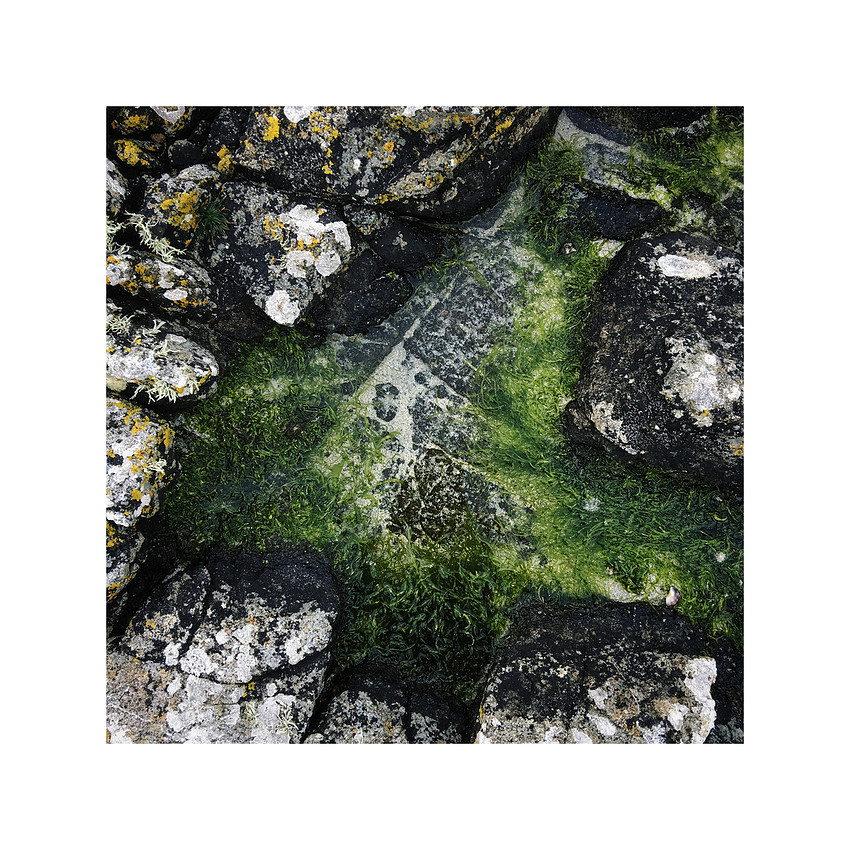
IV. The Intertidal Zone - Where Identities Are Negotiated
This is the true heart of Oir na Mara.
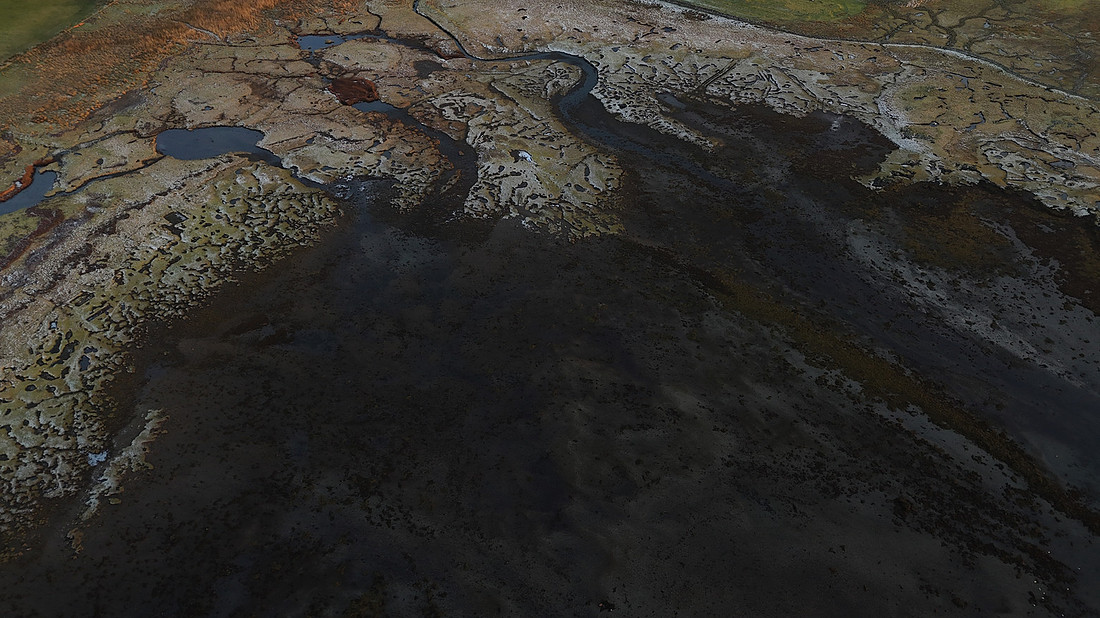
The intertidal zone is neither land nor sea. It belongs fully to neither, and yet it is claimed by both. It exists only because of rhythm…. because the moon insists, because gravity remembers.
For Ardnamurchan, this liminal space feels deeply familiar.
The peninsula itself is intertidal in spirit: attached to the mainland, yet oriented outward; accessible, yet remote; Scottish, Gaelic, Norse, and Atlantic all at once. Its communities have learned to live between categories, to speak in ways that bend and borrow, to endure without needing to dominate.
In the intertidal zone, survival depends on timing and attentiveness. Know when to emerge. Know when to retreat. Know what can be endured, and what cannot.
These lessons echo beyond ecology. They are written into crofting rhythms, into ferry timetables, into the patience required to live where the weather still holds authority.
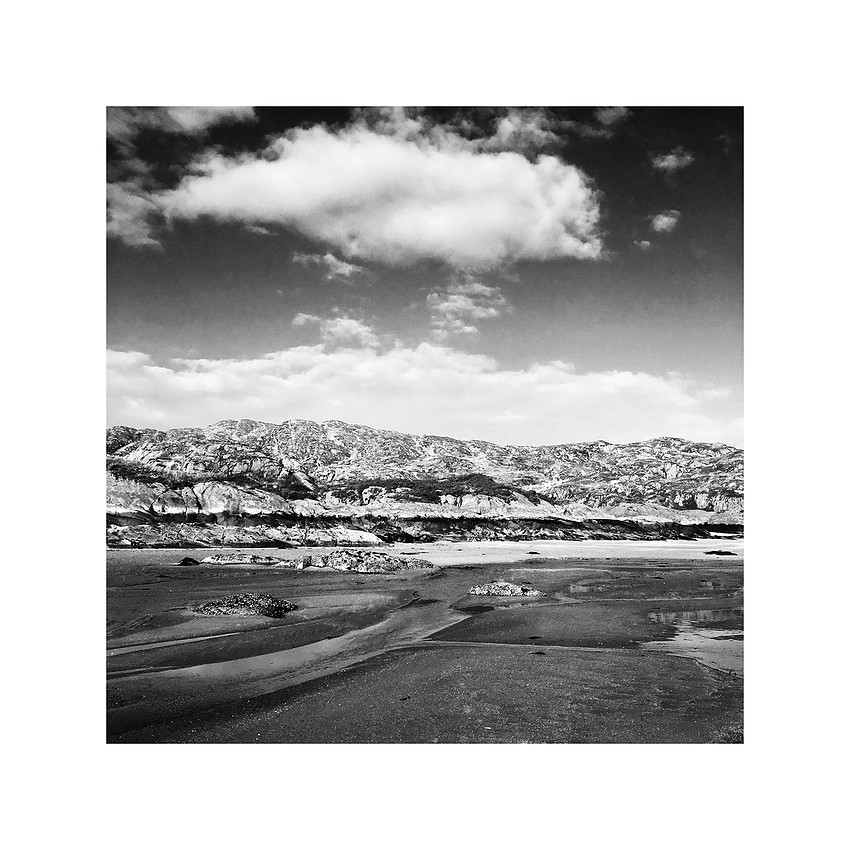
Standing at low tide, watching the sea withdraw and return, it becomes clear that edges are not weaknesses. They are places of exchange.
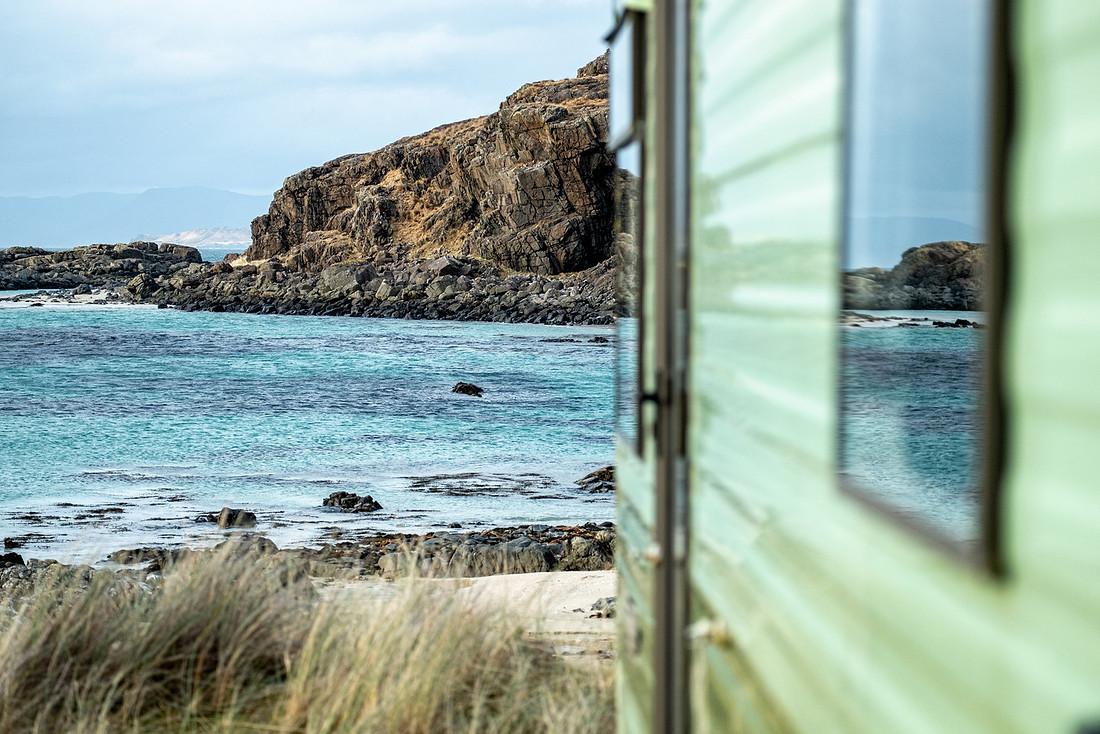
V. Reflective Interlude - Oir
Between the leaving and the coming back
the shore holds its breath.
Stone remembers fire.
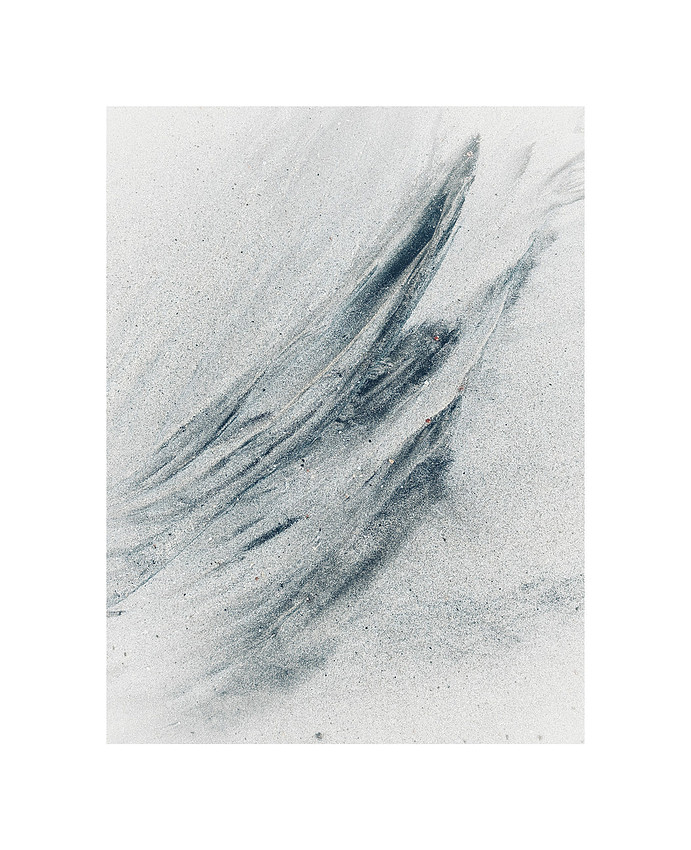
Sand remembers nothing.
We stand where tides borrow the land,
where islands exist without names,
where belonging is not fixed
but felt
like salt on skin,
like wind learning your face.
VI. Ardnamurchan as an Island Without Separation
Ardnamurchan’s island‑like identity is not a romantic invention. It emerges from material facts: geology that turns inward on itself, roads that narrow and slow, seas that frame daily life, and a cultural memory shaped as much by departure as by arrival.
The Gaelic of Ardnamurchan carries its own rhythm and prosody, shaped by isolation and contact alike. Place‑names speak of bays, points, and crossings…. a language tuned to edges.
Pride here is quiet but firm. It is the pride of people who know where they are, and why that matters. The sea does not soften this identity; it sharpens it.
To live at the edge is to be constantly reminded that stability is earned, not assumed.
Coda: An Invitation to the Reader
Rachel Carson did not write The Edge of the Sea to instruct alone, but to awaken attention. Ardnamurchan asks the same of those who walk its shores or remember their own.
Where are the edges in your life?
What margins shape your creativity, your sense of belonging, your understanding of place? How does the meeting of elements; water and land, certainty and uncertainty, challenge you, nourish you, ask something of you?
Whether you stand on an Atlantic headland, a riverbank, a tidal estuary, or a quiet inland shore, the edge remains a place of becoming.
Attend to it.
Create from it.
And let it remind you that the most vital spaces are often those that refuse to be one thing or the other.
“Chan eil an cladach na chrìoch,
ach àite coinneachaidh
far a bheil an talamh ag ionnsachadh
cànan na mara.”
English sense (not a literal translation):
The shore is not a boundary,
but a meeting place
where the land learns
the language of the sea.
Bibliography / Further Reading
Carson, R. (1951) The Sea Around Us. New York: Oxford University Press.
Carson, R. (1955) The Edge of the Sea. Boston: Houghton Mifflin.
British Geological Survey (2005) British Regional Geology: The Palaeogene Volcanic Districts of Scotland. 4th edn. Nottingham: British Geological Survey.
British Geological Survey (n.d.) Ardnamurchan Central Complex, Hebridean Igneous Province. Available at: https://earthwise.bgs.ac.uk (Accessed: 15 February 2026).
Geological Society of London (n.d.) Ardnamurchan Ring Complex. Available at: https://www.geolsoc.org.uk (Accessed: 11 February 2026).
NatureScot (n.d.) Ardnamurchan Site of Special Scientific Interest (SSSI) Citation. Available at: https://www.nature.scot (Accessed: 17 February 2026).
Heritage Ardnamurchan (n.d.) History and Heritage of Ardnamurchan. Available at: https://heritageardnamurchan.co.uk (Accessed: 12 February 2026).
Johnson, M.E. (2024) ‘Ecology of intertidal rocky shores related to examples of coastal geology across Phanerozoic time’, Journal of Marine Science and Engineering, 12(8), pp. 1–28. https://doi.org/10.3390/jmse12081399.
Simons, D.-L., Hipperson, H., Webb, T.J., Spencer, M., Horsburgh, G.J. and Mieszkowska, N. (2025) ‘Characterizing rocky intertidal biodiversity using environmental DNA metabarcoding from local to national scales’, Environmental DNA, 7(5), e70203. https://doi.org/10.1002/edn3.70203.
Omniglot (2021) Gaelic dialects of Ardnamurchan and Rùm. Available at: https://www.omniglot.com/language/articles/ardnamurchan.htm (Accessed: 20 February 2026).