Spiorad Àird nam Murchan Pt 26 - Held By The West

Spiorad Àird nam Murchan
Part 26: Held by the West
Introduction
I began writing Held by the West a little over two days before I found myself admitted to hospital in Fort William with a serious deep vein thrombosis in my leg. At the time, I could not have known how abrupt that shift would be, how quickly the slow, attentive rhythm of Ardnamurchan would be replaced by the sterility of a ward, the measured language of scans and treatment, and the unfamiliar weight of enforced stillness. Like many moments that later feel pivotal, it arrived without warning, folding the ordinary into something far more fragile.
What followed was not a clean interruption, but a long, uneven pause. Recovery has been slow, sometimes painful, often tiring, and it has delayed this writing far beyond what I had anticipated. Nearly seven weeks passed before I felt able to return fully to this piece. Progress came in fragments, sentences written between rest, thoughts gathered and then abandoned, the body insisting on limits even as the mind kept drifting west. During that time, travel was impossible. Ardnamurchan, so familiar to me as a place of movement, arrival, and physical presence, became distant, unreachable except through memory, photographs, notes, and the persistent ache of longing.
Yet within that enforced stillness, something else opened. Being unable to return sharpened my awareness of why I go there at all. Removed from the physical act of walking, sitting, and listening in the landscape, I was left only with the deeper question that has quietly underpinned this entire series: why does this place matter so much to me? Not just aesthetically, not just creatively, but emotionally, almost bodily. Ardnamurchan has long been a place where my sense of self steadies, where attention softens and deepens, where I feel most aligned with slowness, with listening, with the idea that presence can be enough.
This period of recovery has been hard, hard in ways that are difficult to articulate without slipping into cliché, but it has also been clarifying. Separated from the land I so closely associate with grounding and renewal, I began to understand just how fully it holds me, even in absence. Ardnamurchan has remained present throughout this time not as nostalgia, but as orientation. Its contours, names, winds, and lochs have continued to shape my thinking, offering a quiet reassurance that stillness, too, has value; that pauses are not failures, but part of longer rhythms.
Held by the West now carries that understanding within it. Written at first in physical presence, then shaped and completed through distance and recovery, it stands as both a reflection on place and a marker of interruption. This pause has been humbling, grounding, and at times deeply frustrating, but it has also strengthened my resolve and deepened my connection to Ardnamurchan as a place of meaning rather than merely access. The longing I feel to return is no longer impatient. It is attentive, deliberate, and rooted in gratitude.
When I am able to make that journey again, I know it will not feel like picking up where I left off, but arriving changed. Until then, this piece stands as an act of return in another form, an acknowledgement of absence, endurance, and the quiet certainty that the west, in all its patience, will still be there when I am ready to meet it again.
Held By The West
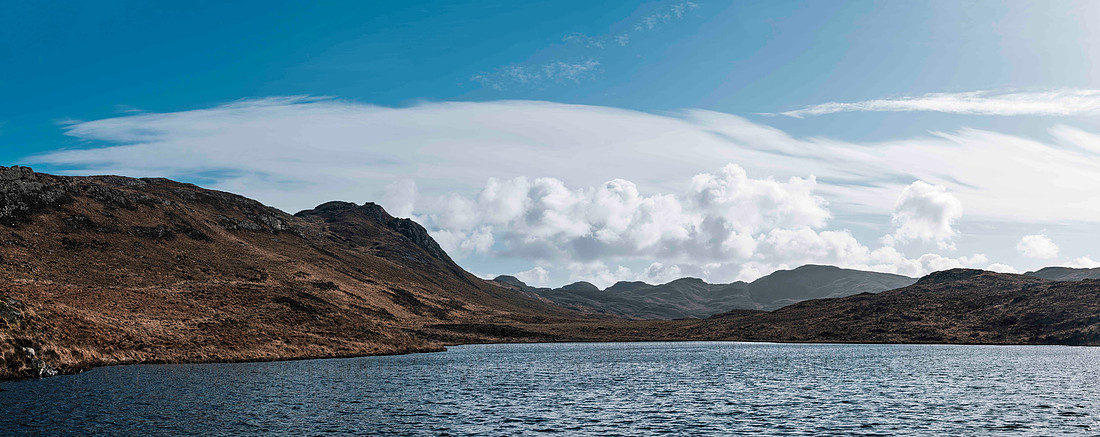
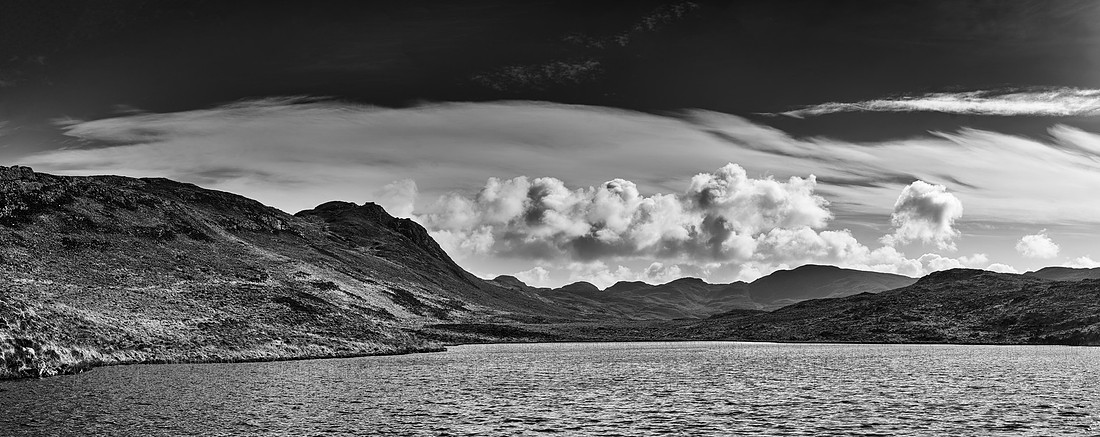
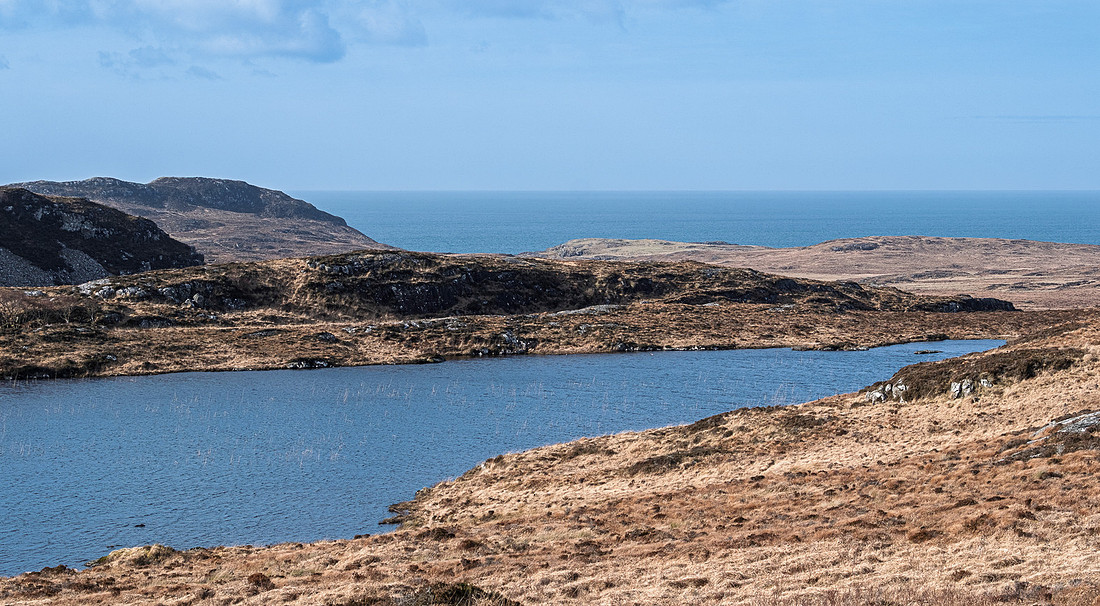
I am seated high above Loch Caorach, the Loch na Caorach, the loch of sheep, where the land opens itself to the far edge of the mainland and the long weather of the Atlantic. From this elevation near Griogadal, Grigadale, the land loosens its grip on enclosure. Here, the peninsula narrows not just in width but in intention, tapering towards Rubha Àird nam Murchan, the headland of the great seas, and beyond that to Corrachadh Mòr, the furthest western reach of mainland Britain.
This is not a place of arrival. It is a place of holding.
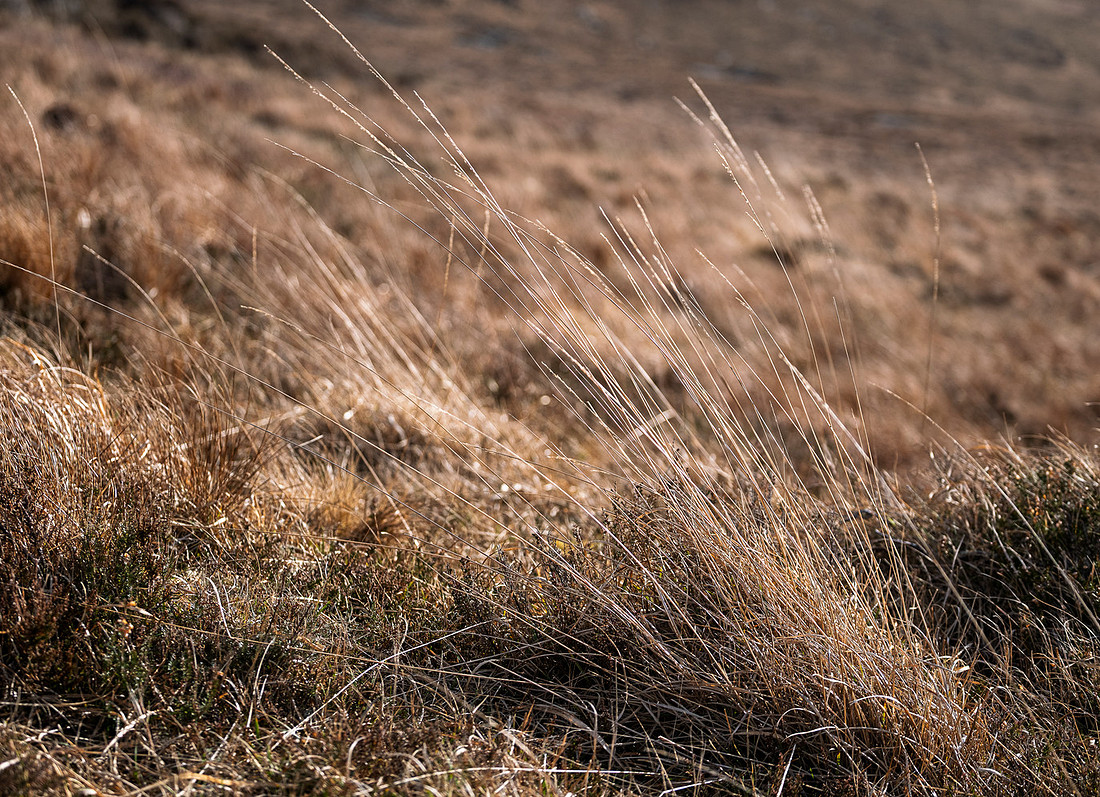
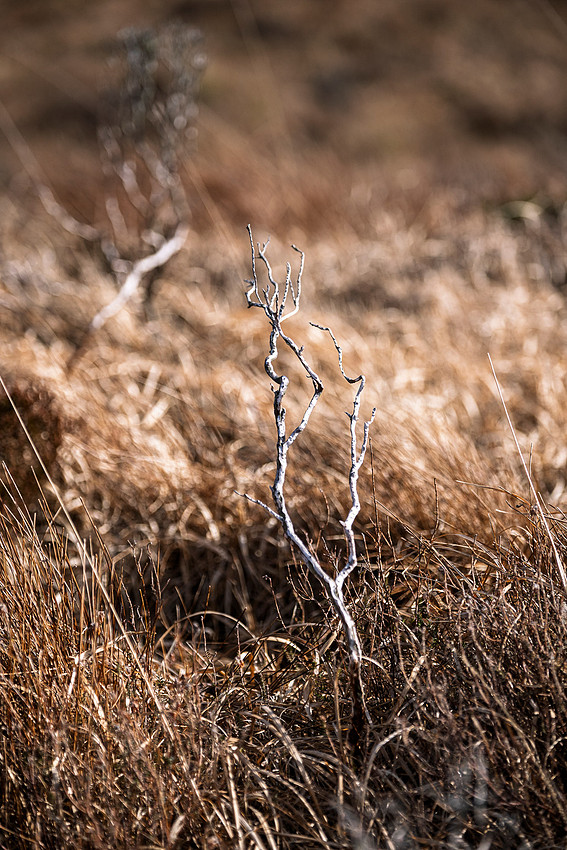
The wind comes first. It always does. Not as a single force but as a layered presence: the high wind that carries the eagles, the lower wind that combs the grasses, and the intimate wind that moves across the skin and settles the breath. It arrives unannounced, already knowing the shape of the land, already fluent in its contours. The grasses, bleached honey and peat-dark at the roots, lean and rise again, not resisting, not yielding, but participating.
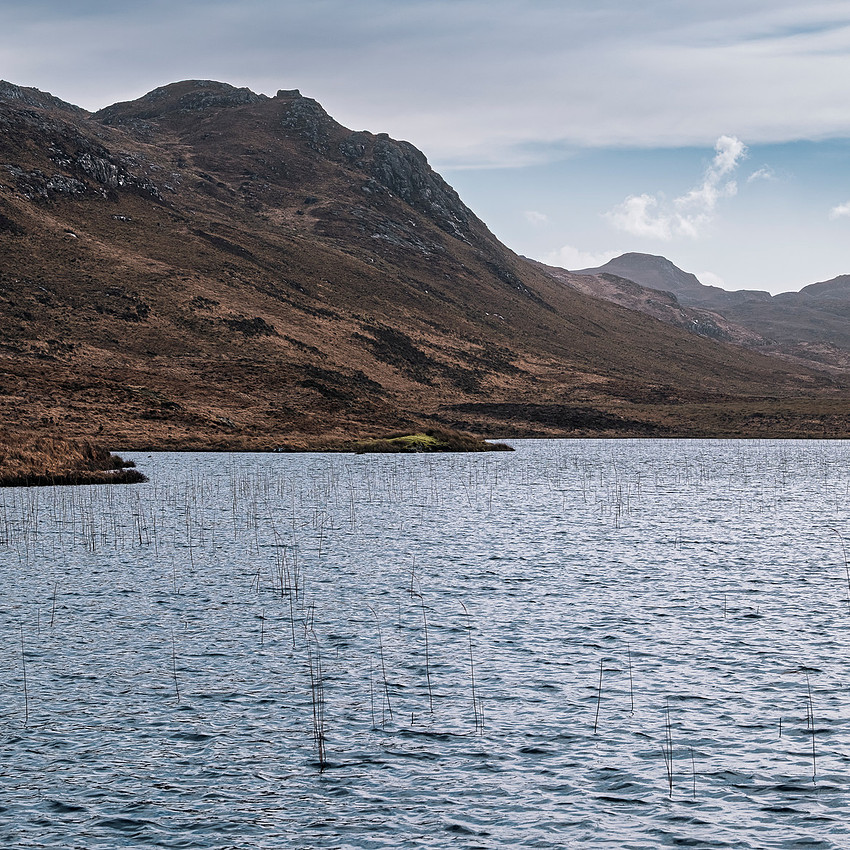
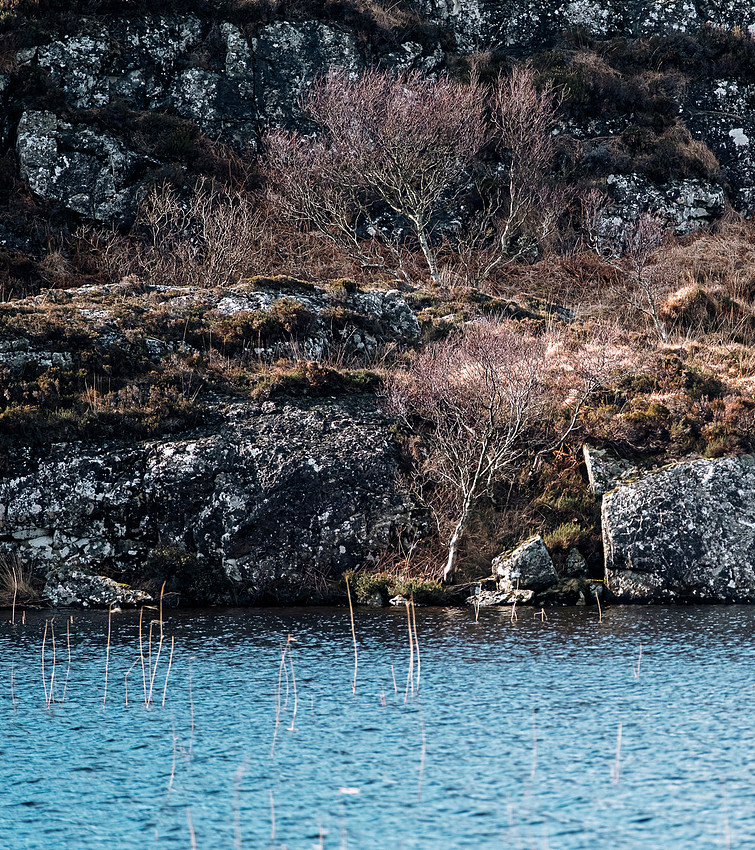
Below me, Loch Caorach gathers the sky with a quiet steadiness. Its surface is dark, peat‑stained, and patient, shaped by the slow work of rain, sheep, and centuries of runoff from the moor. It does not sparkle. It listens. Like so many of the inland lochs of Ardnamurchan, it holds its depth without display, reflecting not spectacle but presence.
This is a west‑facing stillness. A stillness that is not empty but full of agreement.

The Height of Listening
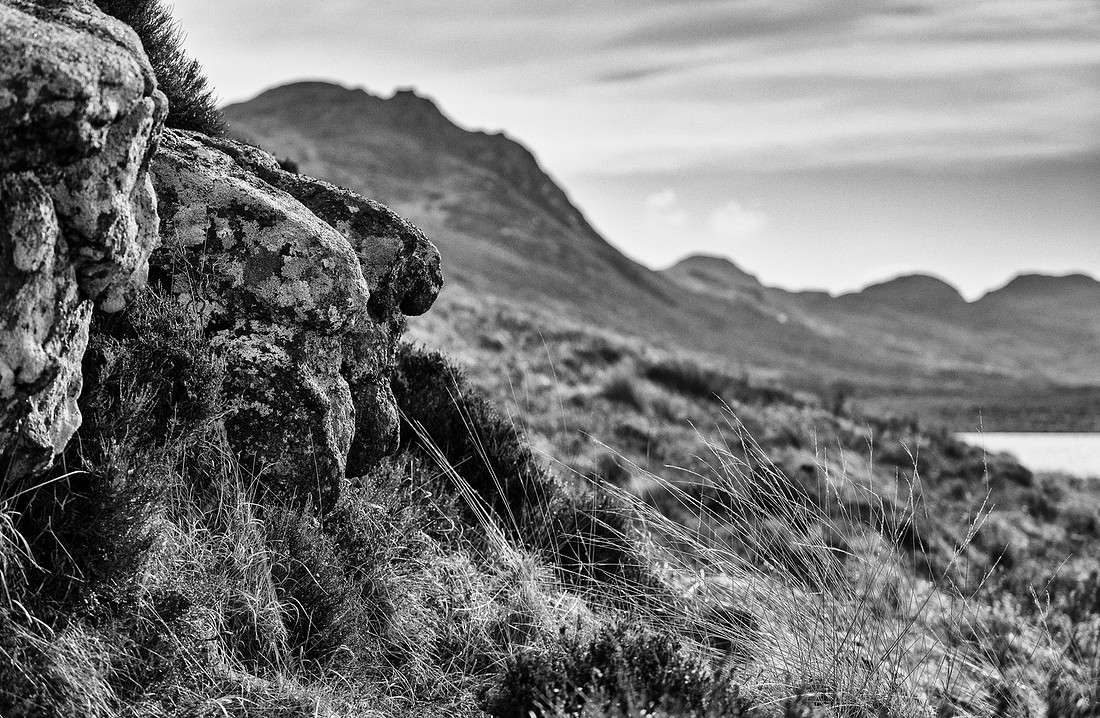
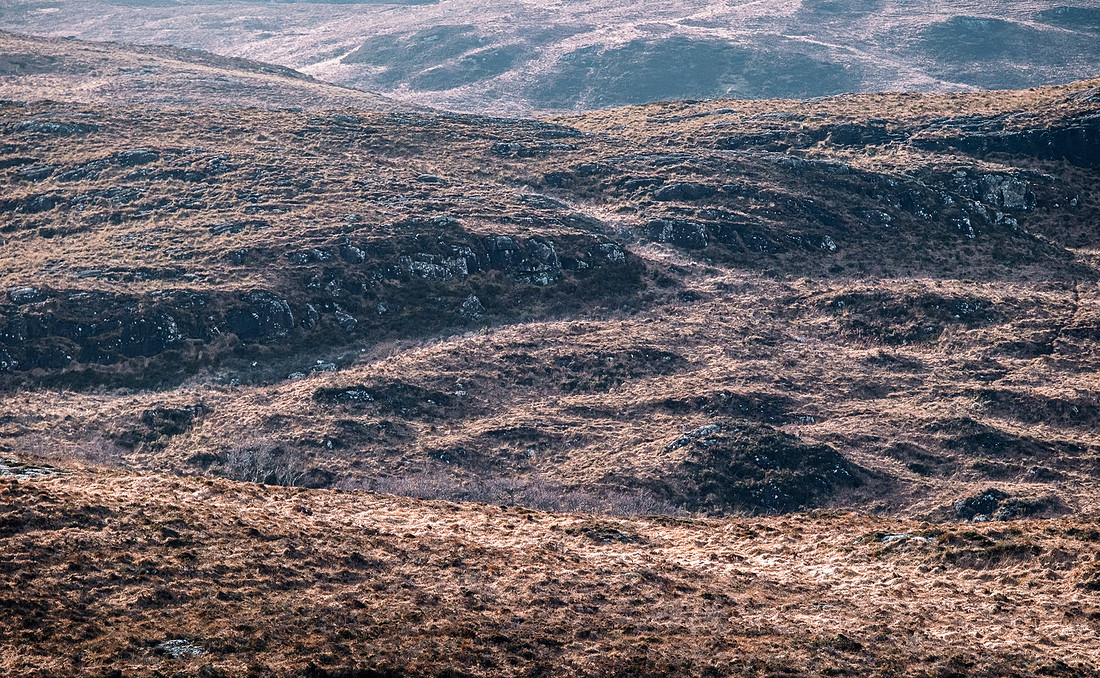
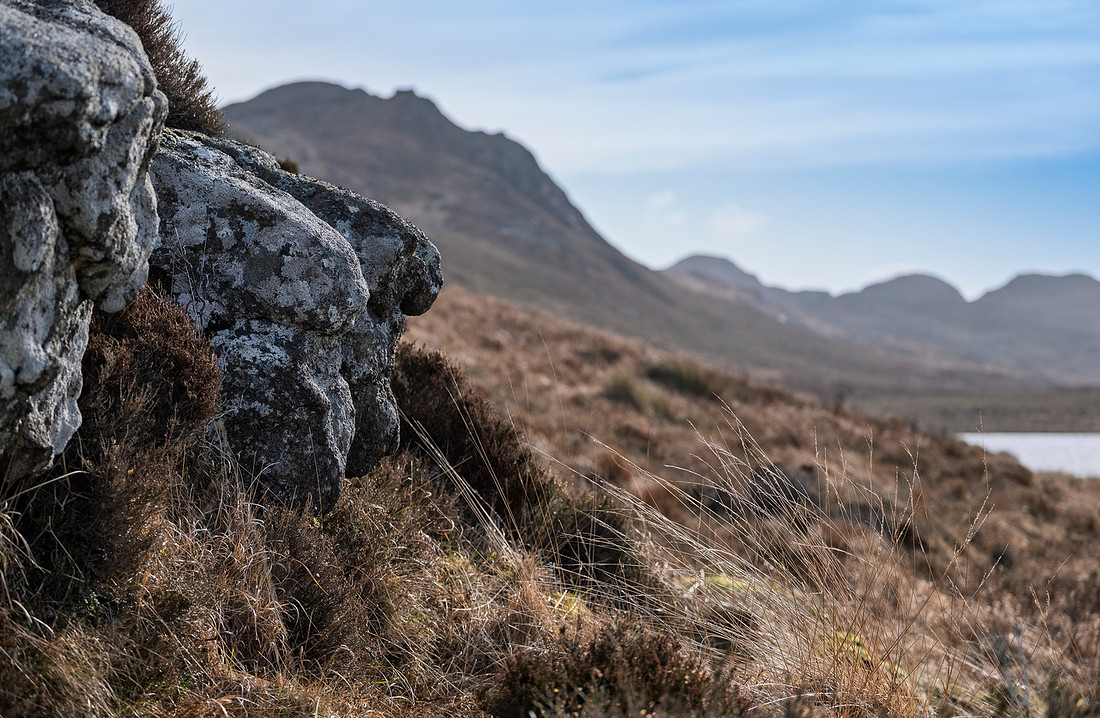
From this height, the land resolves itself into layers. The near ground is textured with stone and heather, with the blackened scars of old burn lines and the pale lichen that writes its own slow script across the rocks. Further out, the ground softens into undulation, moors and low ridges that lead the eye westward without urgency. And beyond that, the sea appears not as boundary but as continuation, a tonal shift rather than a break.
The Gaelic of this place understands this layeredness. Names here do not label; they describe relationships. Àird, a height, a promontory, does not merely indicate elevation, but exposure. Àird nam Murchan, the headland of the great seas, speaks not of land pushing outwards, but of land meeting what comes in.
To sit above Loch Caorach is to understand that Ardnamurchan is not oriented towards the interior. It faces the weather. It has always faced the weather.
Above me, an eagle moves across the sky, slow, assured, economical. Whether iolaire‑bhuidhe, the golden eagle, or iolaire‑mhara, the white‑tailed eagle, the distinction matters less than the presence. The Gaelic iolaire carries weight and reverence; these birds are not visitors here but long‑established residents of the air. They do not circle for show. They read the wind the way a crofter reads the sky, intimately, without drama.
A skua cuts across their path, urgent, declarative. Its cry is brief, sharp, and quickly absorbed by the open space. Nothing lingers here longer than it needs to.
Griogadal and the Long Edge
Behind me lies Griogadal, Grigadale, its name carrying the soft Norse undertones that run quietly through this part of the peninsula, a reminder that Ardnamurchan has always been a meeting place of languages, currents, and intentions. Norse and Gaelic coexist here not as conflict but as layering, much like the geology beneath my feet.
This ground is anciently volcanic. Beneath the grasses and lochs lies the ghost of fire: ring complexes, gabbro, eucrite, stone that once moved molten and now holds stillness with extraordinary patience. Ardnamurchan’s geology is internationally known, but here, sitting above Loch Caorach, it feels less like knowledge and more like temperament. The land has learned how to endure movement by becoming still.
That endurance expresses itself in the crofting townships, Portuairk, Achosnich, Sanna, small, wind‑shaped communities at the peninsula’s edge. Their names speak of ports, fields, sands. They are functional, grounded, unromantic in the best possible way. This is not landscape as spectacle. This is landscape as continuity.
The west does not promise. It receives.
Loch as Vessel
The loch below me is not dramatic. It does not announce itself with waterfalls or mirrored peaks. Instead, it gathers. Rain, light, shadow, birdcall, all are held briefly and then passed on. In this, Loch Caorach behaves as many Highland lochs do: as vessels rather than destinations.
In Gaelic understanding, water is rarely static. Even lochs participate in movement, through outflow, evaporation, reflection. To sit above this loch is to feel time stretch and thin. Minutes lose their edges. The act of watching becomes the act of being present.
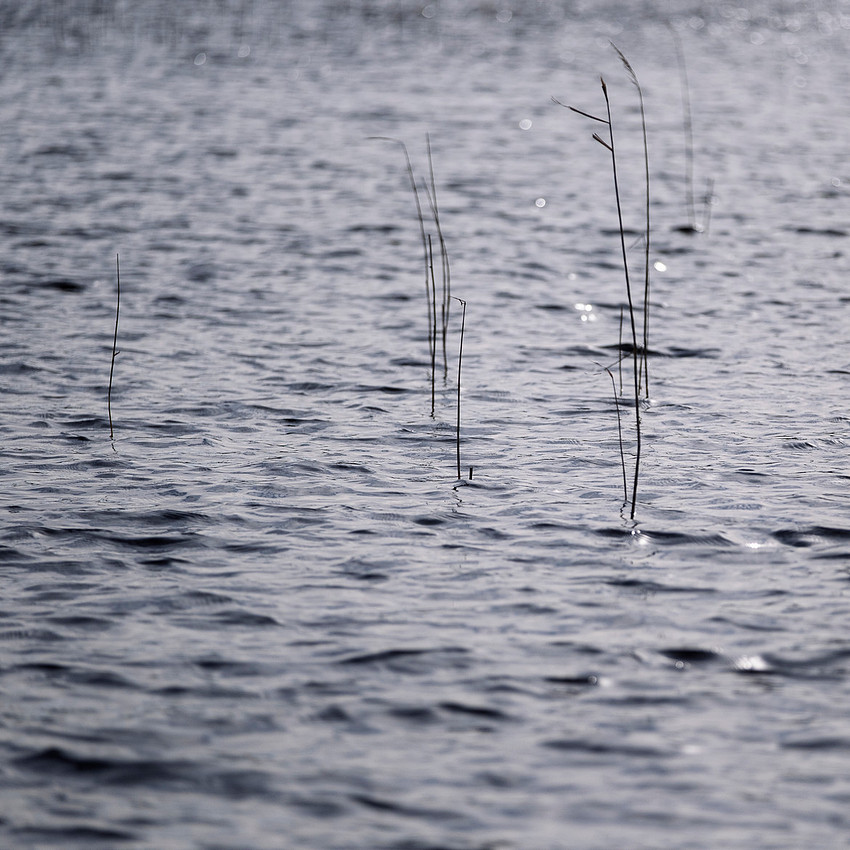
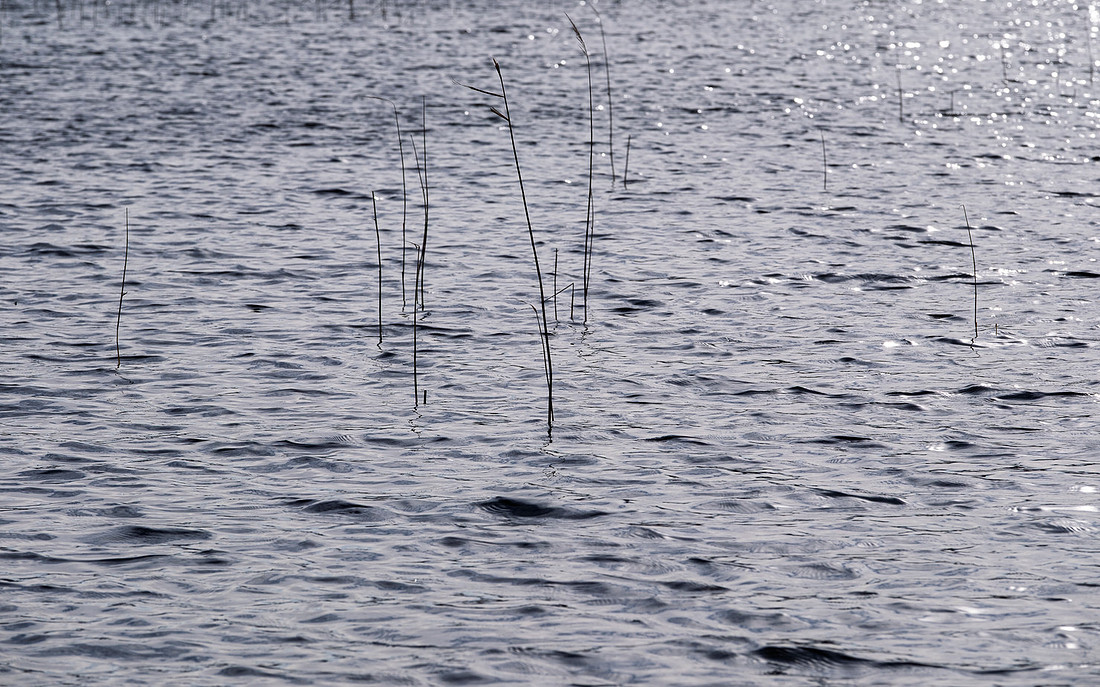
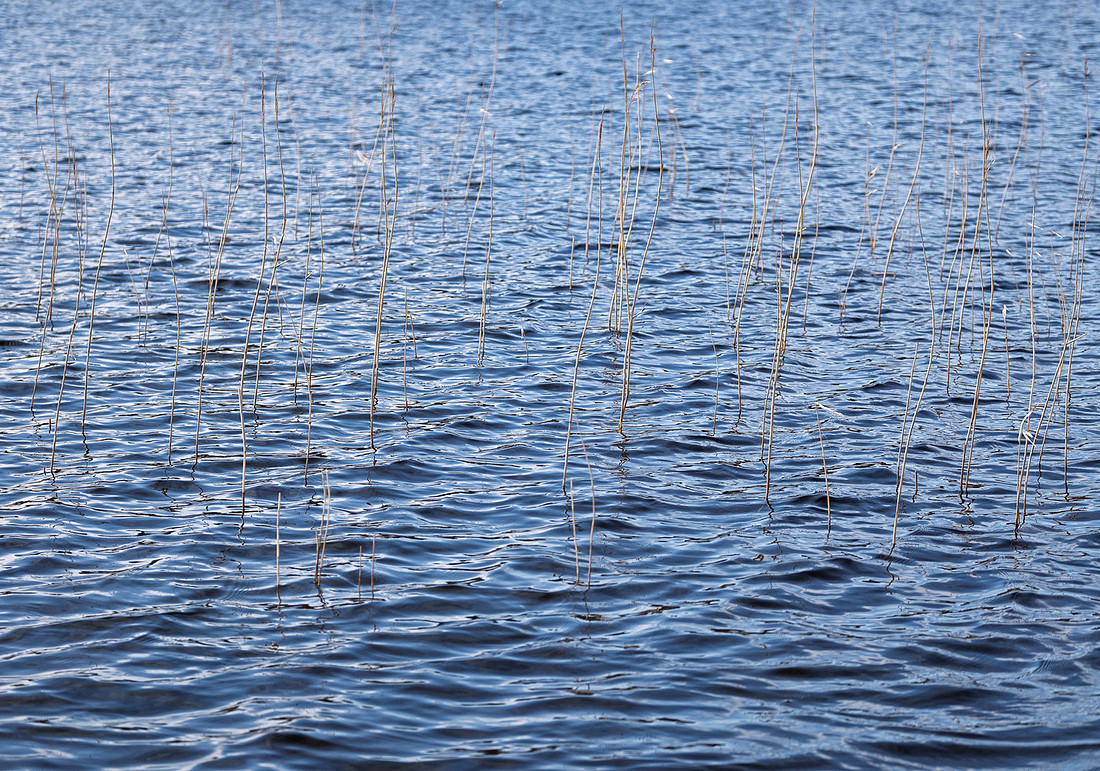
The reeds at the margins sway gently, tracing the direction of the wind with small, repeated gestures. They do not resist. They remember. Their movement is cumulative, not expressive, like the long memory of the land itself.
Facing the Great Seas
To face west from Ardnamurchan is to accept exposure. This peninsula does not shelter itself from the Atlantic; it opens. The weather arrives unbroken, carrying salt, rain, and light that has travelled vast distances before touching this ground.
The Shipping Forecast still names Ardnamurchan Point, marking it not as poetry but as necessity. This is a place of navigation, of orientation, of reckoning. Long before it was a destination, it was a reference point, a way of knowing where you were by knowing where you were not.
Standing, or sitting, above Loch Caorach, I feel that orientation shift inward. The horizon pulls attention outward, but the stillness pulls it back. The west becomes not an ending but a holding space, a pause between land and whatever lies beyond sight.

The Sound of Being Held
Sound here is spare and precise. Wind through grass. The distant cry of birds. The low, almost imperceptible movement of water at the loch’s edge. There is no constant noise, no baseline hum. Silence here is not absence; it is a field in which sound briefly appears and then recedes.
This is the soundscape that has shaped the peninsula’s people, its language, its rhythms. Gaelic is a language of weather, of gradients, of attention. It does not rush. It names carefully. In places like Ardnamurchan, language and land remain in conversation.
Sitting here, I am not observing from outside. I am participating by being still. My presence adds weight to the ground, warmth to the rock, breath to the air. And then, gradually, even that fades into the larger holding of the place.
What the West Teaches
The west teaches patience. Not through instruction, but through scale. Through the long arcs of bird flight. Through the slow accumulation of peat. Through the way light moves across the moor without ever settling in one place for long.
It teaches that resilience does not require hardness. The grasses bend and rise again. The loch absorbs and releases. The land holds without clinging.
This is not a landscape that asks to be conquered, captured, or even fully understood. It asks only for attention.
Held
As I sit above Loch Caorach, high on this west‑facing ground, I realise that what I feel is not exposure but containment. The land does not push me outward; it gathers me in. The wind does not unsettle; it aligns. The silence does not empty; it steadies.
This is what it means to be held by the west, not protected from weather or time, but placed within their long, patient rhythms.
Here, at the edge of the mainland, the land does not end. It rests. And for a while, so do I.
A Closing Word of Thanks
Before this piece comes to rest, I want to acknowledge something that sits quietly beneath it. Held by the West was written not only in conversation with land, weather, and distance, but also in the presence of people whose care, attentiveness, and calm insistence quite literally altered the course of events.
My deepest thanks go to Matt, my very good friend and co‑lead of the Ardnamurchan Creative Retreat. Throughout that final stretch of the workshop, his steadiness and support were unwavering, both in holding the space for our guests and, quietly, in holding me to account for my own health and wellbeing. To share this work and these places with someone so thoughtful and grounded is a gift I do not take lightly.
I am equally and profoundly grateful to Dave, Verina, and Andrew, our guests, whose generosity of spirit extended far beyond the creative work we had come together to explore. At the point when my own instinct, sense of duty, and desire to simply carry on would have kept me going, it was their concern, clarity, and encouragement that helped me pause and choose otherwise. That moment mattered more than any finished photograph or resolved piece of writing or a final group walk to nearby Kilmory.
In retrospect, the gravity of the situation is impossible to ignore. Their understanding, and their gentle insistence that getting to hospital mattered more than continuity or completion, played a pivotal role in ensuring I received care when I did. For that, I remain deeply grateful.
This series often speaks of listening: to land, to weather, to silence. In this instance, it was people who listened first, who noticed, who acted, and who reminded me that attention, when offered with kindness, can be lifesaving.
I close this piece with thanks held as carefully as the landscape itself holds those who move through it.
Bibliography
Gribble, C.D. & Durrance, E.M. (1996). Ardnamurchan: A Guide to Geological Excursions. Edinburgh: Edinburgh Geological Society.
Henderson, A. (1915). ‘Ardnamurchan Place‑Names’. The Celtic Review, 10, pp. 149–168.
MacDonald, K. (trans.). Glossary of Ardnamurchan Place Names. Scottish Geology Trust. Available at: https://geoguide.scottishgeologytrust.org (Accessed: 3 March 2026).
Ordnance Survey (2019). The Gaelic Origins of Place Names in Britain. Available at: https://getoutside.ordnancesurvey.co.uk (Accessed: 3 March 2026).
Scottish Wildlife Trust (2024). Golden Eagle Species Profile. Available at: https://scottishwildlifetrust.org.uk (Accessed: 3 March 2026).
Wikipedia (2026). Ardnamurchan. Available at: https://en.wikipedia.org/wiki/Ardnamurchan (Accessed: 3 March 2026).
Wikipedia (2026). Grigadale. Available at: https://en.wikipedia.org/wiki/Grigadale (Accessed: 3 March 2026).
Undiscovered Scotland (2025). Ardnamurchan Point. Available at: https://www.undiscoveredscotland.co.uk (Accessed: 3 March 2026).