Spiorad aird nam Murchan Pt 31 Creativity V Flow

Spiorad aird nam Murchan
Part 31 - Creativity V: Flow (Sruth / Sruthadh)

There is no beginning here, only a gentle continuation.
Before the step is taken, before the eye settles, the place is already moving, held within a quiet sruth that threads its way through grass, across sand, along the faint lines that seem to guide without directing. Sanna Bheag does not present itself as a scene to be entered; it is already in conversation with itself, already shaping and reshaping in ways that require nothing of the one who arrives, other than a willingness to remain.
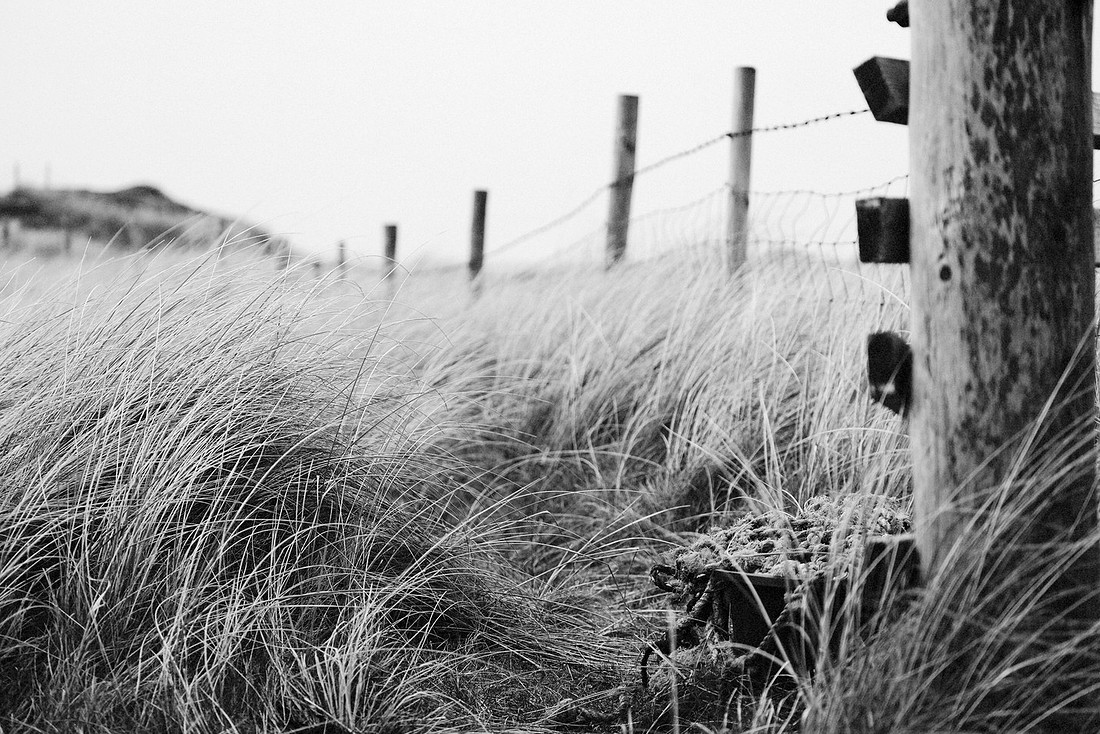
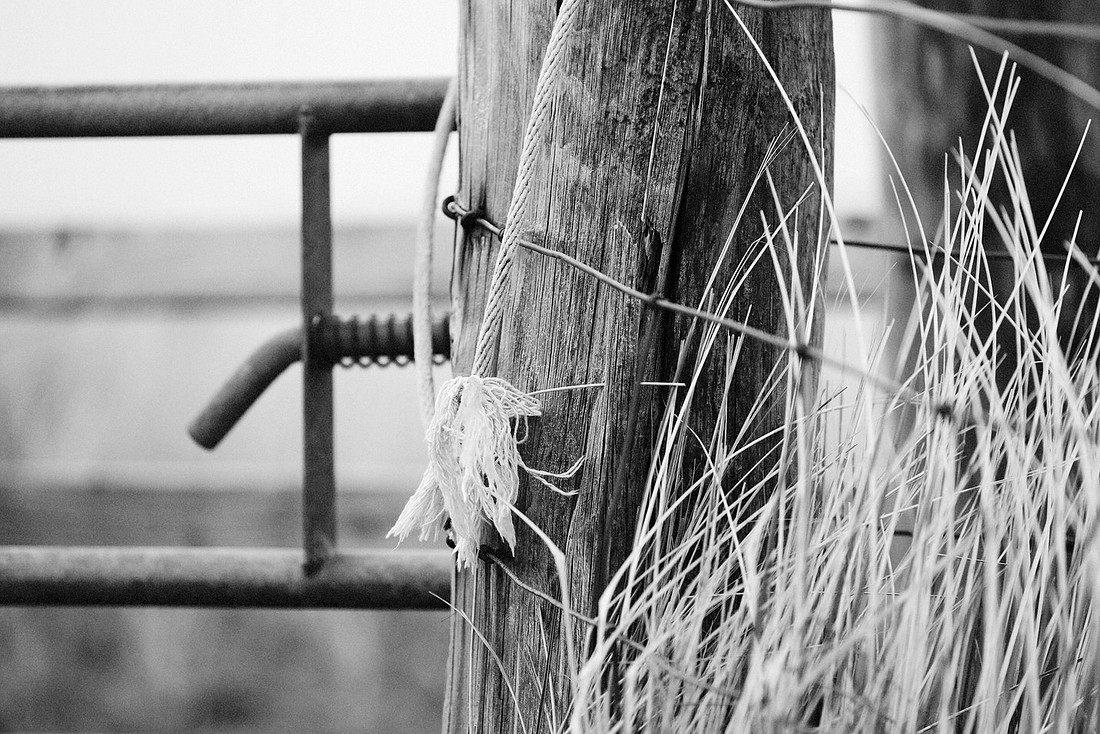
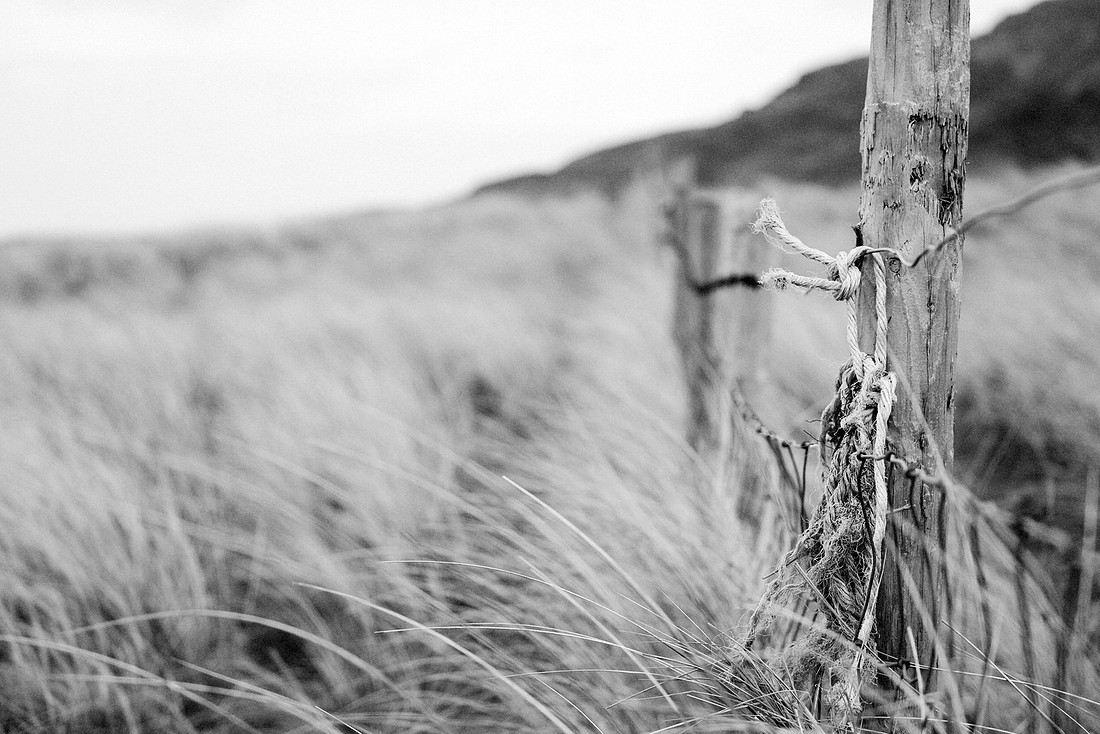
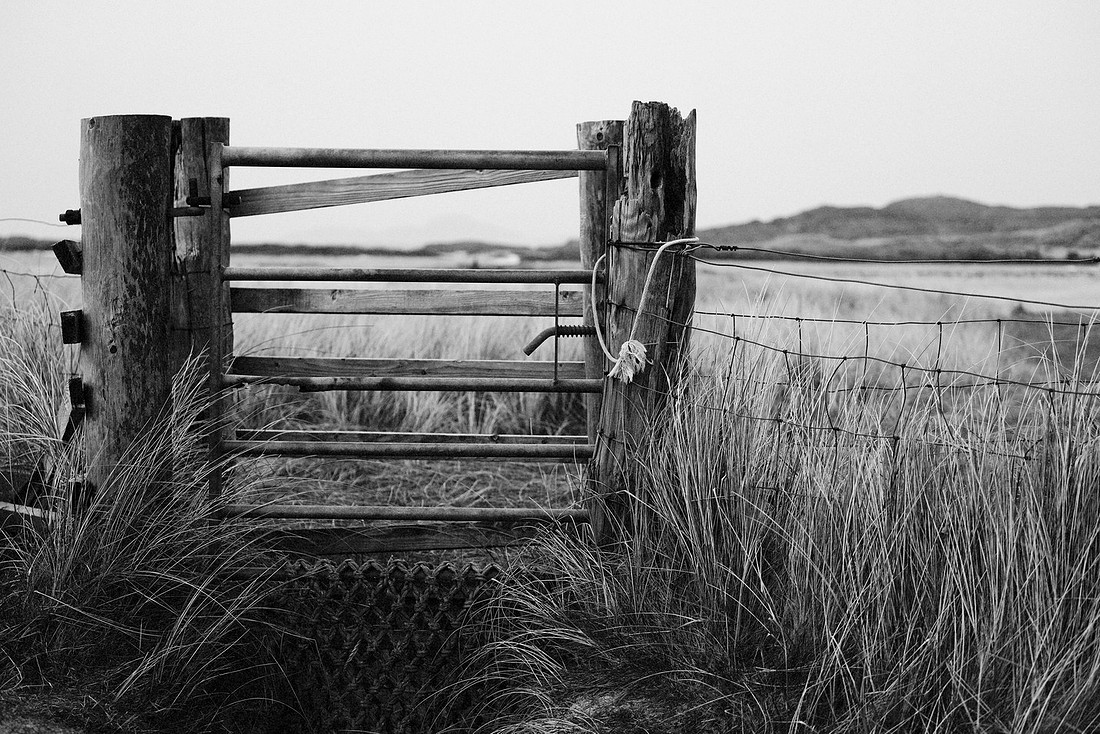
The first thing I notice is not the sea, nor the distant outline of land, but a subtle articulation across the slope before me, a gathering of posts that trace a line which is neither straight nor fixed, but gently responsive to the ground it inhabits. Each one leans slightly, as though acknowledging the long passage of wind and weather, not resisting its force, but adjusting to it, over time, until standing and yielding become indistinguishable from one another.
The wire carried between them hums faintly in the shifting air, not taut, not slack, but held within a quiet balance, its presence less a division than a continuation of the line itself. There is nothing abrupt here, no hard delineation; the fence does not insist, it participates, joining the wider sruthadh that moves through everything, a small structure absorbed into the greater movement of the place.
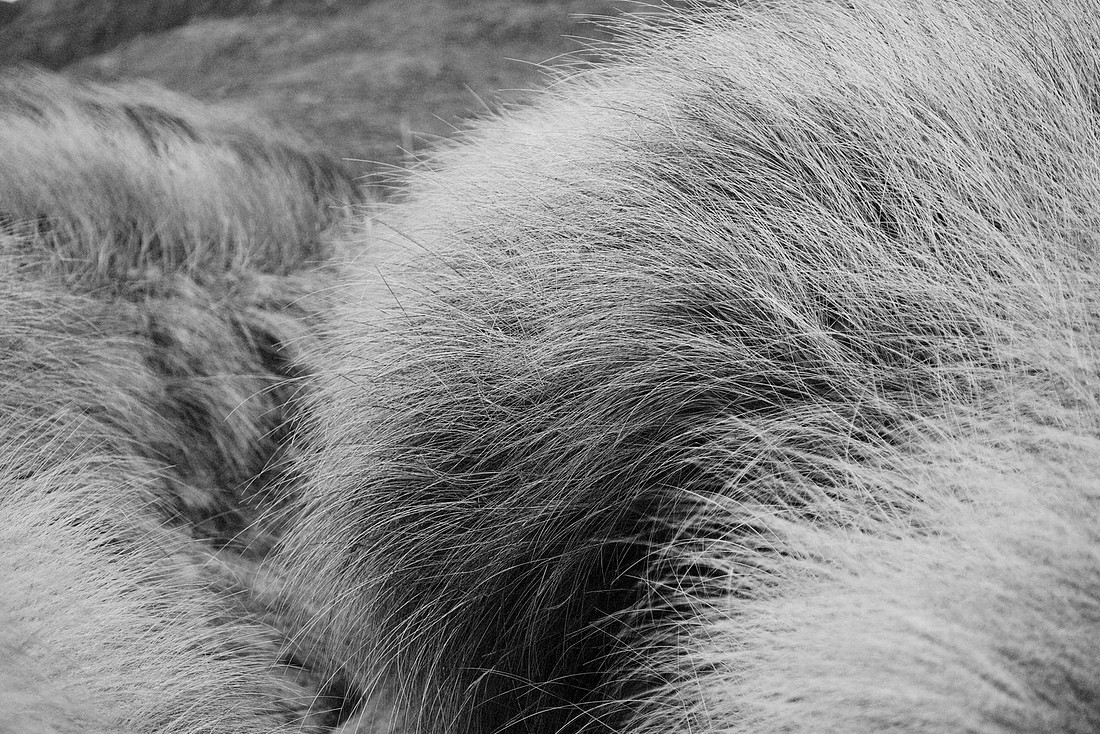
The grasses take up that movement and extend it.
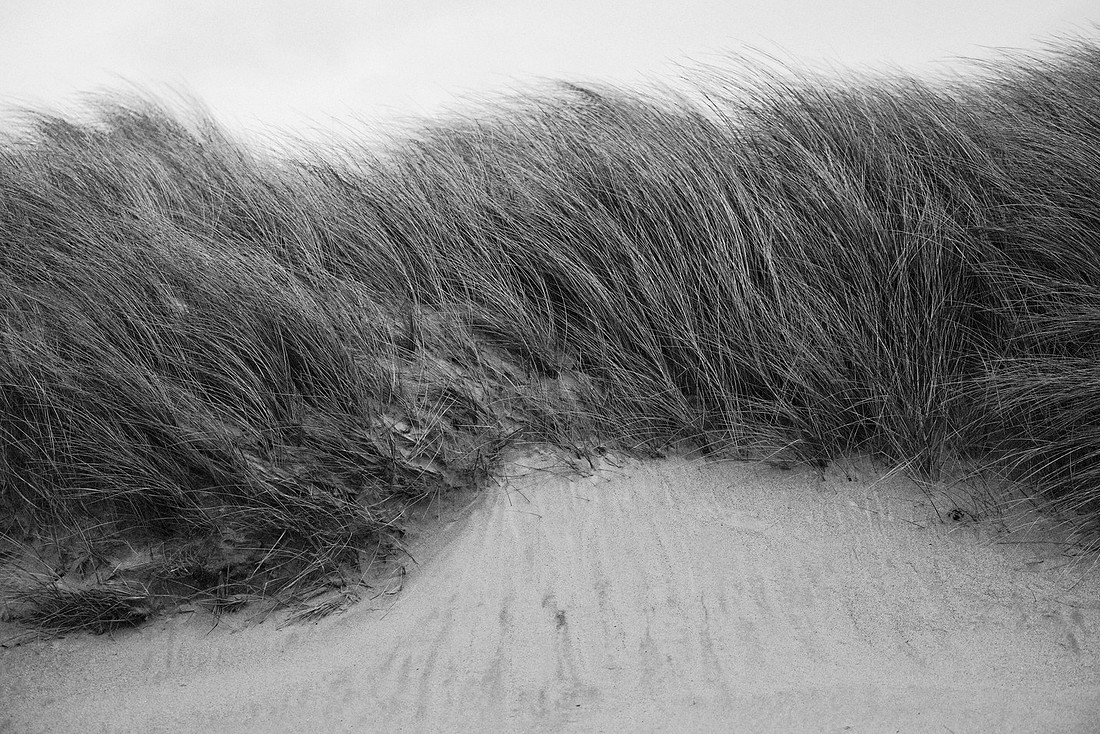
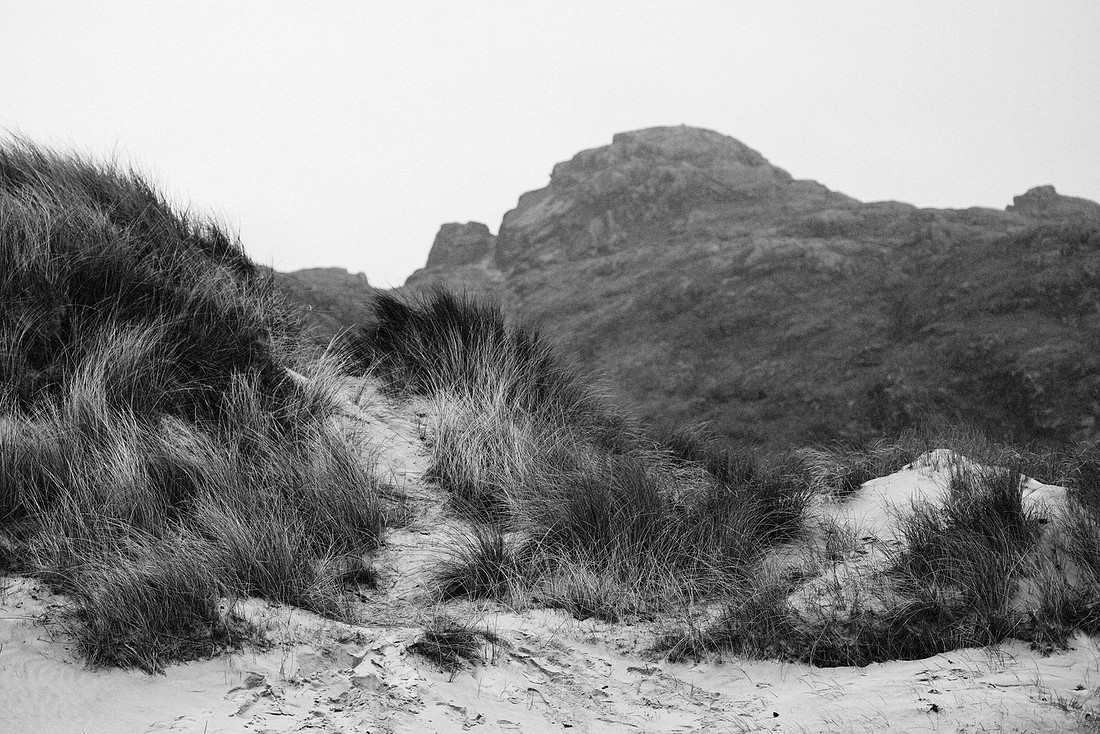
They bend in long, subtle waves, each blade carrying its own response, its own variation, yet never breaking from the shared rhythm that holds them together. Light moves across their surface in slow transitions, catching momentarily on the edges before dissolving into softer tones, the whole field shifting in a way that resists stillness without ever calling attention to its motion.
Nothing asks to be fixed.
The eye moves, then is released, drawn along the slight undulation of posts, then outward into the rise of dune, then beyond again, into spaces that are only partially revealed. There is no single point of focus to rest upon; every form suggests another, every line leads quietly away from itself, as though what matters lies not in any isolated detail, but in the relationships that hold them together.
What appears at first as structure begins to soften.
The fence line does not divide the land; it sketches across it, a gesture rather than a boundary, guiding without containing. The posts mark a presence, but not a limit; the wire gathers the eye, but does not hold it. Even the ground beneath my feet offers no clear path, only a faint inclination, a suggestion of where others may have walked, now partially absorbed back into the grasses and sand.
It is through this softening that the idea of flow begins to shift from concept into experience.
Not as movement that passes from one point to another, but as a condition in which everything is already engaged, already part of a wider coherence. The sruth here is not directional; it does not carry forward so much as it gathers, folds, and continues, each element entering into it without needing to change its nature.
Lines begin to reveal themselves as something more than markers.
They are expressions of relationship, of time held lightly across the surface of the land. The curve of sand left by a receding tide, the arc of grasses pressed low before rising again, the slight bow in timber that has accommodated years of weather, all of these speak a language that is not written, yet becomes legible through patience.
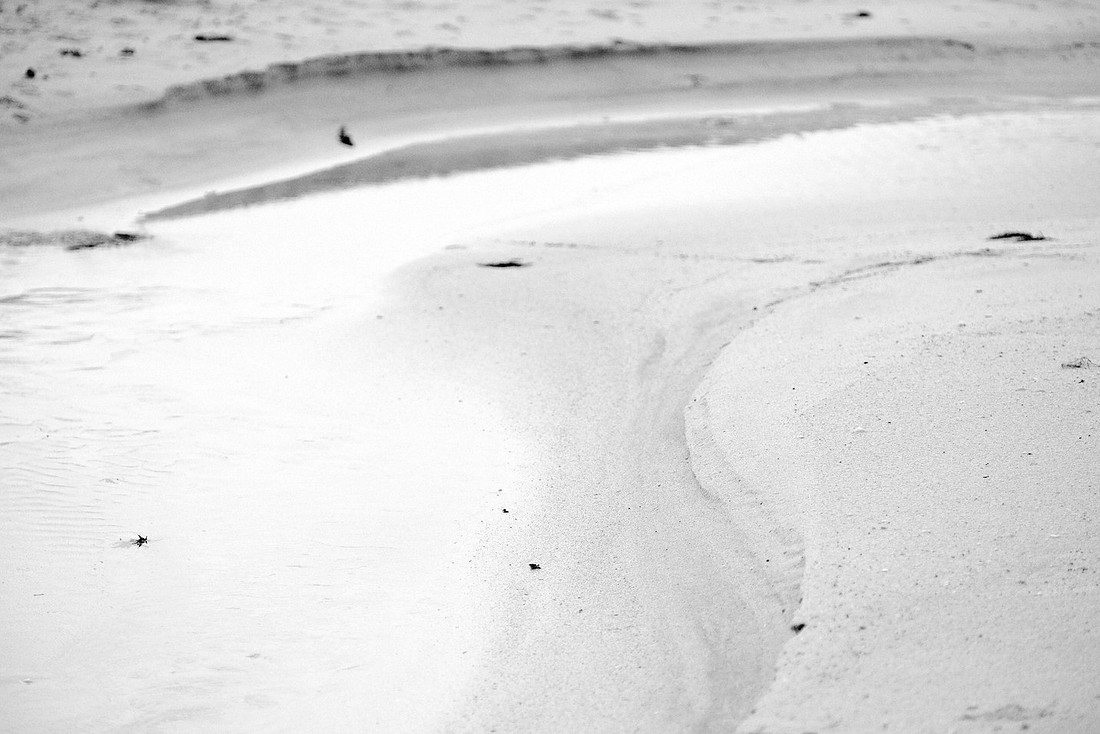
To remain here is to begin learning that language.
Not in any structured way, but through repetition, through returning the gaze again and again until patterns emerge that are not imposed, but recognised. The line is never simply itself; it carries within it the memory of its making, the influence of what surrounds it, the quiet pressure of forces that continue to shape it even as it appears still.
There is no hierarchy within this.
The smallest shift holds as much weight as the more obvious form, and often more, the trace of water across sand revealing as much about the place as the larger structures that endure. These faint gestures, these lines that appear and dissolve, hold the essence of sruthadh, a continual becoming that resists being fixed into a single moment.
I find my gaze following these curves without intention.
It moves gently along the fence, then into the grasses, then outward again into the low, rising forms beyond, tracing arcs that never fully close, never resolve into a final shape. There is a quiet trust in this movement, a sense that nothing needs to be concluded, that the act of following is enough in itself.
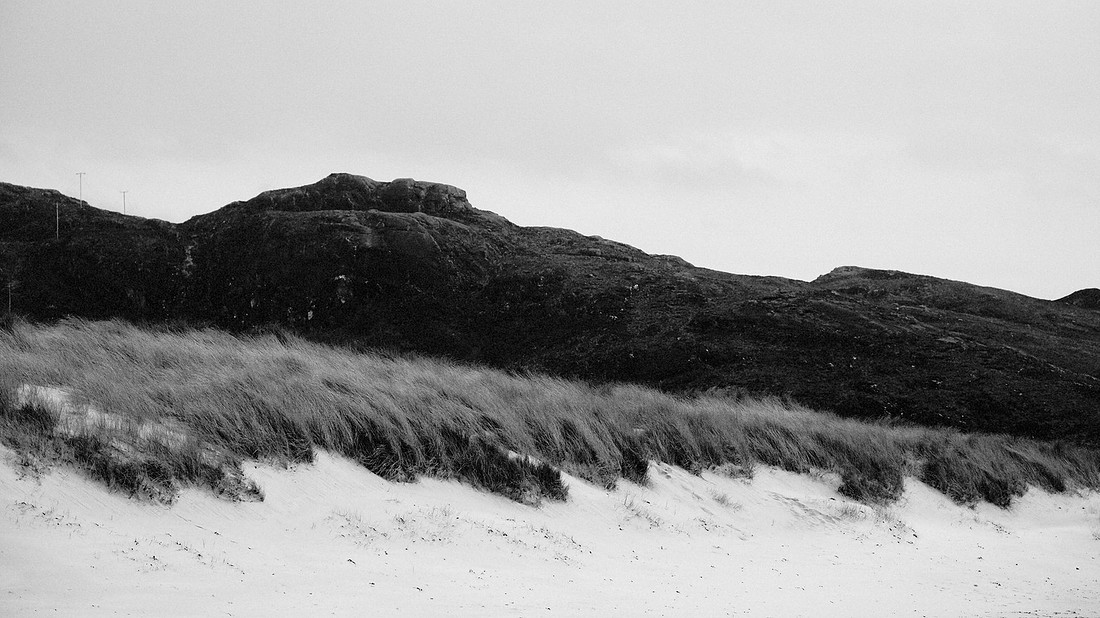
Even the horizon remains withheld.
It is suggested, approached, then shifts again, never fully revealing its edge, as though to remind me that completion is not the purpose here. What matters exists within the ongoing, within the space where perception meets movement without needing to arrive at certainty.
The more I stand within it, the more the pressure to define begins to dissolve.
Seeing becomes less about identifying and more about attending, less about holding and more about allowing. The line of the fence no longer asks to be understood as an object; it simply continues, carrying with it the quiet presence of time, of weather, of those who placed it here and left it to become part of everything else.
The sruth continues through it, and through everything.
It is present in the smallest movement of grass, in the way light shifts and withdraws, in the barely perceptible settling of sand after the passing of water. It does not ask to be noticed, yet it becomes known through attention, through the simple act of remaining long enough for its presence to be felt rather than sought.
And in that remaining, something begins to ease.
The need to make sense of the place gives way to a different kind of engagement, one that does not stand outside or apart, but enters quietly into what is already underway. The lines that cross the land no longer define it; they reveal its continuity, its quiet insistence that nothing stands alone, that everything exists in relation, within a movement that does not begin or end.
The fence leans into that movement.
The grasses carry it onward.
And the land, in all its subtle articulations, continues to speak in a language shaped not by certainty, but by flow.
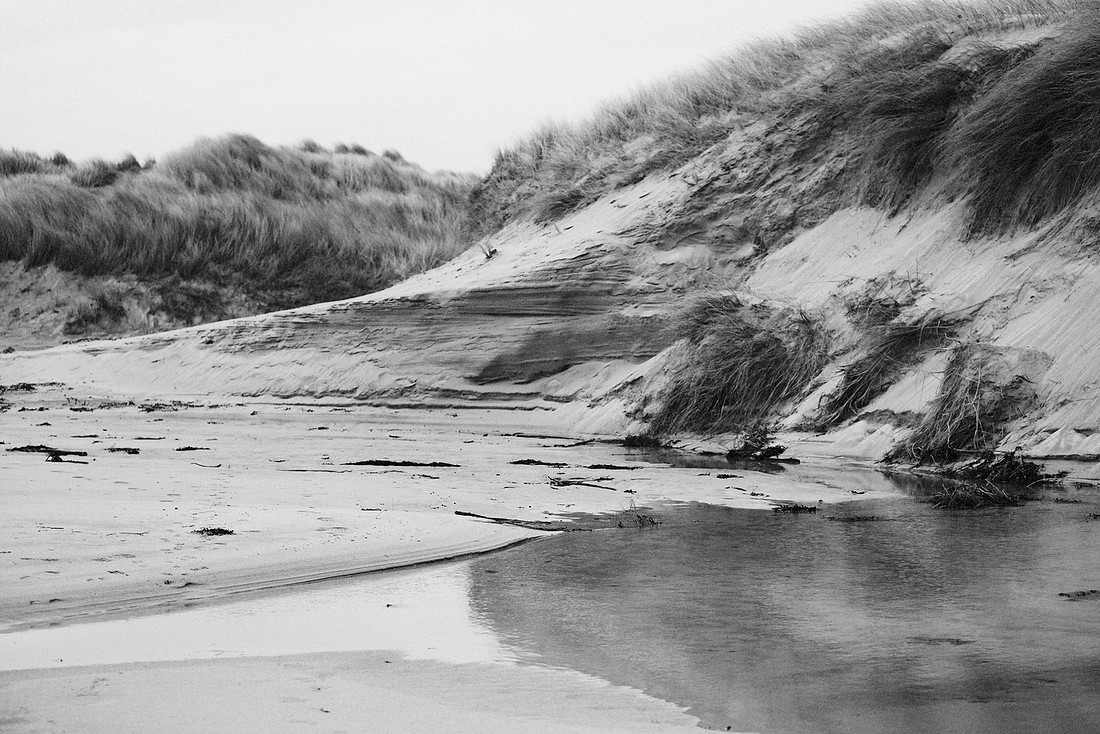
The movement continues, though something within it begins to deepen.
Walking no longer feels like a progression across ground, but a gradual entering into a rhythm that has its own quiet persistence, a cadence that does not alter for the presence of the walker, yet slowly absorbs that presence into itself. Each step finds its place without instruction, shaped not by decision, but by the subtle incline of land, by the yielding of sand, by the slight resistance where grass gathers more densely. There is no need to choose a direction; the sruth carries the body as surely as it carries the movement of air, of light, of the faint lines that appear and dissolve beneath the eye.
In this, attention begins to shift again.
What first presented itself as a field of relationships now draws the gaze inward as much as outward, asking not what is seen, but how it is seen. The eye moves more slowly, not in hesitation, but in recognition that there is no singular moment to arrive at, no fixed composition waiting to be discovered. Instead, there are only small convergences, subtle alignments where form, movement, and light enter briefly into coherence, then pass back into the wider unfolding.
The fence line that had guided the initial movement is no longer followed so much as inhabited.
Its rhythm has been absorbed into the act of looking, into the way the gaze lifts and falls, traces and releases. The spaces between posts begin to carry as much weight as the posts themselves, each interval holding a quiet measure, a pacing that the body begins to reflect without effort. Even the light participates in this spacing, moving between form and absence, settling briefly, then slipping onward without pause.
Breath aligns without instruction.
It lengthens, softens, falls into a pattern that feels less personal and more shared, as though it has entered the same field of sruthadh that carries everything here. The body is no longer distinct in its movement; it responds, adjusts, yields in ways that mirror the land itself, not through intention, but through participation. The ground is no longer something crossed, but something read through sensation, through the small confirmations of balance, pressure, and release.
It is here that the sense of separation begins quietly to dissolve.
Not in any dramatic realisation, but through a gradual easing of the distinction between observer and observed. The act of looking is no longer external to the place, nor does it seek to stand apart; it becomes another movement within the field, another subtle articulation within the ongoing flow. What is seen is inseparable from the way it is encountered, and the way it is encountered is shaped entirely by this shared rhythm.
Even stillness becomes a form of movement.
To pause here is not to step outside the flow, but to feel it more deeply, to notice how even in apparent quiet there is a constant shifting, a continual adjusting of grass, of light, of the unseen pressures that shape the surface of the land. The eye rests, but it does not fix; it remains open, allowing the place to continue its own articulation.
Within that openness, another awareness begins to gather.
It does not present itself as memory, nor as something imagined, but as a quiet continuity, a sense that this way of attending does not belong to this moment alone. There is a familiarity in the act of pausing, in the inclination to remain with what unfolds rather than to move past it, a subtle resonance that suggests the presence of other gazes, other attentions that have known this same ground.
She walked here.
Not in any way that leaves a trace that can be followed, no mark to be read in sand or grass, but within the act of seeing itself, within the quiet discipline of remaining present long enough for the place to reveal its subtler movements. The awareness is not of a figure, not of a person moving through the landscape, but of a shared orientation, a way of being with the land that feels both distant and immediately close.
MEM Donaldson does not need to be sought.
Her presence is not something separate that must be found, but something already folded into the place, held within the same sruth that carries the grasses, the lines, the slow articulation of form. To recognise this is not to step into her path, but to acknowledge that the conditions of seeing persist, that the landscape continues to offer itself in the same quiet way to those who are willing to remain.
The act of photography begins to shift within this recognition.
It no longer centres itself as the purpose of being here, nor as the means through which the place is validated. Instead, it enters the flow alongside everything else, responsive rather than directive, a natural extension of attention when that attention gathers into form. The camera is raised, but without urgency, without the pressure to capture or define.
What emerges are not images imposed upon the land, but fragments of alignment.
Moments where the leaning of a post finds its echo in the curve of grass beyond it, where the faint line of wire draws the eye toward a horizon that is only partially revealed, where light settles briefly into a form before moving on. These are not decisive instants; they are quieter than that, requiring a willingness to remain without expectation, to trust that what reveals itself will do so without being forced.
It is possible that she worked in this same way.
Not in the specifics of what was seen, for the land has shifted countless times since her presence here, but in the underlying approach, the patient attentiveness that allows the place to articulate itself through the act of looking. Her images, when considered in this light, are not taken from the land, but arise from within it, expressions of a shared moment of recognition that continues beyond their making.
There is no need to claim that connection.
It is enough to recognise that such a way of seeing exists, that it has existed here before, and continues now without needing to be named. The desire to follow dissolves into a quieter understanding, that to be present in this way is to participate in something that is already ongoing, already complete in itself.
The sruth carries this continuity without effort.
It holds past and present not as separate conditions, but as overlapping presences, each informing the other without standing apart. The grasses move now, as they have always moved; the lines form and reform; the light gathers and withdraws. Within this, the act of seeing becomes less about the moment in which it occurs, and more about the way in which it continues.
I find that I am no longer searching for anything.
Not for an image, nor for a trace of what has been, nor for a resolution that might bring clarity. Instead, there is only a quiet participation, a willingness to remain within the movement, to allow the place, and the faint echoes of those who have stood here before, to shape the way of looking from within.
And in that, there is a stillness that is not still.
A steadiness that exists within the flow itself, held not by stopping the movement, but by entering it fully, allowing it to carry both the act of seeing and the quiet presence of what has been, forward together, without the need to separate them.
The quiet companionship within the act of looking settles more fully now, not as something newly discovered, but as something that has been present all along, only just becoming perceptible as the need to define begins to loosen. The gaze no longer moves outward alone; it begins to recognise itself as part of the movement it follows, shaped by the same subtle forces that draw the grasses into their long, soft arcs, that lean the posts into their held balance with wind and time.
The camera rests lightly in the hand, no longer anticipating, no longer seeking.
It is not absent, but it has relinquished its insistence, its need to direct attention toward an outcome. When it is raised, it does so within the same rhythm that carries everything here, responsive rather than assertive, entering the sruth without interrupting it. The act of framing becomes less an act of selecting and more an act of recognising, a moment where the movement of land, light, and perception briefly gathers into a form that feels already complete in its incompleteness.
This is where the creative process shifts most distinctly.
Flow reveals itself not as something that sits beyond effort as a reward, but as something that emerges through the quiet dissolution of effort itself, through the gradual alignment of attention with what is already unfolding. The distinctions that once held the process in sequence, looking, thinking, composing, making, begin to soften at their edges, no longer discrete stages, but overlapping gestures within a continuous movement.
What is seen is already part of the making.
The leaning post is not separate from the moment of framing; the arc of grass is not something observed before it is translated into image; they are held together within a single act, inseparable in their emergence. The work does not begin at the moment of pressing the shutter; it begins long before, in the willingness to remain, and continues long after, carried forward in ways that are not immediately visible.
There is a quiet trust in this.
The need to resolve, to bring the work to a point of definition, falls away, replaced by an understanding that what is gathered is only ever part of something larger, part of an ongoing sruthadh that cannot be contained within a single frame. The image becomes a point of contact rather than a conclusion, a place where the viewer might enter the same movement, rather than a statement that seeks to fix it.
Within this, the presence of Donaldson deepens again, though it remains without form.
It is not a matter of lineage in any formal sense, nor of influence as something that can be traced or articulated. It is closer to a shared disposition, a way of allowing the land to speak through a sustained attentiveness, a refusal to impose clarity where the place itself holds ambiguity. The photographs she made carry this same quietness, this same attentiveness to the subtle relationships that define a place more than any singular feature.
To recognise this is not to follow her, but to stand alongside that way of seeing.
It is to understand that creativity, at this point, is no longer owned, no longer located solely within the individual, but is part of a wider continuity that extends through place and through time. The act of making becomes less about asserting a perspective and more about entering an existing conversation, one that does not need to be named in order to be known.
The sruth holds this without effort.
It carries the traces of previous gazes not as memory in a fixed sense, but as a continuity of attention, a way of being present that remains available within the place itself. To enter into it now is to participate in that continuity, to allow the work to arise from within it rather than to stand outside and attempt to interpret it.
This understanding continues as the land opens toward the shore.
The movement of grasses thins, giving way to sand that bears its own language of lines and curves, each one drawn and redrawn in the quiet persistence of water. The sound of the sea, already present as a low articulation beneath everything else, gathers in clarity, though it does not dominate; it becomes another layer within the sruth, another rhythm that the body begins to align with.
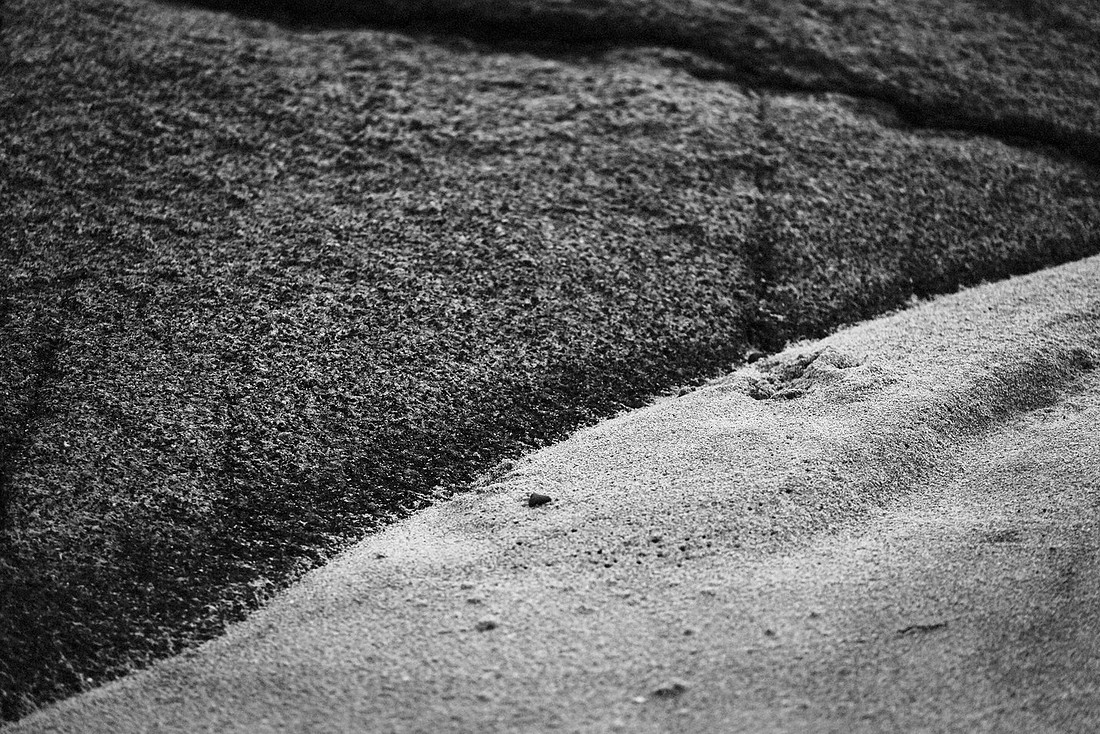
The edge, when it comes, is not an arrival.
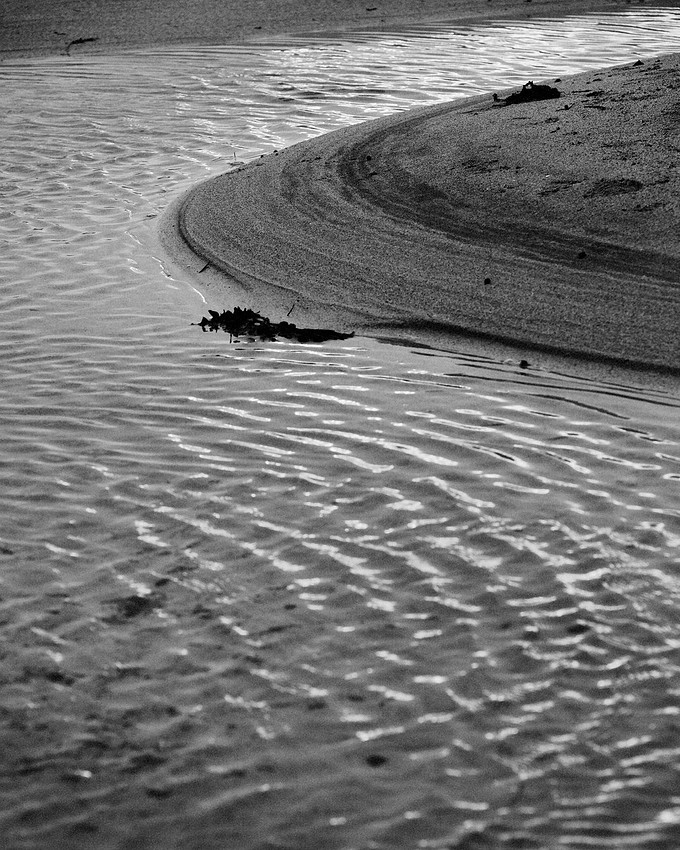
It is a continuation, a widening of the same movement into another form. Water meets sand not as a boundary, but as an exchange, a place where form is endlessly negotiated, where nothing holds long enough to become fixed, yet everything contributes to the shaping of what follows. The lines drawn here are finer, more transient, but they carry the same quiet coherence as those held in grass and timber.
The tide moves in slow articulations.
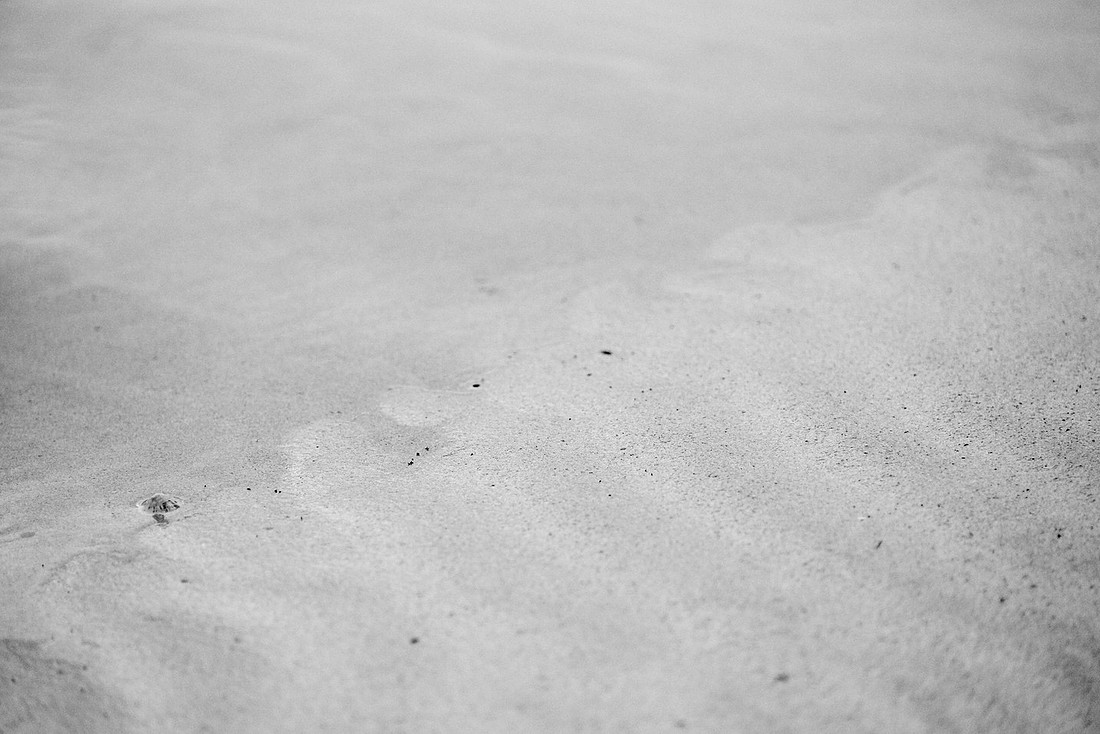
It advances, not as a force that asserts itself, but as a gathering, a thickening of presence that spreads across the sand, finding its way around small rises, slipping into shallow channels, pressing gently before withdrawing again. Each movement leaves a trace, a curve, a faint edge of darkened sand that holds the memory of that passing only briefly before it is reshaped.
I follow these lines without deciding to do so.
The eye traces the curve of water as it recedes, noting how it gathers itself into narrower forms, then dissolves again into a broader surface. The patterns repeat, but never precisely; each iteration carries a slight difference, shaped by the smallest variation in surface, in pressure, in timing. This is not repetition as duplication, but repetition as deepening, each movement carrying within it the memory of those that have come before.
Flow becomes more visible here, though no more definable.
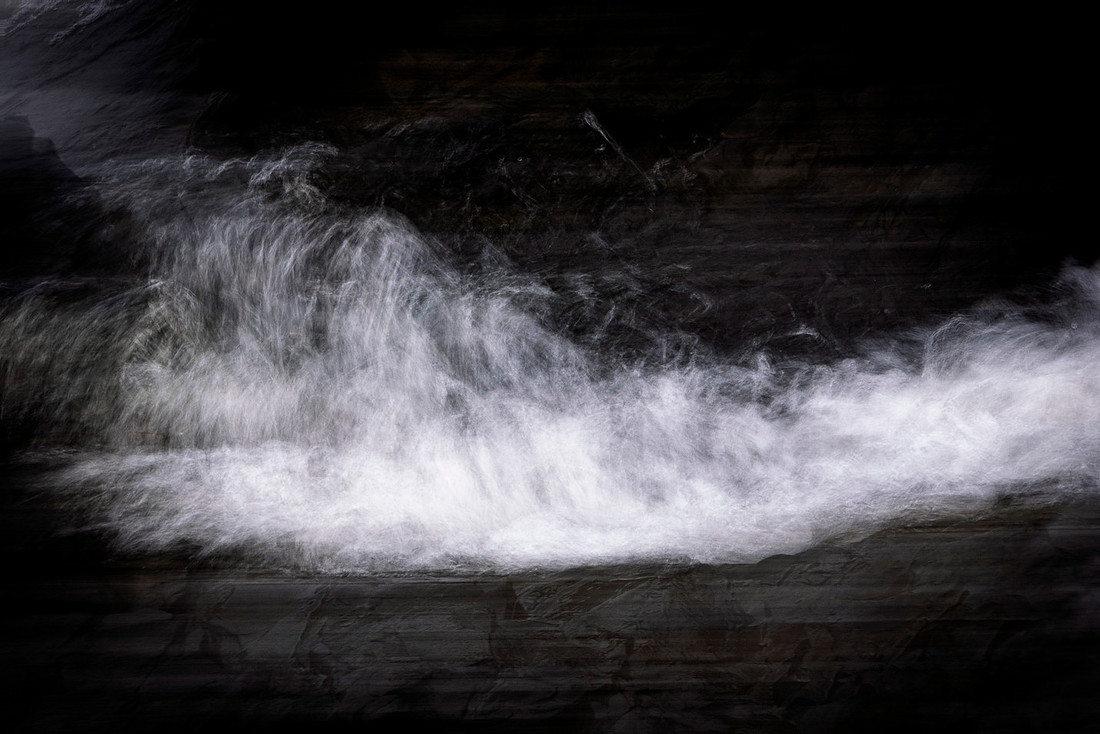
It reveals itself in the way water cascades over rock, softening the hard edge into a blurred continuity, then releasing it again as the wave withdraws. The rock does not resist; it shapes the movement, redirects it, holds it briefly before allowing it to pass. Structure and movement exist together, neither overpowering the other, each required for the other to be known.
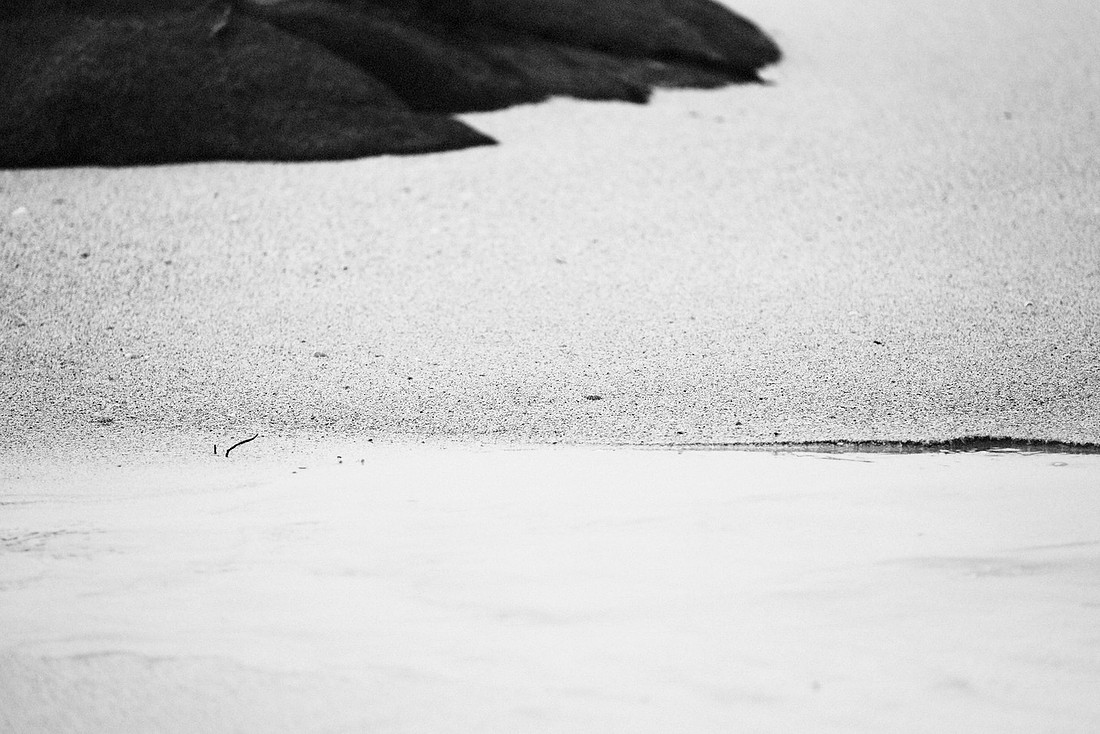
The camera remains within this.
It does not seek to stop the motion, nor to isolate a singular form from the shifting whole. Instead, it waits within the rhythm, attuned to those moments where the movement becomes perceptible as form, where the flow gathers into something that can be acknowledged without being fixed. These moments are subtle, requiring patience, a willingness to remain without certainty.
This is the deepening of flow within the creative act.
It is no longer something that arises intermittently, but something that begins to underpin the entire process, a continuous alignment between inner attention and outer movement. There is no need to search for it; it is present as long as the conditions of openness and attentiveness are sustained.
Time loosens further here.
The cycles of the tide, the repeating gestures of water and withdrawal, hold a different sense of duration, one that does not move toward completion, but continues in quiet persistence. The work mirrors this, emerging not as a linear progression, but as an accumulation of moments that are not separate, but held within the same ongoing rhythm.
As I step back from the shoreline, that rhythm remains.
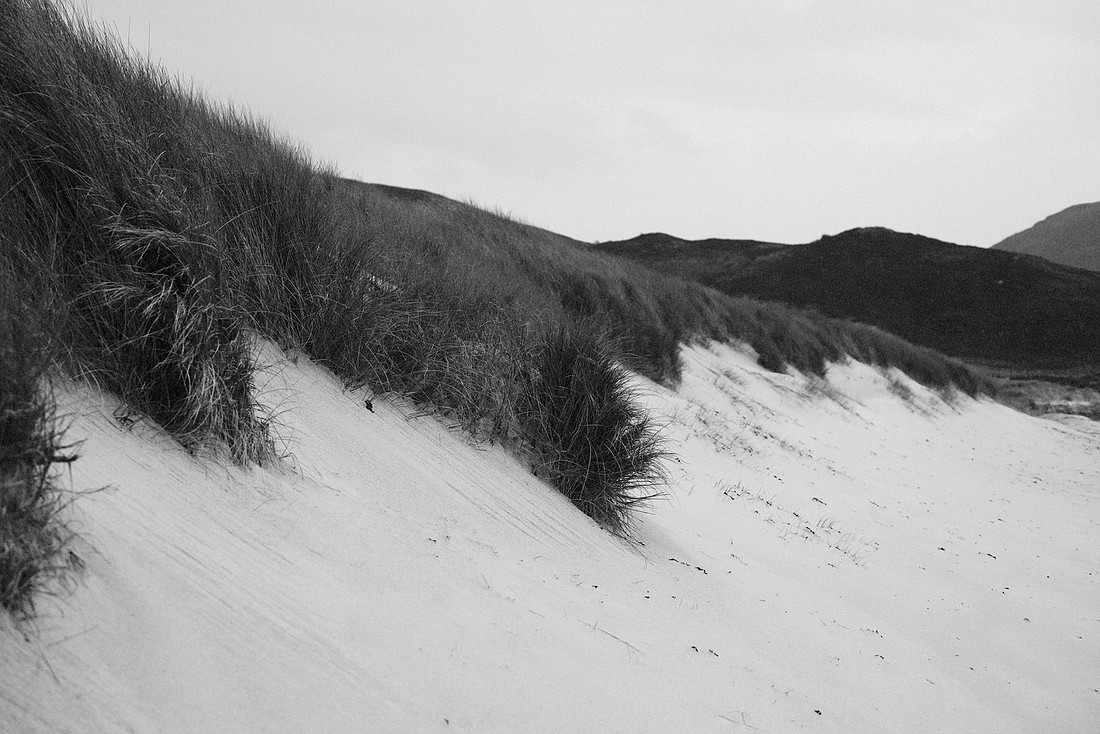
The grasses take it up again, carrying it across the dunes, through the fence line, into the subtle undulations of the land. What was once perceived as distinct elements now feels inseparable, each one part of a shared articulation that moves through different forms without losing its continuity.
The posts still lean, though now their leaning feels more fully understood.
It is not a sign of weakness, but of endurance, of a capacity to hold by yielding, to remain through adaptation rather than resistance. The wire continues to trace its line, not as a barrier, but as a connection, linking each post within a shared tension that is balanced and sustained.
Holding and yielding become indistinguishable.
They are not opposing forces, but complementary aspects of the same movement, each one necessary for the other to exist. The grasses would not move so fluidly without the anchoring of their roots; the fence would not remain without its flexibility. The land itself is shaped through this interplay, contours formed through the slow negotiation between pressure and release.
This begins to mirror the creative process with increasing clarity.
There is a need for form, for structure, for moments where the work gathers into something that can be held, yet there is an equal need to release, to allow the work to shift, to remain open to what is not yet known. Flow exists within this balance, not as a resolution, but as a continual adjustment, a responsiveness that sustains the movement without fixing it.
The images that emerge carry this tension quietly.
They are shaped, yet not confined; resolved, yet open. They offer a way into the experience rather than a conclusion drawn from it, holding within them the same sense of ongoingness that defines the place from which they arise. They do not attempt to contain the sruth, only to acknowledge it.
And in this, the understanding of flow settles more completely.
Not as something achieved, nor as a destination reached, but as a way of being within the work itself, a condition that allows everything, uncertainty, structure, response, and release, to exist together within a continuous, living movement.
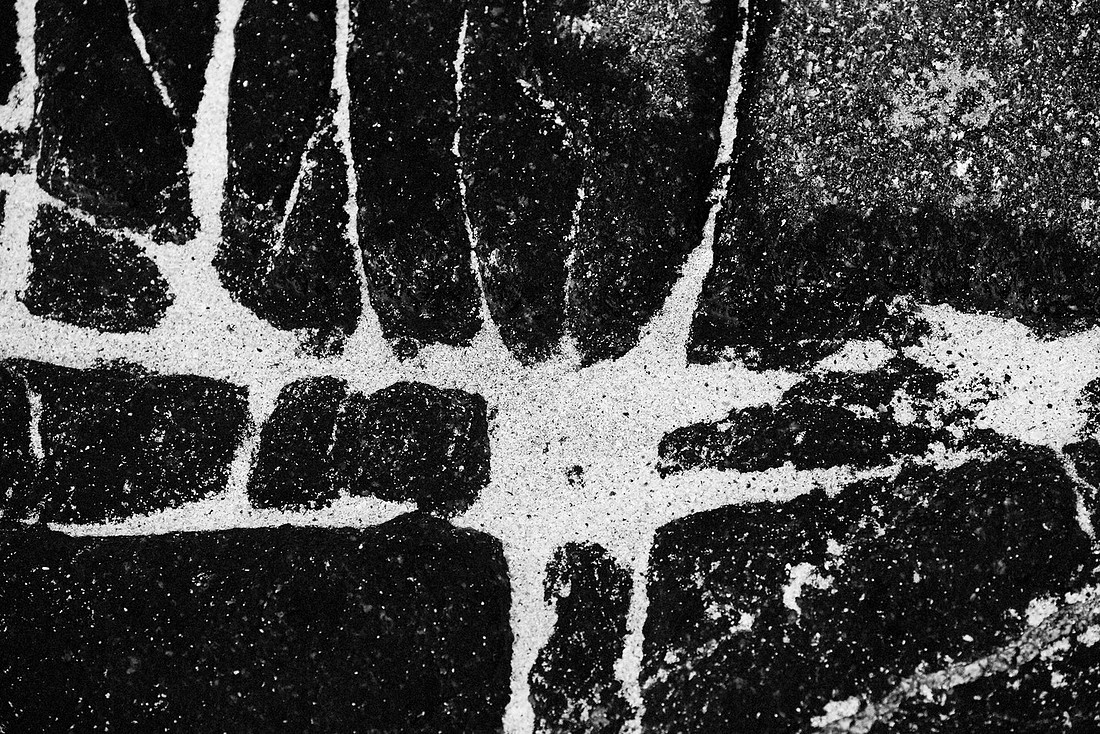
And as this movement continues, something begins to settle into a quieter, more encompassing awareness, not as a conclusion drawn from what has been, but as a widening that allows everything already encountered to remain present at once.
There is no clear point at which this occurs.
It does not arrive as insight, nor as a moment that can be identified and held; rather it emerges gradually, as the need to separate experience into stages begins to dissolve. What had once felt like distinct phases within the act of making, the initial impulse, the development, the questioning, the quiet work of reflection, now appears less as a sequence and more as a continuous unfolding, each part contained within the others, each still active within the present moment.
The sruth holds them all.
Nothing has been left behind, nothing completed in any final sense; each gesture remains, carried forward within the same movement that shapes the grasses, the sand, the shifting edge of water. The early stirring of attention that first drew me into the work still exists here, not as something distant, but as a subtle undercurrent within the way the eye continues to respond. The periods of uncertainty, of not knowing where the work was leading, are not resolved so much as absorbed, their questions becoming part of the openness that allows the present moment to remain receptive.
Even reflection itself no longer stands apart.
It is not something that happens after the act of making, nor a process of stepping back to evaluate what has been done; it is already present within the act of attention, folded into the way the gaze lingers, into the quiet recognition of relationships as they emerge. To stand here, within this movement, is already to reflect, already to be in a state of understanding that does not require articulation in order to deepen.
The land mirrors this without effort.
There is no separation between what has been and what is, the traces of previous tides remain within the shaping of the present surface, just as the current movement of water begins to form what will remain only briefly before changing again. The fence line, weathered over years, carries within it every season it has endured, yet it stands wholly within the present, not as a record, but as a continuation.
It becomes clear that creativity does not progress toward a point of arrival.
It opens outward, again and again, each stage giving way not to completion, but to further movement. What once felt like distinct steps now reveals itself as a single, continuous gesture, a sruthadh that moves through attention, through making, through reflection, without interruption. To attempt to divide it is to lose something of its essence, its quiet coherence that relies on the presence of all parts at once.
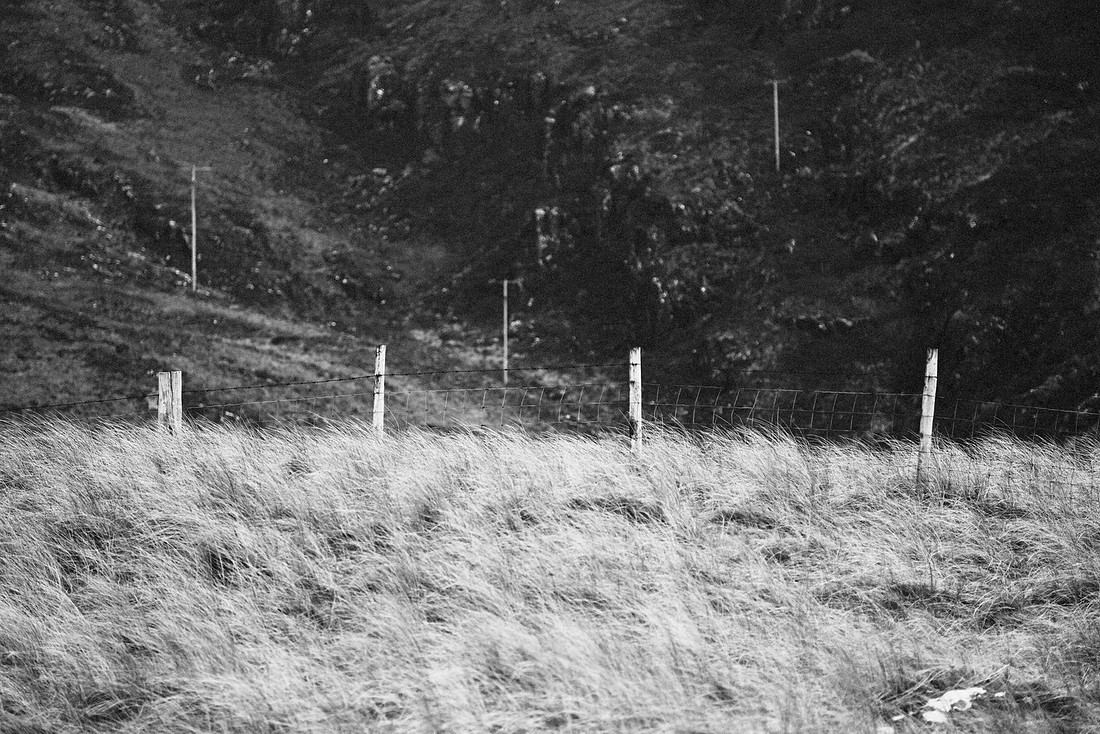
Sanna Bheag makes this visible, though without ever stating it.
The lines that cross the land do not begin or end; they extend beyond what can be seen, suggesting continuation rather than closure. The grasses never settle into a final form; they move, return, move again, each moment both new and entirely familiar. The tide reshapes the shore without pause, never reaching a finished state, yet never incomplete.
Within this, the work finds its place.
Not as something concluded, nor as a series of achievements to be marked and set aside, but as part of the same ongoing movement. The images that have gathered, the words that begin to form around them, they are not endpoints; they are points along the flow, moments where the continuity has briefly become visible, before continuing beyond what can be held.
There is a quiet release in this recognition.
The need to finalise, to determine where one phase ends and another begins, falls away. What remains is a steadier presence, an ability to remain within the act of making without needing to define its boundaries, to allow it to be what it is, changing, unfolding, responsive.
Even the idea of completion softens.
This piece, this moment within the wider body of work, does not stand apart as a closing, but as a continuation, a turning within the same movement that has been present from the beginning. It gathers what has come before, not to contain it, but to carry it forward, held lightly within the ongoing sruth.
I find that nothing has truly resolved.
And yet everything feels more at ease.
The questions remain, though they no longer press for answers; the uncertainties persist, though they are no longer obstacles. They exist within the same field of flow, part of the movement that sustains the work, rather than something that disrupts it.
To stand here is to understand, quietly, that this is how the practice continues.
Not through reaching an end, but through remaining within the movement, through returning again and again to places like this, where the land offers its gentle articulation of continuity, where the act of seeing can align once more with something beyond itself.
The fence leans, still.
The grasses rise and fall.
The tide draws its lines and releases them.
And within all of this, the sruth continues, carrying the work forward, not as something to be completed, but as something to be lived.
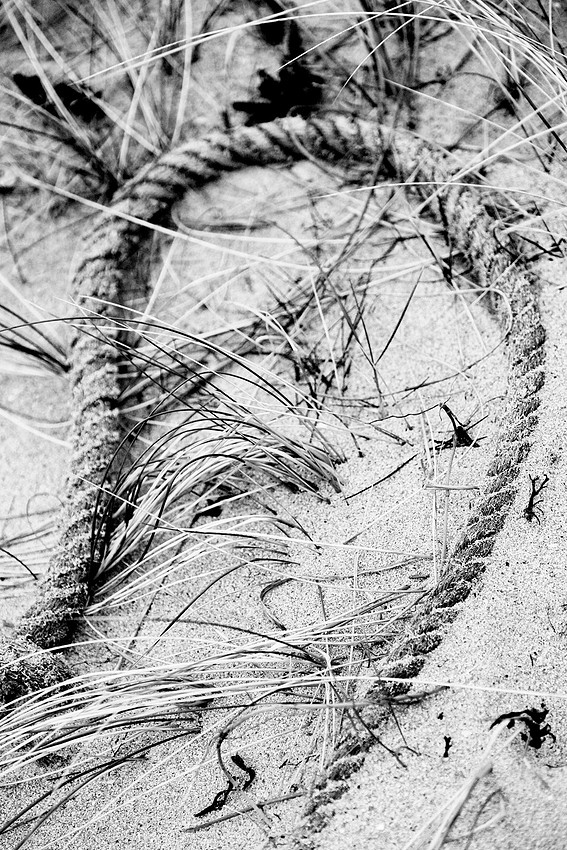
And as this moment settles, perhaps the most meaningful continuation does not lie within the work itself, but within the quiet space it leaves for you.
You may find yourself returning, not to Sanna Bheag, but to a place of your own, somewhere familiar enough to walk without direction, where lines reveal themselves slowly, where movement is not imposed but encountered. It might be a stretch of water, a woodland edge, a field shaped by season, or simply a space that asks for your attention rather than your intent. As you remain there, you may begin to notice how your gaze moves, how it pauses, how it is drawn and released, and you might quietly ask yourself when you have felt this before. Where, in your own work, has a sense of flow emerged, even briefly, and what allowed it to surface.
Notice, too, how your practice has been held.
Has it unfolded as a series of stages, separate and ordered, or has there always been a quieter continuity beneath it, something that connects making, questioning, and reflecting without clear division. What might shift if those boundaries softened, if reflection were no longer something that followed the work, but something already present within it.
As you look, you may begin to recognise the subtle language of line and rhythm in your own images.
Where does repetition appear, where does variation take hold, and what happens when you follow those lines rather than direct them. In what ways do you hold your work, and where might you allow it to yield, to remain open, unresolved. There may be a space here to consider the balance between effort and attentiveness, and to notice where one gives way to the other, where the work begins to move of its own accord.
You might also find yourself returning to more literal expressions of flow.
In water, in wind, in the shifting of light across a surface, and from there begin to ask how these movements echo within your own creative practice, not only visually, but conceptually, as something experienced rather than defined. What does sruth, or sruthadh, mean for you, not as a translation, but as something felt within your way of seeing and making.
And perhaps most quietly of all, you may ask where this already exists.
Where, within your own practice, this movement has always been present, waiting not to be found, but to be recognised. Not as something to achieve, but as something to enter, through attention, through presence, through a willingness to remain with what unfolds rather than move beyond it.
From there, the work continues.
Not as something to be completed, but as something already in motion, carrying you with it, as surely as the grasses bend, as the tide draws its lines and releases them again, as the land at Sanna Bheag continues its quiet articulation of flow.
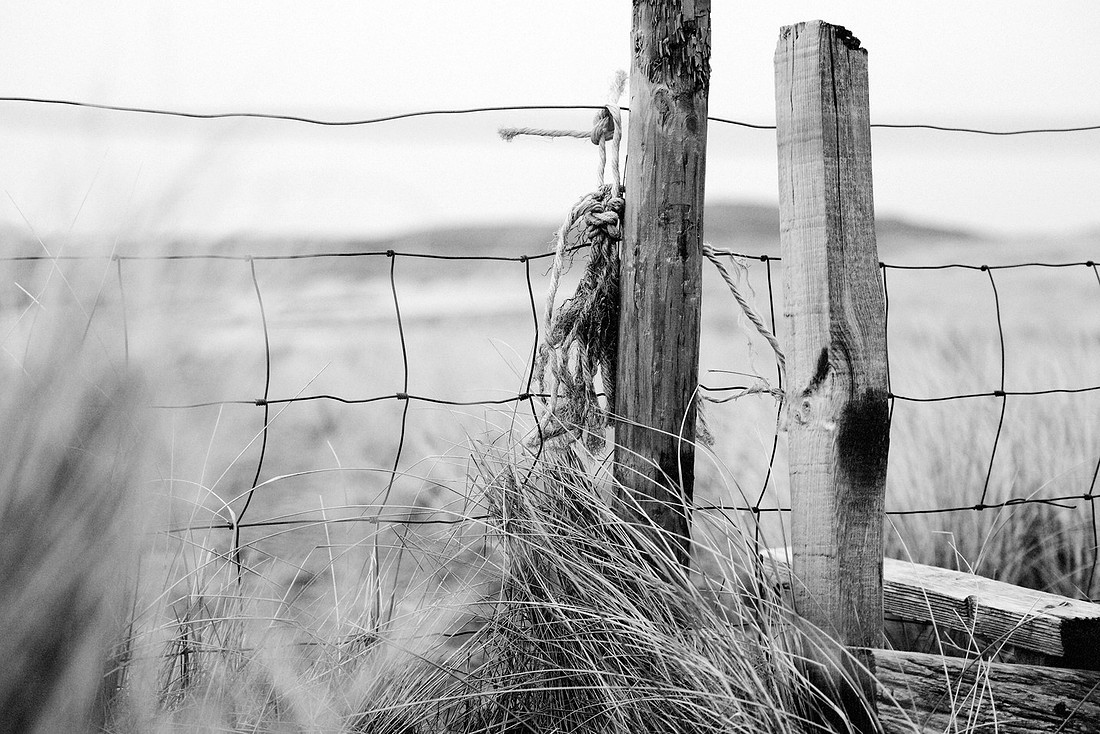
A Closing Note
Many of the photographs and ideas that have found their way into this essay and the series are now part of the newly opened Spiorad Àird nam Murchan Gallery at the Ardnamurchan Natural History Centre in Glenmore.
The gallery brings together work from almost a decade of walking, returning, listening, photographing and writing across Ardnamurchan. It is not intended as a definitive portrait of the peninsula, something no single body of work could ever achieve, but rather a reflection of an ongoing creative relationship with a place that continues to inspire, challenge and shape the way I see the world.
If the themes of flow, attention, place and creative practice explored in this essay resonate with you, I would be delighted to welcome you to the gallery. There you can spend time with these images and stories, alongside many others made throughout my continuing journey with this remarkable peninsula.
Like the sruth that runs through Sanna Bheag and beyond, the work remains unfinished, still evolving, still returning, still finding new lines to follow. The gallery is simply another point along that journey, an invitation to slow down, look closely, and perhaps discover your own connection with the landscapes, history and spirit of Ardnamurchan.
I look forward to sharing it with you.
Equally, we'd be delighted to welcome you on one of our residential creative experiences in Ardnamurchan to help you further your creative journey in this truly special place.
Creative Retreat (Group)
Residency Ardnamurchan (Exclusively 1to1)
Bibliography
Barrett, J.C. and Ko, I. (2009) ‘A phenomenology of landscape’, Journal of Social Archaeology, 9(3), pp. 275–294. [grafiati.com]
Brownrigg, J. (2017) Early women photographers documenting Highland and Islands of Scotland: MEM Donaldson. Available at: Access research paper [academia.edu]
Coast that Shaped the World (n.d.) M.E.M.D – photographer and ethnographer. Available at: Read article [coast.scot]
Cseh, G.M. (2016) ‘Flow in creativity: A review of potential theoretical conflict’, in Harmat, L. et al. (eds.) Flow Experience: Empirical Research and Applications. Berlin: Springer. [researchgate.net]
Csikszentmihalyi, M. (2009) Flow: The Psychology of Optimal Experience. New York: HarperCollins. [books.google.com]
Csikszentmihalyi, M. and Csikszentmihalyi, I.S. (eds.) (1992) Optimal Experience: Psychological Studies of Flow in Consciousness. Cambridge: Cambridge University Press. [flowcentre.org]
Donaldson, M.E.M. (1921) Wanderings in the Western Highlands and Islands. London: Alexander Maclehose. [learngaelic.net]
Dunbar, J.T. (1979) Herself: The Life and Photographs of M.E.M. Donaldson. Edinburgh: Blackwood. [amazon.com]
High Life Highland (n.d.) MEM Donaldson Collection. Available at: View collection overview [highlifehighland.com]
Ingold, T. (1993) ‘The temporality of the landscape’, World Archaeology, 25(2), pp. 152–174. [jstor.org]
Ingold, T. (2000) The Perception of the Environment: Essays on Livelihood, Dwelling and Skill. London: Routledge.
Ingold, T. (2011) Being Alive: Essays on Movement, Knowledge and Description. London: Routledge.
Ingold, T. (2022) Imagining for Real: Essays on Creation, Attention and Correspondence. London: Routledge. [timingold.com]
Kaufman, J.C., Glăveanu, V.P. and Baer, J. (eds.) (2017) The Cambridge Handbook of Creativity Across Domains. Cambridge: Cambridge University Press. [cambridge.org]
Macfarlane, R. (2015) Landmarks. London: Hamish Hamilton.
Nakamura, J. and Csikszentmihalyi, M. (2009) ‘Flow theory and research’, in Snyder, C.R. and Lopez, S.J. (eds.) Handbook of Positive Psychology. Oxford: Oxford University Press. [flowcentre.org]
Serafin, J. and Dollinger, S.J. (2017) ‘Photography and creativity’, in Kaufman, J.C., Glăveanu, V.P. and Baer, J. (eds.) The Cambridge Handbook of Creativity Across Domains. Cambridge: Cambridge University Press, pp. 123–144. [cambridge.org]
Shepherd, N. (1977) The Living Mountain. Aberdeen: Aberdeen University Press.
Tilley, C. (1994) A Phenomenology of Landscape: Places, Paths and Monuments. Oxford: Berg.
Waterman, A.S. (2025) Flow Theory Re-Envisioned: A Conceptual Analysis and Response to Critiques. Oxford: Oxford University Press