Spiorad Àird nam Murchan Pt 24 - The Sea Around Us

Spiorad Àird nam Murchan, Part 24 “The Sea Around Us”
An Cuan mu Thimcheall Oirnn

Introduction: Reading Carson on the Edge of the Mainland
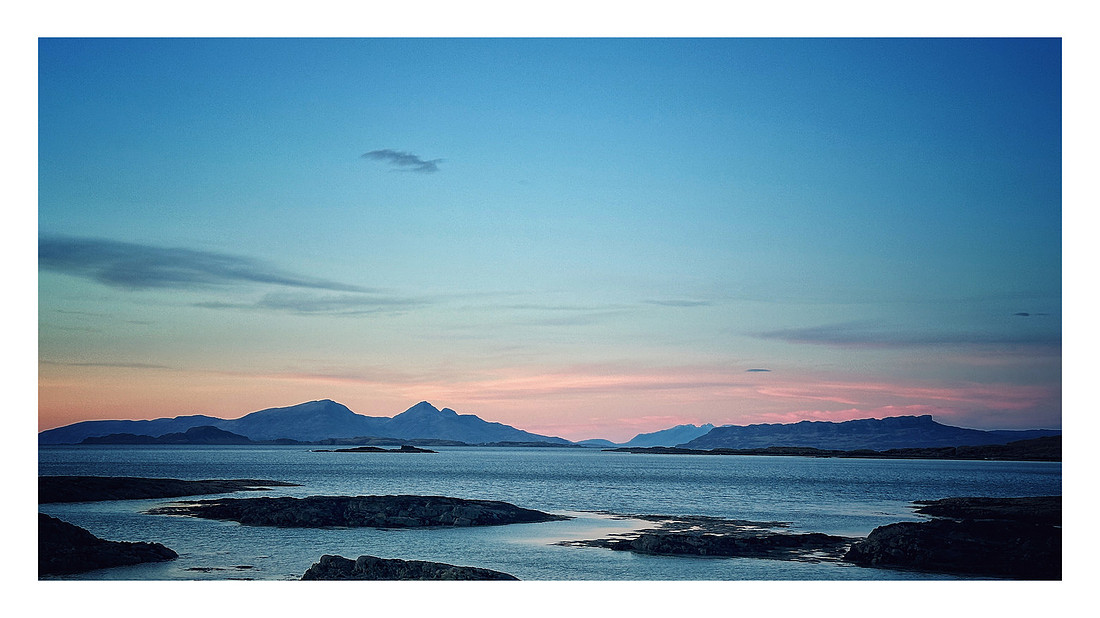
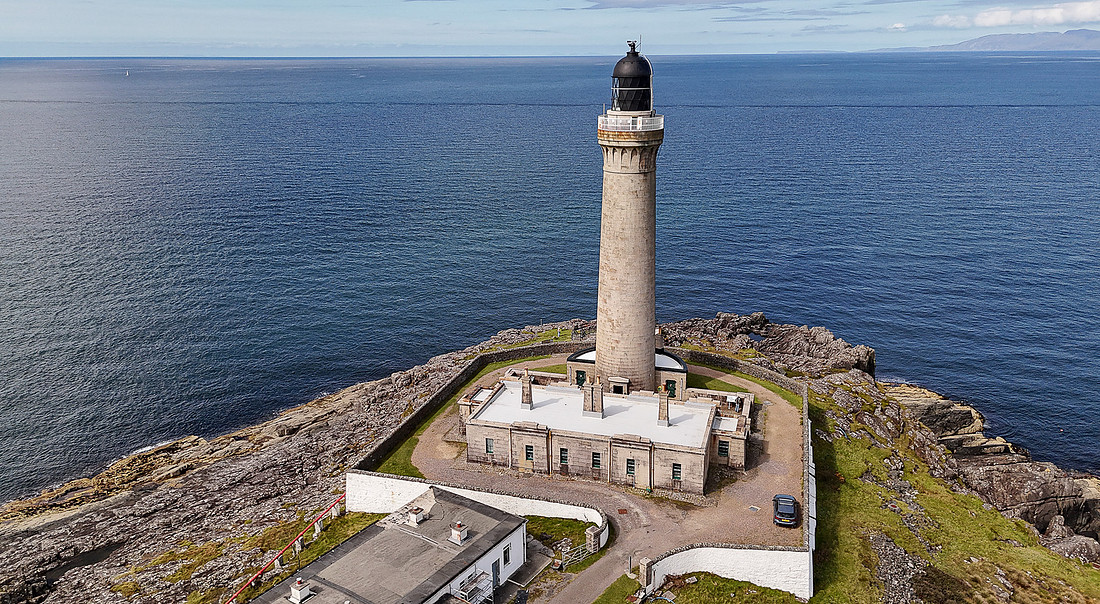
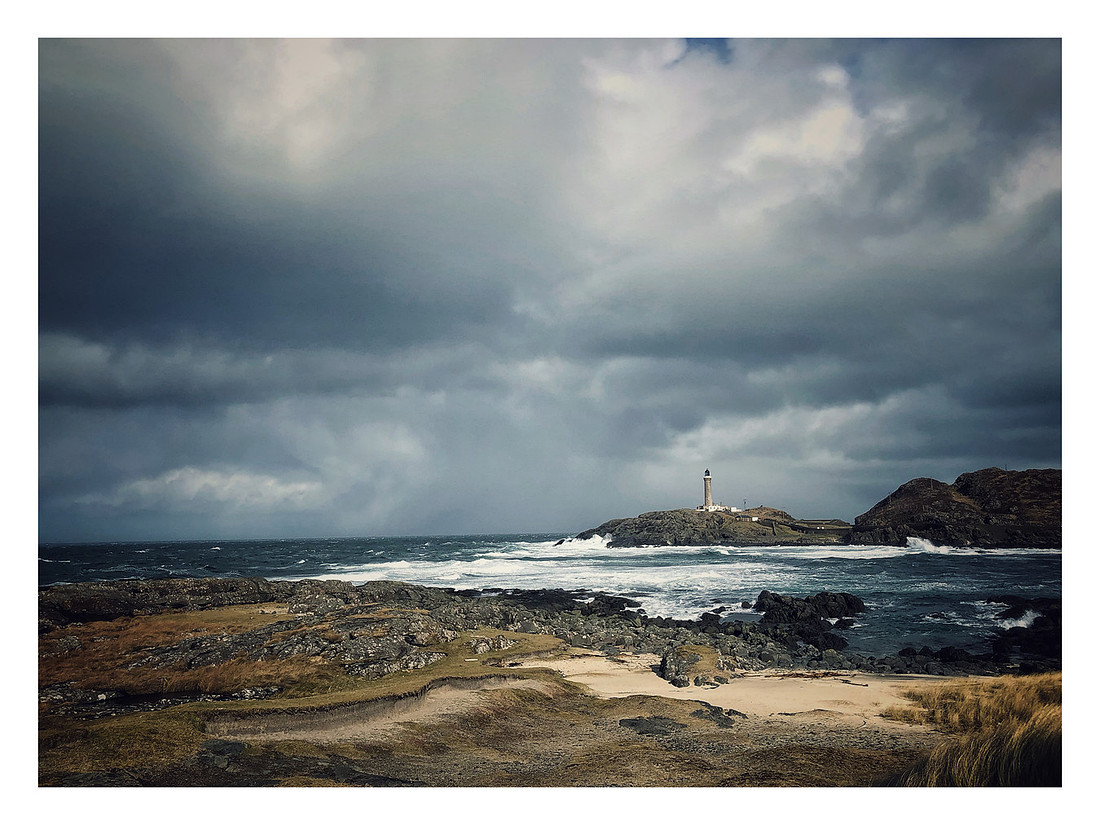
On a pewter-skied afternoon at Rubha Àrd nam Murchan, the lighthouse throwing its quiet geometry into the Atlantic haze, I opened Rachel Carson’s The Sea Around Us and felt the peninsula breathe a little deeper. Carson’s book taught a generation to listen to the ocean as both origin and orchestrator “Mother Sea,” “The Restless Sea,” and “Man and the Sea About Him” mapping a grammar of currents and deep time that still instructs the attentive reader. The structure of her work; the sweep from primordial waters to the living, entangled present, gives me a lens through which to look again at Ardnamurchan’s far west, where the sea is not merely surrounding but suffusing, where weather is a maritime mood and geology is the stilled movement of an ancient storm.
For a decade now, my creative practice has circled here: walking the cone-sheet ribs and gabbro knuckles; listening with microphones to the hiss at Sanna’s strandline and the long drag of kelp over rock; painting the ringed forms of the Great Eucrite as if they were a cross-section of breath; and making photographs that try, in their tonal silences, to record the intervals between wave and wind. This peninsula: almost-island, isthmus-thin in its tether to the mainland has taught me that place is not a fixed noun but a set of tidal verbs. Its islandness is felt in the bones: in the single-track road’s grace and stubbornness, in the ferry lights slipping past Tobermory at dusk, in the Gaelic of names that hold water like vessels. Yet Ardnamurchan is not administratively an island, and with that distinction comes a real politics…. of subsidy, of services, of recognition…. that complicates its romance of remoteness.
What follows is an essay aligned with Carson’s triadic frame but rooted in this shore: geology and geomorphology meeting folk-memory and hydronymy; weather braiding with culture; the lives of people with the lives of waters. It is a meditation on the mothering sea, its restlessness, and the entanglement of people with tides…. an Ardnamurchan book of hours composed in spray and peat-smoke.
I. The Mother Sea — A’ Mhuir Mhàthair
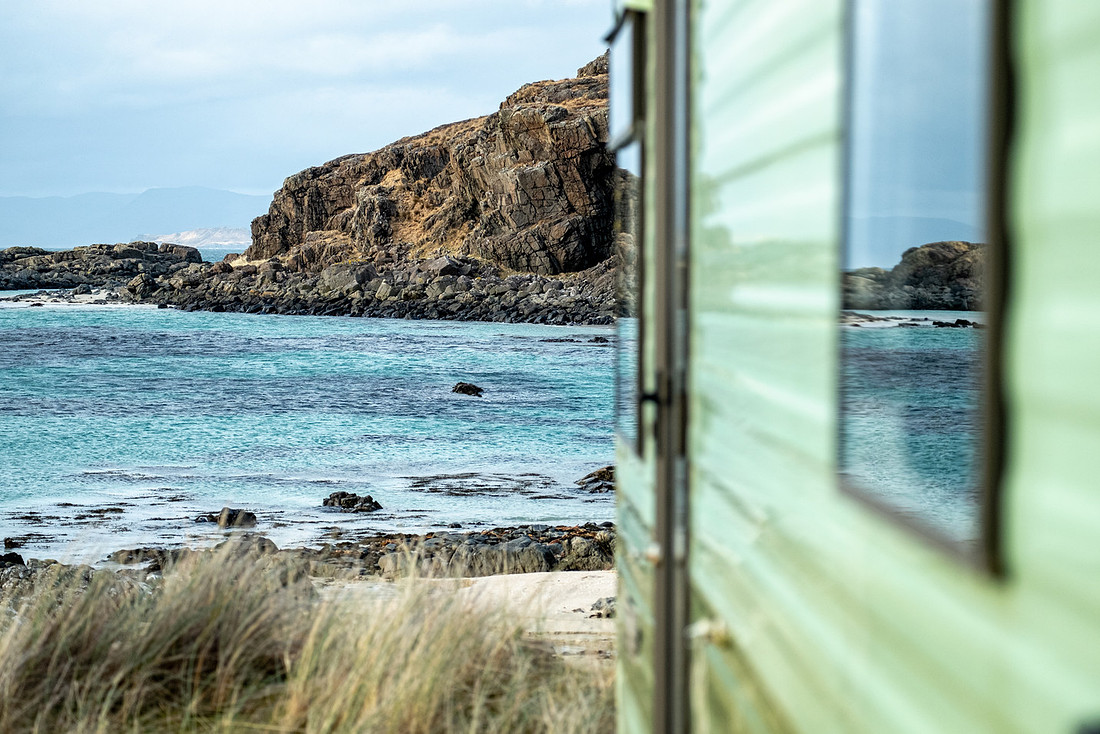
The sea that girdles Ardnamurchan is not merely circumference but ancestry. Carson reminds us that the oceans are our first archive; saline signatures persist in our blood, the ancient past brimming like a remembered fragrance in the body. Standing at Port Bàn with a field recorder cupped in my hands, I’ve often felt that same ancestral tug: a resonance that is half sound, half inheritance.
Here, the mothering sea has tutored rock itself. Ardnamurchan’s western end is the exhumed heart of a Palaeogene volcanic complex, its ringed anatomies cone-sheets, arcuate intrusions laid bare by time and Atlantic abrasion. For long years we spoke of the “ring dyke,” the textbook Great Eucrite encircling like a basalt psalm; recent work reframes this, reading the complex as a dish-shaped lopolith and the cone-sheet architecture as the expression of a single elongate magma chamber. Whether dish or ring, what endures is the sense of having stepped into a paused inferno: the inside-out of a volcano, its cooled pulses forming the landscape’s grammar of knoll and bay.
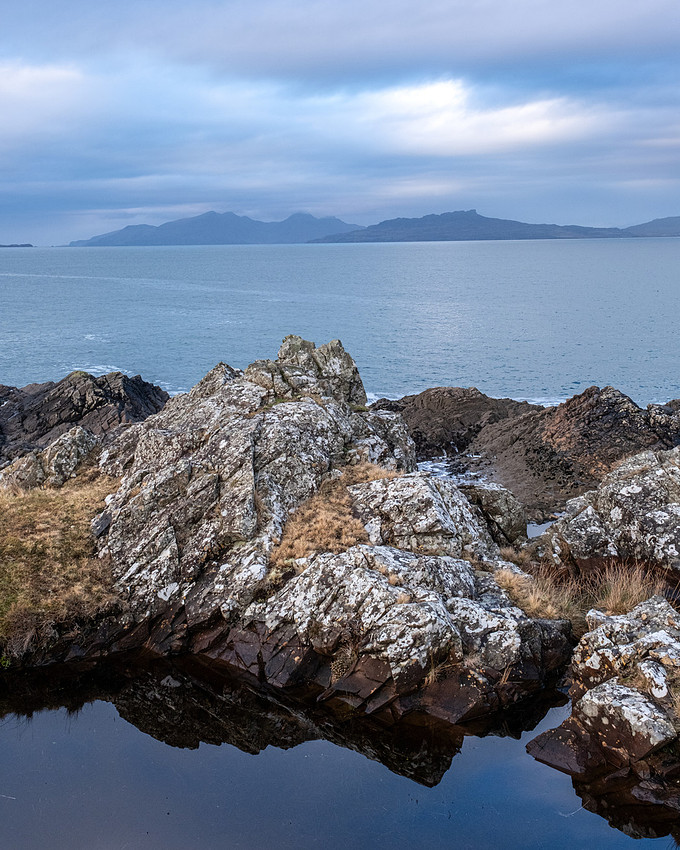
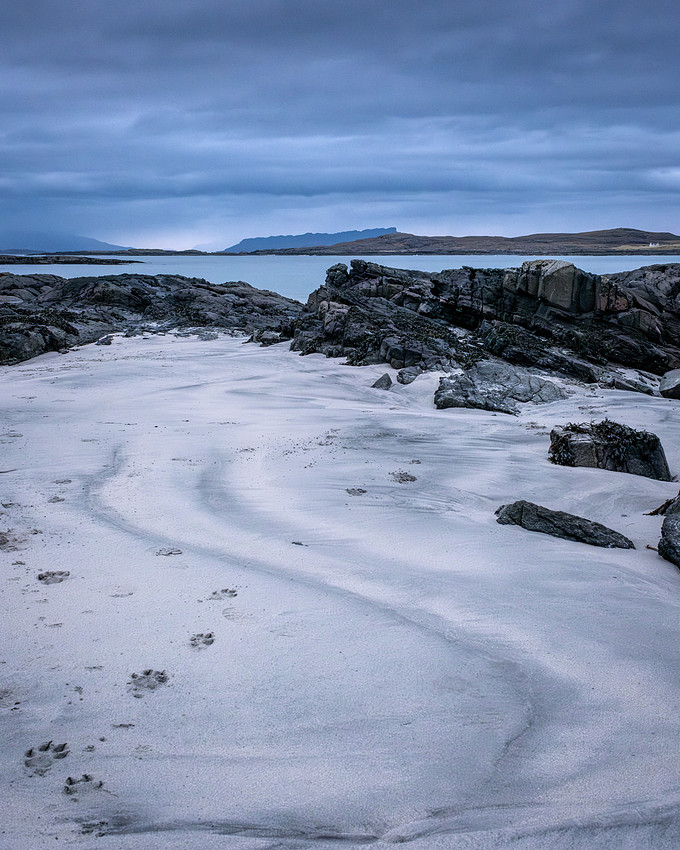
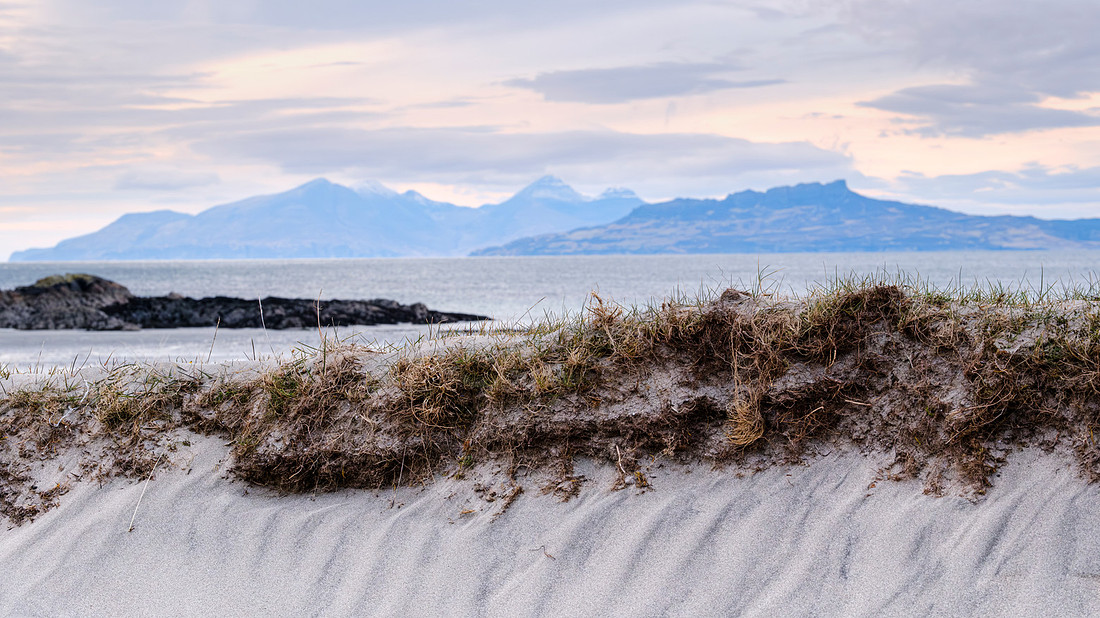
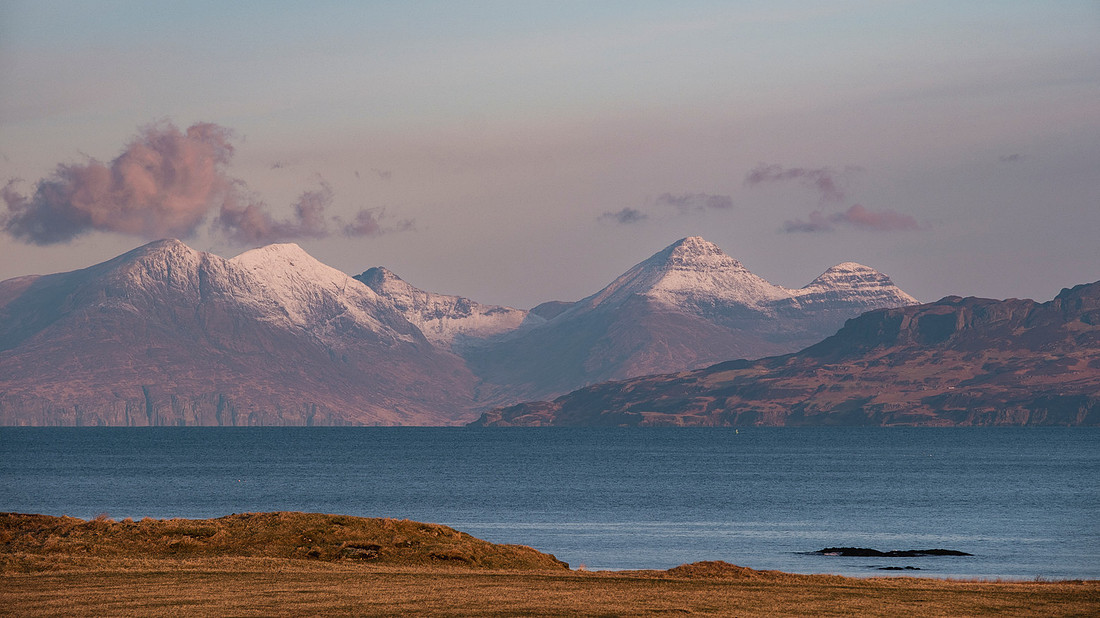
At Sanna, the mother sea composes with this stone a bright script; white shell-sand and turquoise shallows, machair breathing seasonally with salt. Further south, near Ben Hiant, volcaniclastic memories bed down beneath lavas: a palimpsest of explosive episodes and doming pressures that lifted Mesozoic sediments and then sliced them with dolerite teeth. To walk these exposures is to read eruptions translated into rock: lopolith margins turning to coastal landforms; cone-sheets splaying like the ribs of a great creature; gabbro hills cupped in the sea’s palm.
The mother sea also names. Hydronymy…. this islanded peninsula’s watery lexicon holds histories like tidepools hold wrack and shrimp. An Acairseid (the anchorage) promises shelter; Camas nan Clacha Móra (bay of the large stones) says geology first; Lochan Dóbhrain (little loch of the otter) swims with fur and whisker; Allt Faskadale braids Norse and Gaelic, ship-dale streaming into burn. Even Àird nam Murchan, often rendered “height or headland of the sea-dogs,” seals as kin turns a gaze outward to the element that defined it. Names are boats: they carry us to the old relations between people and water.
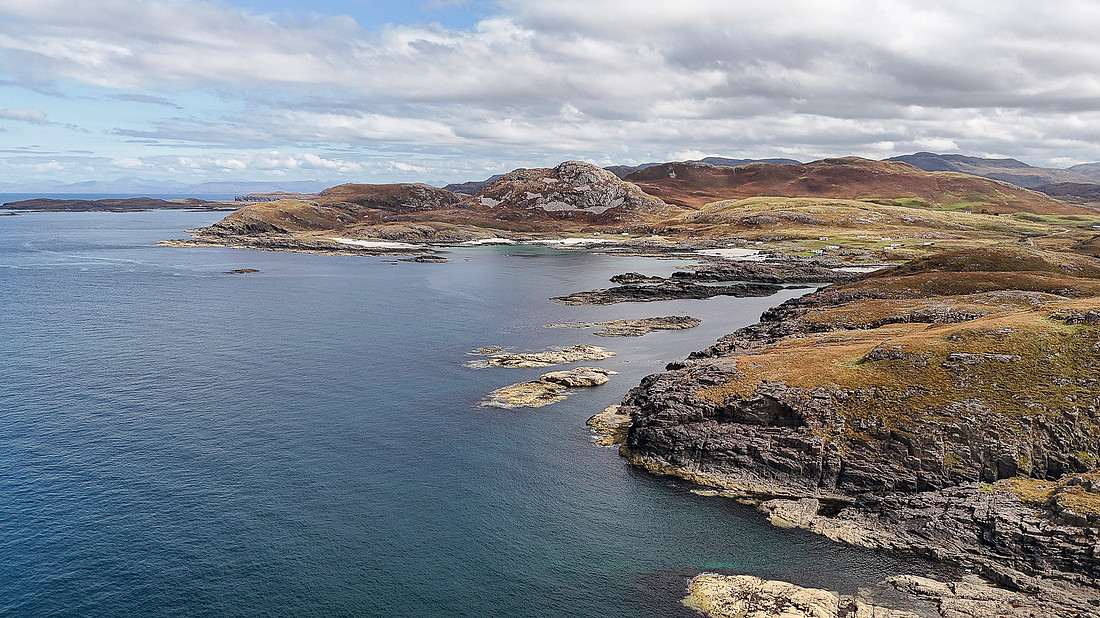
In the studio, I have tried to honour this naming. A series of small paintings; oil, saltwater, and sand from Sanna take their titles from burns and bays: Allt Choire Mhuilinn, An t-Acairseid, Port Rubha a’ Chait. Each word, when spoken aloud, seems to ripple the mouth, as though the language itself were tidal. The local Gaelic, with its distinctive cadence, deepens that sense of place: a prosody tuned by coasts and crossings, carrying weather in its vowels. It is a living sea-music, and when you hear it at Mingary or along Loch Sunart, you recognise how language, like shoreline, is shaped by incessant wash.
Carson’s “Mother Sea” invites us to consider origins; Ardnamurchan adds a specific, grounded version of that inquiry. The peninsula is a lesson in emergence: the sea as sculptor; igneous deep time as matrix; human settlement patterning its coasts and glens in response to landing, fishing, ferrying. Even the mythic shadow of creatures seen and half-seen…. sea serpents off Kilmory, undulant in glassy calm, belongs to this mothering: the sea birthing legends from its own volatile surface.
II. The Restless Sea — An Cuan Gun Socair
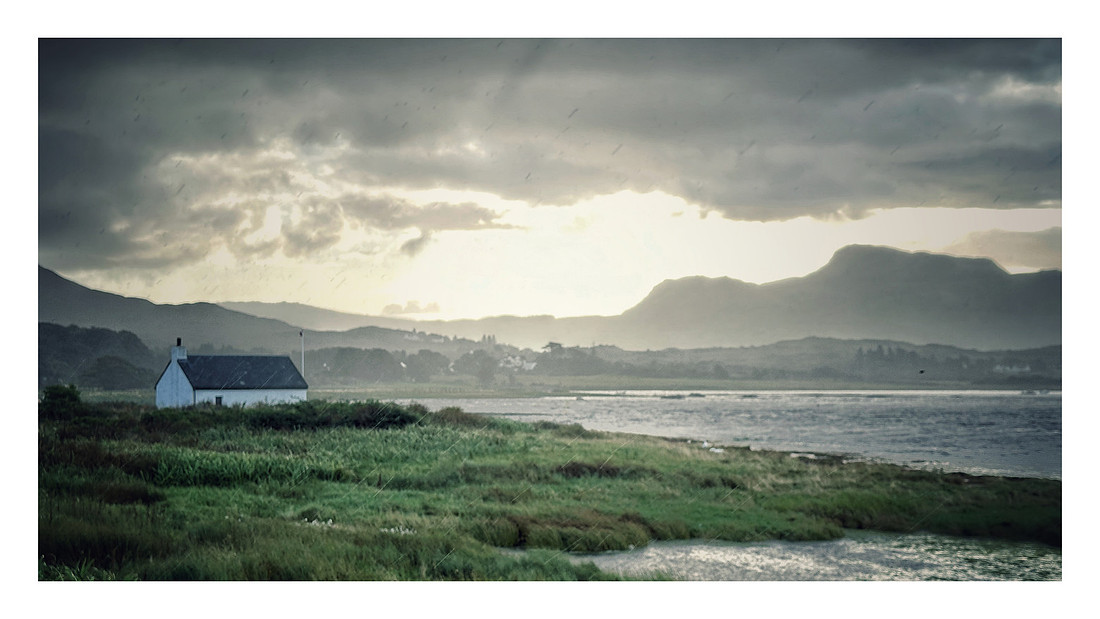
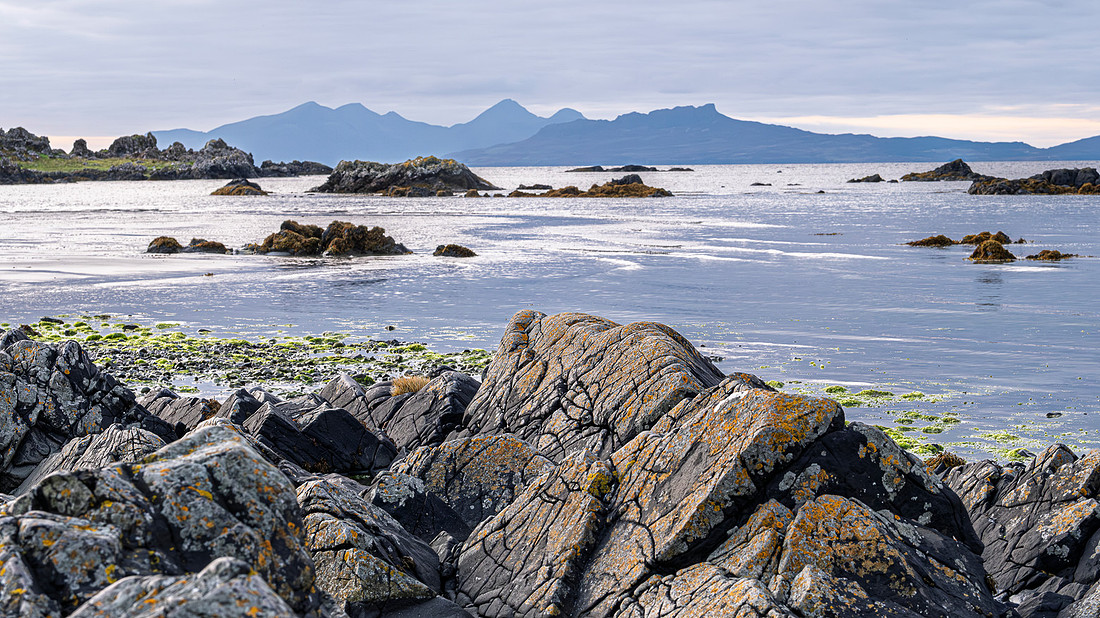
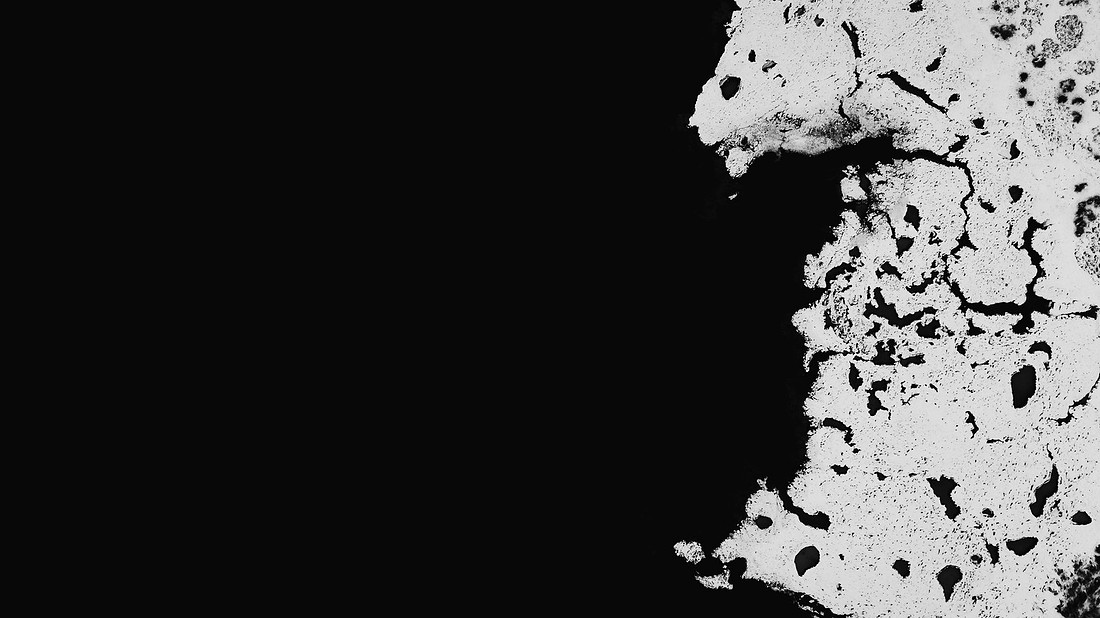
Carson’s “Restless Sea” speaks of currents, tides, planetary weather forces whose dance scripts coastal life. Nowhere is restlessness more legible than on Ardnamurchan’s fringe, where Atlantic long-period swell arrives as breath, set to the tempo of distant storms. Here, meteorology is maritime: the weather does not “come from” the sea; it is the sea, mist and spray and rain, a water-cycle conducting its own orchestra over moor and machair.
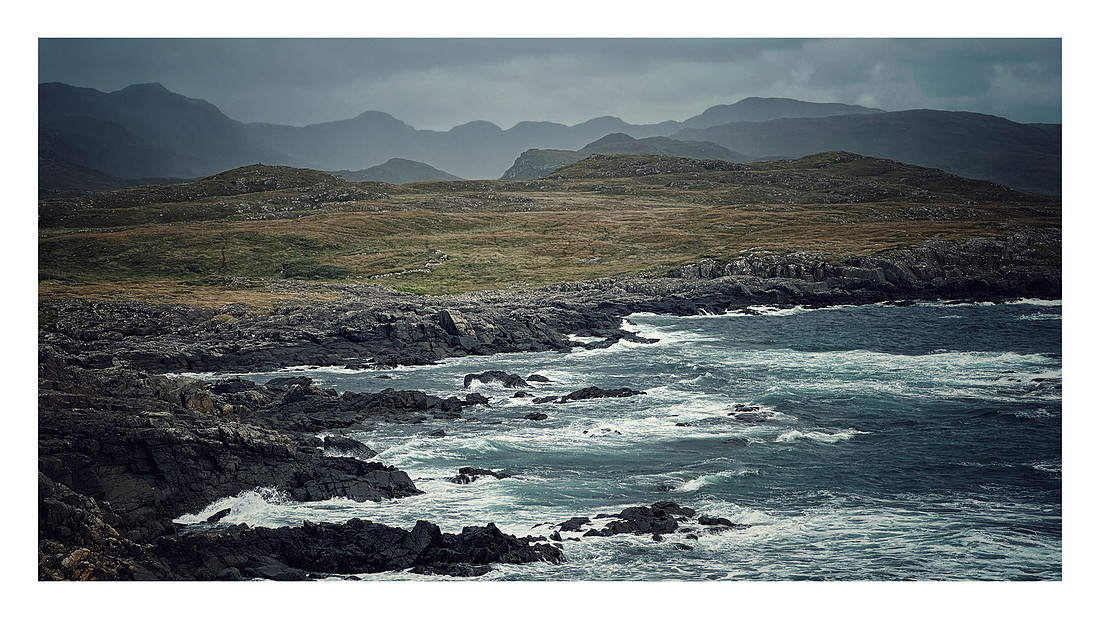
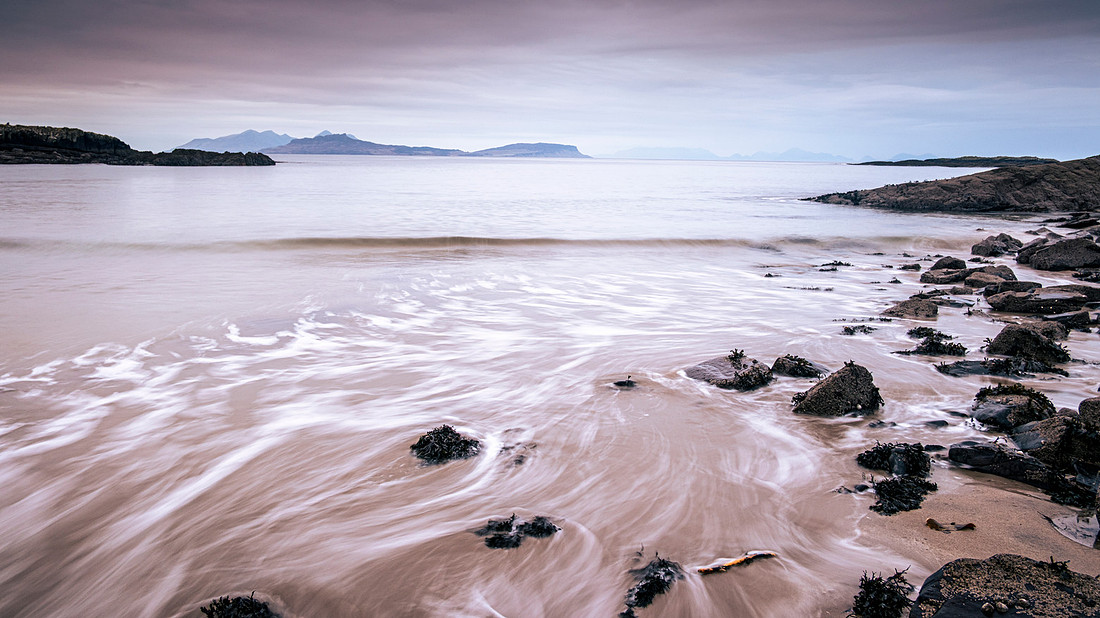
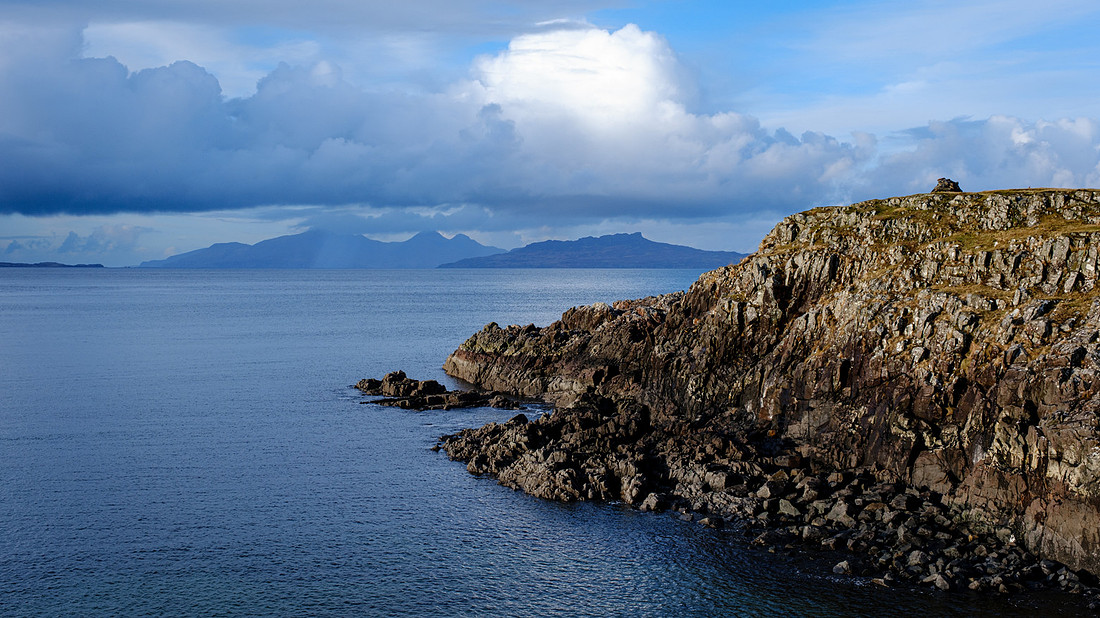
The geology underfoot amplifies this restlessness. A ridge-like morphology betrays the volcano beneath; the arcuate intrusions make catchments, bays, and headlands that catch and refract waves. Coastal erosion has cut section through the plumbing system—cone sheets ringing the shore, radial dykes like spokes revealed in cliff and foreshore so that every storm becomes a form of reading. Waves write in passing: scouring one pocket-beach clean to the basalt floor one week, then heaping kelp and drift the next. The sea is endlessly editing its own coastline.
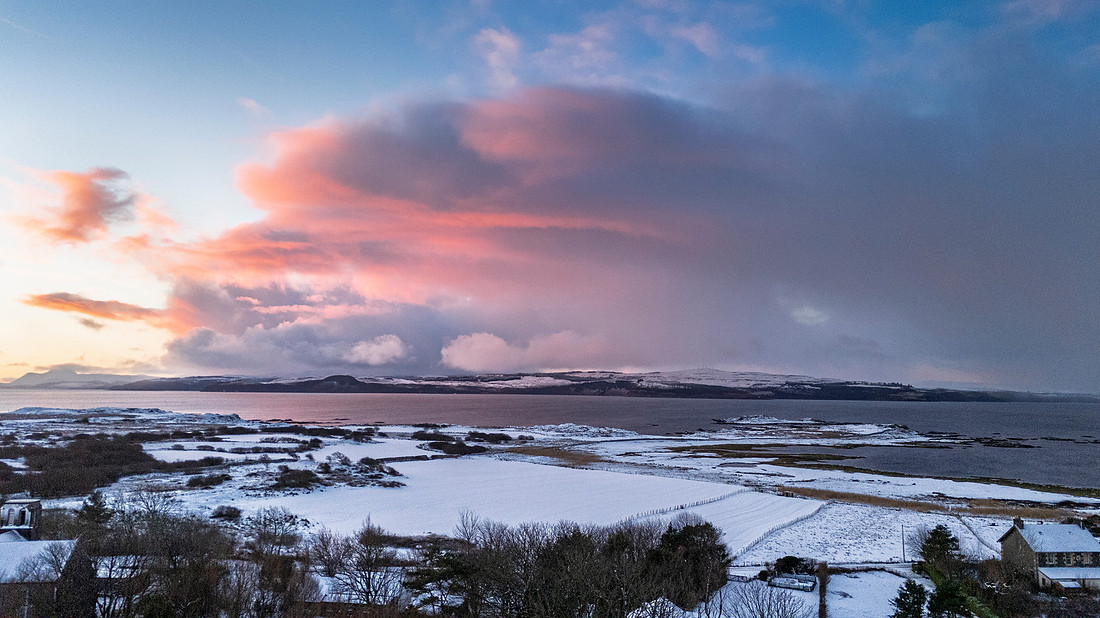
Weather here is also an intimacy of distance. In my sound recordings from Sanna and Achosnich, I can locate the deep Atlantic pulse by low-frequency energy: the sub-audible thrum that microphones register before ears understand. Rain thickens the spectral picture; wind feathers the microphone’s deadcat, a tactile reminder that all our instruments are themselves bodies in weather. Sometimes, in winter, the sea changes the colour of the light; blue pressed into pewter and the lighthouse on Ardnamurchan Point seems less a building than a metronome for horizon and gale.
Climatologically, Ardnamurchan belongs to the restless dialogue of the Inner Hebrides: warmed by a North Atlantic Drift that mitigates extremes; exposed to westerlies that bring moisture-laden air; strutted by sea-lochs; Loch Sunart lengthening the breath of the weather across 19 miles so that cloud-systems are funnelled and modulated like notes in a chanter. These are not abstractions. They decide lambing days and ferry sailings, fieldwork windows and drying times for nets and film.
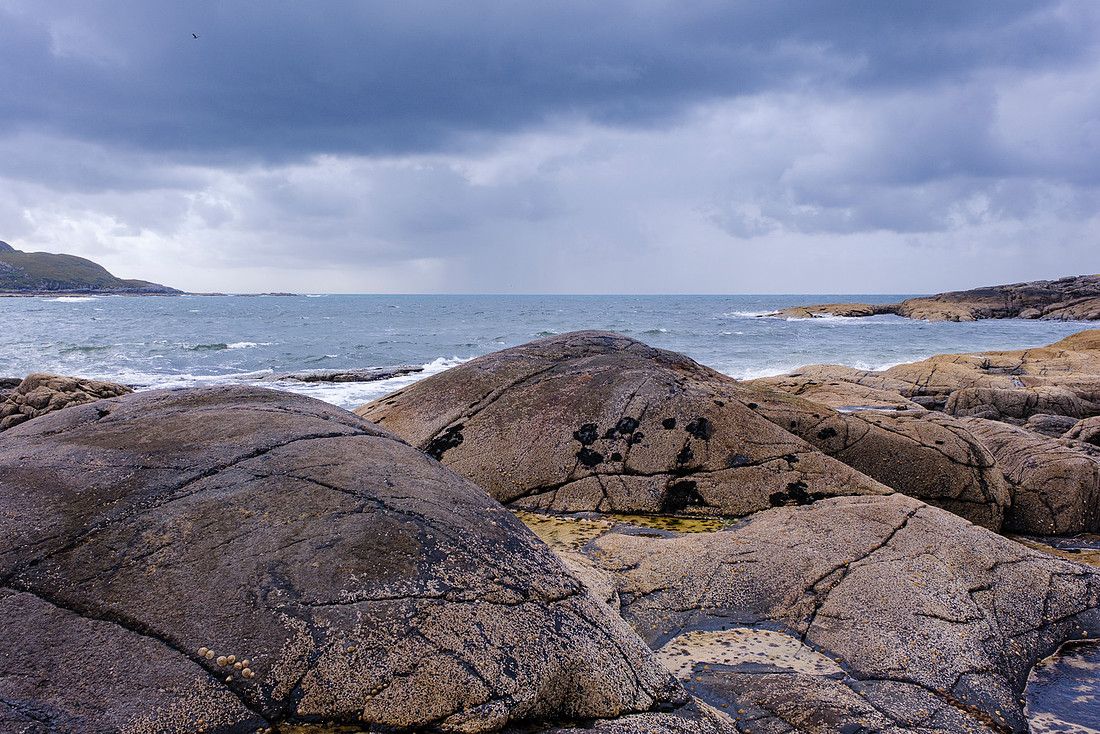
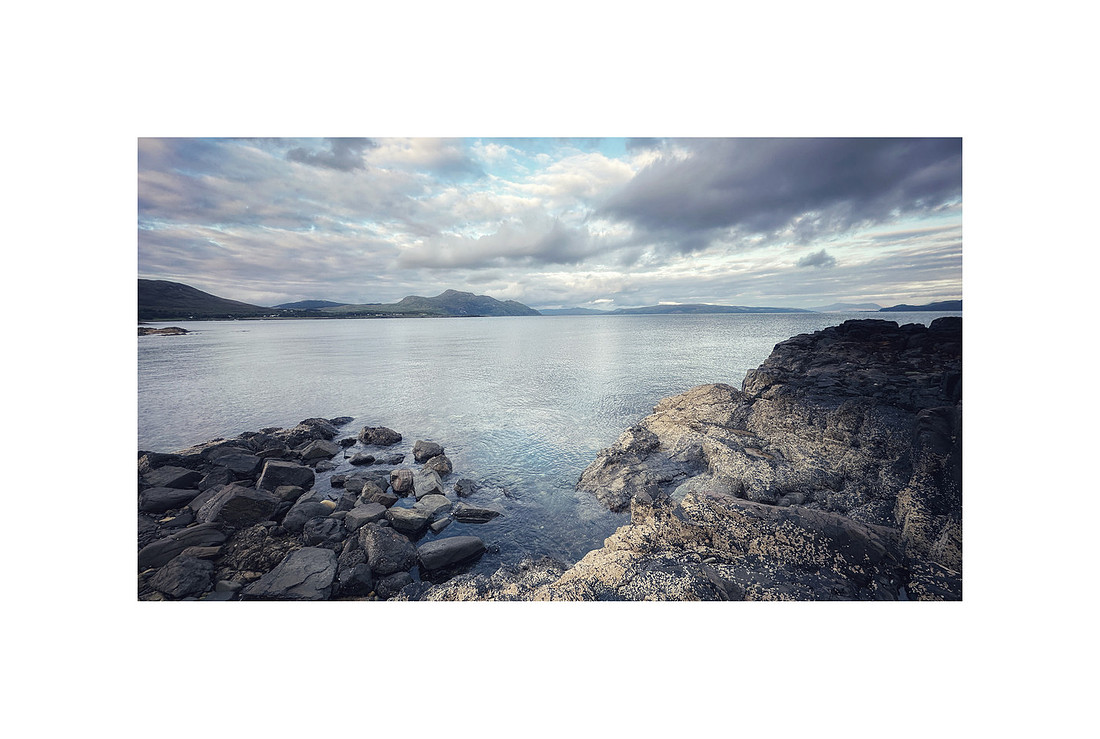
Geomorphologically, the sea inscribes Ardnamurchan with raised beaches, storm berms, dune slack, and the fine articulations of intertidal life. On spring lows I have walked out along rock platforms corrugated with dykes and veins, the magmatic handwriting clear as if newly scribed; then watched the flood-tide erase my steps grain by grain. The lopolith’s saucer form…. if we accept that reading, becomes metaphor: the sea pours and lifts, turning this whole west into a vessel for rearrangement.
Restlessness, too, is cultural. The road to the far west is largely single-track, a choreography of passing places and patience. Living here means thinking like tide: arriving before weather closes, carrying what you need, making do. The peninsula’s “islandness” is not a trope but an experience: attached to the mainland in fact, yet often connected to the wider area quicker by ferries and sea-roads than by land. The idea of islandness, less about strict geography, more about relations, boundaries, power has a literature of its own; Ardnamurchan lives inside that theory as practitioner rather than example.
Across the Sound of Mull, the island of Mull benefits from policy frameworks designed for islands; subsidies, targeted support, while Ardnamurchan, arguably no less remote, contends with the ambivalence of its classification. This is not merely an administrative wrinkle; it shapes lives on the ground, from transport and healthcare to schooling and the sustainability of crofting and small enterprises. A sea-blessed peninsula is not automatically sea-favoured in policy. The weather’s restlessness is mirrored in the shifting fortunes of definitions.
And yet, in this restlessness lies creativity. My own practice; photography that leans into stillness; paintings that try to hold motion; writing that follows wave-logic; and sound pieces that attend to intervals, finds in Ardnamurchan a tutor of attention. The sea insists on revision, and every return to Sanna or Portuairk is a new draft of the same sentence.
III. People & The Sea — Daoine & An Cuan
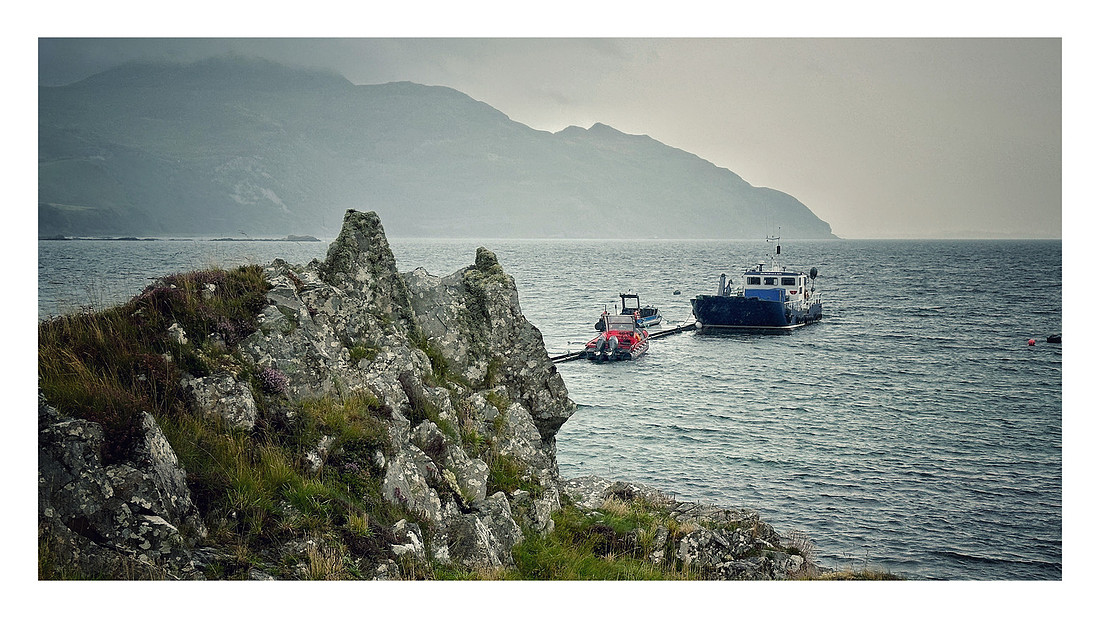
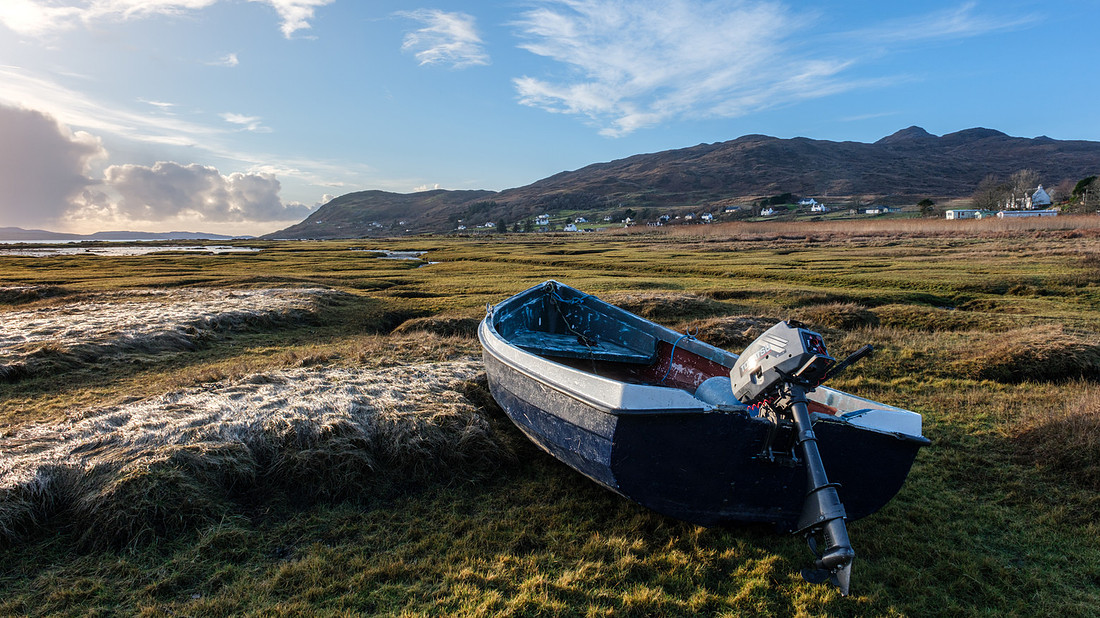
Ardnamurchan’s people are a littoral community: villages threaded along sea-lochs and bays, kinship and economy aligned to the water’s edge. Historically, the sea determined routes and rhythms: boats out of An Acairseid and Port Bàn, landings beneath the basalt lips, cattle ferried, messages carried by oared and sail power long before roads pressed their thin line into the moor. The ruins of Mingary Castle still hold that maritime posture, facing currents and histories MacIain, Lordship of the Isles, and all the tides of allegiance that moved through these waters.
Archaeology keeps turning up the sea’s fingerprints: at Port an Eilean Mhòir, a Viking ship burial surfaced from the soil, grave goods gleaming with brine-bronze memory…. a reminder that Ardnamurchan has long been a nodal point in sea-routes that lace the Inner Hebrides. Earlier still, St Columba’s journeys brush this shore, faith arriving as a maritime practice. To live here has always meant living with the sea as neighbour, road, larder, and sometimes adversary.
Ecology today shows continuities and anxieties. Sea eagles; emblems on old crests, myths made flesh again wheel high above Loch Sunart and the western bays, their return a symbol of how marine and coastal systems can recover when given time and protection. Meanwhile, the long story of fisheries and aquaculture complicates the picture: livelihoods entwined with ecological stewardship, communities attentive to the health of kelp forests, seagrass beds, and nursery grounds. Carson’s prescience about human impacts on the sea, written in the 1950s, reads now as sober counsel: care for the ocean is care for the whole.
Travel has always been shaped by water here. Even now, timetables think like tides. To reach a hospital appointment, to sell work, to welcome visitors to a workshop or exhibition.... these efforts coordinate with ferries and forecasts. In my own calendar, recording trips have been decided by windows of calm: small boats to the skerries off Ardnamurchan Point, microphones lowered toward the susurrus of tide rips; walking circuits that link Portuairk to Sanna by the angle of wind; writing retreats that count on a week of drizzle to keep me desked.
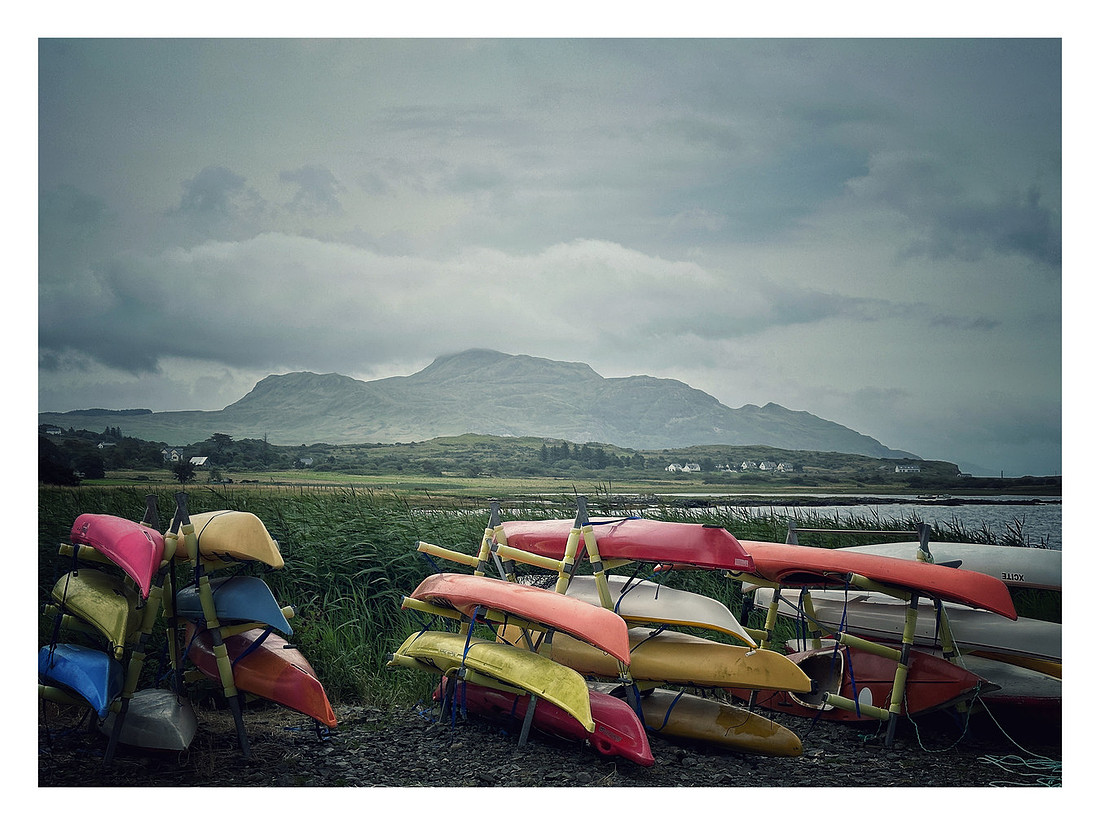
Culture across the peninsula draws from the sea’s aural and visual motifs. Music carries it; pipe laments that sound like keening wind over corrie, fiddle tunes whose lift mimics the run of a fair tide; contemporary composition that samples wave and gull, shaping electroacoustic pieces woven with Gaelic verse. In visual arts, painters chase the impossible colours between storm and sun, photographers permit the horizon to be the slow hinge of the image, and sculptors in driftwood and rope make altars to littoral salvage. Writers, across Scotland, have long let the sea instruct their rhythms, from the crosswinds of Robert Macfarlane’s prose to the sea-led walking of David Gange, the close watching of Annie Worsley, the attentive prose of Neil Ansell. To create from here is to keep an ear to the water.
And language, once again, reveals the intimacy. The peninsula’s store of Gaelic hydronyms is a cultural ecology in its own right. Amhainn Chrò Bheinn, Loch Caorach, Camas nan Ceall, Glas Eilean, Port Mìn…. to speak them is to remember relationships between resource and refuge, work and worship, rock and flow. Early records tell us Àird nam Murchan was named not as an abstraction but with reference to the living sea, seal and otter as familiars and even whisper of older, more ambiguous meanings around piracy and peril. Names hold both blessing and warning.
Folklore is the memory theatre where such meanings are staged. The Ardnamurchan sea monster, seen from Mingary Pier, or out by Kilmory, the sea glassy and a dark, articulated shape moving as if the water itself had vertebrae, belongs with selkies and storm-witches, with charms for wind and the old belief in the sea’s sentience. Folklore keeps risk vivid; it is an ethics encoded in tale.
Ecologically, change is the thread through all of this. Kelp forests sensitive to temperature and storm tracks; plastic lines woven into wrack; shifting fish stocks and the responsibilities of both small-boat and farmed aquaculture. Protecting An Cuan is an act of global citizenship enacted locally: beach cleans and citizen science, careful moorings over seagrass, marine protected areas debated and refined, education rooted in place. Carson’s witness remains catalytic: love sharpened into attention, attention into action.
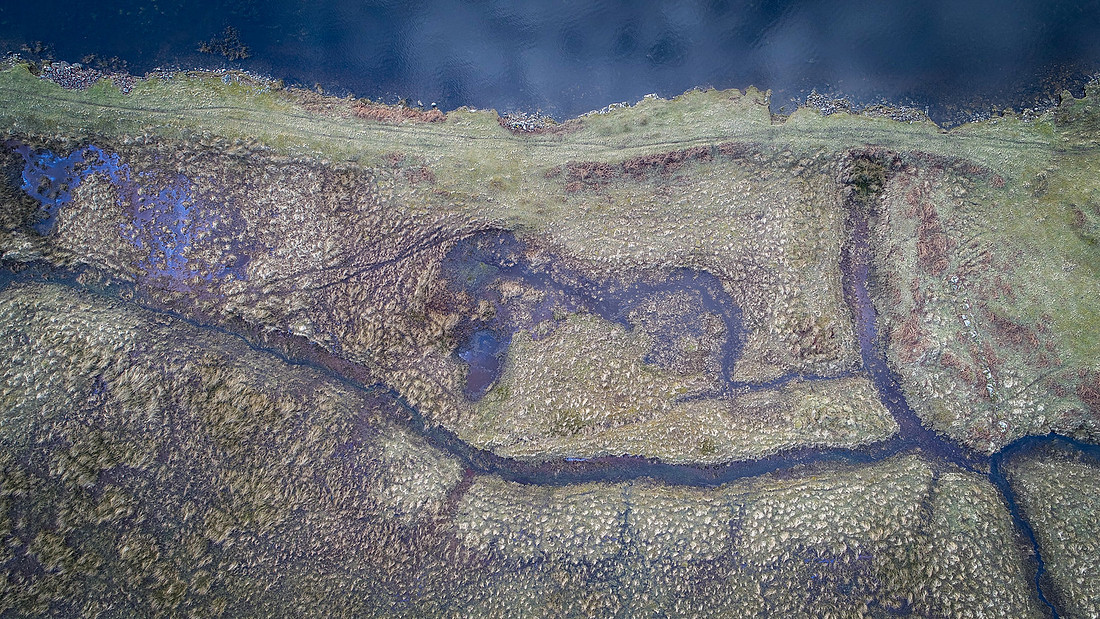
Reflective Coda: An Cuan mu Thimcheall Oirnn
When I look back over ten years; photographs printed in the soft blacks of sea-mist; canvases where seawater left its crystalline film; notebooks salted with droplets; and hours of audio where the sea is alternately a hush and a hymn, I see that Ardnamurchan has taught me its island lesson. To be “almost-island” is to carry both the pride and the ache of edges: the solace of a coherent culture and the challenges of distance; the clarity that comes with limits and the stubborn negotiations they demand. Across the Sound, Mull formalises islandness; here, we inhabit it. The difference is not merely cartographic. It is felt in waiting rooms and wheelhouse chatter, in quarterly budgets and school timetables, in how we make and how we maintain.
But the sea does not divide us from the world. It connects; in currents and migrations, in weather and trade, in imagination. The ocean that cradled the volcanic birth of this peninsula, that carved Sanna’s pale crescents and flung storm against Ben Hiant’s shoulder, is the same ocean that moves under Arctic light and Pacific typhoons. The mother sea that twined early life into complexity now interlaces our lives with obligations: to look after the kelp beds and nursery shallows, to attend to what plastic and heat and noise make of the deep, to insist that policy see realities as they are lived.
“Lorg na Gaoithe is na Tuinne” / “The Trace of Wind and Wave”
Between Eucrite’s dark and machair’s bright,
a line of foam writes “here” in white;
seal-breath at dawn, a skerry’s psalm
An Cuan holds Ard, and Ard the calm.
Not island, yet by tide and tongue
an island’s heart beats westward, sung.
In the end, Carson’s frame returns me to gratitude: for the mothering and the restlessness, for the people and their sea. My work: images, walks, notes, and sounds is a small portion of listening returned. If these pages bear any fidelity, it is to the pulse beneath the peat and the hush beyond the reef.
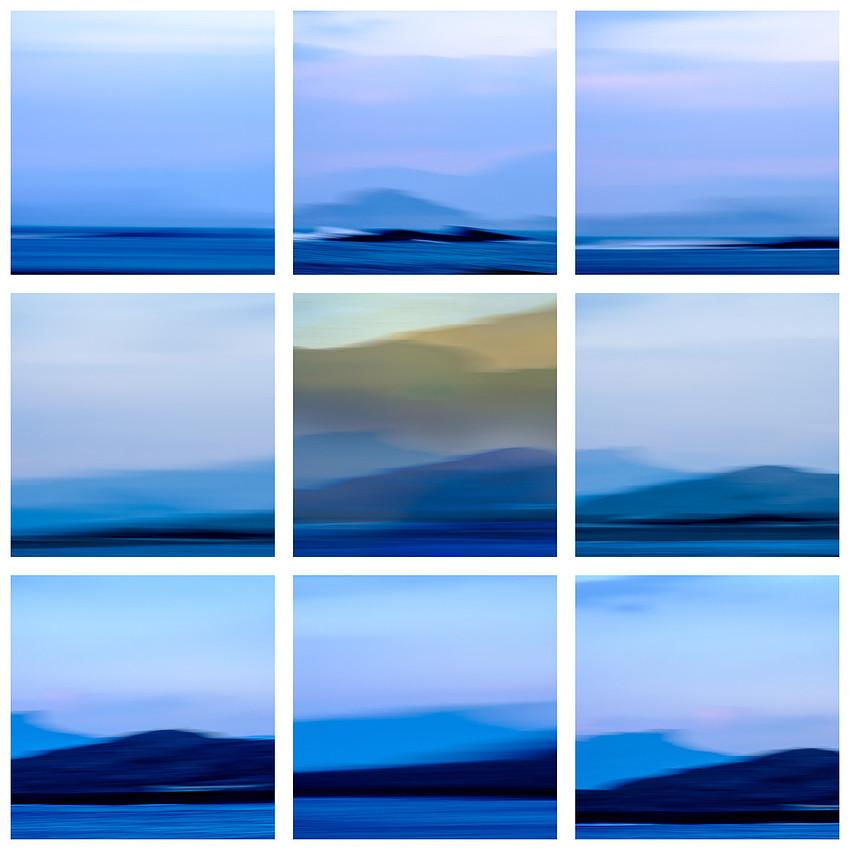
A Call to the Reader
Stand, sometime soon, by a body of water you know; the ocean if you can, a loch or river or even the condensed breath of a city fountain if you cannot, and ask yourself: what does this water make possible in me? What does it change about my pace, my seeing, my patience? Then ask: what does it ask of me? Care, perhaps, or a slowed attention, or a promise to learn the names Gaelic or otherwise of its features. Make something from that encounter: a sketch, a tune, a paragraph, a picture, a recorded minute of wave or weir. Let your own Sea Around Us begin in that act.
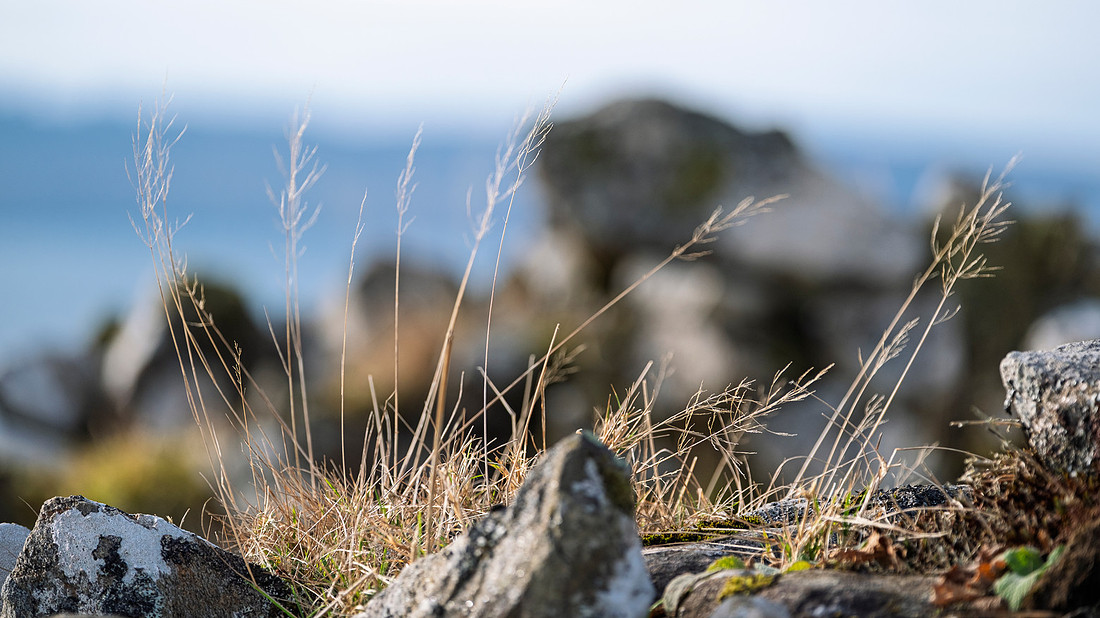
Bibliography
- Ardnamurchan Central Complex, Hebridean Igneous Province — British Geological Survey / Earthwise. (Detailed overview of Centres 1–3, doming, cone-sheets, and country rock context.) [earthwise.bgs.ac.uk]
- Ardnamurchan ring complex — Geological Society of London, 100 Great Geosites. (Classic site description; Great Eucrite and evolving interpretations.) [geolsoc.org.uk]
- Ardnamurchan 3D cone-sheet architecture explained by a single elongate magma chamber — Burchardt et al., Scientific Reports (2013). (Reinterpretation of cone-sheet sources; elongate magma chamber model.) [nature.com]
- Ardnamurchan Rocks – A Geological Tour — Wild Ardnamurchan. (Accessible field guide to the volcano’s exposures from Sanna to the lighthouse.) [wildardnamurchan.com]
- Ardnamurchan | GeoGuide — Scottish Geology Trust. (Historical mapping of the complex and debates over ring-dyke interpretations.) [geoguide.s...ytrust.org]
- Appendix — Glossary of Ardnamurchan place names — GeoGuide. (Hydronymy and Gaelic place-name meanings for western Ardnamurchan.) [geoguide.s...ytrust.org]
- Early Gaelic names in Scotland — Historic Environment Scotland Blog. (Etymology of Àird nam Murchan and early attestations; linguistic notes.) [blog.histo...nment.scot]
- List of Gaelic place-names in Argyll: Morvern and Ardnamurchan — National Library of Scotland Manuscripts Catalogue. (Archival list of Gaelic place-names.) [manuscripts.nls.uk]
- Gaelic, and ancient language on Ardnamurchan and Rùm — Omniglot article by L. A. Pentecost. (Dialectal notes; prosodic observations for Ardnamurchan Gaelic.) [omniglot.com]
- The Ardnamurchan sea monster — Coast that Shaped the World / Ardnamurchan History & Heritage Association. (Local folklore accounts from Kilmory and Mingary Pier.) [coast.scot]
- Ardnamurchan – Clan Donald Heritage — Clan Donald Heritage. (Historical-cultural context: MacIains, Mingary, and the sea eagle motif.) [clandonald...ritage.com]
- The flora of Morvern and Ardnamurchan compared with that of Mull — J. E. Raven, Watsonia (1980). (Comparative biogeography across Sound of Mull; island/mainland contrasts.) [The flora...at of Mull]
- A Land that Time Forgot — Spirit of the Highlands & Islands. (Public-facing interpretation of the lopolith reading and volcanic heritage.) [discoverhi...lands.scot]
- Remoteness, islands and islandness — Owe Ronström, Island Studies Journal (2021). (Conceptual framework for “islandness” as relation rather than geography.) [islandstud...ournal.org]
- The Sea Around Us — Rachel Carson, Oxford University Press (1951; rev. ed. 1961). (Primary inspiration, structure, and themes; see also research summaries.) [en.wikipedia.org], [ebsco.com]
- Summary of “The Sea Around Us” — EBSCO Research Starters / Charlotte Zoë Walker. (Concise overview of Carson’s tripartite structure and thematic emphasis.) [ebsco.com]