Spiorad aird nam Murchan Pt 34 A Place Called Home An Dachaigh

Spiorad Àird nam Murchan: Part 34
A Place Called Home | An Dachaigh
On belonging without possession, the geography of return, the people who make a place familiar, and the quiet, complicated ways in which somewhere repeatedly visited can begin to feel like home.

Introduction: The Word I Have Been Avoiding
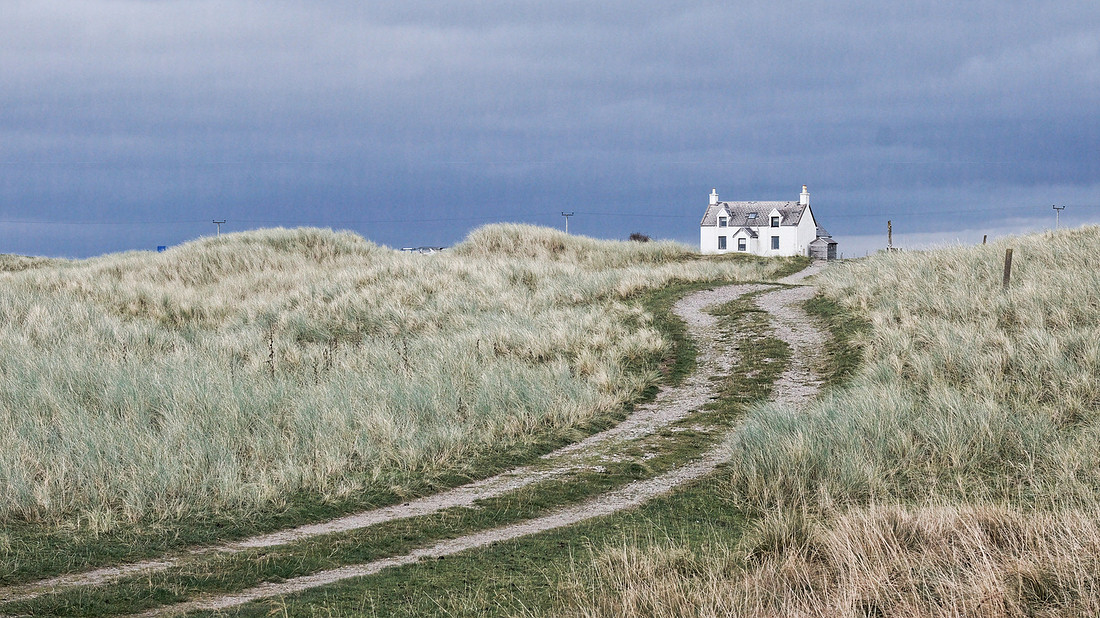
This essay has taken considerably longer to finish than I expected, although perhaps that is entirely appropriate given the subject. Home is not a word I have wanted to hurry towards, still less one I have wanted to use carelessly, and somewhere between finishing Part 33 and beginning this piece the idea stopped being something I could simply approach intellectually. Too much had happened around it. Too much of what I wanted to explore had become entangled with our own circumstances, with disappointment and anticipation, with my health earlier in the year, with returning to Ardnamurchan after an absence that felt longer than it actually was, and with a particular moment on Skye when I found myself looking across the water towards the peninsula after what had been a difficult creative week.
That moment on Skye has stayed with me. I had been struggling creatively, not in any dramatic sense, but with the quieter and perhaps more unsettling feeling that I had temporarily lost contact with whatever instinct usually tells me why I am making photographs in the first place. I could still make photographs, of course, but making them and feeling connected to them are quite different things. There are times when creativity begins to feel like a process of searching because searching is what we think creative people are supposed to do. Another landscape, another possibility, another piece of light, another subject, perhaps another answer. It is very easy to confuse movement with progress.
Then, across the water, I saw Ardnamurchan.
Nothing extraordinary happened. There was no sudden revelation, no photograph that changed everything, and certainly no grand moment in which all uncertainty disappeared. The peninsula was simply there in the distance, familiar even from that unfamiliar perspective, and I felt something settle. After a week of trying to locate myself creatively, perhaps what I needed was not another place at all, but the sight of the place to which my creative compass had already been pointing for years.
I realised how little desire I now have to chase some endlessly receding idea of the next landscape. That does not mean I have lost my curiosity about elsewhere, nor that my camera and I will never wander beyond the peninsula. It simply means that the restless part of creative practice, the part that tells us inspiration must always be somewhere we have not yet looked, has become much quieter. Ardnamurchan has given me enough questions for a lifetime. After nearly ten years of returning, photographing, listening, writing, painting, recording and forming friendships, I increasingly understand that this is not a subject I am gradually exhausting. It is a relationship I am only beginning to comprehend.
That experience on Skye would have been enough to complicate an essay about home, but my return to Ardnamurchan late last month and into this month carried another significance. It was my first time back since experiencing the DVT in March, an episode which inevitably shifted my relationship with my body, movement and time, and it was also the first return since our plans to move north had been interrupted when the sale of our house here fell through. With that collapse we also lost the place in the region on which we had had an offer accepted.
I know there are far greater difficulties in life, and perspective matters, but truth matters too. It was deeply upsetting.
By that stage we had allowed ourselves to imagine the move not as some distant ambition but as something real. Rooms had already begun to acquire an imagined life. Roads I have travelled repeatedly as a visitor had started taking on the shape of ordinary journeys. The word eventually had become soon. Then, with remarkably little ceremony, soon returned to eventually.
The psychological effect surprised me. Losing a property transaction is one thing. Feeling, however temporarily, that a life you could almost touch has moved away from you is quite another. Yet the more time I have had to sit with that disappointment, particularly after returning north, the more clearly I have understood that what we lost was a house and a timetable. We did not lose Ardnamurchan. We did not lose the friendships we have made there, the attachments formed over almost a decade, the creative work, the gallery, the conversations, the places that have become familiar, or the future we still intend to build.
We will make it north eventually. Of that we know.
Perhaps the delay has even made this essay more honest, because it has forced me to examine what I mean when I use the word home before I physically live there. I am not from Ardnamurchan. I was not born there. My family history is not written through generations of its crofts, townships, graveyards, working landscapes and remembered lives. I have no desire to borrow that history or to allow affection to become a claim of ownership. There are people for whom Ardnamurchan is home in ways it cannot yet be home for me, people whose lives are embedded within its schools, roads, gardens, crofts, businesses, weather, families, ferries and winters, and people whose connection reaches backwards long before I first turned a camera towards the peninsula.
That distinction is important to me because this essay needs to be written through love, respect and honour rather than possession. Yet acknowledging the difference does not make my own relationship false. For almost ten years Ardnamurchan has become the place around which so much of my creative identity has gathered. Photography changed there. Writing emerged alongside it. Sound recording, moving image and painting have gradually become part of the same conversation. Friendships have grown beyond the circumstances in which they began. Places that once existed as destinations have entered memory so deeply that I sometimes carry them around with me without consciously thinking about them.
Somewhere in all of that, Ardnamurchan became my creative home.
Perhaps Spiorad Àird nam Murchan has always been an attempt to understand how and why that happened.
So I hope readers will forgive the longer gap between Part 33 and this essay. I needed to let this one take its own time because the subject felt too close to force into shape simply to maintain a schedule. Part 33 brought me to the threshold of the word home. This piece needs to step further inside it, while always remembering that a threshold can be crossed in many different ways.
1. The Threshold and the Literal
Geography of a Peninsula
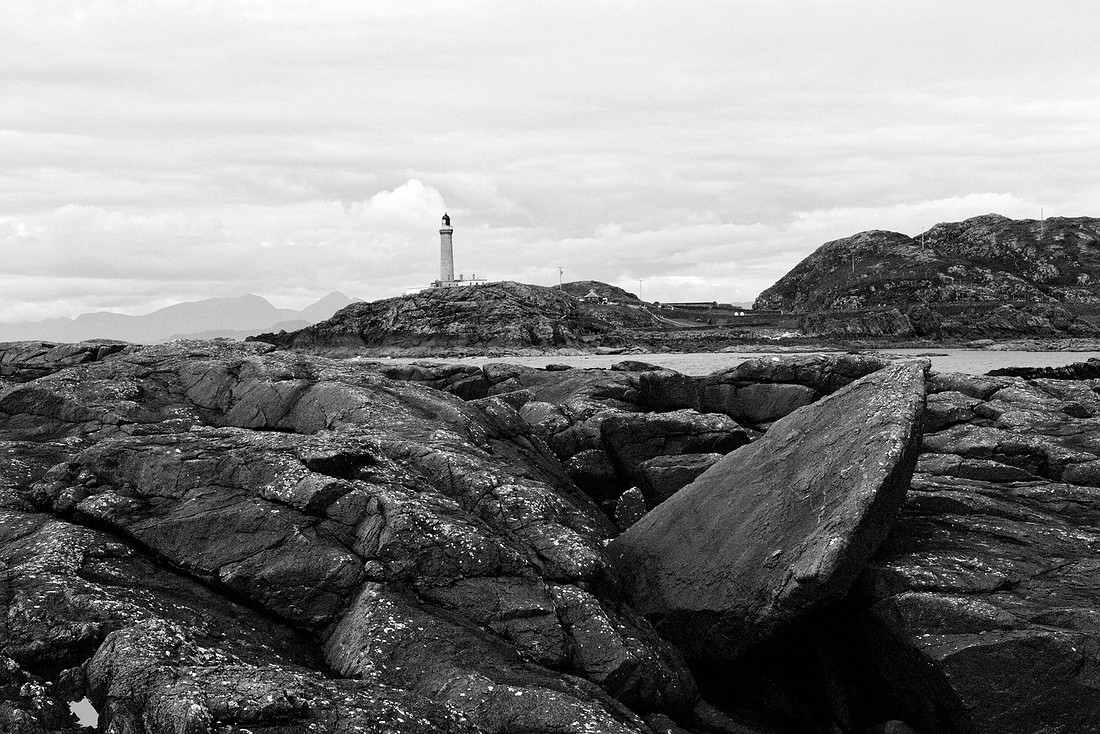
Ardnamurchan does not make arrival particularly easy, and I have come to value that about it. Geography refuses to let the peninsula become merely another destination reached almost accidentally. Whether travelling through the Corran Narrows and then westwards or approaching by another route, there comes a point where the nature of the journey changes. Roads contract, distances acquire another character and the assumptions carried north from motorways become less useful.
For us, the Corran crossing has gradually become part of that transition. It is only a short journey across water, and I am conscious that for those who depend upon it the ferry is first and foremost infrastructure, not metaphor. Its reliability affects appointments, work, school, deliveries, family life and all the ordinary practicalities that rarely appear in romantic descriptions of remote Scotland. Yet repeated journeys create personal meanings alongside practical ones, and after all these years there is something about that brief crossing that changes my sense of direction. The journey after Corran does not simply feel westward. It begins to feel inward, towards a landscape whose markers have become part of memory.
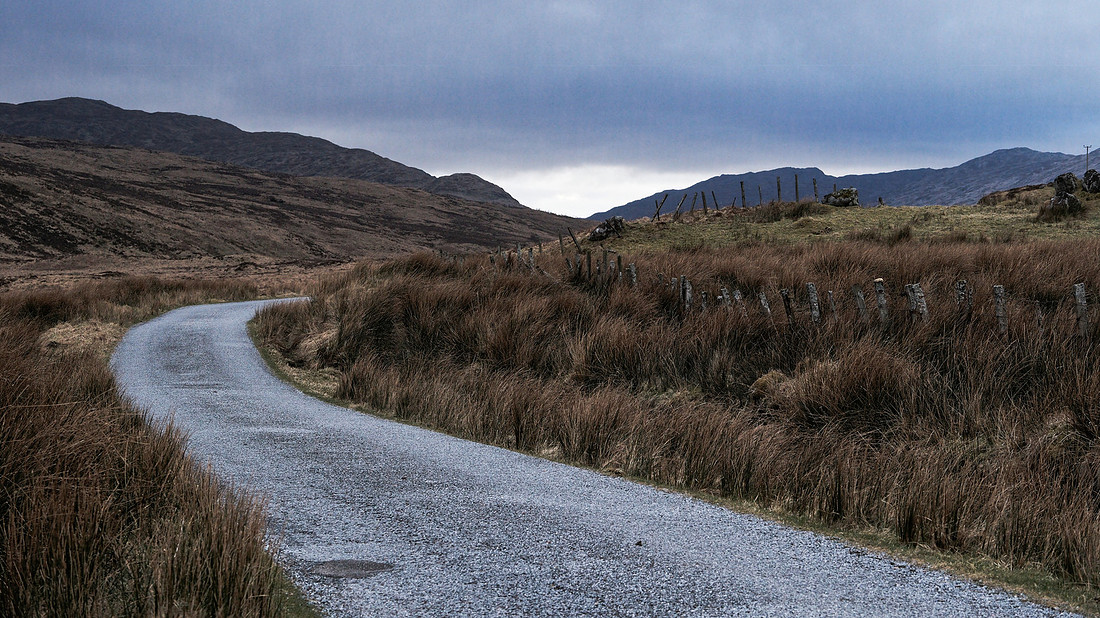
The road itself has taught me something about familiarity. On early visits, every view seemed to announce itself. The temptation was constantly to stop, photograph, look, record. Over time the landmarks have become quieter. A bend is anticipated before reaching it. A hill appears where memory expects it. Particular sections of woodland indicate not simply where we are but how far remains. Weather over Loch Sunart can prompt an almost unconscious calculation about what conditions might be like farther west. None of this constitutes local knowledge in the deep sense possessed by people who navigate these roads throughout the year, but it does represent a change from seeing landscape as spectacle towards recognising it as an environment through which life actually happens.
That distinction between the experience of arrival and the experience of living there is one I want to preserve. I can find the single-track road beautiful precisely because I have chosen to travel along it on my way to somewhere I love. The person trying to reach an appointment, make a delivery, get children somewhere on time or complete a day's work has an entirely different relationship with the same tarmac. The weather that gives me a dramatic photograph may represent inconvenience or lost working time to somebody else. Remoteness is never solely aesthetic when you live inside it.
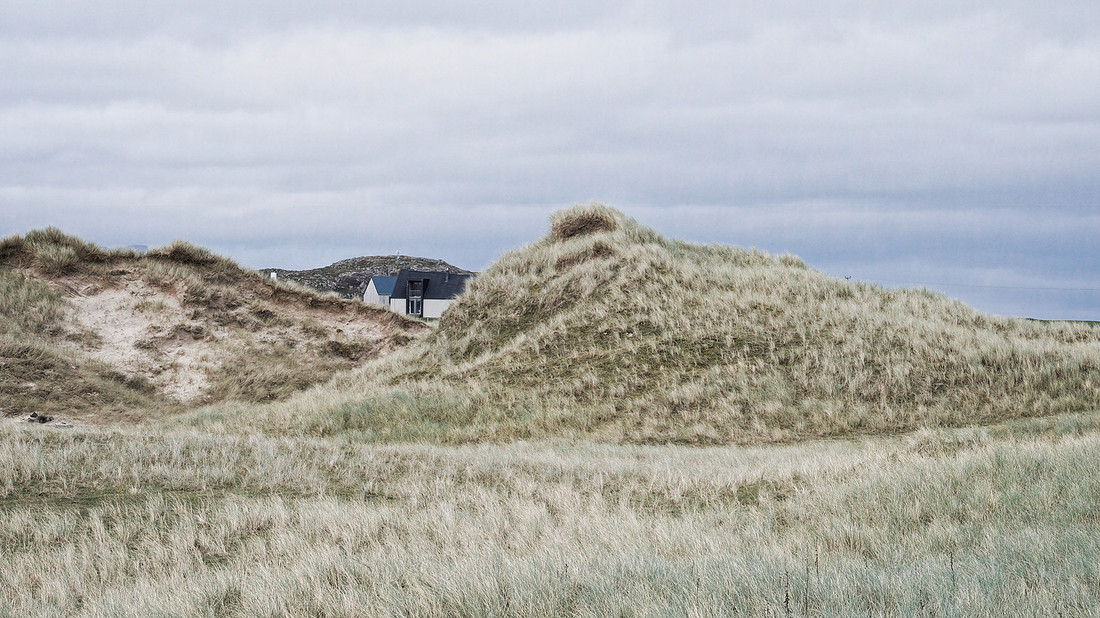
The same is true of houses. Ardnamurchan contains buildings that invite easy romance: old croft houses, white cottages set beneath enormous skies, modern homes positioned towards loch and mountain, and ruins whose remaining walls have been softened by weather, moss and time. As photographers we are conditioned to see form, texture, history and atmosphere in these places, but the visual language of the Highland cottage can become dangerously detached from the reality of Highland housing.
A house in a remote community is not simply an attractive structure in a landscape. It is potentially a family able to remain there, a child attending a local school, somebody working locally, volunteering, shopping, gardening, caring, helping, maintaining and contributing through winter as well as summer. Housing scarcity, affordability, second homes and the pressure created when residential property moves away from permanent occupation therefore belong within any honest discussion about making a home in the Highlands.
This matters personally because I do not want our eventual move to be framed as though we are simply acquiring our own piece of Ardnamurchan. That idea sits uncomfortably with everything these essays have gradually come to explore. Putting down roots should involve much more than buying a property. If and when we finally carry boxes through a new front door, the house itself will only provide the physical structure. The work of making a home lies elsewhere, in participation, friendship, patience, responsibility and the willingness to become part of everyday life rather than remaining permanently enchanted by its surface.
The collapse of our own move has unexpectedly clarified this. For a while the property we had hoped to buy became inseparable from my idea of the future, so when we lost it, the future seemed to disappear with it. Returning to Ardnamurchan showed me how mistaken that was. The house had gone, but nothing that mattered most had actually withdrawn. People still greeted us. Conversations resumed. The work still made sense. Familiar places were still familiar. The part of my life that has grown there over nearly a decade had not been cancelled by somebody else's decision in a property chain hundreds of miles away.
There will be another house.
What I understand now, more clearly than before, is that the house does not create the belonging.
It gives belonging somewhere to put the kettle on.
2. Dùthchas and the Psychological Pull
Belonging, Inheritance and the Place We Carry
The Gaelic word dùthchas has hovered around my thinking for some time, but I have resisted using it too casually because it contains far more than a convenient poetic equivalent of belonging. Its meanings gather around inherited connection, homeland, tradition, culture, knowledge and the responsibilities that exist between people and place. That complexity matters particularly here because Ardnamurchan is not an empty geographical stage upon which I am free to project whatever meaning I choose. It is lived land, remembered land, worked land, named land, and those relationships extend backwards through generations.
There is something profoundly different between deciding that a place matters to you and inheriting a relationship with that place from childhood. People raised in Ardnamurchan carry forms of knowledge I simply do not possess. They may remember who lived in houses before the current occupants, which families belonged to particular places, changes in roads or businesses, winters that altered assumptions, people no longer present, stories attached to apparently unremarkable corners of landscape. Place is not encountered only through appearance but through memory layered over memory.
That distinction is essential to my understanding of home because I would never want the sincerity of my own connection to depend upon pretending it is the same as somebody else's. Belonging does not need to become a competition in which one form attempts to appropriate the authority of another. My relationship with Ardnamurchan began through repeated visits and creative attention. It has deepened through friendship, participation and time. It is chosen, but chosen does not mean shallow.
This is where the strange experience of feeling homesick for somewhere you do not yet live enters the conversation.
For years I was slightly embarrassed by that feeling because it seemed unreasonable. Sheffield is physically where our house is. My everyday life still operates from here. Yet after returning south there has increasingly been a sense of something being left behind beyond the miles, and it is not simply the landscape. Beautiful places exist everywhere, and if geographical drama alone created belonging I could presumably substitute Ardnamurchan with another mountain, another beach or another Atlantic coastline.
I cannot.
What I miss is specificity.
I miss particular people rather than the abstract idea of community. I miss specific roads, the turn of certain weather, particular conversations, familiar buildings and the accumulated small knowledge that comes through repetition. I miss knowing roughly how somewhere feels before I reach it and then discovering that the day has changed it anyway.
This is also why I am wary of romanticising the peninsula. Romance can survive perfectly well at a distance because it does not require contradiction. Relationship does. A place becomes more real when we begin accepting the inconvenient parts alongside the beautiful ones, when we listen to local frustrations instead of protecting our preferred image, and when we understand that the landscape exists for purposes other than providing us with creative inspiration.
There have been wet days when nothing particularly picturesque happened, conversations about entirely ordinary problems, cancelled plans, businesses trying to survive, difficult winters, worries about housing and transport, and all the other realities that exist in any community. None of this lessens my affection for Ardnamurchan. If anything, it deepens it because I no longer need the place to behave like the version that initially drew me there.
Perhaps familiarity becomes belonging when the imperfect place starts mattering more than the imagined one.
The community has been central to that change. Over the years the map of Ardnamurchan has been populated not simply with locations but with people. We no longer travel north only towards Sanna, Glenmore, Kilchoan, Salen, Loch Sunart or Ben Hiant. We travel towards conversations. Particular doors. Friends. Gardens. Shared jokes. Questions left unfinished on the previous visit.
There is an enormous emotional difference between being recognised in a place and merely recognising the place itself.
Someone remembers what I was working on. Someone asks how the move is progressing. Someone knows I have been unwell. Somebody tells us what has changed since we were last there. Another conversation resumes with such ease that the months between visits seem temporarily irrelevant. None of these moments is spectacular enough to become part of a traditional landscape essay, yet increasingly they are the landscape for me.
I remain wary of using the word kin too freely because kinship in Highland communities can carry generations of family meaning, but friendship creates its own quiet form of relation. I do not believe acceptance requires the distinction between local and incomer, resident and visitor, inherited and adopted belonging to disappear completely. Perhaps genuine acceptance allows those differences to remain without making them barriers.
Someone does not need to pretend I was born there in order to make me feel welcome.
I do not need to pretend it either.
That honesty allows the friendship to mean more.
3. The Architecture of Kinship
Community as Home
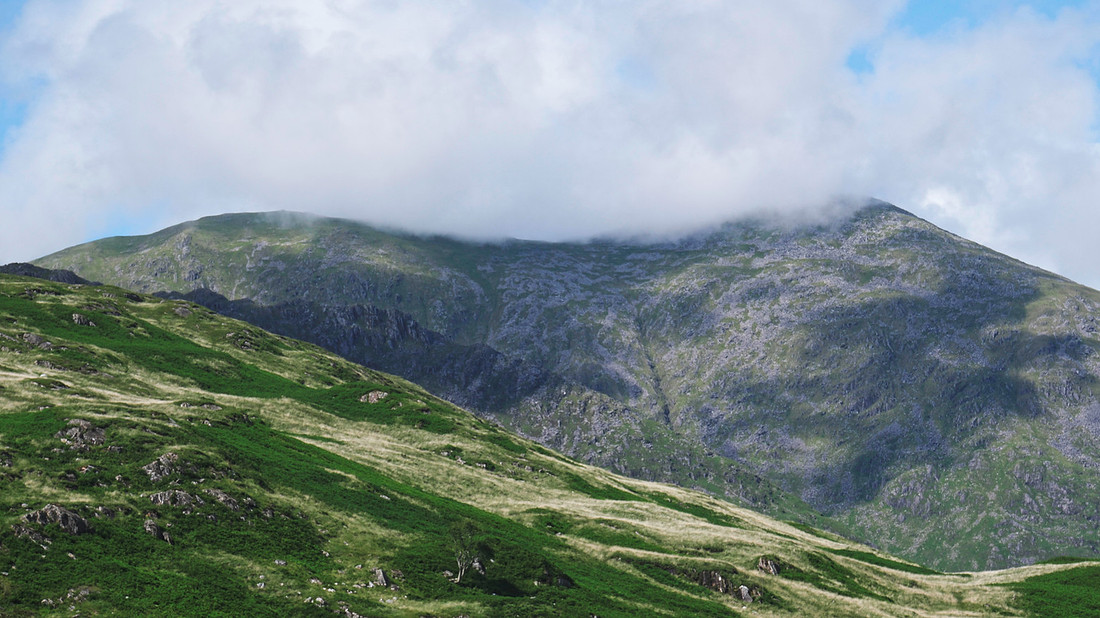
The longer I think about home, the less convinced I am that buildings have very much to do with its deepest meaning. They give it walls and warmth, somewhere to sleep, somewhere to return to at the end of the day, but the structure that makes a place emotionally inhabitable is built largely between people.
Remote communities make this unusually visible because the practical value of relationships is difficult to ignore. People know whose skills, tools, knowledge or time might be useful when something needs doing. Somebody understands machinery, another knows boats, gardens, livestock, timber, local history, weather or the particular oddities of a building. These networks are not quaint remnants of some idealised communal past. They are practical systems of reciprocity that make life work.
Nor should community ever be romanticised as permanent harmony. Real communities contain disagreements, difficult histories, personalities that do not always fit comfortably together and arguments that may have been circulating longer than the visitor realises. That is not evidence of community failing. In some respects it is evidence that community is real. People continue to meet after disagreement because there are roads, halls, gardens, schools, committees, ferries, shops, neighbours and lives still requiring attention.
Perhaps home works in much the same way. It is not created by uninterrupted affection but by continuation.
This has given me another way of understanding our own relationship with Ardnamurchan. Part of our life already happens there even though we remain based in Sheffield. Friendships continue between visits. Plans are discussed. People know when we are returning. My work with the gallery at the Ardnamurchan Natural History Centre in Glenmore has given the creative project an actual physical presence on the peninsula, while my growing involvement with the West Highland Community Gardens has opened another relationship with the place, one centred not on observing landscape but on participating in something shared.
Gardens have been surprisingly important in changing my perspective. Photography often places the artist slightly outside what is being observed. Gardening makes such separation difficult. Things need watering, growing, tying, harvesting, clearing and tending. Seasons matter for entirely practical reasons. Weather is no longer just light. Rain can be welcome. Sun can become a problem. Soil asks for attention at a scale considerably smaller than mountains.
There is humility in that.
These experiences have made me think increasingly about the difference between visiting Ardnamurchan and contributing to it. The question is uncomfortable but necessary. If a place gives me photographs, writing, friendships, creative purpose, income through workshops, a gallery and what I increasingly describe as my life's work, then what travels in the opposite direction?
What do I return?
There is no single answer, and I certainly do not imagine that making art automatically settles the account. Reciprocity is built through many small actions. Supporting local businesses matters. Volunteering matters. Sharing skills can matter. Listening matters. Turning up matters. Treating people's stories with care matters. Understanding when something should remain private matters. Allowing local voices to challenge your own interpretation matters.
This is where the idea of home begins to become a verb rather than a noun. We make home through repeated acts of care. Cooking, mending, growing, checking, visiting, repairing, listening, remembering, carrying, sharing. None is especially dramatic on its own. Together they make a place inhabitable.
I increasingly hope that when we eventually move, the transition will not feel like arriving with the expectation that the landscape should somehow fulfil us. I would rather arrive ready to take our place within the reciprocal life already happening there.
And strangely, what I anticipate most is not the spectacular.
It is the ordinary.
I look forward to experiencing Ardnamurchan on a day when I do not feel remotely compelled to photograph it. I look forward to travelling somewhere because we need milk, calling to see somebody without it being squeezed into a limited visit, becoming irritated by practical things, watching bad weather through a window without secretly wondering whether I ought to be outside making art from it.
I want some of the peninsula's exceptional quality to disappear through familiarity, not because it will matter less but because that is what intimacy eventually permits. A home cannot remain a permanent destination.
At some point it needs to become the place from which you simply get on with living.
4. The Creative Vessel
The Multi-Sensory Architecture of Home
Photography first gave me a way into Ardnamurchan, but over time Ardnamurchan has changed what I need from photography.
Early encounters with the peninsula were inevitably visual. It is difficult not to respond first to the scale and drama of western Ardnamurchan, to the Atlantic light, the old volcanic geology, rock broken and weathered into extraordinary forms, the pale sands and clear water around Sanna, the imposing presence of Ben Hiant, the changing character of Loch Sunart, woodland after rain, winter's restricted palette and summer evenings that seem reluctant to finish.
Yet repeated exposure alters perception. The dramatic view remains beautiful, but it stops being sufficient. After years of returning, I often find myself drawn instead towards quieter things, small relationships, the edge of a path, a fence repaired differently from the section beside it, weathered material, a garden in a particular season, patterns made by human use, evidence of time rather than spectacle.
Perhaps familiarity shifts our attention from what a place looks like towards how it behaves.
That shift has taken my creative practice beyond still photographs because photography began to feel insufficient for everything I wanted to remember. Sound entered naturally. Moving image allowed time to become visible. Writing developed as somewhere to explore what happened around and between photographs. Painting offered a way to work with memory rather than evidence, allowing colour and emotion to move away from literal description.
I no longer think of these as separate creative territories. They are different methods of listening to the same place.
Time, patience and the slowing of attention
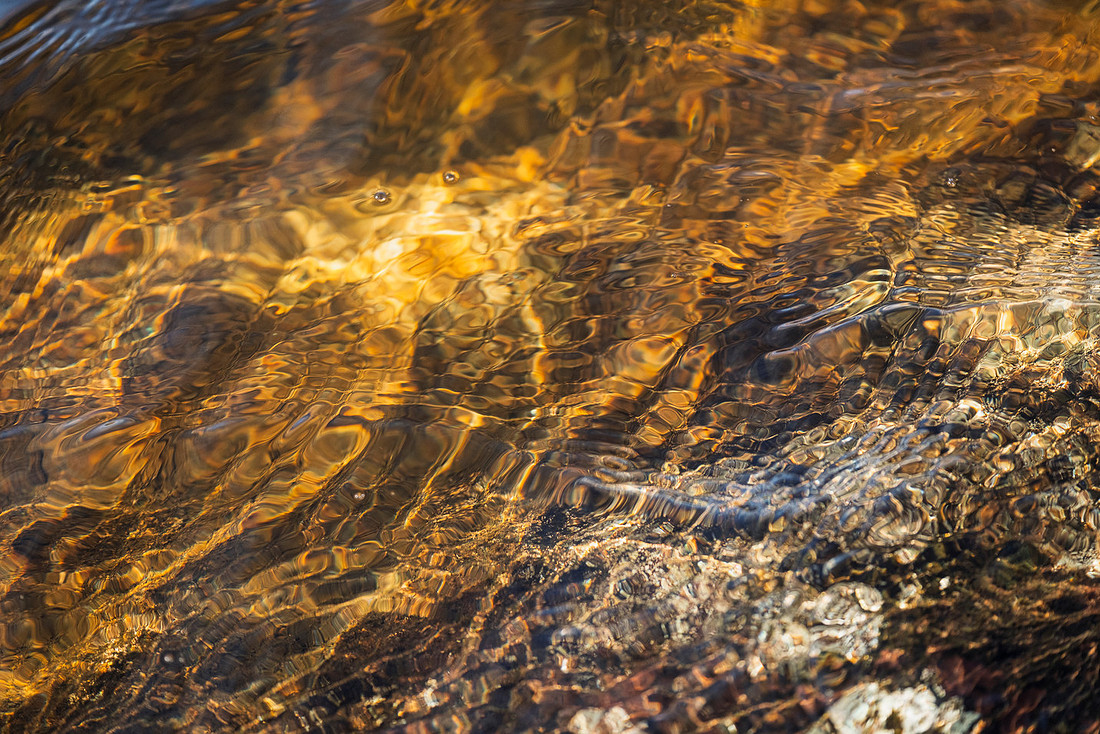
Long-exposure photography is built around an odd compromise. The camera remains still precisely so that movement can become visible. Water shifts, clouds accumulate, grass bends, the sea loses its surface detail and time itself becomes part of the image.
I have spent long periods over the years simply waiting.
Waiting for the light across Ben Hiant to change. Waiting beside water. Waiting through periods when a photograph appeared unlikely. Waiting for cloud to lift and occasionally realising that the image was more interesting before it did. Slowly, the expectation that every visit should produce something spectacular has faded.
The camera has trained me towards patience, but Ardnamurchan has also trained the camera.
The difference matters.
In earlier years I probably arrived carrying more urgency from elsewhere. Time was finite, conditions were being assessed, locations considered, possibilities calculated. These days I am far more comfortable allowing nothing much to happen. Sometimes the best part of an afternoon is simply the period of watching before deciding that no photograph is needed.
Slow video has extended that experience. A locked frame lasting several minutes can reveal changes that the impatient eye dismisses: wind repeatedly crossing grass, rain approaching over water, the gradual disappearance of a hill into cloud, a tide altering the balance of stones along a shore. The resulting work asks the viewer for some of the patience required to make it.
But I am conscious that this slowness is something I choose.
For those working the land or sea, time is not slowed for creative reasons. The tide decides something. Weather closes an opportunity. An animal needs attention. A crop grows according to season rather than schedule. A ferry disruption changes a day. Winter compresses the useful light.
My creative patience and those practical rhythms should not be confused, but living alongside one can teach respect for the other. Over ten years I have gradually become less inclined to impose my timetable upon the landscape.
That may be one of the most important artistic things Ardnamurchan has taught me.
Acoustic belonging
Sound has perhaps brought me closest to understanding the sensory architecture of home because sound behaves differently from a photograph.
A photograph presents somewhere in front of us. Sound enters the space we are already occupying.
When I listen to field recordings made on Ardnamurchan while sitting back in Sheffield, there are moments when this geographical distinction becomes surprisingly unstable. Wind moves through marram grass. Water rearranges stones. Rain finds leaves. A boat somewhere across Loch Sunart creates a low engine note that approaches, changes direction and recedes. Gates move. Birds occupy brief positions in the acoustic field. Human voices carry rhythms and inflections that are instantly recognisable.
Close your eyes and the room changes.
This fascinates me because much of our acoustic understanding of home is built from sounds we barely notice while living among them. A familiar engine outside. The closing of a gate. Rain against a particular roof. The ferry. Wind striking one side of a building. A voice from another room. Silence at a certain hour.
For me these sounds become material to record precisely because I am aware of them. I position microphones and listen actively, sometimes with headphones making the ordinary suddenly extraordinary.
For friends living there, the same sounds may simply belong to Tuesday afternoon.
That contrast is beautiful to me. What I carefully archive may be something another person has comfortably stopped hearing.
Perhaps home is partly the soundscape we no longer need to notice.
Materiality, painting and memory
Writing and painting create another form of return because neither needs to remain completely loyal to what was physically in front of me.
Photography carries an expectation of evidence. A photograph begins with light reflected from something that existed before the lens. A recording begins with actual sound. Painting and writing are more unstable. Memory intervenes and, in that instability, another kind of truth becomes possible.
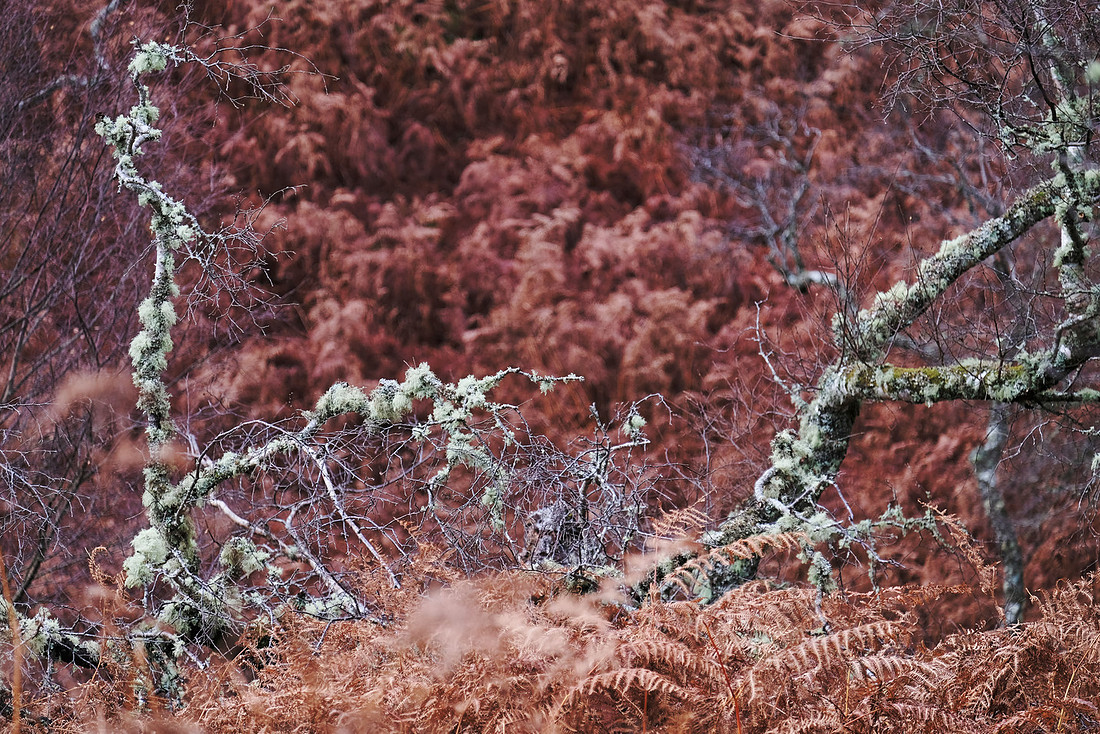
I might remember the bruised purples of a November squall more intensely than any photograph recorded them. Lichen on old rock can become a remembered field of grey, green, orange and yellow. The colour I mix later in the studio may not match the literal surface, but it may come closer to how the place remained in me.
Writing works similarly.
Many of these essays have begun with photographs but moved quickly beyond them. Memories enter that were never contained inside the frame: cold hands, wet ground, someone's remark, a smell carried on weather, something heard before the shutter was released, the peculiar emotional condition in which an image was made.
The photograph is often less the conclusion than the point from which memory begins moving again.
When I compare these creative processes with ways friends physically shape their surroundings, I see interesting parallels but important differences. Mending a fence is not an artistic metaphor when a fence actually needs mending. Working with timber, tending gardens, growing food, maintaining buildings and passing down stories are practical forms of continuity rather than aesthetic gestures.
Yet both involve attentiveness to material.
Both leave traces.
Both say, in different voices, that something here matters enough to be cared for.
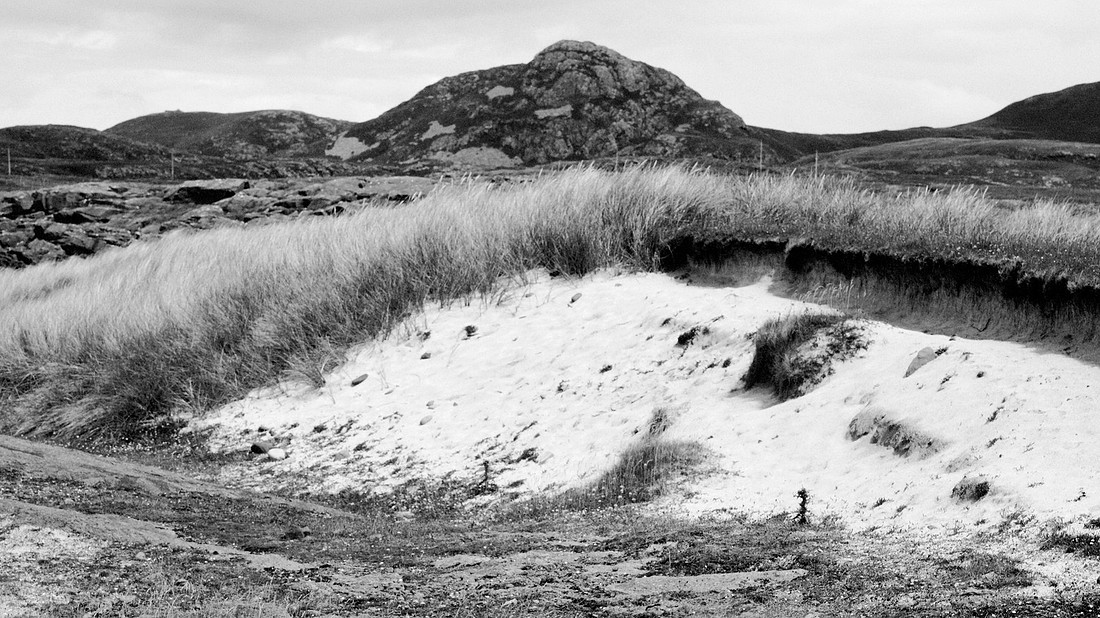
Ten years of looking
Almost ten years of repeated creative work has also produced something I did not anticipate when I first began: an archive.
Thousands of photographs, pages of writing, pieces of film, field recordings, paintings, notes and fragments now contain different versions of Ardnamurchan and different versions of me.
Looking backwards through that material can be unsettling. I see what attracted me first, what I repeatedly overlooked and how my visual priorities changed as relationships deepened. The earlier pictures often reach more readily towards spectacle. Later work tends to linger closer to detail, evidence, gesture, material, community and memory.
Perhaps an archive becomes interesting when it stops recording only its subject and begins recording the evolution of the person making it.
The peninsula has changed during those years too. Communities are never fixed. Buildings change hands. Businesses change. People arrive. People leave. Children grow. Older generations pass away. Storms alter shorelines. Trees fall. Gardens mature. Friendships develop. Things considered permanent reveal themselves as temporary.
There is no single Ardnamurchan for me to document.
There never was.
What I can create is an accumulation of encounters, each honest to a particular moment, and perhaps together those fragments begin to describe something of the relationship.
I hope the archive can also act as a mirror, offered back rather than simply carried away. One of the most meaningful responses I can receive is when someone who lives on the peninsula recognises something in the work rather than simply admiring the scenery. Recognition tells me that perhaps I have paid attention to more than appearance.
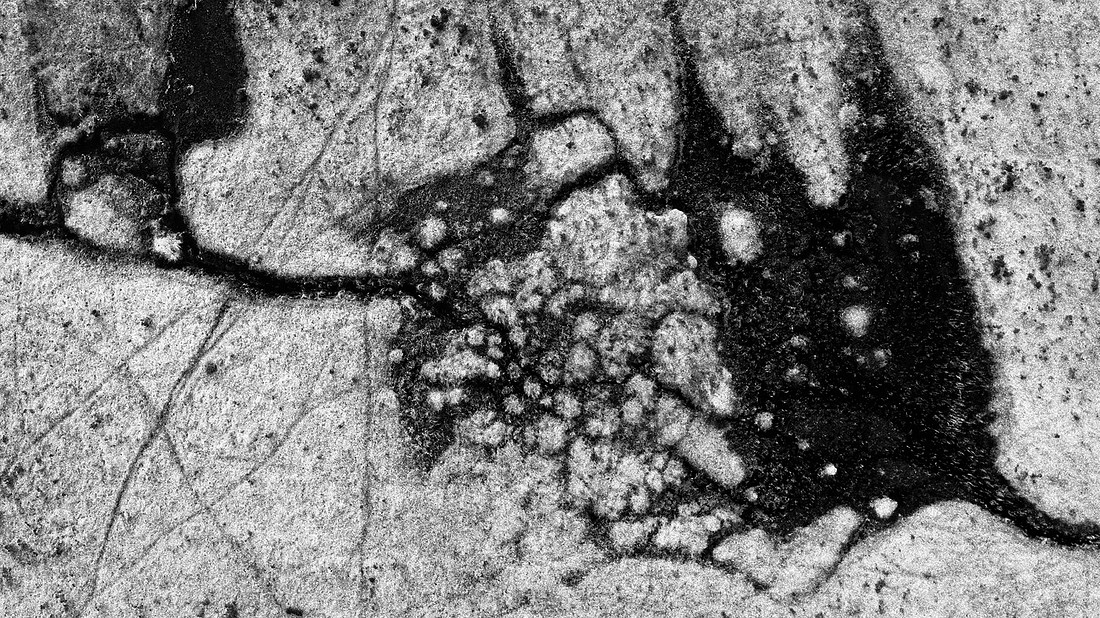
The responsibility of telling
This becomes increasingly important as Spiorad Àird nam Murchan grows.
The longer I work on the series, the less comfortable I am with any suggestion that I might somehow be speaking on behalf of Ardnamurchan. I cannot do that, and nor should I.
I can speak about my relationship with it.
That distinction is not an apology. It is part of the work's integrity.
My Ardnamurchan is shaped by where I go, whom I know, what I notice, what I fail to notice, my own history, my creative interests and the circumstances through which particular encounters occur. Someone born there possesses another Ardnamurchan. Someone who crofts carries another. Someone who left decades ago and still misses it carries another. A child growing up there now is forming an Ardnamurchan that none of us can yet know.
The responsibility of the storyteller is not to collapse those experiences into one authoritative voice. It is to make enough room for plurality.
This may be where the next stage of this project needs to lead. Less towards defining the spirit of Ardnamurchan and more towards inviting other people into the conversation.
Not because my own voice has ceased to matter.
Because it matters enough to know it should never be the only one.
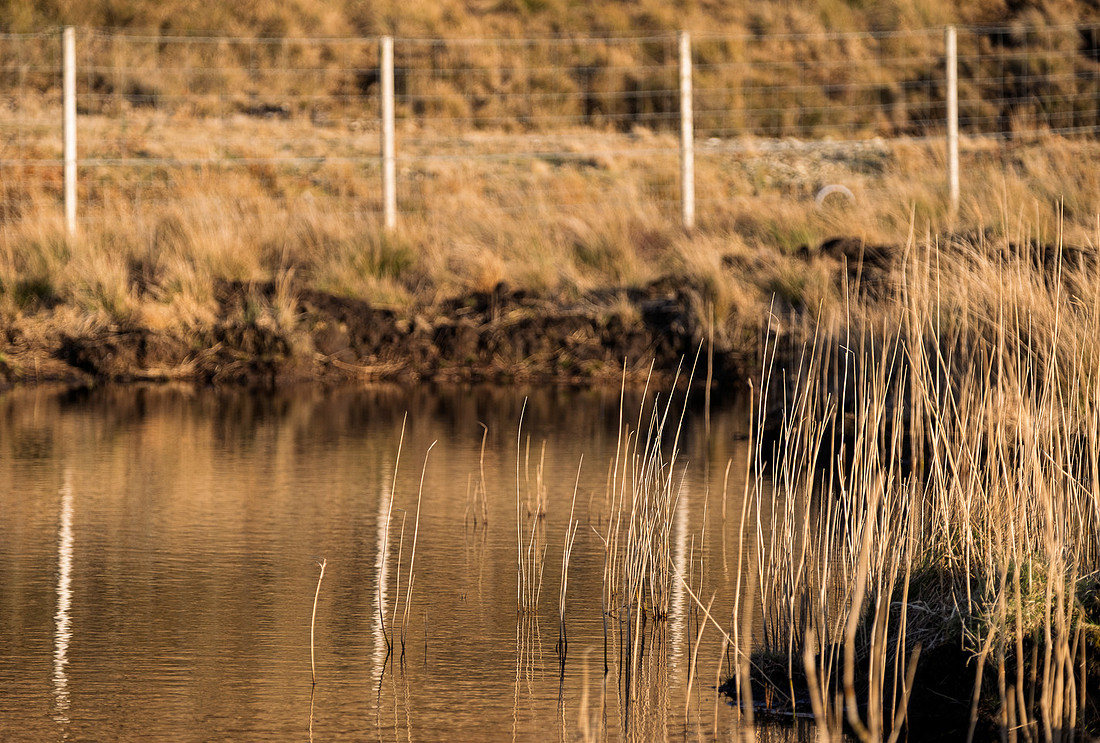
5. Cianalas and the Liminal Space
Living in the "Not Yet"
There are moments when English feels remarkably efficient and still somehow insufficient. Homesickness is a perfectly good word, yet it does not quite encompass the particular ache created by distance from somewhere that appears to hold part of our identity. The Gaelic idea of cianalas, with its associations of longing, yearning, melancholy and distance, reaches towards a more elusive emotional territory, although it too deserves care rather than being reduced to a convenient decorative translation.
What interests me is the emotional state behind it, because that state feels particularly close to where we are now.
We are living, in some respects, between homes.
Our physical life remains here. The practical evidence is incontrovertible. The house, possessions, bills and much of the routine are still rooted in Sheffield. Yet psychologically something has already shifted. We began preparing for departure and cannot entirely reverse that preparation simply because circumstances have delayed us.
Perhaps this is what I mean by living in the hyphen.
Not here or there in any absolute sense, but somewhere between.
The failure of the house sale intensified that condition because we had allowed the future to become specific. It had rooms. Arrangements were being imagined. Journeys were being recalculated. The move was no longer a loose ambition belonging to an undefined future.
Then suddenly it was.
The instinct after that kind of disappointment is to repair certainty as quickly as possible. Find another buyer. Find another property. Restore the sequence. Recover the timetable. Yet I have begun to feel that rushing would misunderstand what this move means to us.
We are not simply relocating.
We are trying to alter the centre of our life.
That deserves patience.
Returning recently helped enormously because it separated the dream of one house from the deeper reality of the place. Ardnamurchan had not vanished because our route towards it became more complicated. Our friends had not withdrawn their welcome. The gallery remained. Creative ideas returned. Conversations continued. The peninsula was beautifully indifferent to the paperwork that had caused us so much disappointment.
There was great comfort in that.
It also forced me to acknowledge another question that has quietly accompanied the dream of moving.
What if living there changes my creative relationship with Ardnamurchan?
Distance creates intensity. When a visit has a beginning and an end, time acquires urgency. Weather is noticed because there are only so many days in which to work. Light can feel precious. Each journey west carries anticipation because departure sits somewhere behind it.
Living there will inevitably alter that economy of attention.
There may be entire weeks when I make no photographs. The same hill might appear outside a window so regularly that I stop giving it conscious attention. Practical life will interrupt creativity, as practical life always does. There will be shopping, work, wet clothes, things that break, journeys that take too long, tired evenings and mornings when the famous western light is merely grey.
I welcome that prospect more than I fear it.
If Ardnamurchan remains dependent upon exceptional experience in order to sustain my affection, then perhaps what I have loved is not really the place at all but my temporary experience of it.
Home must be permitted to disappoint us occasionally.
It can irritate, exhaust and inconvenience us because our commitment is no longer dependent upon perfection.
This is why the waiting, frustrating though it is, may eventually prove valuable. We have been given longer to distinguish expectation from intention. The expectation was that we would move according to a particular timetable. The intention is that we will make our home there.
The timetable failed.
The intention did not.
And during the periods when that distinction becomes difficult to remember, friends seem to hold it for us.
There is something profoundly affecting about hearing not if you move but when you get here. Such small changes in language carry extraordinary weight. They place our future somewhere within other people's expectations as well as our own.
Perhaps that is another kind of belonging.
Someone else is keeping a place for you.
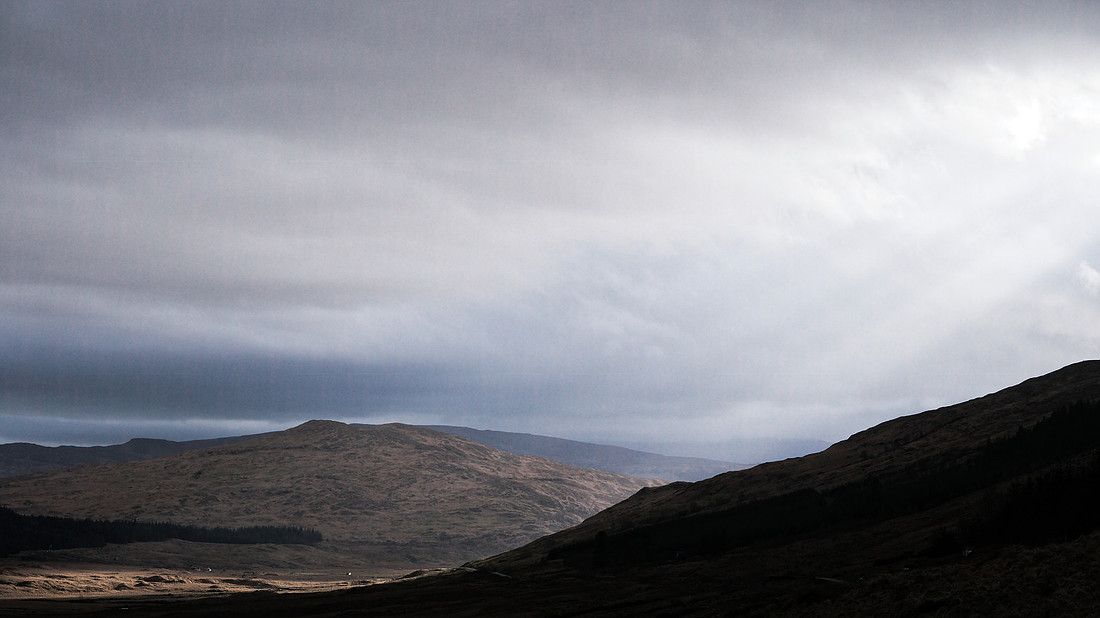
6. Carrying the Spirit
What Changes When Home Finally Becomes Home?
What will really change when the boxes are eventually unpacked?
I have been asking myself that question increasingly because the obvious answer is almost too easy. Our postcode will change. Distances will collapse. People currently seen intermittently will become part of everyday geography. Roads now associated with arrival and departure will become routes to ordinary things. Locations in which I have spent years photographing will be encountered when I am thinking about something else entirely.
These things will matter enormously.
Yet emotionally, I wonder whether the change will be subtler than I once imagined.
If home is made through repetition, memory, friendship, attention, participation and responsibility, then some of its foundations have already been laid. The move will make physical something that has been developing internally for years. It will alter the terms of the relationship without creating the relationship from nothing.
What it will not do is confer ownership of the larger place. A property boundary is exactly that, a legal delineation around a relatively tiny area of ground. It does not give anybody ownership over the history, culture, language or collective memory surrounding it.
Nor will moving to Ardnamurchan make my relationship equivalent to those of people born and raised there.
I do not need it to.
One of the conclusions this essay has brought me towards is that home is generous enough to contain different depths and histories of belonging without requiring them to become identical.
There is ancestral home, the place carried through family and generations. There is childhood home, remembered perhaps long after somebody else occupies its rooms. There is the home made through family or partnership. There is adopted home. There are homes we leave reluctantly and homes we are relieved to leave. There are places that never feel like home despite years spent living within them.
Then there is creative home.
That idea matters particularly to me because Ardnamurchan became the creative centre of my life long before we seriously began planning to move there. In hindsight I suspect I have been carrying pieces of it south for years, attempting to build temporary rooms from photographs, recordings, paintings and words.
The field recordings are perhaps the most literal example. Put on headphones in Sheffield and, for several minutes, wind from western Ardnamurchan occupies the room.
A photograph performs another version.
A painting another.
Writing perhaps goes deepest because it forces me to ask why I needed to remember in the first place.
When gathered together, these fragments have become Spiorad Àird nam Murchan.
The title has acquired more meaning for me as the series has grown. Spiorad, spirit, does not describe some vague mystical quality floating above the land. I have increasingly come to think of spirit as the accumulation of connections which are difficult to photograph directly yet which make a place what it is: geology beneath our feet, weather moving across it, language, work, family, memory, story, friendship, history, loss, resilience, human presence and the traces people leave behind.
Spirit is that unseen connection and presence that binds us, people to people and people to place, carrying the past into the present and changing how we understand ourselves within the landscape.
That spirit belongs particularly to those whose homes are physically there, and to families whose relationships with the peninsula run through generations. It exists through lives lived in the place rather than merely through interpretations of its beauty.
But love, care and creative connection can also carry something of a place beyond its geographical boundaries.
That is where I locate myself.
Ardnamurchan has become my creative home without becoming something I need to claim.
Perhaps the distinction is the reason the relationship now feels so grounding.
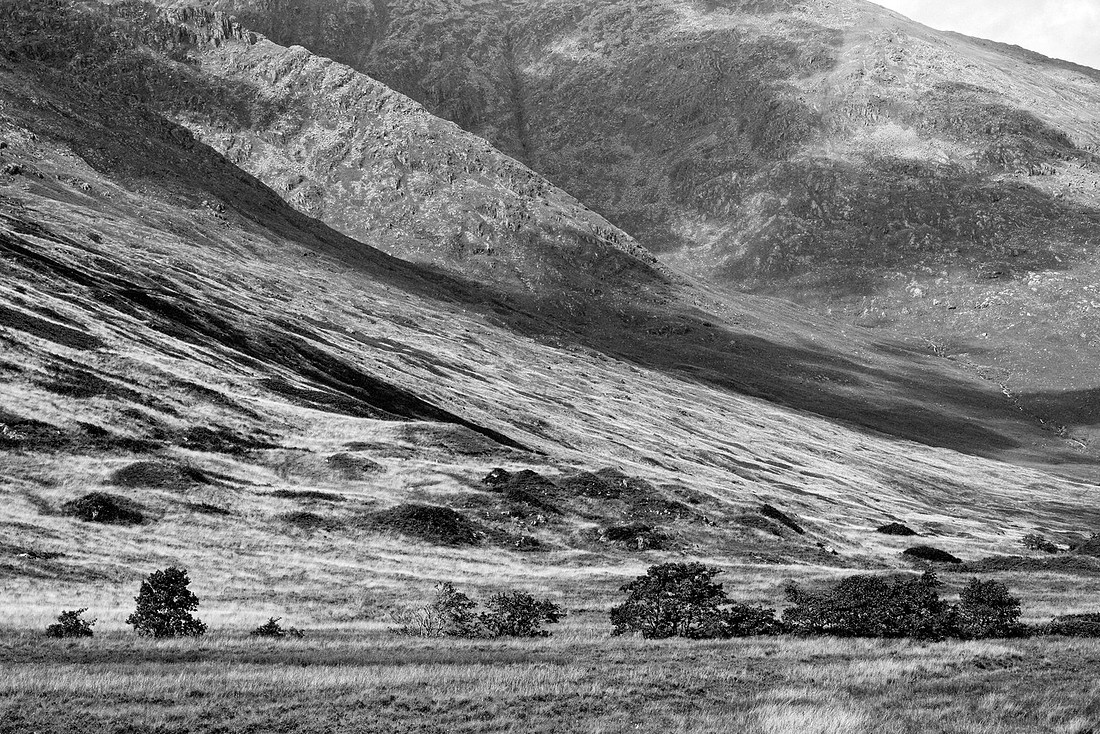
I no longer need Ardnamurchan to provide a dramatic photograph every time I return. I do not need to exhaust its possibilities. I no longer worry that eventually I will have photographed everything there is to photograph, because the proposition now seems faintly absurd. Every change in the place changes the work. Every change in me changes how I meet it.
Almost ten years has not brought me closer to finishing.
It has shown me how little ten years really is.
There are people I need to listen to more carefully, histories I have barely begun to understand, places I have not properly explored, weather I have never experienced and ordinary details I have walked past dozens of times without noticing.
There may also be photographs I cannot make yet because I have not lived enough of the relationship needed to recognise them.
That thought gives me enormous peace.
I do not need to chase elsewhere for the sake of novelty. There is freedom in allowing one place to become deep enough that repetition itself becomes creative.
And one day, hopefully not too far from now, there will be another accepted offer, another removal van, another collection of boxes and another front door.
The journey north will still feel significant when it finally comes, perhaps more so because of everything that has happened between deciding to move and eventually being able to do it. I imagine the crossing at Corran will carry rather more emotion than usual, not because the crossing itself will have changed, but because for once it will not represent the familiar beginning of another finite stay, with a departure already waiting somewhere in the days ahead. There will undoubtedly be excitement, exhaustion and probably a certain amount of disbelief after such a long period of anticipation, especially after the disappointment of believing ourselves close once before and then watching those plans unravel.
Soon enough, though, all of that emotion will have to make room for the reassuringly ordinary business of arriving. There will be boxes to unpack, things temporarily lost inside other things, and a kettle which will hopefully be found before too long. Someone will inevitably ask where something has been put, rain may be moving across the windows, and outside Ben Hiant might be clearly visible or have disappeared completely into the weather. Life will begin not with some grand declaration that we have arrived, but through these small domestic acts, and I think that ordinariness may now be what I anticipate most. After so many years in which Ardnamurchan has been somewhere we travel towards, spend precious time within and eventually have to leave again, there is something deeply moving in imagining the day when it simply becomes the place from which everyday life begins.
That is very different from wanting possession of Ardnamurchan, or imagining that living there will somehow give me a greater claim upon the peninsula than those whose relationship with it reaches through families, generations and lives spent there. What I hope for is something much quieter: the opportunity to live more closely within a place that has already shaped such a significant part of my creative life, while remaining conscious that loving somewhere carries responsibilities of its own. If the relationship is to mean anything, then that love must find expression through care, contribution, respect and a willingness to participate in the life of the place rather than simply receiving from it.
There are people whose belonging to Ardnamurchan reaches through generations, whose family histories, memories and understanding of the land are embedded far more deeply than anything I could ever claim. Others have arrived during their own lifetimes and, through years of living, working, contributing and forming relationships, have gradually become woven into the community. Some have left the peninsula but continue to carry a profound sense of home with them, while others return whenever life and circumstance allow because something of themselves remains rooted there. None of these experiences is quite the same, nor should they need to be, because home is spacious enough to accommodate different kinds of belonging without pretending that every connection has the same history or depth.
My own relationship with Ardnamurchan continues to occupy a space somewhere between visitor, friend, participant, artist and, one day, permanent resident, and I no longer feel any particular need to simplify that into a neater definition. I know I do not yet live there, and I am careful not to write as though I do, but I also know that Ardnamurchan has become home to much of the creative life I have built over the last decade. Those truths do not contradict one another. If anything, the space between them has become important in its own right, because this period of waiting has asked me to understand more clearly what it is that draws me north and whether that connection can survive delay, disappointment and the inevitable difference between imagining a future somewhere and actually living it.
I think now that it can, because the delay has not weakened the relationship so much as stripped away some of the assumptions I had placed around it. We lost a house and we lost the timetable we had begun to believe in, but we did not lose the friendships, the creative work, the accumulated memories or the certainty that this remains the direction in which our lives are moving. The journey is unfinished rather than abandoned, and perhaps there is something valuable in recognising that a life can already be changing long before the removal van arrives.
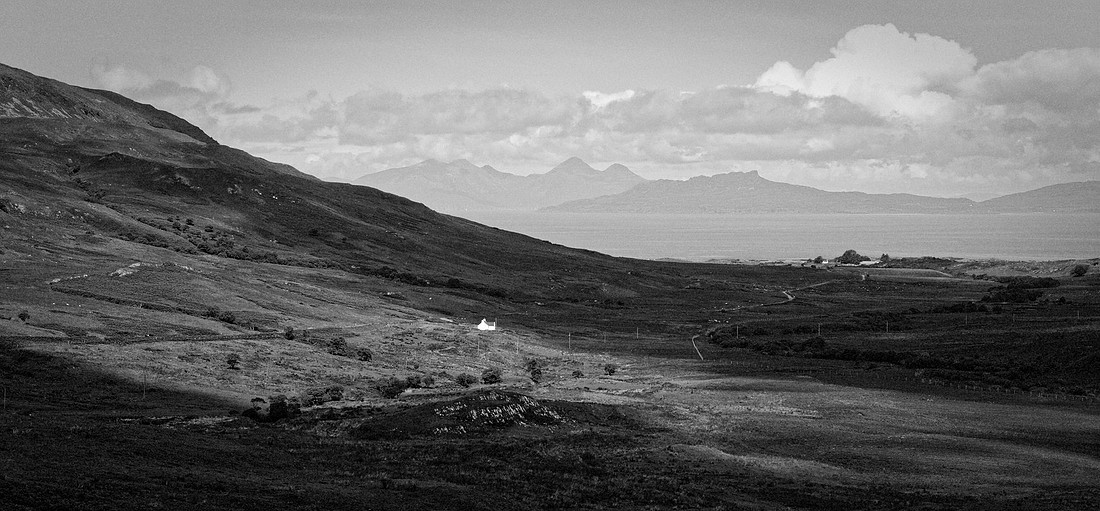
Whenever disappointment makes the physical distance between here and Ardnamurchan feel greater than it really is, I find myself returning to that afternoon on Skye, after a difficult creative week when I had spent far too much time wondering what I ought to be photographing, where I ought to be looking and whether I had somehow lost touch with the instinct that had guided my work for so long. Then I looked across the water and saw Ardnamurchan in the distance, familiar even from another shore, and the searching seemed suddenly unnecessary.
Nothing dramatic needed to happen. The peninsula did not offer an answer so much as remind me of something I already knew. After almost ten years of returning, of photographing and listening, of writing, painting, forming friendships and allowing the work to grow slowly out of those experiences, I no longer needed to wonder where my creative compass had settled.
Whatever practical distance still remains between the life we have now and the life we hope eventually to make there, creatively I had already found my answer.
An Dachaigh.
Where Is Home for You?
This has been one of the most personal essays I have written within Spiorad Àird nam Murchan, but I would rather it did not finish with my own understanding of home. The word is too large for that, and our individual relationships with it are too different.
For some, home will be exactly where they are now. For others it may exist hundreds or thousands of miles away, in a house occupied by somebody else, a landscape visited only occasionally, a language spoken less often than they would like, or a community whose rhythms remain part of them despite their absence.
Home might be inherited.
It might be chosen.
Sometimes it might take us years to recognise that we have found it.
For those of us who make creative work, another possibility interests me particularly. Perhaps we have a creative home as well as a physical one, a place in which our attention settles differently and our work begins to feel less like searching and more like a continuing conversation.
I would therefore love to open this part of Spiorad Àird nam Murchan outwards and hear your experiences.
Where, or perhaps with whom, do you understand home to be?
Is home where you live now, where you were born, where your family comes from, or somewhere entirely different?
Have you ever missed somewhere with an intensity that feels like homesickness, despite never having permanently lived there?
Do you have a creative home, a particular landscape, community or environment in which your work feels more deeply grounded?
Does your creative home coincide with your physical home, or do the two exist apart?
How important is place to your understanding of yourself?
And what responsibilities come with saying that we belong somewhere?
I do not imagine that any of these questions has one answer, nor do I think our answers necessarily remain the same throughout our lives.
Perhaps home moves because we do.
Perhaps sometimes we move because we have finally understood where home has been quietly waiting.
Open Call
HOME | AN DACHAIGH
A Collaborative Creative Project for Gallery Spiorad Àird nam Murchan
I would like the conversation begun by this essay to become something tangible.
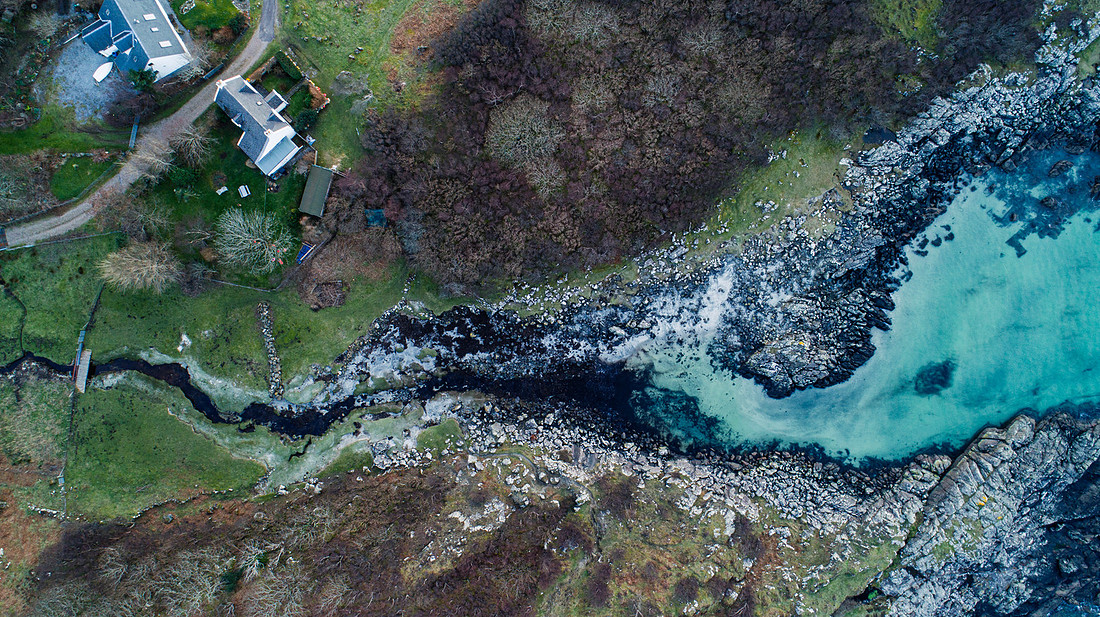
As part of the spring refresh of Gallery Spiorad Àird nam Murchan at the Ardnamurchan Natural History Centre in Glenmore, I am opening an invitation for creative responses to the idea of:
HOME | AN DACHAIGH
This will become a collaborative, community-focused element within the gallery, bringing together different understandings of what Ardnamurchan means as home, inherited home, remembered home, adopted home or creative home.
The invitation is deliberately broad because the relationships people have with Ardnamurchan are broad too.
You may have been born here and have generations of family history within the peninsula. You may live here now. You may once have lived here and carry its memory somewhere else. Perhaps you return regularly because family or friendship continues to draw you back. Or perhaps, like me, your connection has developed through creative practice and repeated return, until the landscape has become part of the way you understand your work and yourself.
These experiences are not interchangeable, and I would not want them to be.
What interests me is precisely the difference between them.
I would like to see what happens when those different understandings of home are allowed to share the same space.
Creative responses can take any form
Photography, painting, drawing, printmaking, poetry, prose, textiles, craft, sound and field recording, music, film, moving image, oral history, objects and mixed-media work are all welcome.
Nor does the work need to provide an uncomplicated celebration of home.
Home can contain affection, distance, memory, frustration, pride, loss, displacement, comfort and longing. For some people the idea may be rooted in landscape. For others it may centre upon a person, a family, a building, a voice, a piece of music, a garden, a particular sound, a remembered journey or something seemingly insignificant to everybody except the person who carries it.
I am not looking for a definitive portrait of Ardnamurchan.
There could never be one.
Instead, I would like HOME | AN DACHAIGH to become a gathering of individual responses, a space in which the peninsula can be encountered through the people who live within it, remember it, return to it, work within it and create in response to it.
The resulting selection will form a collaborative community section within Gallery Spiorad Àird nam Murchan at the Ardnamurchan Natural History Centre in Glenmore as part of the spring gallery refresh.
Full submission details, including dates, formats, practical requirements and arrangements for physical, written, digital and time-based work, will follow separately.
For now, I simply want to open the invitation and allow the question some space.
Because perhaps the most interesting thing about home is that we can recognise the feeling long before we can adequately explain it.
So I would like to hear your explanations.
See your photographs.
Read your words.
Listen to your recordings.
Encounter the objects, colours, sounds, memories and gestures through which you understand belonging.
And, collectively, perhaps we can begin to explore something larger than any one interpretation of Ardnamurchan could contain.
What does home mean to you?
Where does it live?
What connects you to it?
And when you are away from home, what part of it do you carry with you?