Bay of Distant Echoes

Spiorad Àird nam Murchan
Port na Carraidh: Bay of Distant Echoes
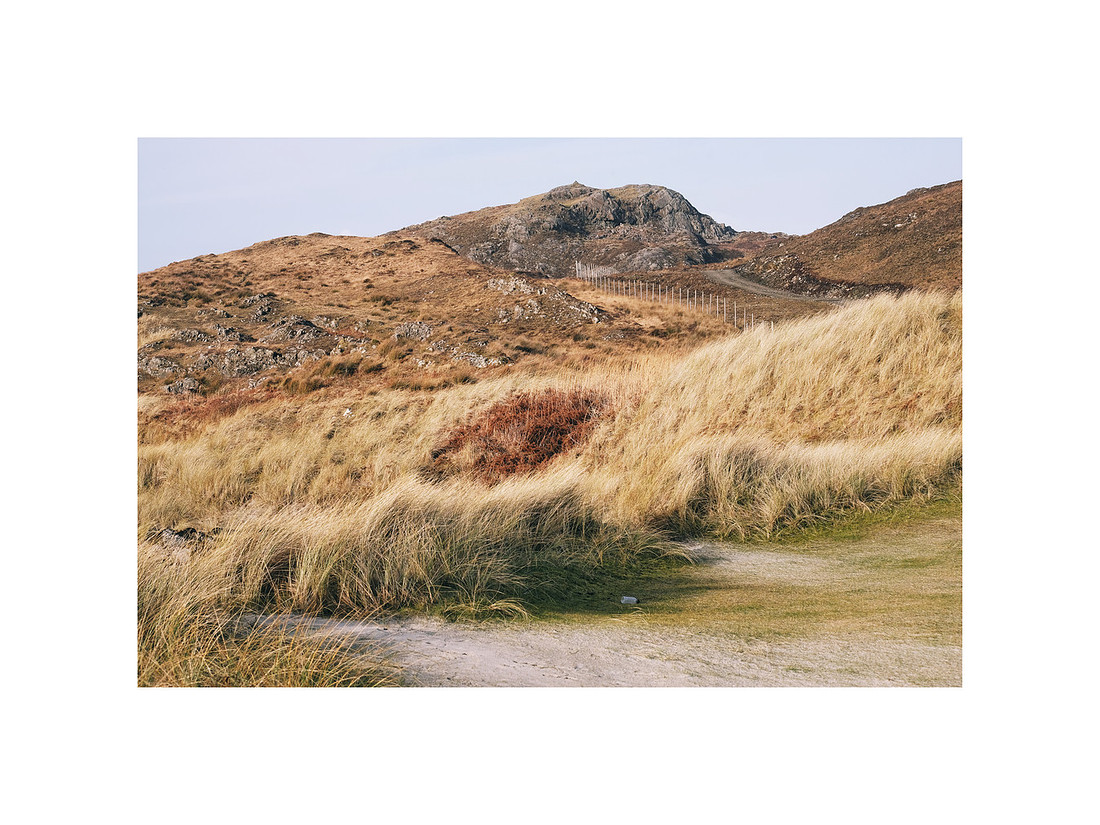

At the far western edge of Ardnamurchan lies a small bay where time stretches thin and horizons blur into memory. Here, land and sea meet gently: a crescent of white shell sand cradling clear water, known in whispers as Bay MacNeil. At first glance it seems a world unto itself – silent dunes, a lone curlew’s cry, the lap of turquoise waves. But linger a while, listen with more than your ears, and you’ll sense threads extending from this bay outward and backward, far beyond sight. Connections radiate beyond the visible horizon, tugging at the heart like a spring tide.
In the cool grey pre-dawn, the horizon is a diffuse line of silver, an opening rather than an end. The sea holds its breath in a mirror-calm, as if awaiting the first light. A gentle breeze carries the faint scent of brine and peat smoke. With each inhale, you draw in the essence of Port na Carraidh – harbour of the or port of the rocks / rocky place, a place named for ancient hands that once shaped the tides. With each exhale, you feel the place drawing you into its long story, absorbing your presence into countless generations of memory.
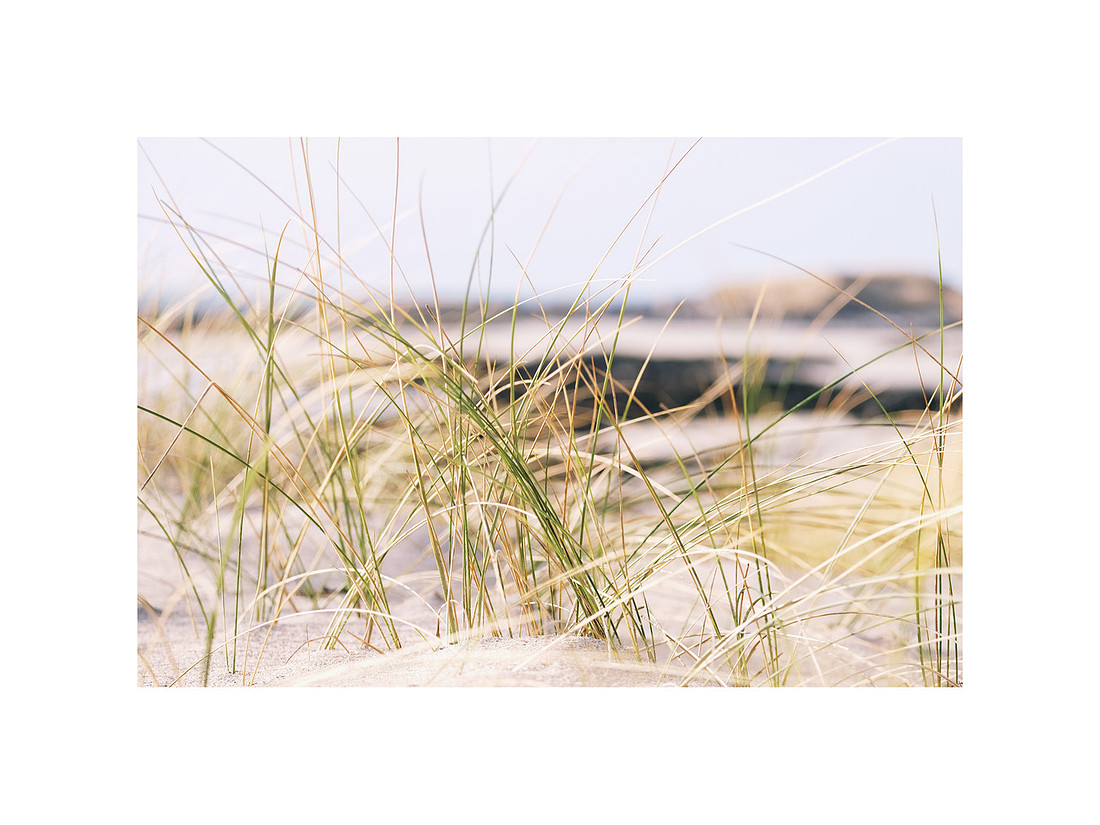
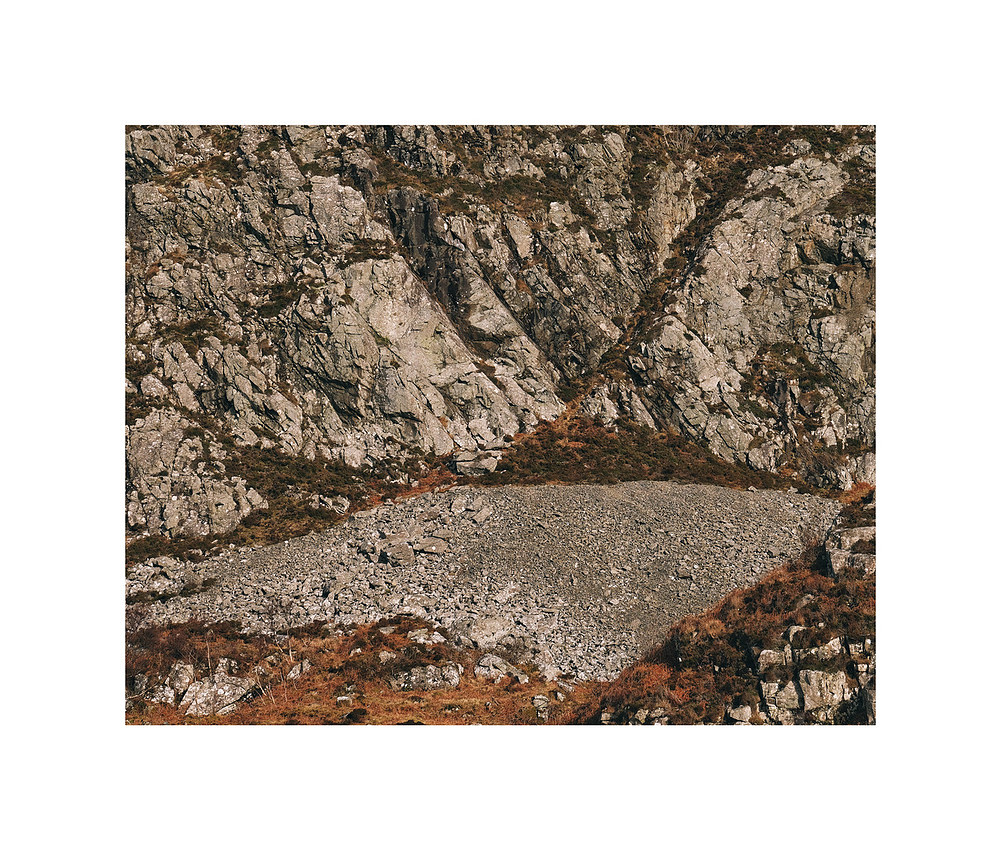
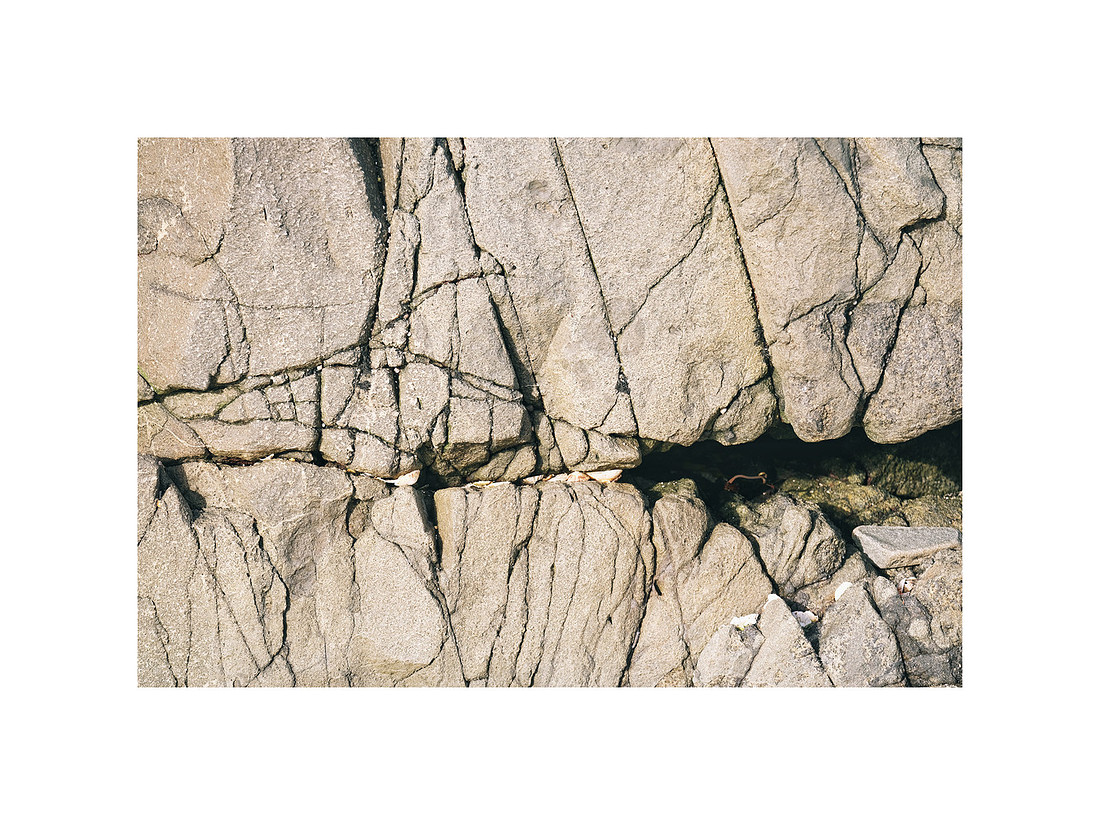
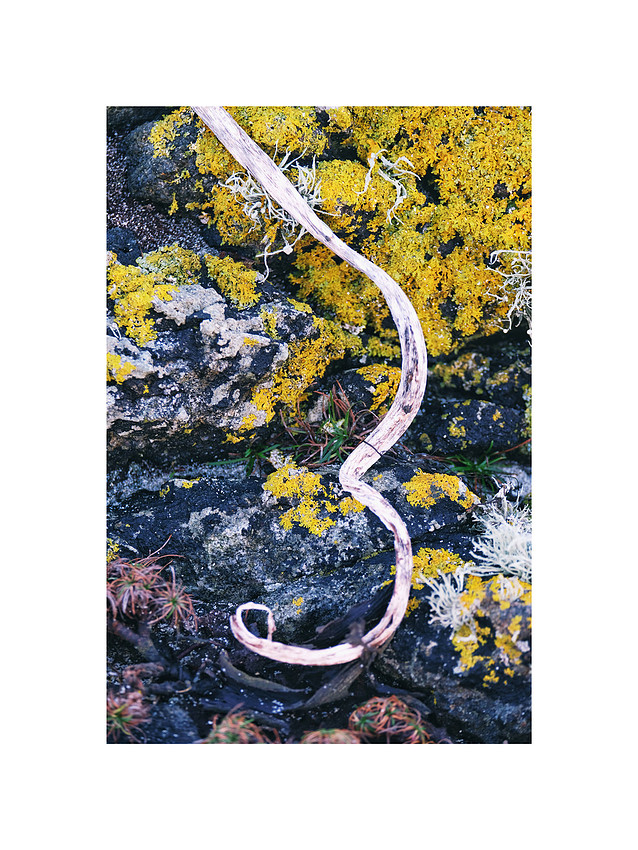
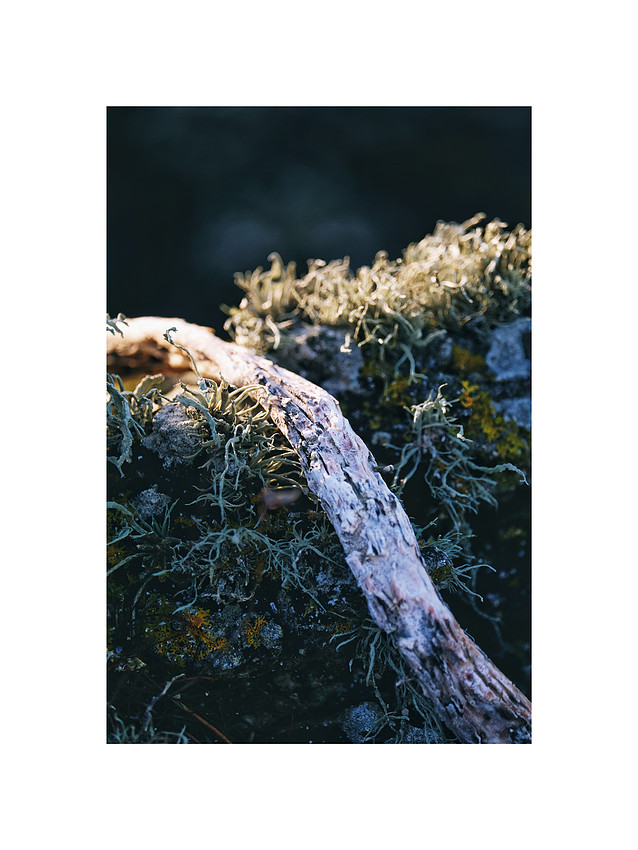
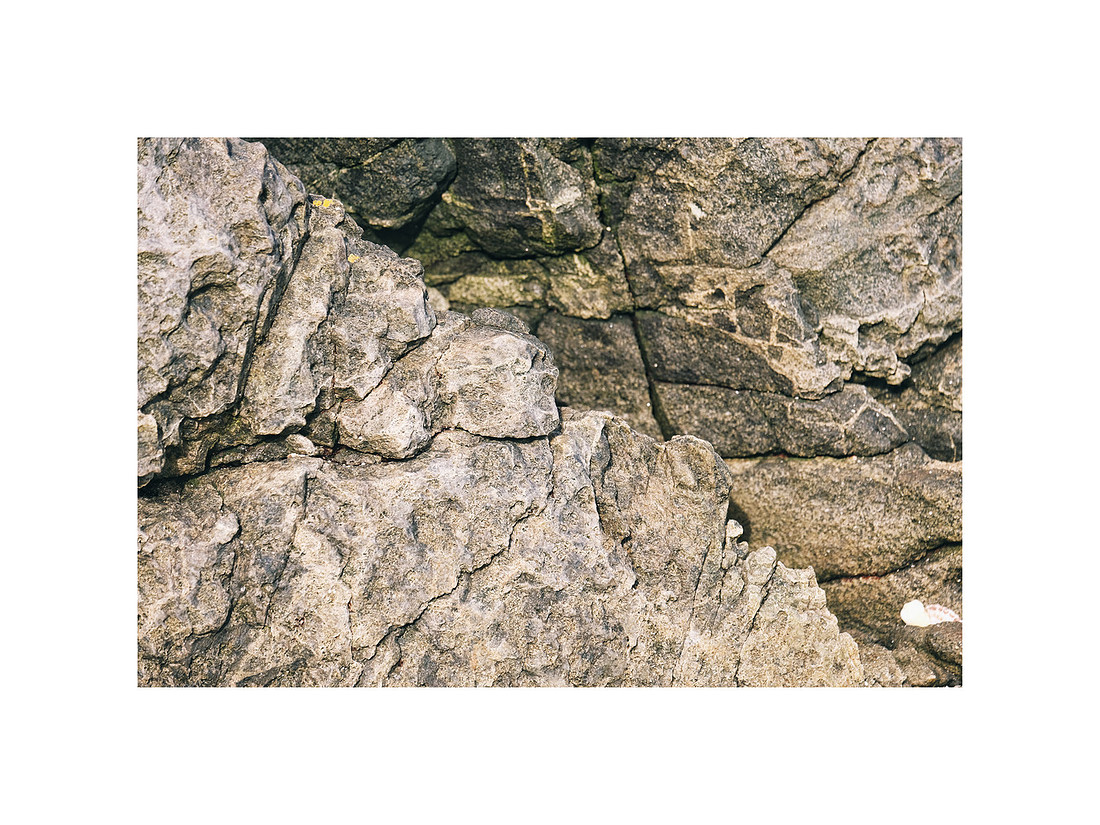
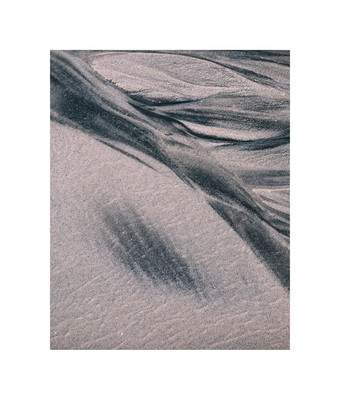
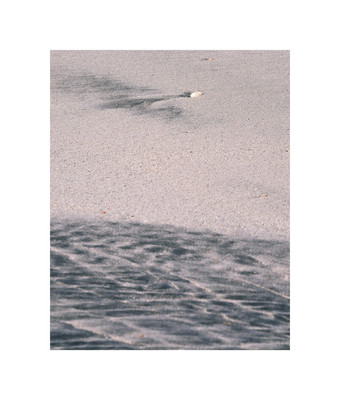
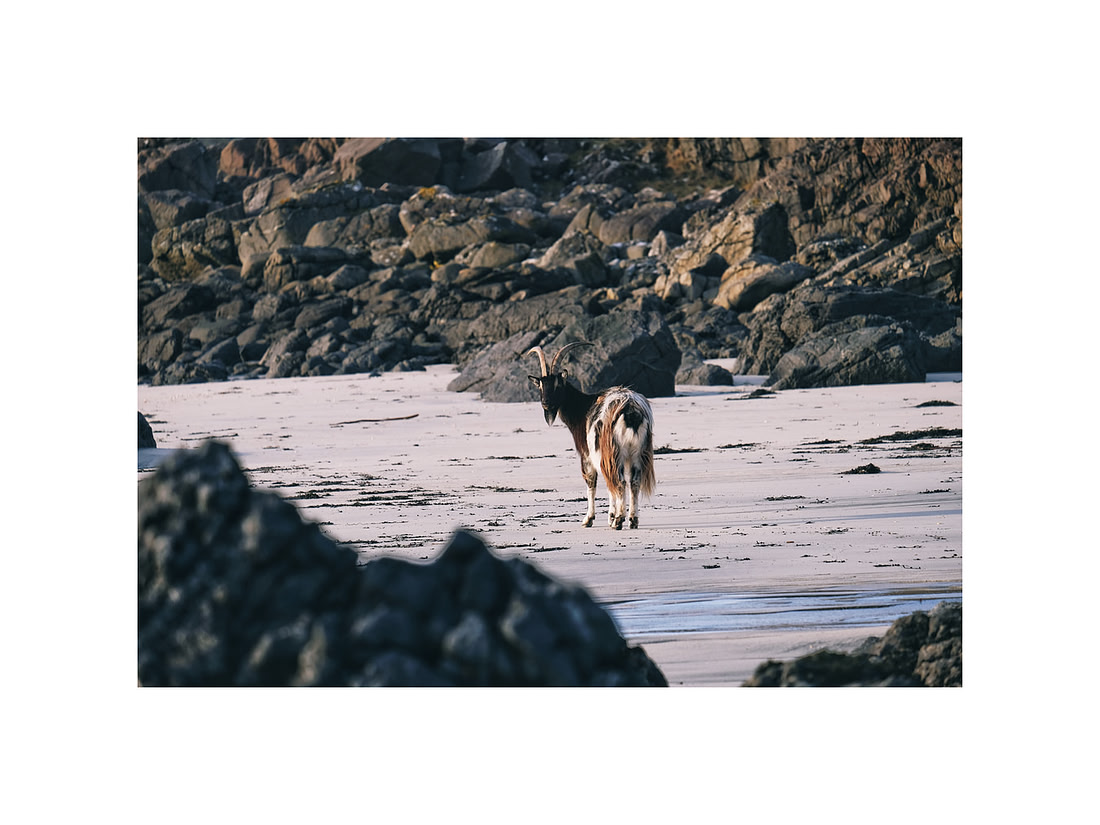
As the sky gradually brightens, shapes emerge from darkness. Dark rock outcrops guard the bay like sleeping giants, and beyond them the suggestion of distant isles hovers on the horizon’s edge. A profound stillness pervades the air, as if the world is holding its breath along with the sea. You walk slowly along the damp strand. Every footstep is soft; the sand here gives kindly, as if recognising a friend. Strewn along the high tide line are the small details of the bay’s everyday miracles: bleached driftwood, peppery tangles of seaweed, a crab’s shell patterned like a tiny sunburst. Each object catches the pearly early light in a different way. Tiny periwinkle snails etch glistening trails on the wet sand – delicate calligraphy written overnight, soon to be washed clean by the day’s first tide.
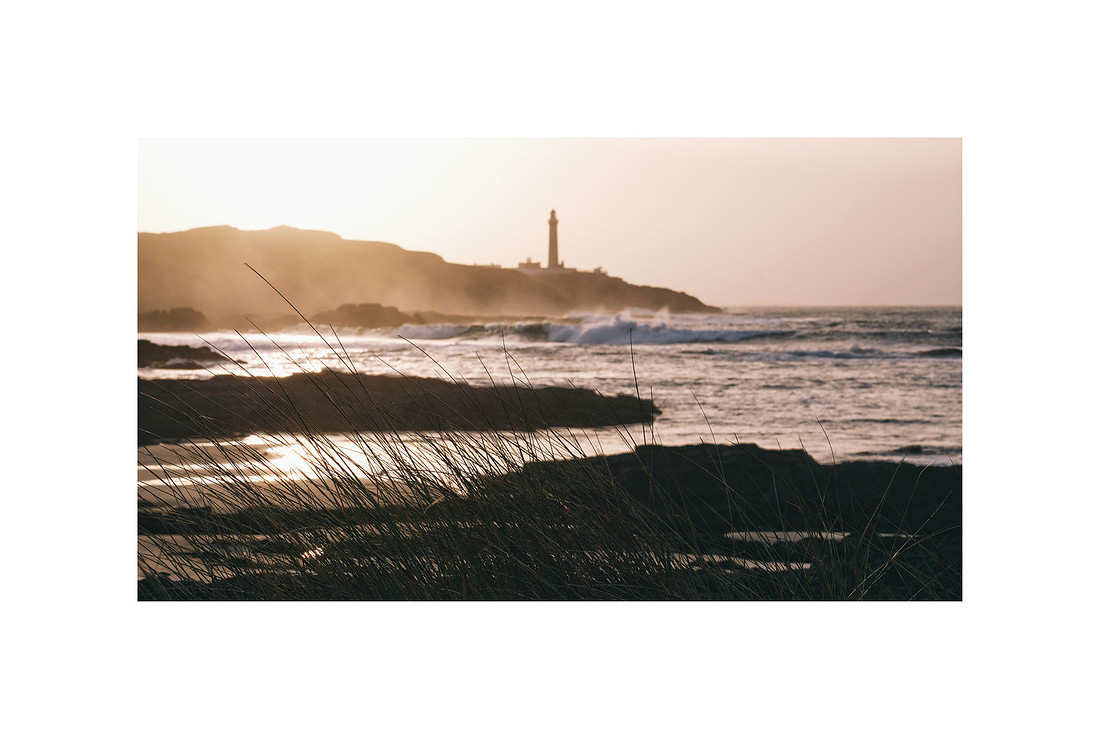
The first rays of sunlight spill over the hills behind you, and colours awaken. The dunes begin to glow with tufts of marram grass, their long blades tipped with gold. Small flowers speckle the green: purple harebells trembling and the starry white of sea campion opening to the sun. Granular detail springs into focus. Here is a single white feather lodged upright in the sand, its downy filament quivering in the breeze. There, half-buried, a pebble of red granite – a remnant of ancient volcanic fire – lies cool and smooth in your palm. In each grain of sand, each weathered stone and stray feather, the bay’s intimacy is evident. These are the bay’s hidden jewels, the minute and the humble, each a world of wonder if noticed. Bend close and you see infinite detail; step back and it all merges into the broad mosaic of beach, dune, and sea.
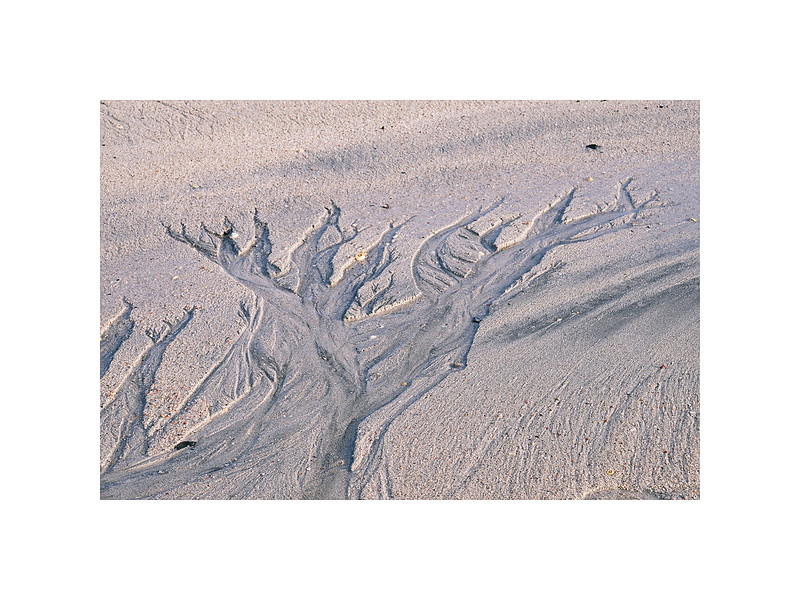
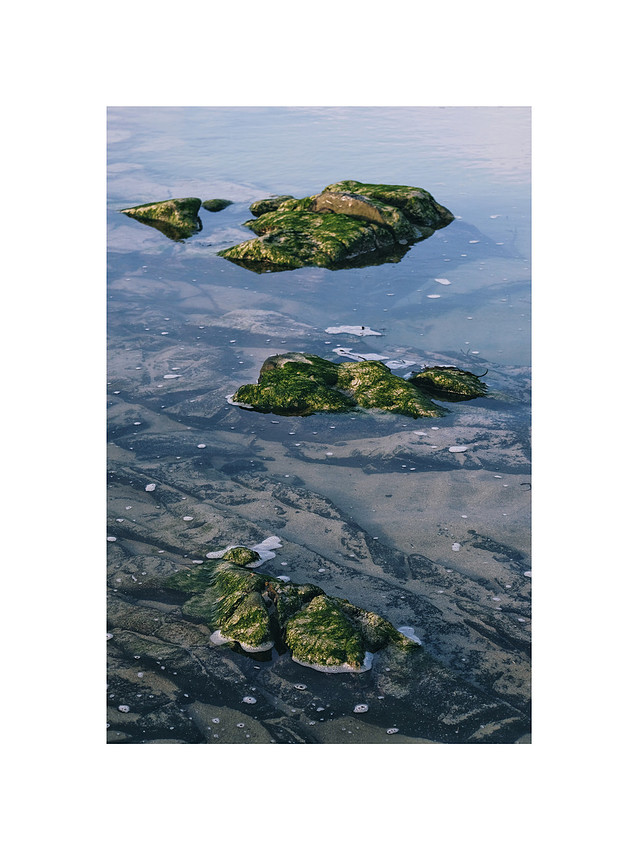
Near the curve of the shore, you come upon a low arc of stones arranged in the sand, half-submerged in a shallow pool left by the ebbing tide. Kneeling down, you run your fingers along one of the stones, feeling the slippery coat of algae and age. These stones were placed here by hands long vanished. They may form the remnant of a fish-trap, a crude semi-circle that once corralled the tide’s bounty or they may be incidentally placed by tidal power and geological activity over millions of years. In this still moment you can almost see them – the fisher-folk of centuries past – wading out at low tide to check their catch, their figures haloed by dawn light much like this. Port na Carraidh earned its name from this very act of living with the sea’s rhythms. The past is not past here; it persists in subtle ways. The stones remain, and at certain low tides the sea still yields silvery fish behind this old weir, unaware that the trap is broken. You close your eyes and imagine the gleeful shouts of those long-ago fishermen, the splash of a captured salmon tail, the scrape of wicker creels on sand. Perhaps a Gaelic blessing was murmured in thanks to the ocean’s generosity. In the quiet of this morning, you swear you can hear it – a faint echo of a prayer carried on the breeze. This bay has always been a confluence of connections – people to nature, present to past, sustenance to spirit. Every stone and every story here is entwined.
Rising to your feet, you cast your gaze out over the water. The wide connection calls from beyond the bay. Now the sun’s ascent has erased the morning mist, the outer world comes into view. On the far horizon, the dark blue outlines of the Small Isles and farther isles hint at their presence. You recall that out there, beyond sight, lies the island of Barra – home of the MacNeil clan whose name this bay bears. And as if conjured by memory, a vision unfolds: a stout oak-framed boat emerges from the horizon’s glare, sails taut with wind, drawing nearer to the bay. On its prow stands a Highland drover, face windburnt and determined, guiding the vessel toward the gentle curve of sand. In the hold and tethered alongside, black cattle shift and low anxiously, sensing land. The boat grounds with a soft crunch; men leap into the surf with whoops and commands, muscling the reluctant beasts into the water. For a moment, the quiet bay is filled with the commotion of another age – splashing hooves, Gaelic shouts, the jingle of bridle ropes. The MacNeils of Barra have arrived, delivering their herds to mainland pastures. Then, as quickly as it came, the phantom scene dissolves. The boat, the drovers, the cattle – all are gone. You find yourself standing in silence once more, the lap of modern waves in your ears. Yet something of that vision lingers as real as the salt drying on your skin. This place remembers. The air itself seems to hold an afterglow of long-ago warmth and struggle. A wave breaks against the shore with a heavier boom, and you fancy it’s the echo of a Viking prow or a clan galley that kissed these sands lifetimes ago. Though unseen, the past is here, permeating the present like a faint scent of smoke in the wind.
|
|
|
|
The sun climbs higher, strengthening from gold to white. With the full light of day, the bay is revealed in all its gentle glory. It is so tranquil and inviting now that it’s hard to imagine it ever otherwise. The thought comes unbidden: how many faces does this bay have? You remember standing here in winter storms, when the gentleness is stripped away and the bay shows a wild, roaring face. Black waves, frenzied and foaming, have assaulted these same sands. Gale winds have scoured the dunes, bending the grass flat in a fury. On those days, the solitude felt awe-inspiring and a little fearsome – the raw power of nature on full display, with no shelter but your own resolve. This morning is the opposite, all softness and light. Yet the two realities are not contradictory; they are twins. Bay MacNeil can be harsh and unforgiving, and Bay MacNeil can be tender and soothing. In both modes, it remains pure, true to itself. The common thread is the heartbeat of nature that underlies every moment here – a steady rhythm in tune with something far greater than human concerns. Realising this, you feel a deep respect. The bay doesn’t exist for you, or for the fishermen of old, or for the holidaymakers who sometimes come; it simply exists, with us and beyond us. Its spirit encompasses storm and calm alike.
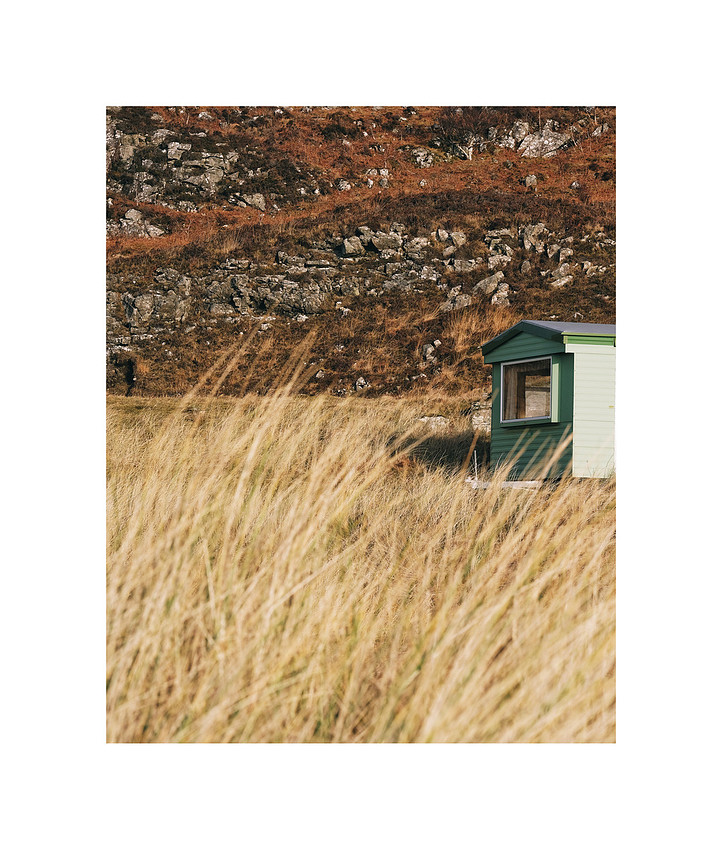
A high, keening cry draws your attention upward: a pair of gulls wheel in the radiant sky, white wings flashing. Their voices are raucous, joyful, like laughter. From somewhere behind the dunes comes another sound of laughter – human this time, bright and free. Peering landward, you catch a glimpse through the marram grass of a small white caravan tucked in a hollow of green. A flutter of a towel on a rail, a child’s colourful bucket left outside in the sun – modest signs of life. Modern pilgrims to this shore, a family seeking refuge in nature’s embrace. They have been coming here summer after summer, perhaps across generations, drawn by the same quiet magic that draws you. The presence of their little camp does not disturb the peace; rather it seems part of the bay’s story. It is a gentle continuation of the tradition of belonging. Once, families might have set up shielings (summer huts) on these very machair meadows to tend cattle or fish; now they park a caravan and unwind by the evening driftwood fire. Times change, but the fundamental impulse – to live in harmony for a while by the singing sea – remains. You allow yourself a smile at the thought of children playing in the surf later, their laughter mingling with the cries of the gulls. Continuity lives here in subtle ways, passed down not in bloodline alone but in the shared love of place.
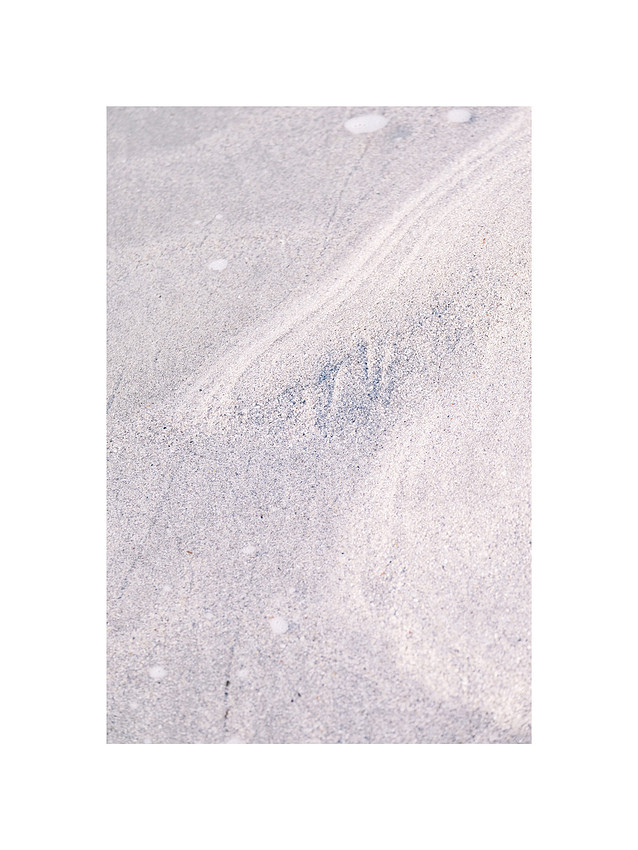
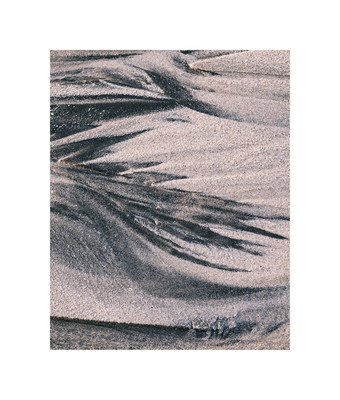
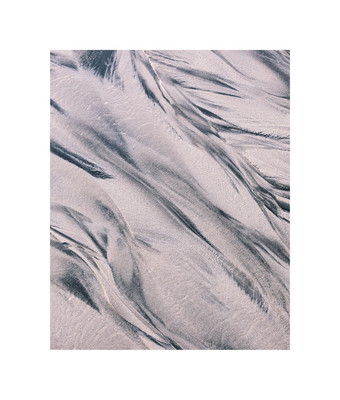
You turn back toward the water’s edge, letting your footprints wander where they will. The bay is fully awake now, glittering and alive. The ocean stretches out in hypnotic blue-green shades, and each outgoing wave leaves a lace of foam on the shining sand. As you walk, you notice the interplay of near and far, minute and immense. By your feet, the retreating tide has left intricate lace-like patterns of sand and water, as if the shore itself were painted with delicate white veins. Further out, the fish-trap stones peek above the water’s surface, steadfast markers of human history amidst the ceaseless natural flow. And far beyond, the silhouettes of distant headlands and islands are crisp on the horizon, reminders that no place stands alone. The scene is a living tapestry of interconnections. The snail and the castle on Barra, the stone under your toe and the mountain across the sea – all woven by threads of water, light, and time into a single fabric.
Two gulls swoop low over the waves, their reflections skating across the mirror of the sea. You find yourself humming a fragment of an old Gaelic tune, something you half-remember or perhaps just feel. The melody mingles with the hush of the morning, a subtle offering to the silence. For an instant, you sense an alignment of all things – a perfect equilibrium. Your breath, the tide’s pulse, the distant call of a bird, the warmth of the sun on your face, the memory of whispered prayers and the excitement of children yet to come – it all flows together. Here, you are not an observer at the edge; you are a participant in the endless conversation between earth and sky, past and future, self and surroundings. This is what Spiorad Àird nam Murchan – the spirit of Ardnamurchan – means to you: a feeling of wholeness and integration, of being at once very small and infinitely connected.
The day moves onward and the world outside beckons, but you hesitate to break the spell. Eventually, with a heartfelt sigh, you know it is time to depart this sanctuary. You take a final slow look around, gathering up the bay’s gifts: the sight of sunlight tangled in seaweed strands, the sound of gentle waves kissing the shore, the sweet smell of wild thyme from the dunes. These are the treasures you will carry with you. As you step away from the water, your last footprints fill with clear seawater, shining for a moment before sinking into sand. The marram grass sways as you pass, as if waving farewell. Behind you, the beach lies pristine once more, awaiting the next tide or the next wandering soul.
Crossing the threshold of the dunes, you pause and glance back one last time. Bay MacNeil lies open and golden in the midday sun, as peaceful as a dream yet utterly real. It occurs to you that in leaving, you are not truly saying goodbye. The salt on your skin, the sand in your shoes, the quiet knowledge in your heart – all these are pieces of the bay that you carry. You have become another thread in its tapestry, another voice in its evolving story. In this moment you understand that here, horizon is not a boundary but a bond. The granular and the infinite, the personal and the eternal, coexist in profound harmony. Spiorad Àird nam Murchan – the spirit of this place – lives and breathes in every gull cry, every ripple, every footstep remembered and forgotten. Nothing is truly lost; nothing is truly distant. All is present, here, and alive in the enduring poetry of the bay.
Sources and Citations:
- Burgess, A. (2013) Bay MacNeil, Ardnamurchan. Geograph Britain and Ireland [Online]. Available at: geograph.org.uk/photo/3694329 (Accessed: 17 August 2025).
- West Highland Peninsulas (n.d.) Ardnamurchan. [Online]. Available at: westhighlandpeninsulas.com/about-the-peninsulas/ardnamurchan (Accessed: 17 August 2025).
- Glosbe Dictionary (n.d.) Entry for “caraidh” (Gaelic-English translation). [Online]. Available at: glosbe.com/gd/en/caraidh (Accessed: 17 August 2025).
- Haylett, J. (2018) Portuairk – The Last Crofting Township. Heritage Ardnamurchan (blog) [Online]. Available at: ardnamurchanhistory.org.uk (Accessed: 17 August 2025).
- Ardnamurchan History & Heritage Association (AHHA) (n.d.) Sanna – M.E.M. Donaldson’s Home. [Online]. Available at: ardnamurchan-history.co.uk (Accessed: 17 August 2025).
- Woolf, J. (2015) Ardnamurchan’s Volcano. The Hazel Tree (blog) [Online]. Available at: thehazeltree.co.uk/2015/04/23/ardnamurchans-volcano (Accessed: 17 August 2025).