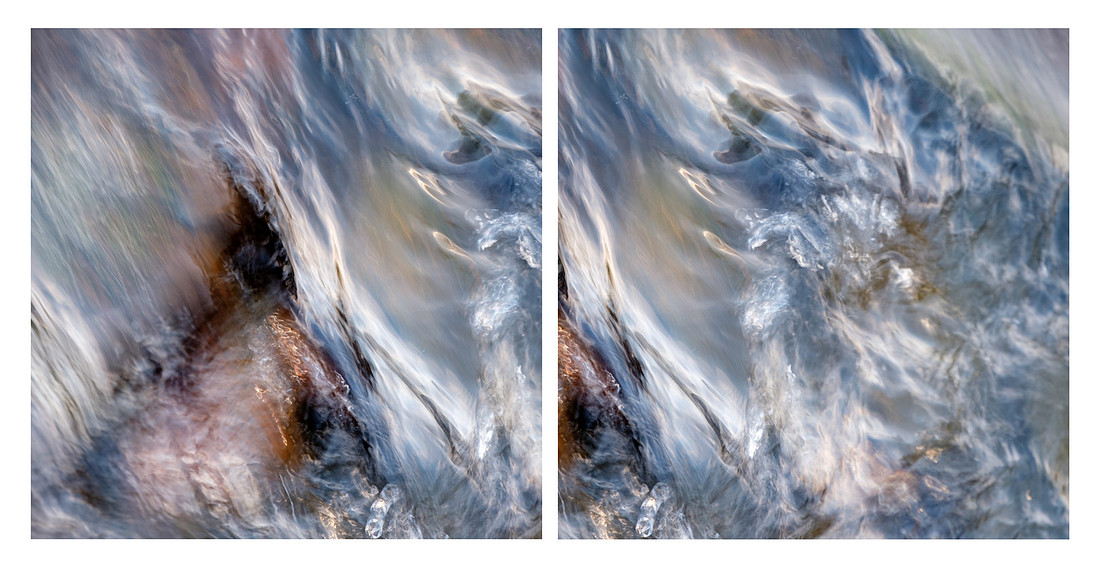
Where the Land Breathes Slowly: A Reflection on Ardnamurchan’s Quiet Power

Where the Land Breathes Slowly: A Reflection on Ardnamurchan’s Quiet Power
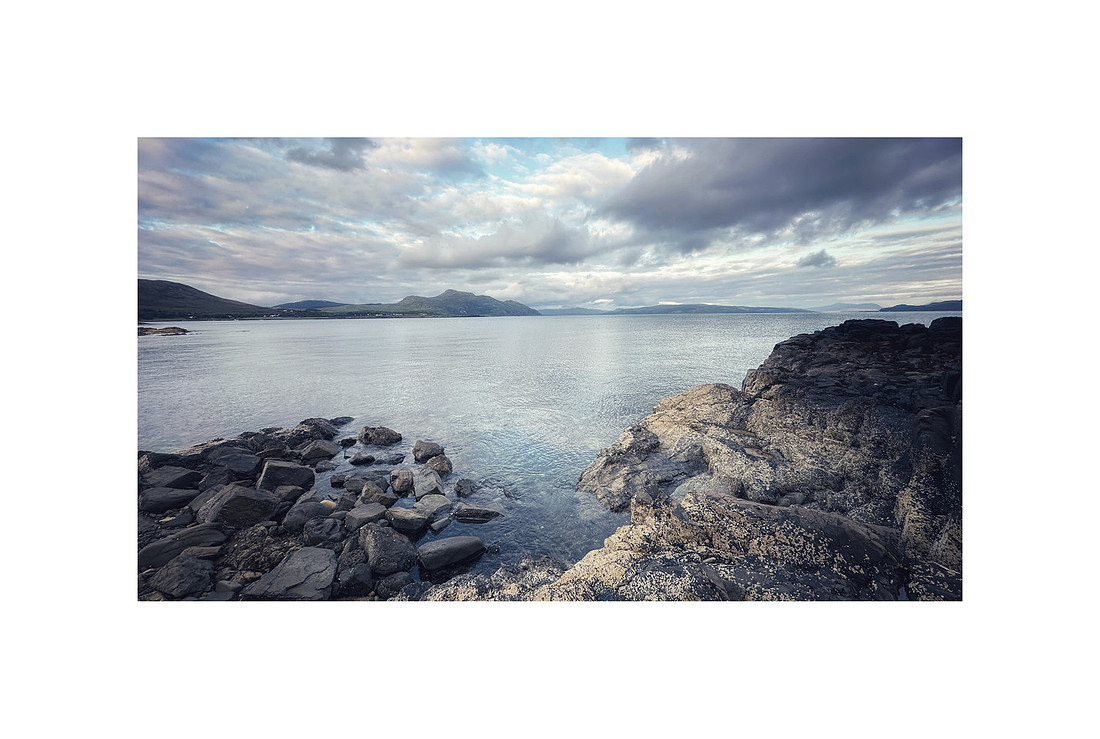

This piece was born from a week spent recently in Ardnamurchan—a week not of itinerary, but of intention. I came to the western edge of the peninsula to pause, to reflect, and to ask myself a question that’s been quietly forming over years of creative work: why here? Why does this place, more than any other, draw me back again and again—not just to photograph or write, but to breathe differently.
Ardnamurchan has always had a near-spiritual effect on me. It slows me down. It invites me to walk without destination, to sit without distraction, to feel the rhythm of the land beneath my feet and the coastal margins as they shift with tide and weather. The passing fronts, the changing light, the silence between gusts—all of it creates a space where thought can settle and creativity can rise.
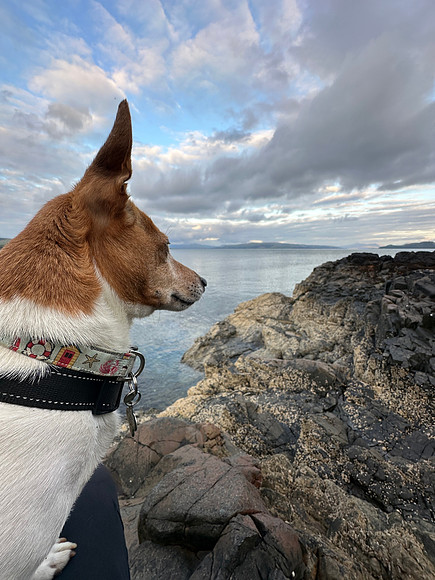
This time, I wasn’t alone. Our newly adopted dog, Bobby—a little Jack Russell with a difficult past and a heart full of cautious hope—was with us. He carries his own anxieties, especially around travel and change. But something about being here, in the quiet and the open, has brought him on in leaps and bounds. Watching him relax into the landscape, sniffing the wind, curling up in the tent, reminded me that slowing down isn’t just a human need—it’s a universal one.
All of this—the walking, the sitting, the listening—led me to write this sixth installment in my Spiorad Aird nam Murchan series. Unlike the previous location-based pieces, this one is a pause. A moment to reflect not on where, but on why. Why this place continues to shape my creative response, and why its spirit feels so deeply woven into my own.
There is a rhythm to Ardnamurchan that resists the urgency of the modern world. It is not a place that demands attention, but one that invites presence. At the western edge of the peninsula, where the land meets the sea in a quiet embrace, I find the space to slow down—not just in movement, but in thought, in breath, in being. This is where the noise of elsewhere fades, and the subtle textures of place begin to speak.
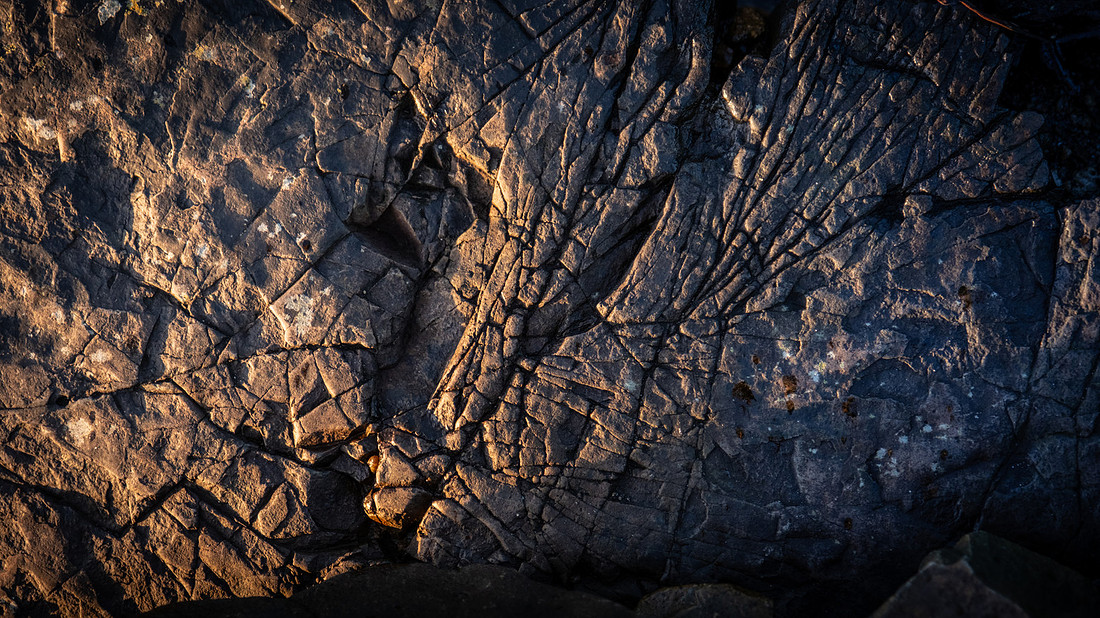
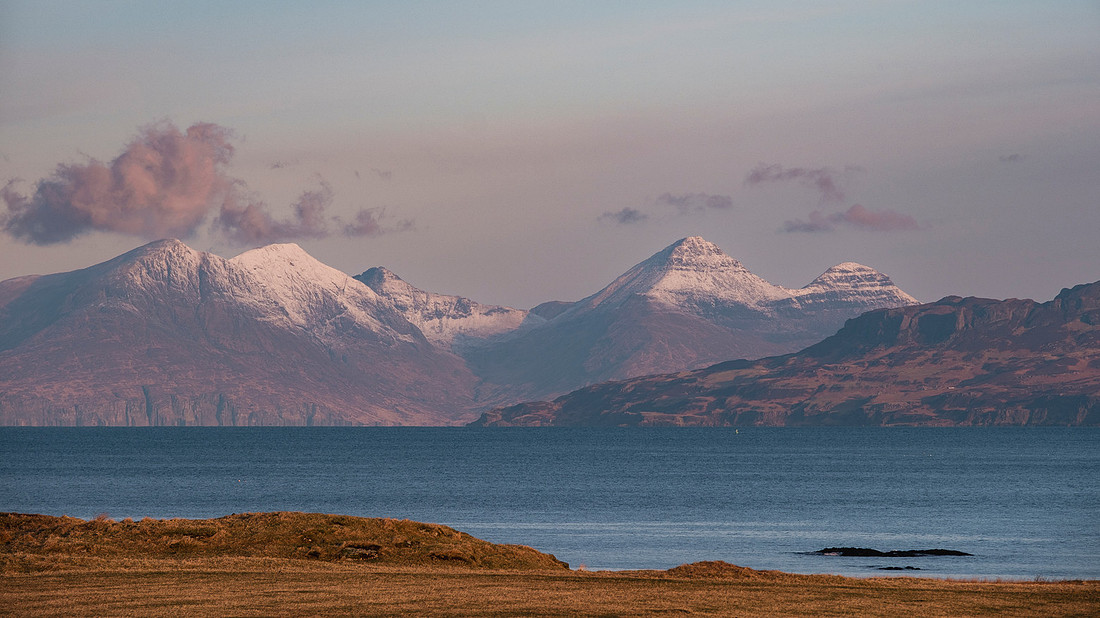
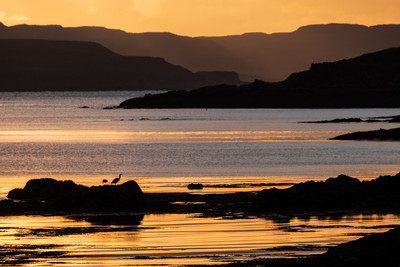
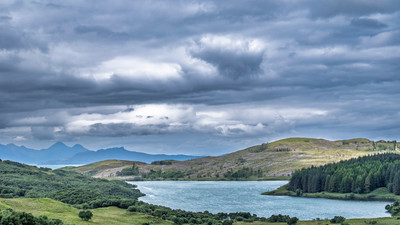
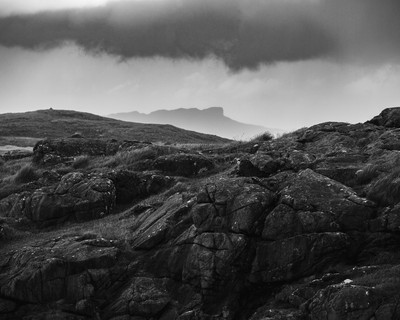
The landscape here is not grand in the conventional sense. It is not dramatic in its scale, but profound in its intimacy. The rocks, dark and weathered, hold stories in their striations. The sea, often still and mirror-like, reflects not only the sky but the quiet within. The hills roll gently, like the contours of a memory, and the air carries the scent of salt, peat, and heather—an olfactory signature that roots me to this place more deeply than any map could.
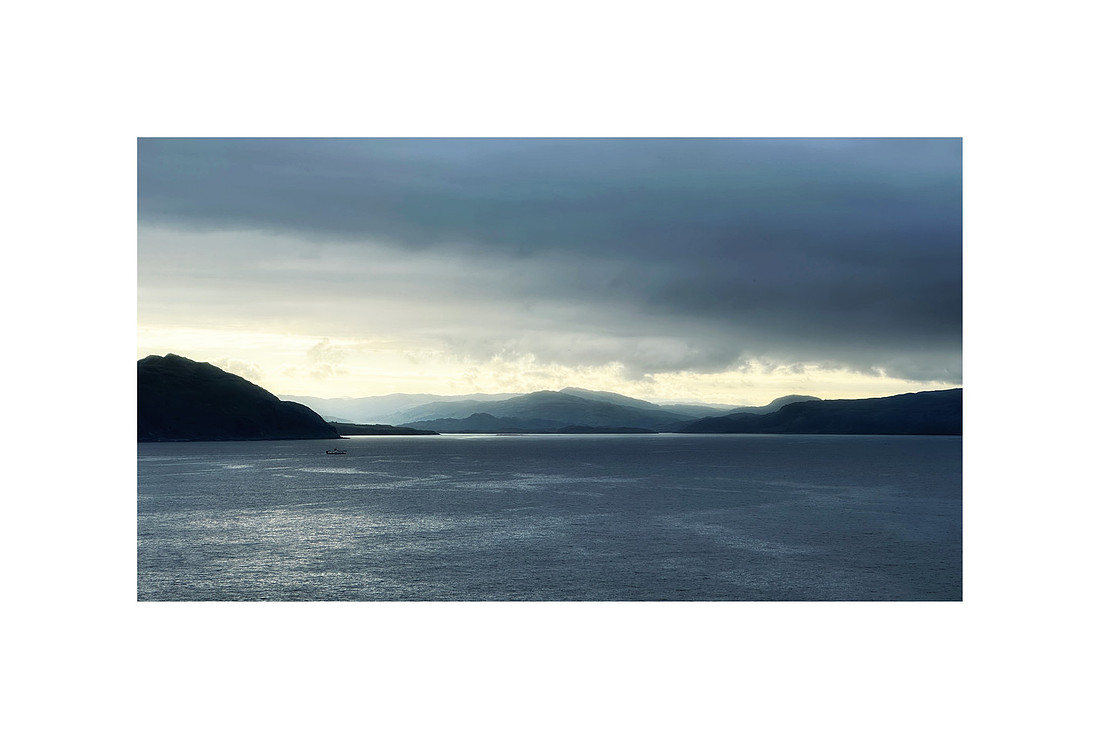
It is in this sensory quietude that I find the conditions for reflection. The audiology of Ardnamurchan is subtle: the distant call of a seabird, the soft lap of water against stone, the whisper of wind through marram grass. These are not sounds that interrupt; they are sounds that accompany. They create a soundscape that allows thought to unfold slowly, like mist lifting from the loch. In this space, I do not feel compelled to produce—I feel invited to respond.
The Gaelic toponymy of the region deepens this invitation. Place names here are not arbitrary; they are descriptive, poetic, visceral. They speak of form, of function, of feeling. Aird nam Murchan—the height of the sea warriors—evokes both geography and mythology. Ormsaigbeg, from Òrmasaidh Beag, suggests a small bay or inlet associated with a Norse personal name. Sanna, possibly from Sànaidh, may relate to a sandy place or pasture.
These names are not just linguistic artifacts; they are sensory and spatial cues. They describe the land in terms of its colour, shape, flora, fauna, and human interaction. Consider:
- Sròn Bheag – “Little Nose,” a promontory shaped like a nose.
- Beinn Bhuidhe – “Yellow Hill,” named for the colour of its vegetation.
- Lochan na h-Achlaise – “Lochan of the Oxter,” a small loch nestled like an armpit in the landscape.
- Camas nan Geall – “Bay of the Pledges,” a place of historical gathering and promise.
- Rubha nan Gall – “Point of the Strangers,” a headland possibly linked to Norse or foreign visitors.
- Gleann Fionnlighe – “Glen of the White Stream,” a valley carved by a pale, fast-flowing burn.
These names are not just labels—they are stories. They are ways of seeing and knowing the land that are rooted in centuries of lived experience. To speak them aloud is to participate in a lineage of connection. They guide my creative process, reminding me that this is not just a place to be seen, but a place to be understood.
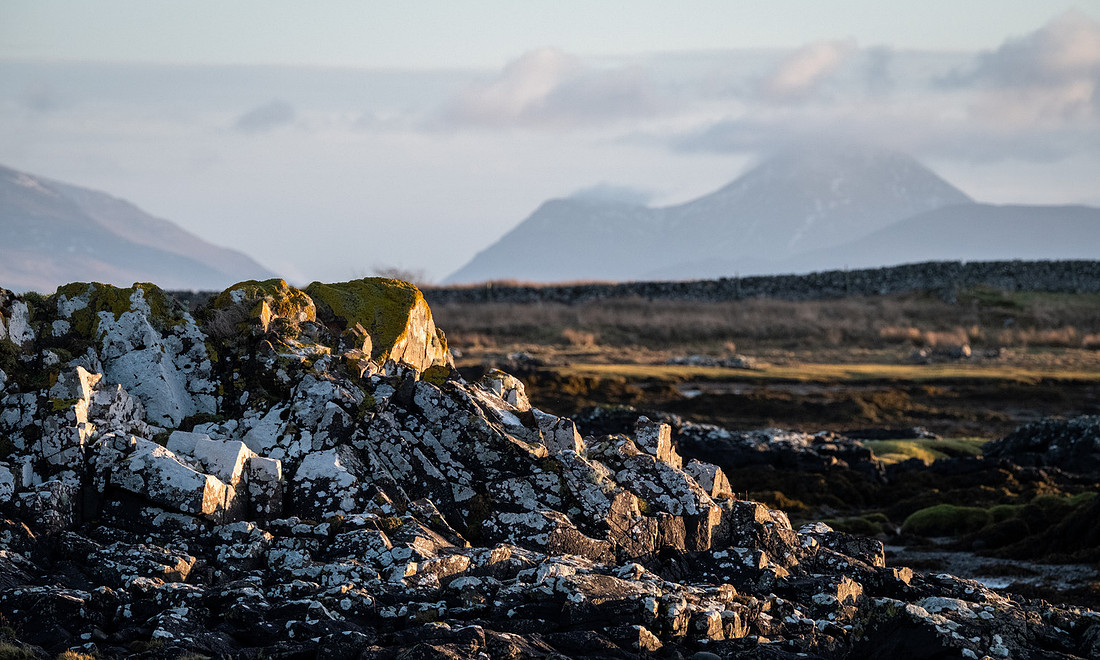
This linguistic intimacy fuels my creative response. When I photograph a fence line, a shoreline, a croft, I am not documenting—I am conversing. I am listening to what the land has to say, and I am trying to answer with honesty. The names guide me, remind me that this is not just a place to be seen, but a place to be known. And knowing takes time.
Over the past decade, my Spiorad Aird nam Murchan project has been a slow unfolding of this knowing. Each image, each piece of writing, is a step deeper into the spirit of the place. It is not a linear journey, but a spiral—returning again and again to familiar locations with new eyes, new questions. What does this place mean to me now? What does it mean to those who live here, who have shaped it and been shaped by it? How can I honour that in my work?
The authenticity I strive for is not just aesthetic—it is relational. It comes from conversations with crofters, with neighbours, with friends who have walked these paths longer than I have. Their stories, their memories, their pronunciations of place names—all of these become part of the texture of my work. I do not want to impose a narrative; I want to reflect one that is already here, waiting to be heard.
This bond with the people of Ardnamurchan is as vital as the bond with the land. It is through them that I learn the nuances of place—the seasonal rhythms, the local lore, the practical realities of living at the edge. Their generosity in sharing these insights is a gift, and it is one I carry with care into my creative practice. It is what allows my work to feel rooted, not just inspired.
And yet, even as I seek to understand Ardnamurchan more deeply, I know that it will always remain partly mysterious. That is part of its power. It does not reveal itself all at once. It asks for patience, for attention, for return. It is a place that teaches me to slow down not just for the sake of rest, but for the sake of respect. To move slowly is to move meaningfully.
So I return, again and again, to the western edge. To the rocks and the sea and the sky. To the names that echo with history. To the people who embody the spirit of the place. And each time, I find something new—not because the place has changed, but because I have. Ardnamurchan holds a mirror to my creative self, and in its quiet reflection, I see more clearly.
A Call to the Reader
If you have ever felt the pull of a place—its textures, its sounds, its stories—then I invite you to respond. Not with haste, but with care. Go to the edge of somewhere. Listen. Learn its names. Speak with its people. Let the land shape your questions. And then, create. Not to capture, but to honour. Not to possess, but to participate.
What place slows you down? What place asks you to listen more deeply? Begin there.
Sources and Citations
- Gaelic place-name meanings and translations sourced from Ainmean-Àite na h-Alba (Gaelic Place-names of Scotland).
- Descriptive Gaelic toponymy and landscape features from SpeakGaelic’s guide to place names.
- Historical and linguistic context of Ardnamurchan names from GeoGuide’s glossary of Ardnamurchan place names.
- Scottish Hill Names - Peter Drummond. Scottish Mountaineering Trust 2010.
- Reading The Gaelic Landscape - John Murray & Iain Moireach. Whittles Publishing 2019.
|
|
|
|