
Spiorad Aird Nam Murchan: Composed by the Quiet

Composed by the Quiet: Reflections from Ardnamurchan’s Far West

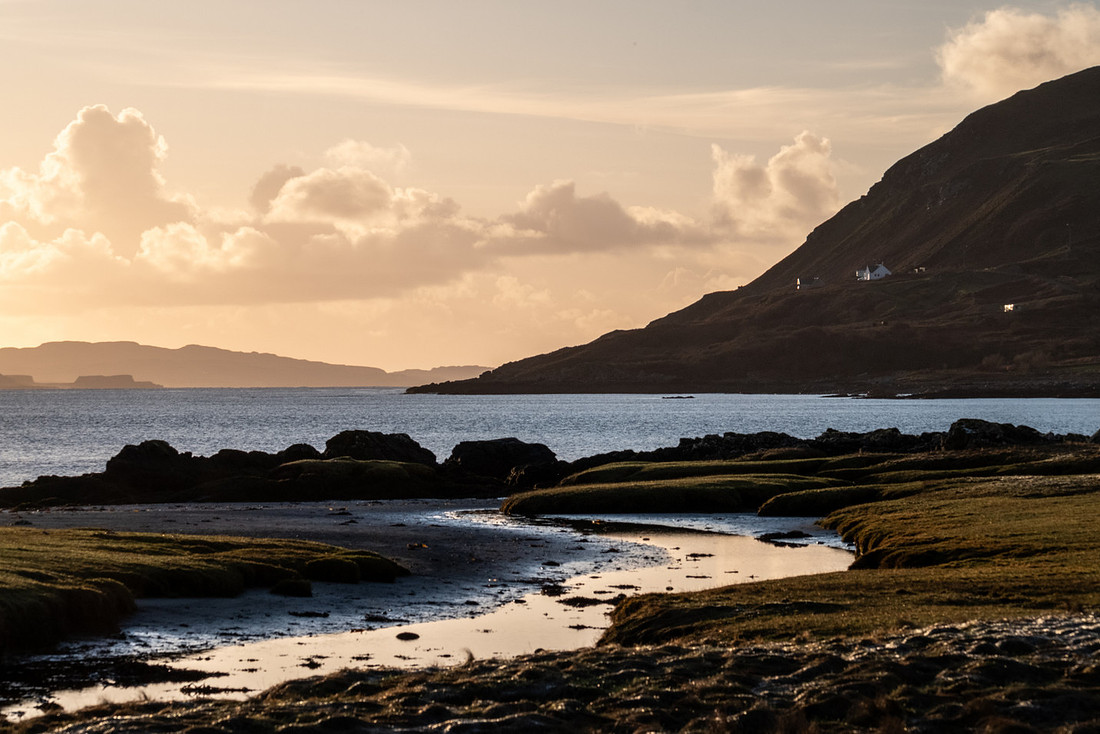
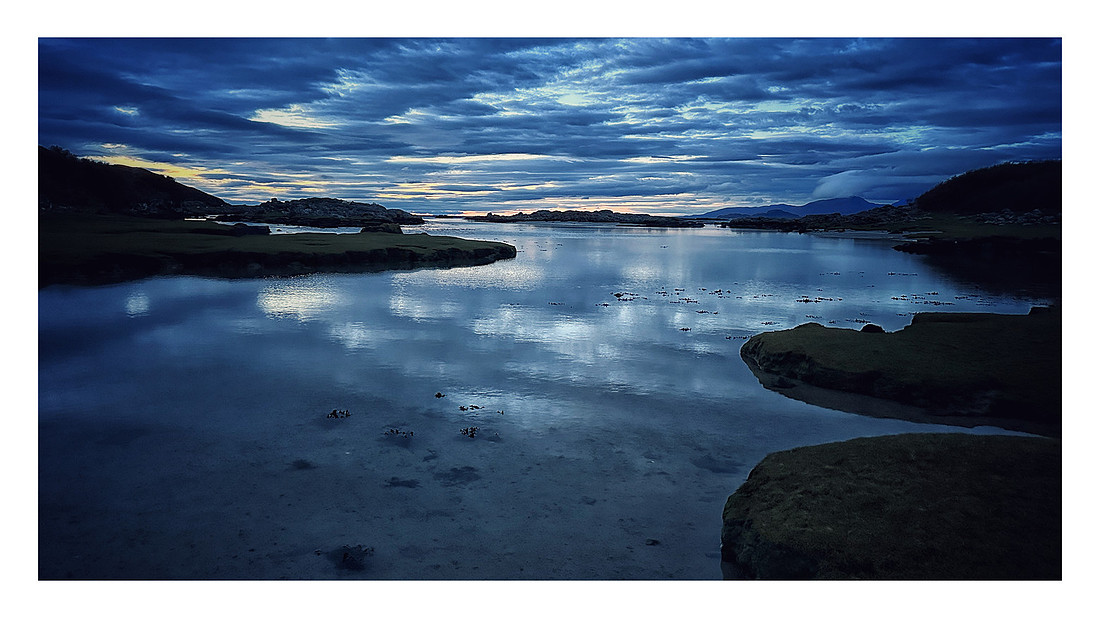
The other evening, as the light folded itself into the hills behind Kilchoan and the sea exhaled a slower breath, a conversation unfolded between two creatives — a quiet exchange shaped by the rhythm of place. We spoke not of grand events or declarations, but of subtle shifts: the way the air felt heavier, as if the weather were preparing to speak; the way the silence deepened, not with absence but with presence. It was a moment suspended between seasons, between knowing and not knowing, between the seen and the sensed.
This piece is born of that conversation — a response not only to words shared, but to the landscape that shaped them. It is not a direct account, but a reflection, an echo, a composition by the quiet itself.
There is a silence in Ardnamurchan’s far west that does not ask to be filled. It is not the silence of emptiness, but of fullness — a silence that holds, that listens, that allows. It is a silence that invites thought to stretch out, uncoiled and unhurried, like the long shadows cast by the evening sun across croft fences and latches. In this silence, the mind does not race; it wanders. It does not grasp; it receives.
This quiet is not passive. It is active in its stillness, shaping the rhythm of life here. It is the silence between waves, the pause before the wind turns, the hush of heather underfoot. It is the kind of quiet that speaks to those who know how to listen — those attuned to the language of land and sky, of stone and sea.
Gaelic place names echo this quietude: Achosnich — the Field of Sighing — breathes with the land’s own exhalation. Sìthean Mòr, the Large Fairy Hill, holds the mystery of ancient silence, a place where folklore and solitude intertwine. Lochan Dòbhrain, the Little Loch of the Otter, nestles in secluded hush, while Garbh Dhail, the Rough Meadow, speaks of wild solitude untouched by time.
And then there is the darkness.
In cities, darkness is often feared, lit away by urgency and noise. But here, in the far west, darkness is a companion. It arrives not with menace but with grace. It wraps the land in a velvet hush, grounding the soul and rooting the body. It is a darkness that does not isolate, but connects — to the stars, to the soil, to the stories held in both.
This darkness is ancient. It carries the weight of time — geological time, cultural time, the time of tides and seasons and slow erosion. It is a darkness that remembers. And in its remembering, it offers rest. Not escape, but return.
Scottish Gaelic proverbs reflect this wisdom: ‘Èist ri gaoth nam beann gus an traogh na h-uisgeachan’ — Listen to the wind upon the hill till the waters abate — teaches patience and presence. ‘Far is saimhche an uisge, ’s ann is doimhne e’ — Where the water is stillest, it is deepest — reminds us of the richness found in quietude. ‘Fanaidh duine sona ri sìth, ach bheir duine dona dubh-leum’ — The fortunate man waits for peace, the unfortunate takes a leap in the dark — speaks to the grounding power of stillness.
The rhythms of Ardnamurchan are not linear. They do not march forward; they circle, spiral, drift. They are the rhythms of peat and bracken, of deer trails and sea lochs, of crofting life and community memory. They are the rhythms of change that is never abrupt, but always present — like the weather that shifts not in storms but in whispers.
To live creatively in this landscape is to be in dialogue with these rhythms. It is to compose not with control, but with response. To create not from imposition, but from invitation. The land does not demand; it offers. And in that offering, something deep within is stirred — a sense of belonging not just to place, but to time, to silence, to the shared solitude that binds community.
Poetic Reflection
Composed by the quiet,
the land speaks in hushes—
a rhythm of moss and memory,
of dusk folding into peat.
Darkness does not close,
it opens—
a door to the deep,
where thought walks unshod
and time is not counted,
but felt.
And so, a question:
What does silence offer you?
What does darkness allow you to feel?
What rhythms shape your own creative life, and how might they be heard more clearly in the quiet?
If you feel moved, I invite you to respond — to share your own reflections, your own compositions by the quiet. You can do so through the blog, where this piece will live not as a conclusion, but as a beginning.
Sources
Henderson, A., 1915. Ardnamurchan Place-Names. The Celtic Review, [online] pp.149–168. Available at: https://www.jstor.org/stable/pdf/30070334.pdf [Accessed 28 Aug. 2025].
Robertson, C.M., pre-1928. List of Gaelic Place-Names in Argyll: Morven and Ardnamurchan, and Strontian District. National Library of Scotland Archives. Available at: https://manuscripts.nls.uk/repositories/2/archival_objects/23967 [Accessed 28 Aug. 2025].
Lingalot, 2023. 37 Scottish Gaelic Quotes, Sayings & Proverbs + Their Meanings. [online] Lingalot. Available at: https://www.lingalot.com/scottish-gaelic-quotes/ [Accessed 28 Aug. 2025].
Keeping Ardnamurchan’s Spirit Alive—Together
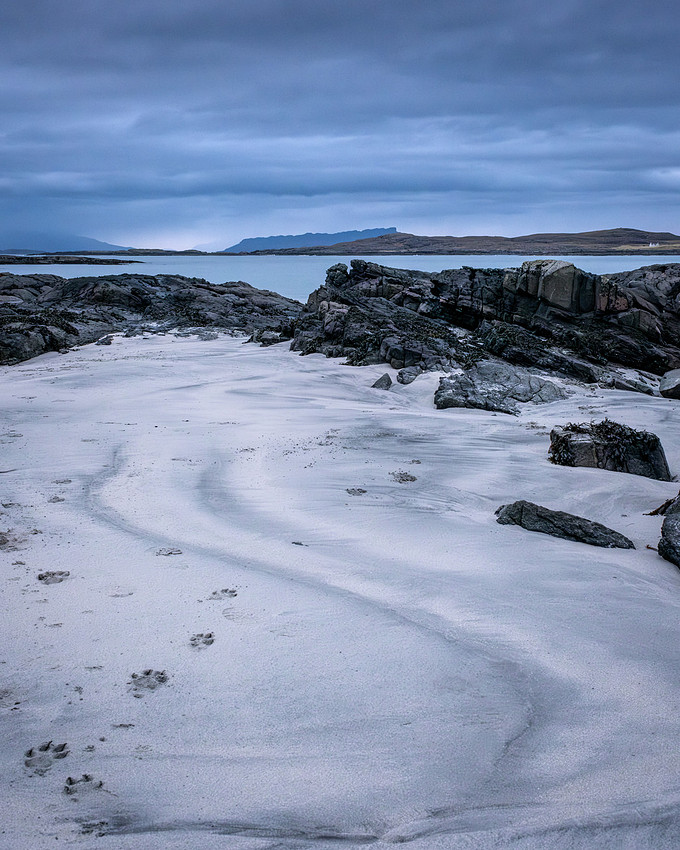
There’s a quiet magic in Ardnamurchan—the way the light shifts across the moor, the salt wind carries whispers of history, and the land holds stories older than memory. This is the heart of my work: to listen, to translate silence into image and word, and to share the spirit of this extraordinary place with those who care about its beauty and heritage.
Every photograph, every essay, every project takes time—time to walk the remote tracks, to wait for the light that lasts only a breath, to write words that do justice to what I see and feel. This is slow art, and it matters deeply to me.
If my work resonates with you, if you believe in the value of preserving cultural and natural spirit through photography and writing, I’d love your support. Buying me a coffee helps me spend more time in the field, create more stories, and keep working closely with—and giving an authentic voice to—a community that is very close to my heart.
You can support me here:
👉 Buy Me a Coffee
Thank you for helping me keep Ardnamurchan’s stories alive.