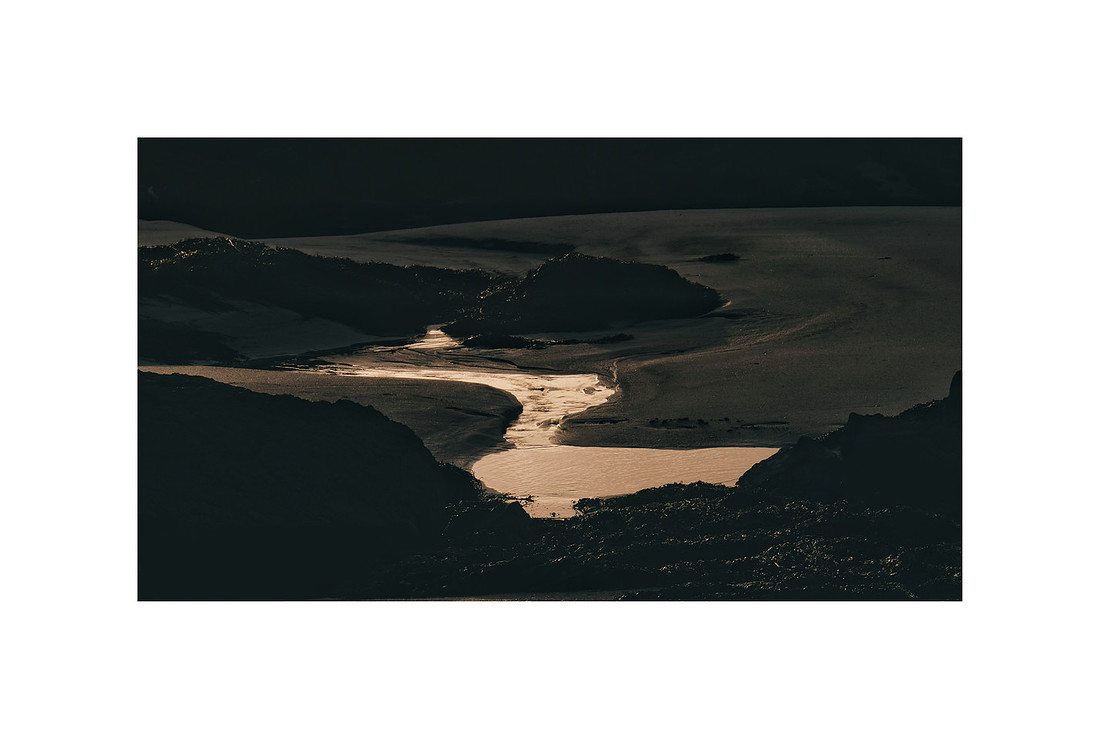
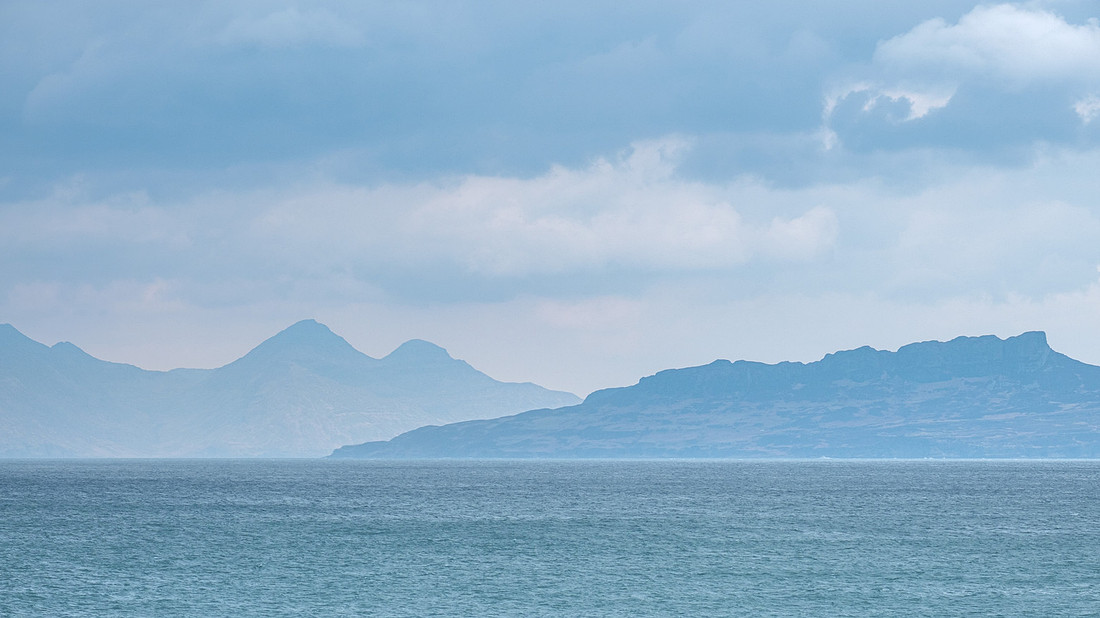
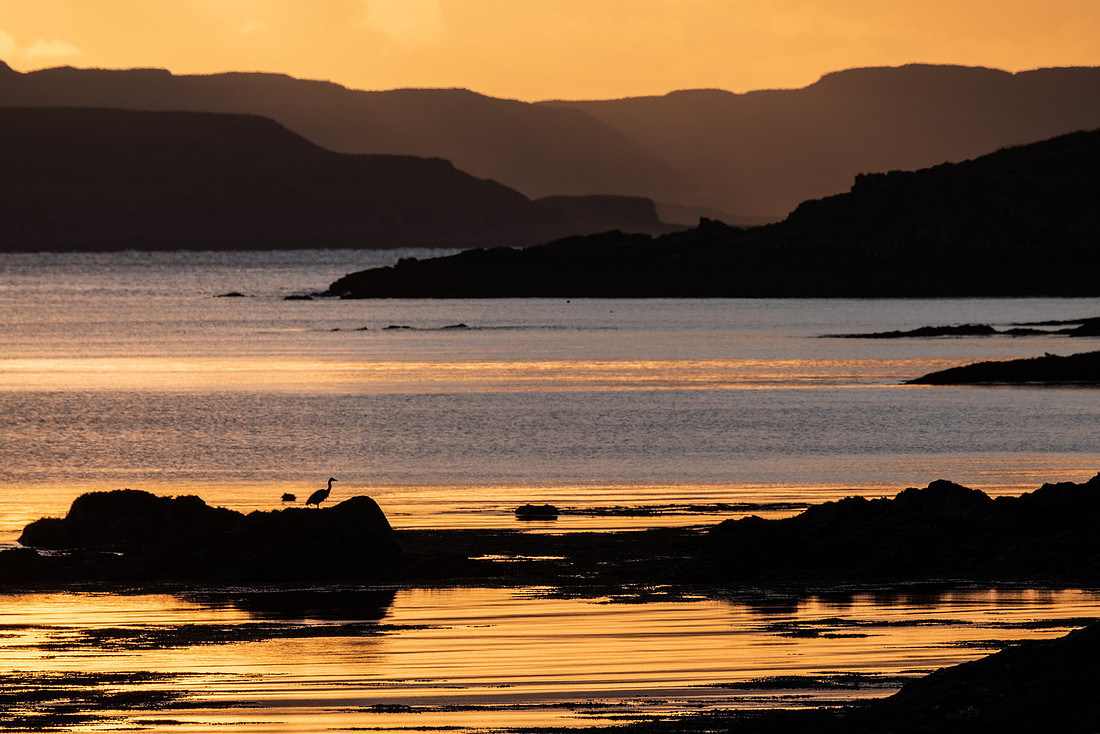
Spiorad Àird nam Murchan -Elemental II - Water

Elemental II – Water (An t-Uisge): The Pulse of Ardnamurchan
Spiorad Àird nam Murchan pt.17

The Element That Breathes
There are days on Ardnamurchan when water seems to speak in every tongue the land has ever known. It murmurs through moss-dark burns, hurls itself in white syllables down rock-lipped falls, and exhales in the long vowels of tide against basalt. It is not a single voice but a choir—Atlantic swell, Hebridean surge, rain threading the heather, mist ghosting the ridges.
Here, water is not backdrop. It is protagonist. It writes the script of this peninsula, line by line, wave by wave. It is the pulse beneath the peat, the breath in the machair grass, the silver ink that drafts every contour of the coast. To walk Ardnamurchan is to walk inside water’s grammar: corries punctuated by lochans, clauses of stream and fall, sentences of tide and storm.
Names That Hold Water
The map of Ardnamurchan is a manuscript of water. Its place-names are syllables soaked in rain, tide, and stream. Àird nam Murchan—“height of the seals”—carries the salt-breath of the ocean in its name, a reminder that this headland was named not for its land but for its marine life.
Look closer and the lexicon deepens:
Allt Choire Mhuilinn – burn from the corrie of the mill, where water once powered human craft.
Allt Faskadale – burn of Faskadale, echoing Norse roots (ship-dale) braided with Gaelic.
Amhainn Chrò Bheinn – river of the enclosure mountain, a name that binds topography to flow.
Lochan Dóbhrain – little loch of the otter, a creature whose life is written in ripples.
Loch Caorach – loch of the sheep, where pastoral life met reflective waters.
Camas nan Clacha Móra – bay of the large stones, where tide and rock negotiate their slow treaty.
An Acairseid – the anchorage, a name heavy with maritime memory.
Even elemental words—uisge (water), allt (stream), abhainn (river), eas (waterfall), inbhir (river mouth)—are embedded in place-names like Acharacle (Àth Tharracail, Torquil’s ford) and Achateny (Achadh an Teine, field of fire), where water and fire meet in linguistic paradox. These names are more than cartographic marks; they are vessels of memory, bearing centuries of intimacy between people and water.
A Peninsula Encircled
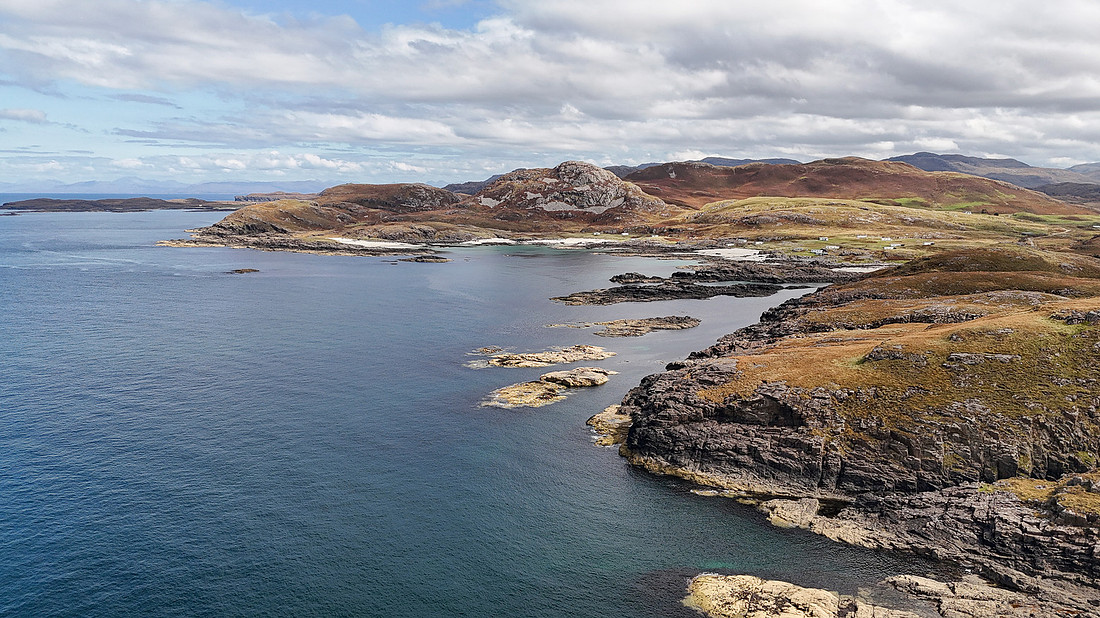
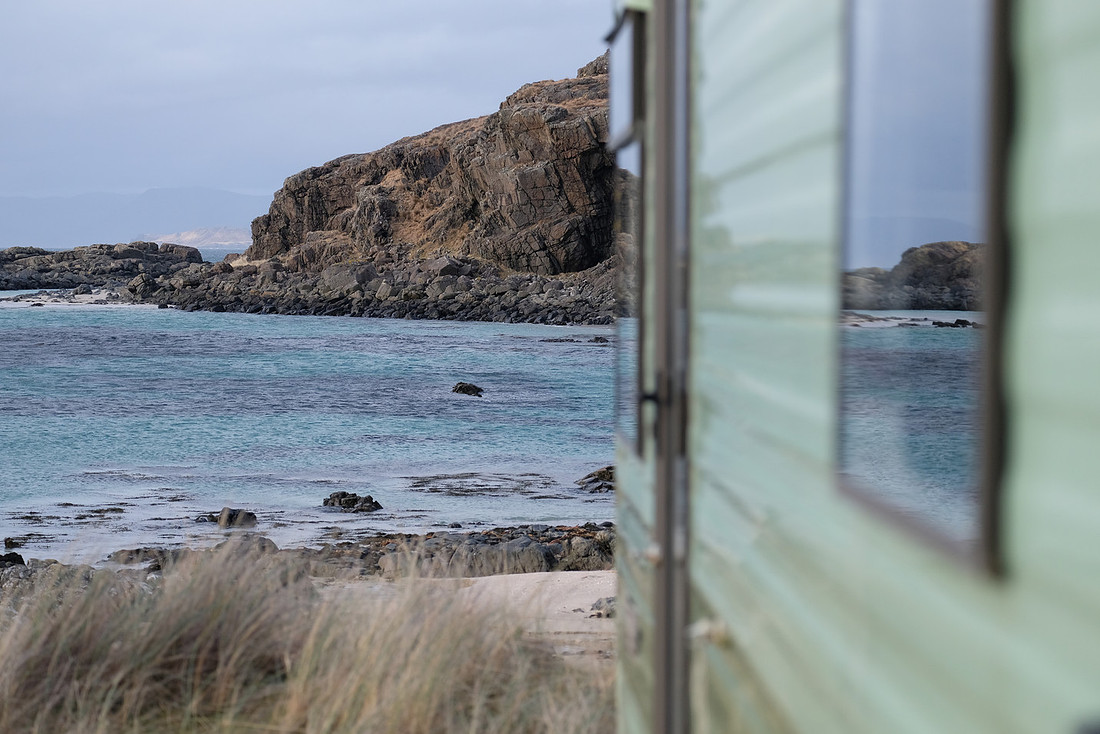
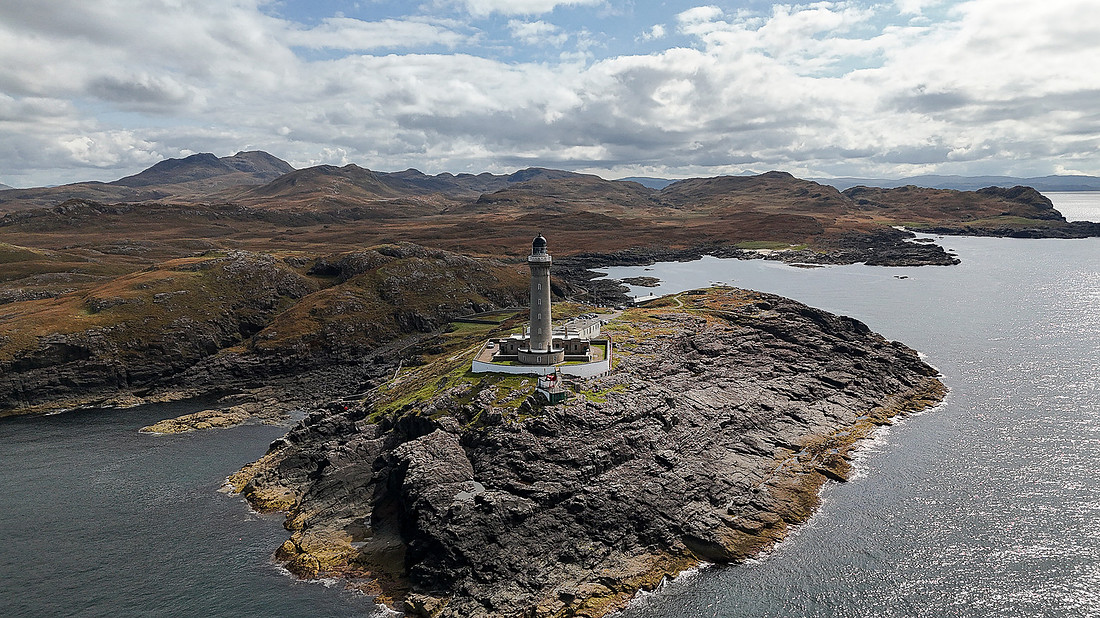
Ardnamurchan is almost an island, clasped on three sides by water: the Atlantic to the west, the Sound of Mull to the south, and the northern waters that lean toward Moidart and Arisaig. From Sanna’s white sands, the sea opens like a vast, breathing lung, its rhythm dictating the tempo of life.
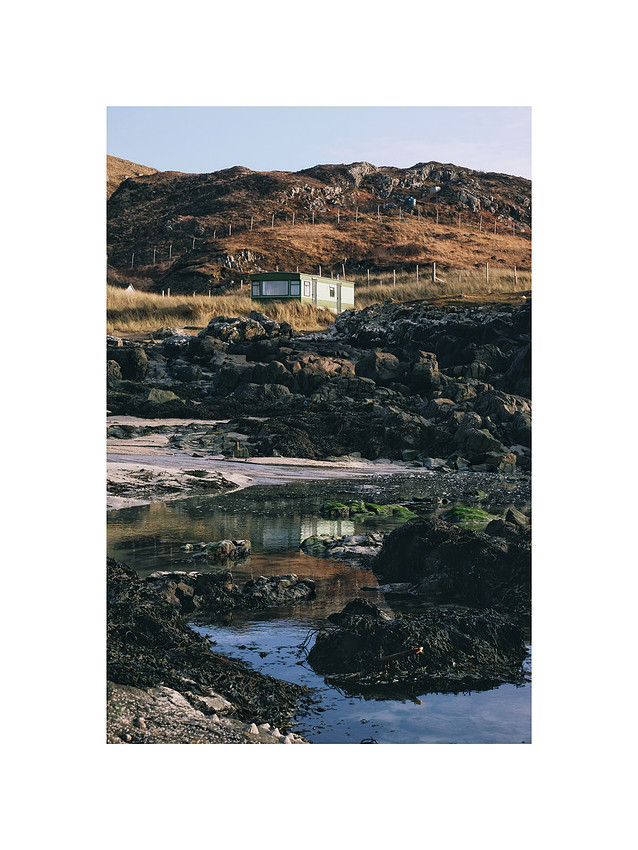
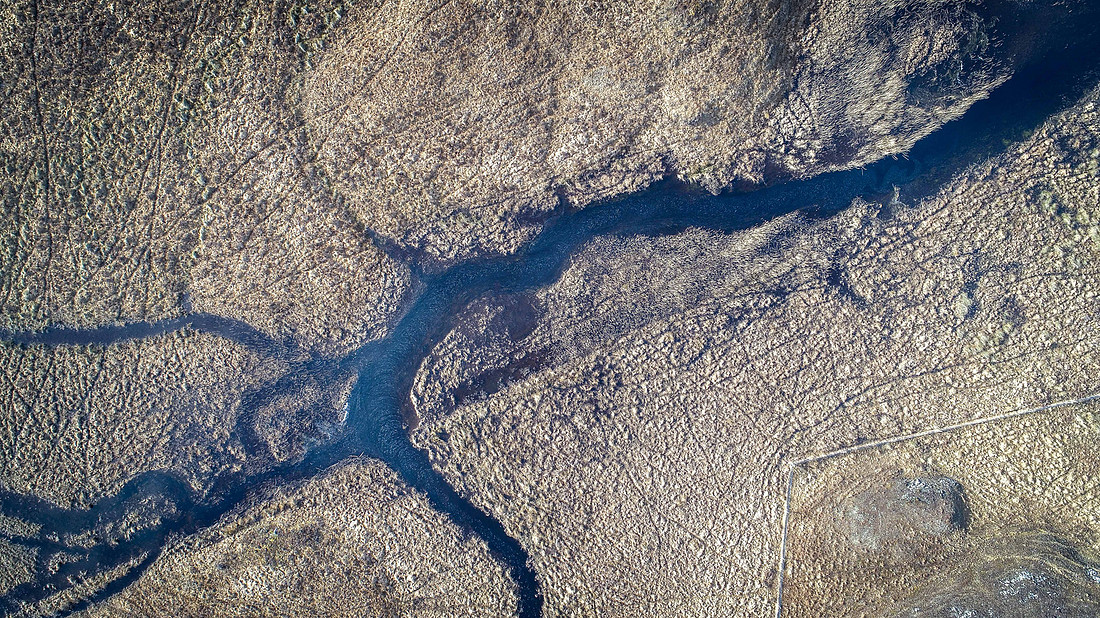
Inland, burns thread the moors like quicksilver veins, feeding lochans that lie in volcanic bowls. Rain is not an event here; it is a condition of being. Twenty days of wetness in a month is no anomaly but a norm, and the air often carries a fine, horizontal drizzle that seems less like weather than atmosphere.
The peninsula’s climate is oceanic: mild yet saturated, with annual rainfall exceeding 2,000 mm. This abundance shapes moss-thickened stones, peat that drinks centuries of rain, and machair grasslands greening the coastal margins. Even the light feels aqueous—silvered, mutable, as if filtered through a lens of mist.
And then there is the wind: a courier of moisture, sweeping in from the Atlantic with rain stitched into its hem. It combs the heather, lashes the sea into white hieroglyphs, and leaves the land rinsed and raw.
Water and Deep Time
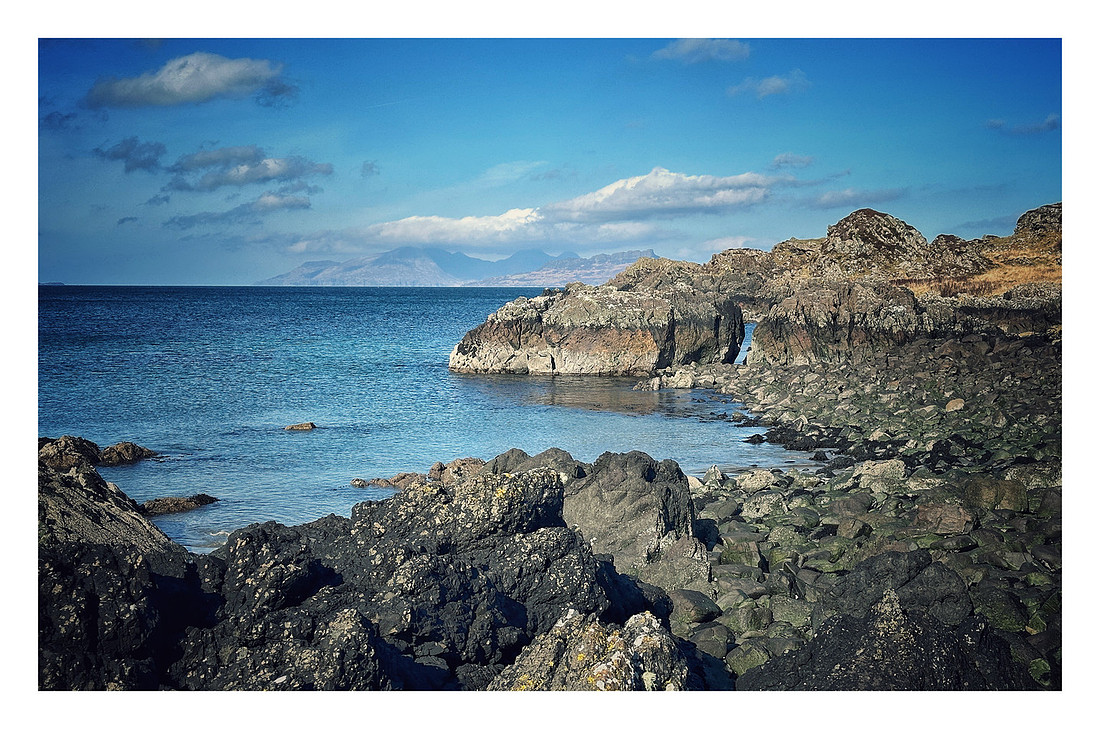
To understand Ardnamurchan’s water, you must first understand its fire. Beneath these hills lies the fossilized heart of an ancient volcano, its ring complex etched into the bedrock like a signature from the Palaeogene. Here, magma once surged and cooled in concentric patterns, later fractured by ice and scoured by meltwater.
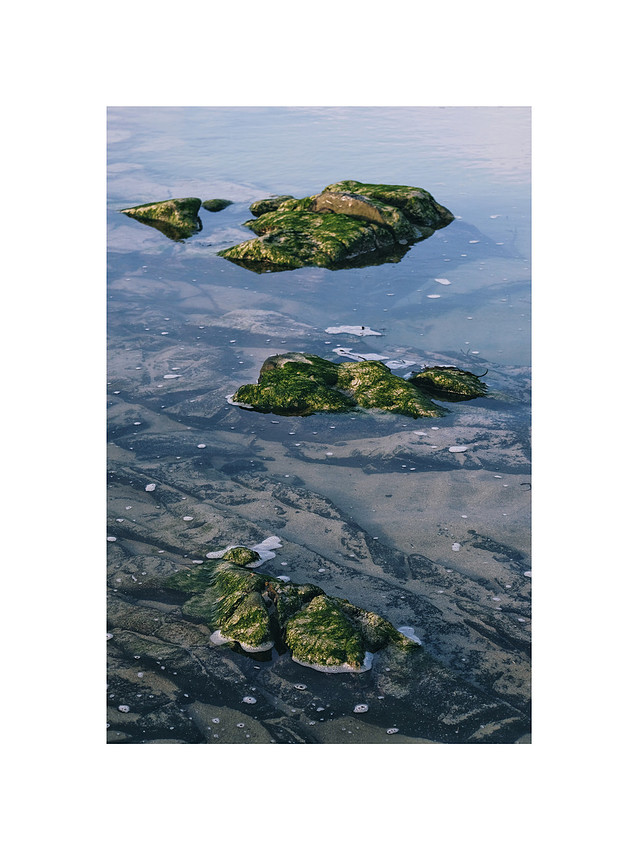
Glaciation carved corries and troughs, leaving lochs as blue afterthoughts in the hollows. Streams tumble now through gabbro and dolerite, tracing paths first drafted by glaciers. Water is both archivist and sculptor, revealing the peninsula’s igneous bones even as it erodes them grain by grain.
Stand by the burn at Achateny and you feel this geology underfoot: the rock’s volcanic heft, the way water has bitten into its edges, rounding the hard angles into fluent curves. Each ripple is a palimpsest, a rewriting of the land’s long story.
The Human Tide
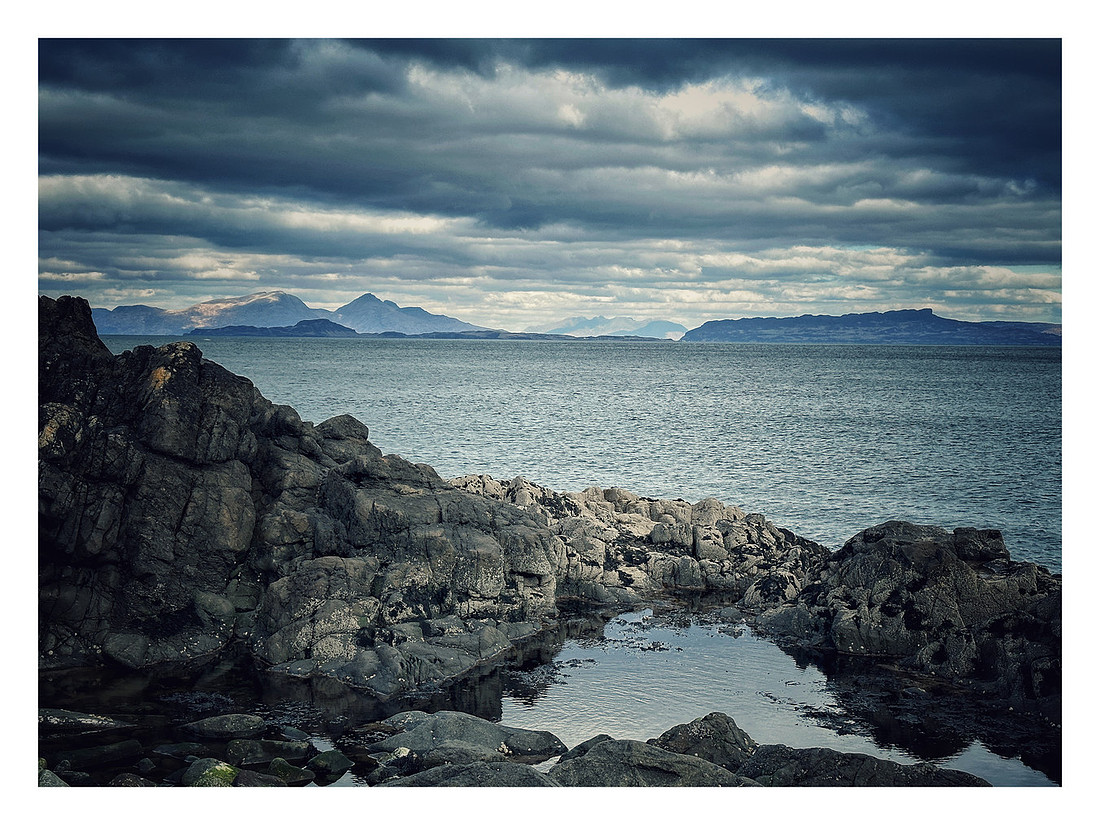
For over ten millennia, people have lived by Ardnamurchan’s waters. Mesolithic hunters followed the tide-lines, gathering shellfish and spearing fish in the shallows. Later, Norse longboats cleaved these seas, leaving their linguistic wake in names like Ormsaig and Fascadale. Gaelic crofters drew life from burns and lochs, their cattle drinking from peaty pools, their boats nosing into sea-lochs for herring shoals.
Water was highway and larder, baptismal font and burial ground. It carried kelp for fertilizer, fish for sustenance, and stories for song. Even today, the peninsula’s sense of remoteness is measured not in miles but in crossings—ferry over Loch Linnhe, road skirting sea-lochs, the final approach where land narrows and the ocean asserts its dominion.
Ekphrastic Immersion
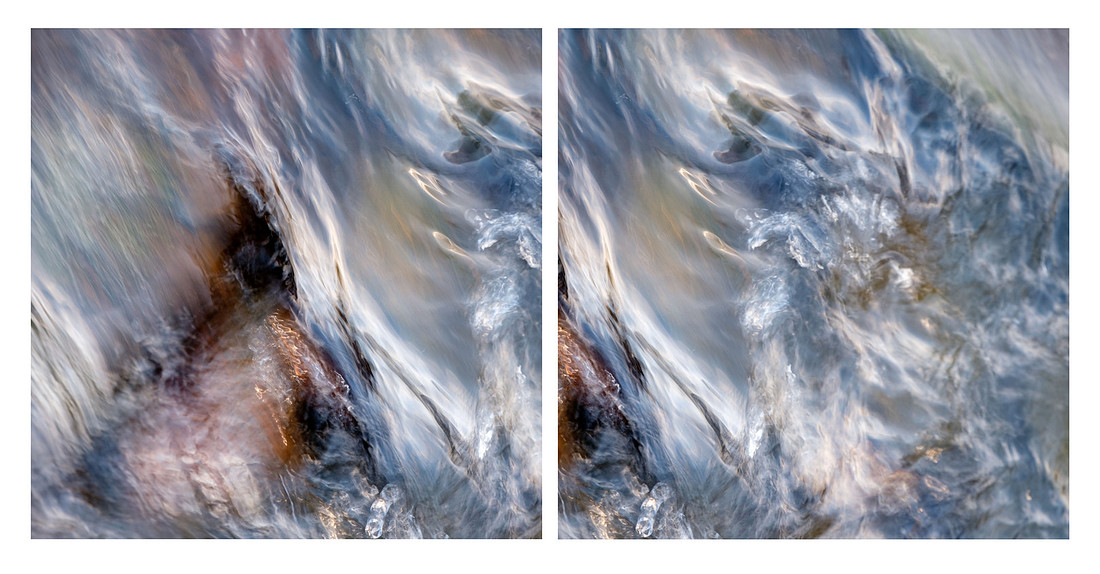
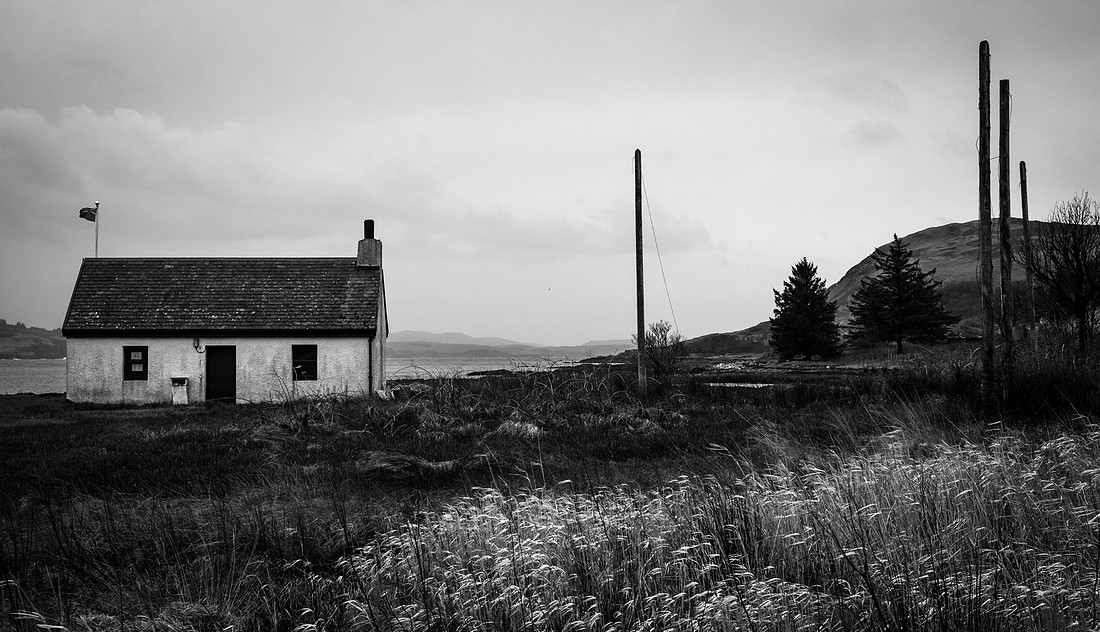
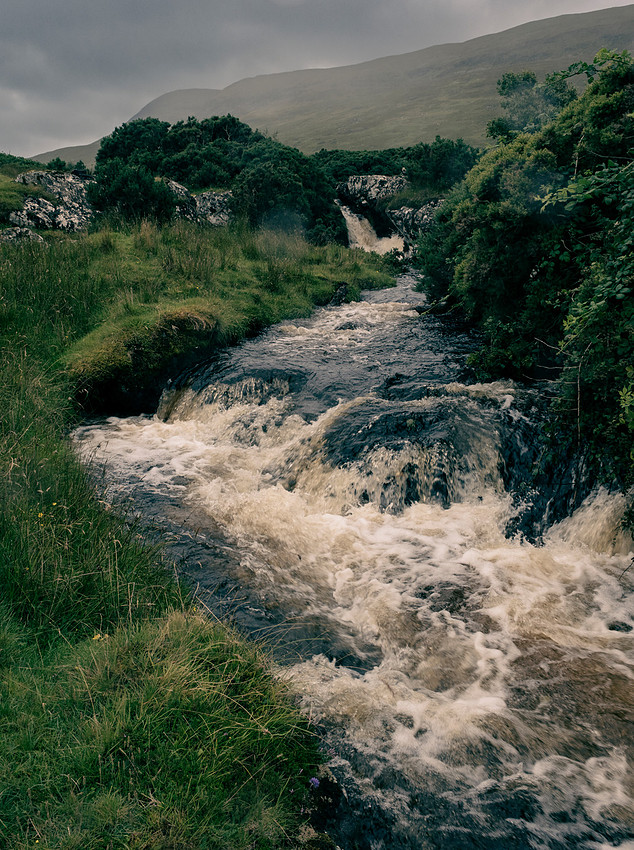
Picture this: a stream at Achateny, swollen with rain, its surface a restless script of white and umber. It leaps in stanzas over rock ledges, pools briefly in dark punctuation, then rushes on, urgent as thought. Around it, grasses lean like italic letters, and the air smells of iron and moss. Above, the hills brood under a sky the colour of pewter, cloud-mass dragging its grey sleeve across the ridges.
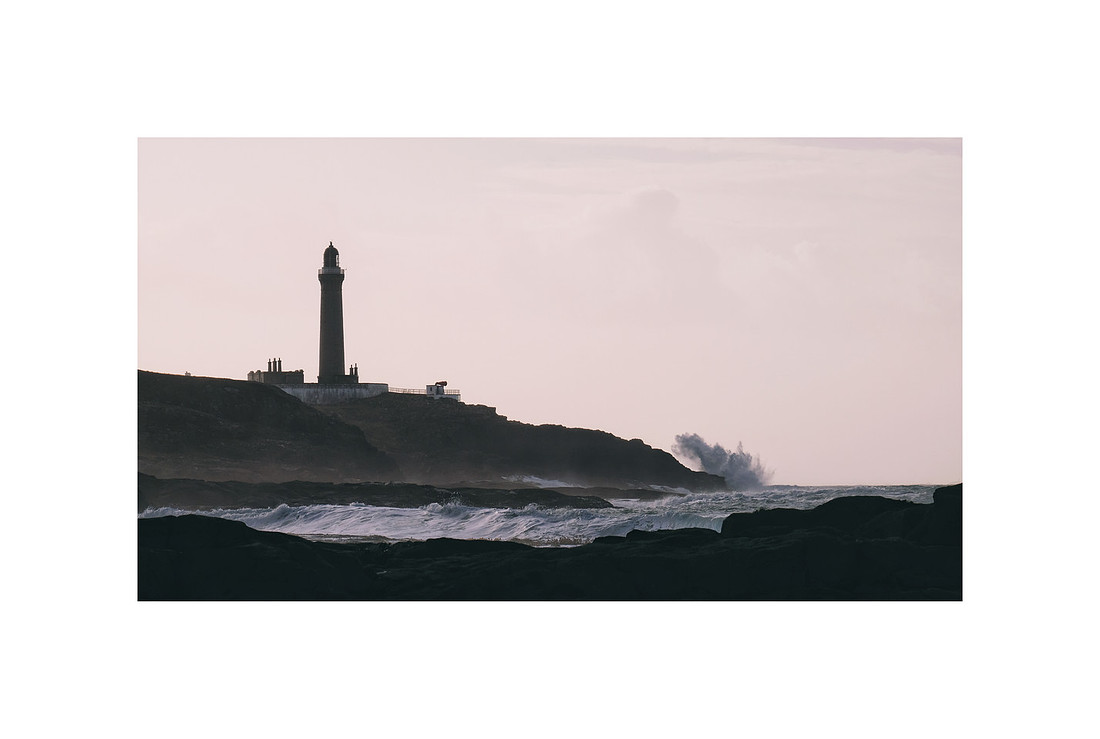
Listen: the burn’s voice is not singular but braided—liquid consonants of fall and swirl, the sibilant hiss where water combs the gravel. This is language without words, yet fluent in meaning. Walk west and the vocabulary shifts: Atlantic rollers booming against basalt, kelp streaming like copper hair in the undertow, the long, low vowel of tide inhaling the sand at Sanna. Here, water is syntax, structuring every sentence of the shore.
Closing Reflection
Water is Ardnamurchan’s pulse—visible, audible, elemental. It binds sky to soil, mountain to machair, past to present. To stand here is to feel time liquefy: volcanic fire cooled to stone, glaciers melted to lochs, rain falling as it has for millennia. And always, the sea breathing at the edge, patient, inexhaustible.
Where the Land is Written in Water
Far a bheil an Tìr Sgrìobhte ann an Uisge
An t-uisge speaks without tongue:
in the rush of burn, in the hush of tide,
in rain that stitches hill to cloud.
It writes the land in fluent silver,
then erases, then writes again.
What will you learn if you listen?
What will you carry when you leave?
A Call to Action
Next time you walk a shoreline or follow a stream, pause. Ask yourself: What does water remember here—and what does it ask you to remember in return?
Bibliography
- Gribble, C.D. & Durrance, E.M. Glossary of Ardnamurchan Place Names. GeoGuide. Link [geoguide.s...ytrust.org]
- LearnGaelic. Place Names: Water. Link [learngaelic.scot]
- British Geological Survey. Ardnamurchan Central Complex: Hebridean Igneous Province. Link [earthwise.bgs.ac.uk]
- Geological Society of London. Ardnamurchan Ring Complex. Link [geolsoc.org.uk]
- Heritage Ardnamurchan. History and Culture of Ardnamurchan. Link [heritagear...chan.co.uk]
- Viking Times. Ardnamurchan Boat Burial. Link [vikingtimes.co.uk]
- Discover Highlands and Islands. Ardnamurchan Overview. Link [discoverhi...lands.scot]
- Time and Date. Climate & Weather Averages in Ardnamurchan. Link [timeanddate.com]
Gaelic Water Terms & Place Names Glossary
This glossary provides Gaelic water-related terms and place names with phonetic pronunciation and English translations.
|
Term / Place Name |
Phonetic |
Meaning / Translation |
|
Uisge |
OOSH-kuh |
Water |
|
Allt |
AHL-tch |
Burn / Stream |
|
Abhainn |
AH-vin |
River |
|
Eas |
Ess |
Waterfall |
|
Loch |
Loch (soft ‘ch’) |
Lake / Sea-loch |
|
Lochan |
LOCH-an |
Small loch |
|
Inbhir |
IN-vir |
River mouth / Estuary |
|
Camas |
CAH-mas |
Bay |
|
Cuan |
COO-an |
Ocean / Sea |
|
Àird nam Murchan |
AARD nam MOOR-chan |
Headland of the seals or Headland of the great seas |
|
Allt Choire Mhuilinn |
AHL-tch CHOR-eh VOOL-in |
Burn from the corrie of the mill |
|
Allt Faskadale |
AHL-tch FAS-ka-dale |
Burn of Faskadale (Norse-Gaelic roots) |
|
Amhainn Chrò Bheinn |
AH-vin CHRO VEN |
River of the enclosure mountain |
|
Lochan Dóbhrain |
LOCH-an DOH-rin |
Little loch of the otter |
|
Loch Caorach |
Loch KEE-rach |
Loch of the sheep |
|
Camas nan Clacha Móra |
CAH-mas nan CLA-cha MO-ra |
Bay of the large stones |
|
An Acairseid |
An AHK-ar-shed |
The anchorage |
|
Acharacle (Àth Tharracail) |
AH-kar-a-cle |
Torquil’s ford |
|
Achateny (Achadh an Teine) |
AH-cha-ten-ee |
Field of fire |