Spiorad Àird nam Murchan – Part XV-Elemental

Elemental Ardnamurchan: A Prelude to Five Conversations with Place
Spiorad Àird nam Murchan – Part XV

Opening Reflection
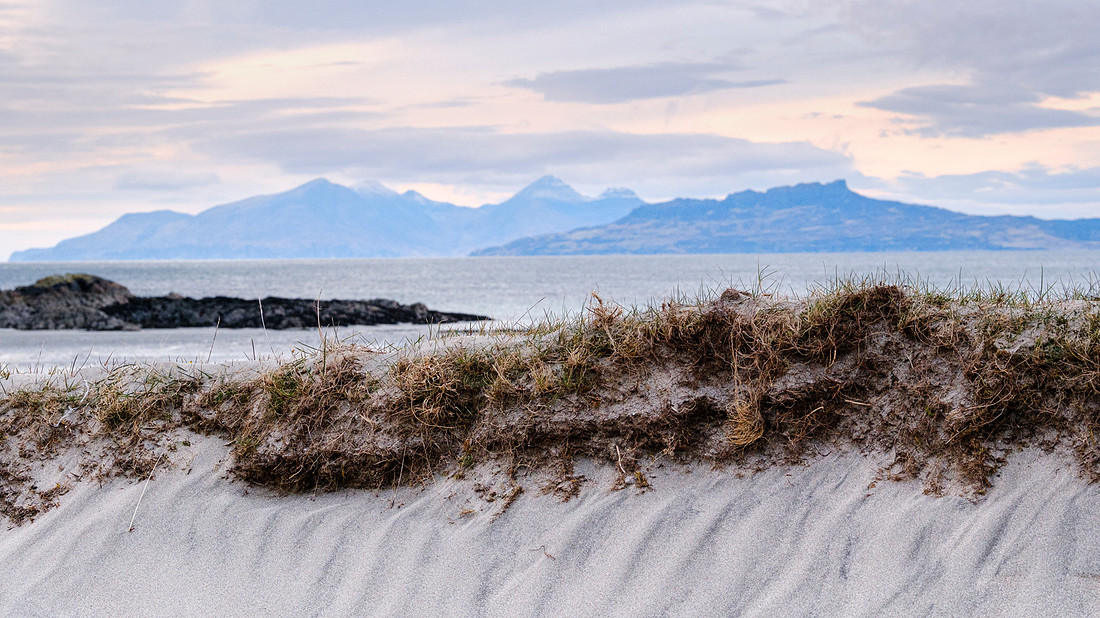
There are landscapes that speak in whispers, and Ardnamurchan is one of them. It does not clamour for attention; it waits—patient, elemental, and unbroken at the far edge of Britain. For almost ten years, I have walked its single-track roads, listened to its tides, and traced its contours through lens and line. Yet, as this long-form project deepens, I find myself returning to the oldest frameworks of understanding: the elements. Earth, Water, Air, Fire—and now, Spirit.
This new chapter, Elemental Ardnamurchan, is not a departure but a distillation. It is the structure that will bring Spiorad Àird nam Murchan to fruition—a way to gather the threads of photography, writing, sound, and even paint into a coherent whole. These elements will serve as compass points, guiding me through the complexity of this peninsula and shaping the final articulation of a project that has grown quietly for nearly a decade.
Why the Elements?
The elements are not mere categories; they are lenses. Through them, Ardnamurchan reveals its layered identity:
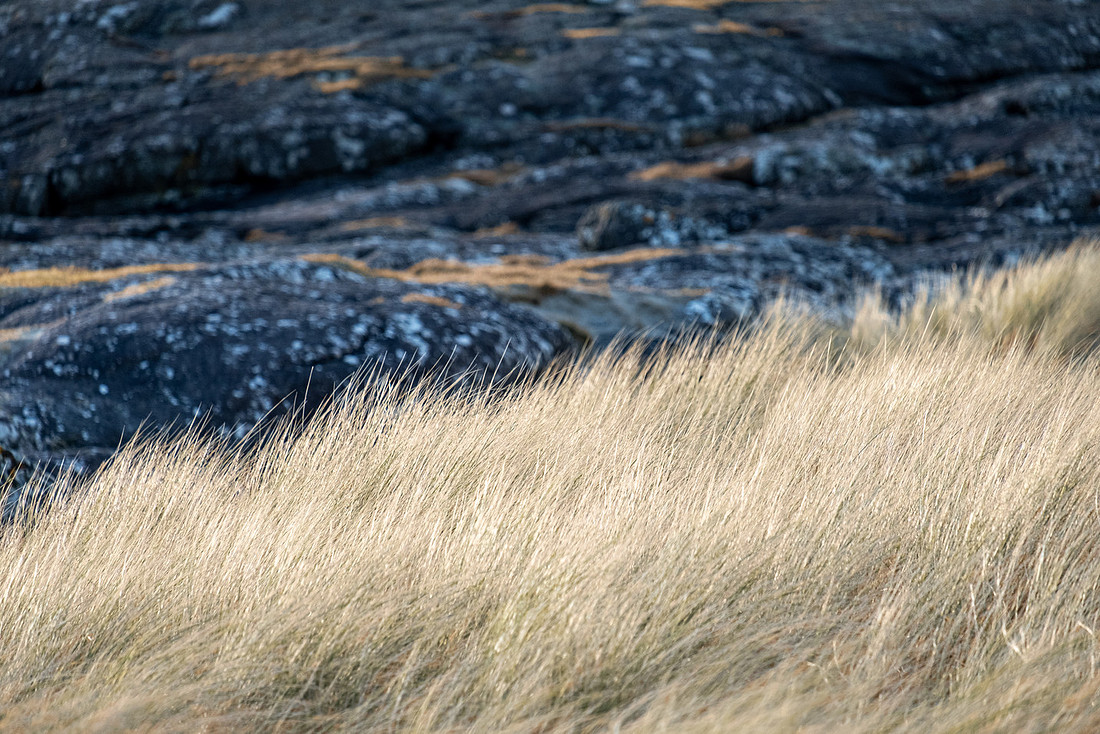
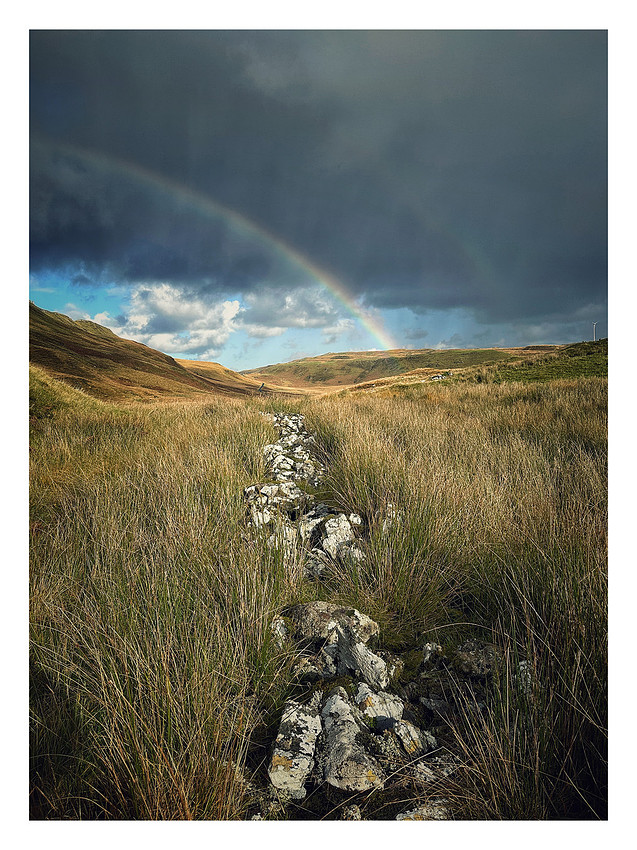
- Earth holds the memory of cultivation and clearance, the quiet resilience of moss and machair.
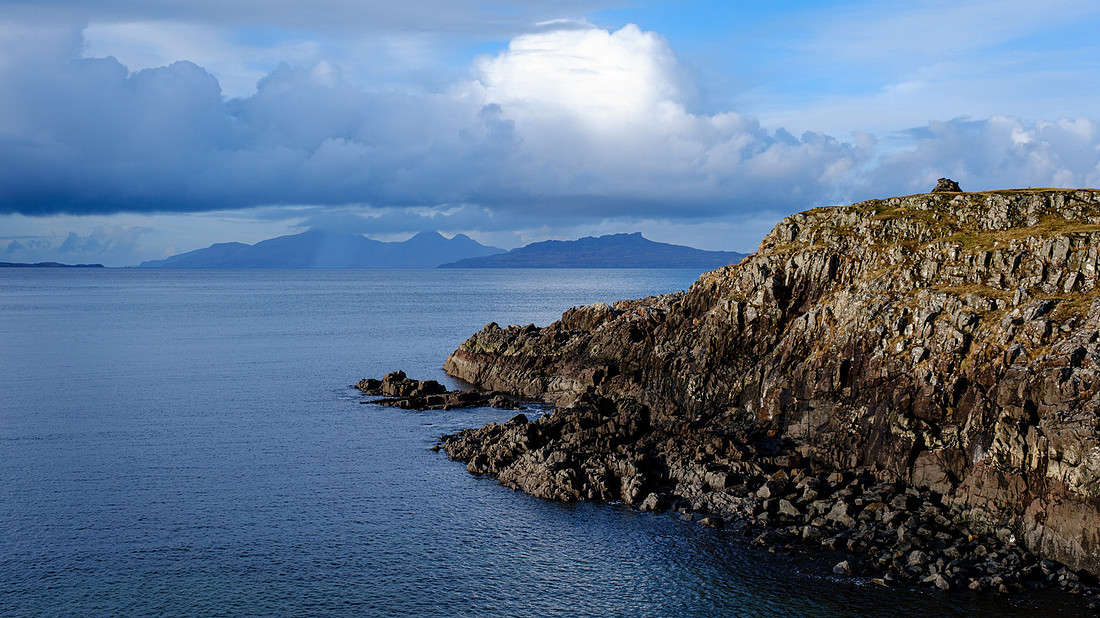
- Water carries the peninsula’s edges, its lochs and burns, its tidal conversations with the Small Isles.
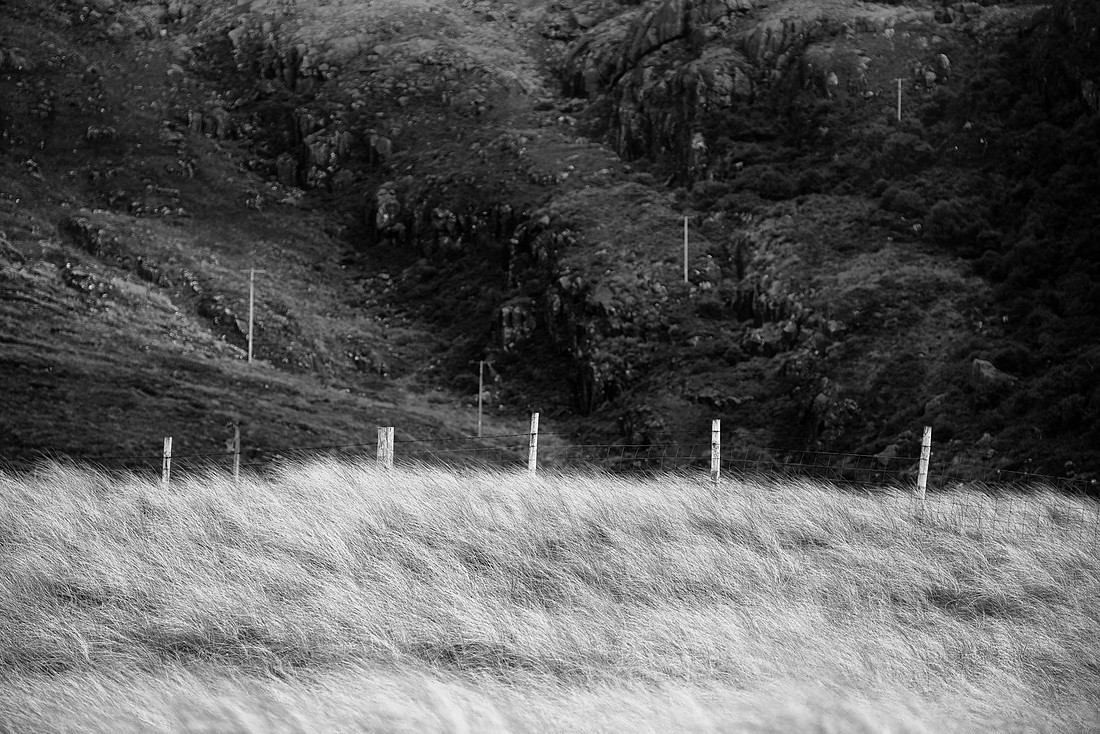
- Air moves like a language across the hills, shaping light and shadow, mood and meaning.
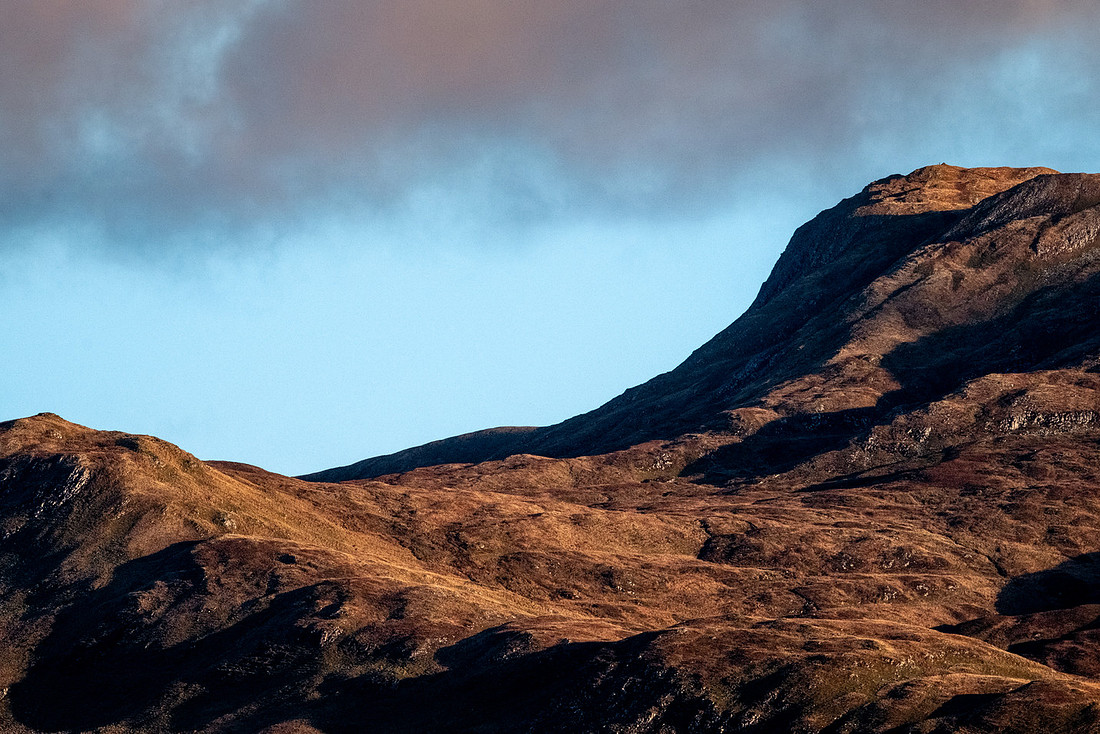
- Fire speaks from deep time—the igneous heart of an ancient volcano, still inscribed in the ring of hills.
- Spirit—the fifth element—gathers the human story: crofting, Gaelic speech, community gardens, and the lived imagination of place.
Together, they form a framework for the next five essays—each a meditation on one element, each an invitation to see Ardnamurchan anew. This elemental structure will not only guide the writing but also the sequencing of images, soundscapes, and video pieces, creating a multi-sensory narrative that reflects the true complexity of this edge-land.
The Five Essays – A Glimpse Ahead
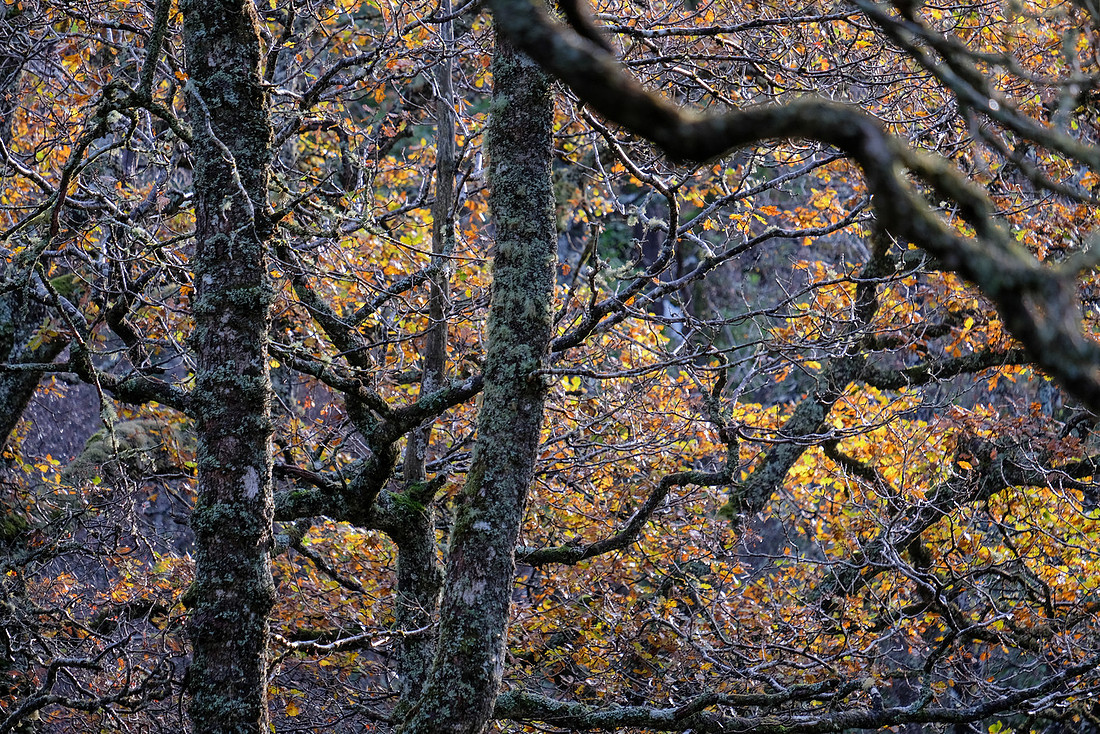
Elemental I – Earth (An Talamh)
I will walk the ridges of Beinn Hiant and the lazy beds of Ormsaigbeg, tracing the marks of cultivation and abandonment. Earth is not static; it bears the scars of the Clearances and the green persistence of return. Expect close studies of peat and heather, the tactile language of soil, and reflections on crofting heritage—names like Achnaha (“field of the kiln”) and Garbh Dhail (“rough meadow”) will ground this essay in the Gaelic map of meaning.
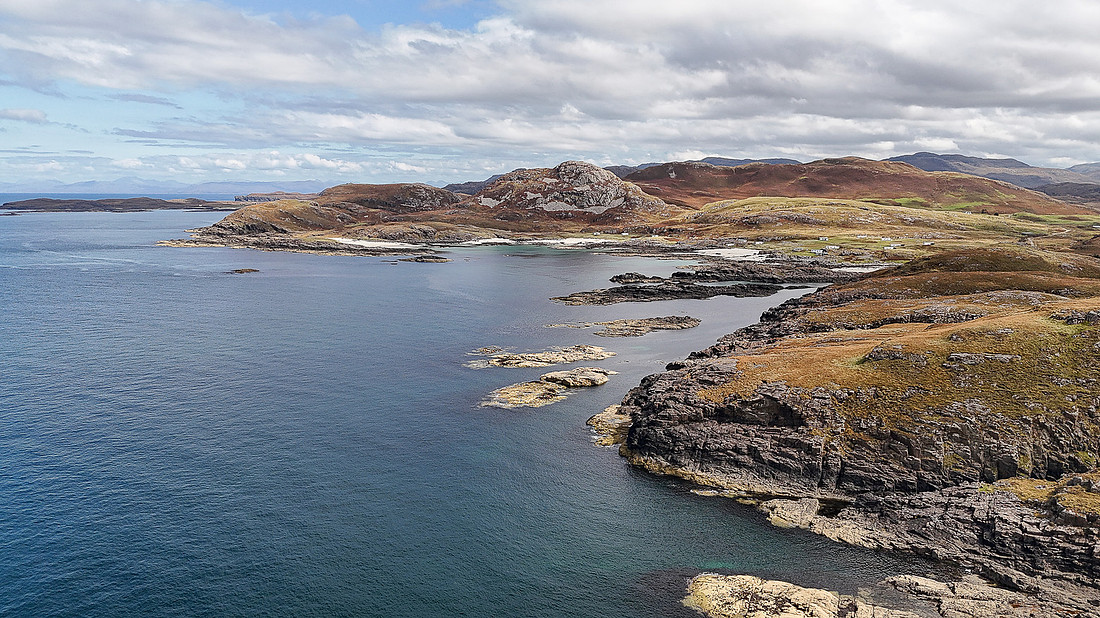
Elemental II – Water (An t-Uisge)
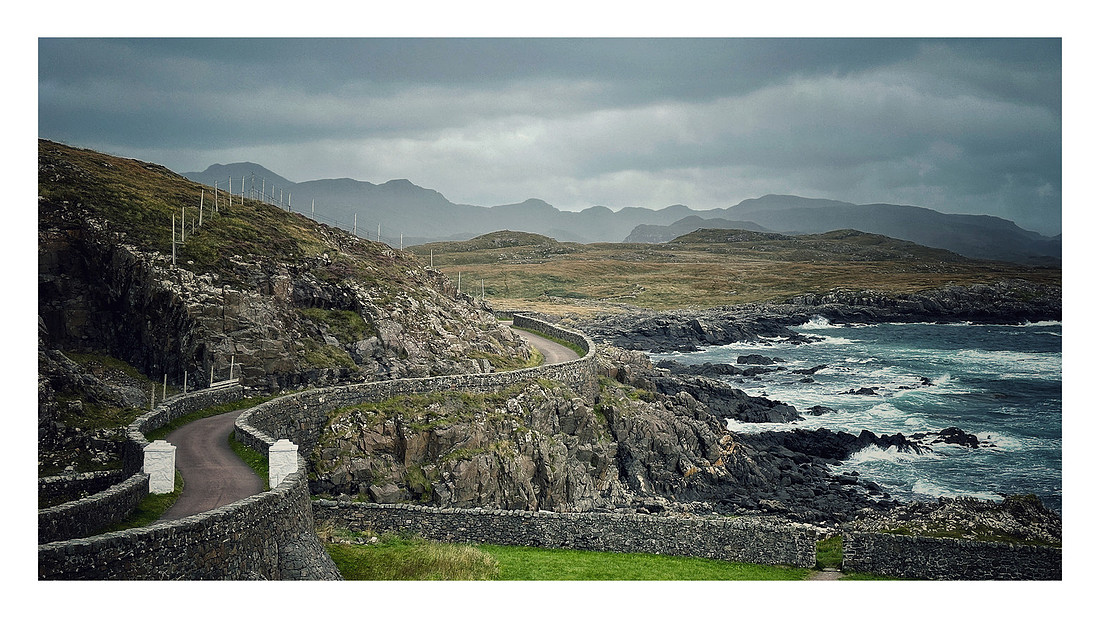
From the surge at Rubha a’Chait to the stillness of Lochan na Crannaig, water writes Ardnamurchan’s margins. I will explore tidal pools at Portuairk, the Atlantic’s restless grammar, and the lochs that hold sky like a mirror. This essay will weave sound—wave hiss, rain percussion—with images of reflection and flow, and consider how water connects this peninsula to the Hebridean archipelago beyond.
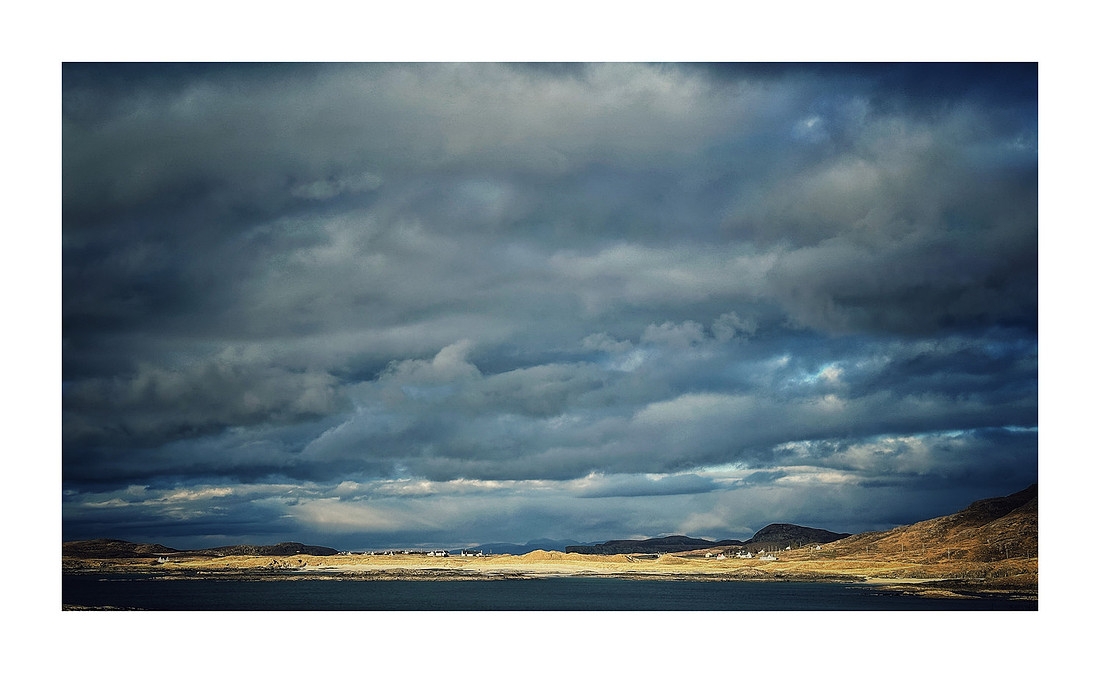
Elemental III – Air (An t-Èadhar)
Air is Ardnamurchan’s most fluent element. It speaks in the long vowel of wind between headlands, in the sudden consonant of squall. Here, I will follow the weather’s choreography—from the silvered noon at Sanna Bay to the pewter undertones of a storm over Kilchoan. Expect meditations on light, cloud, and the Gaelic sky-words that name this shifting theatre.
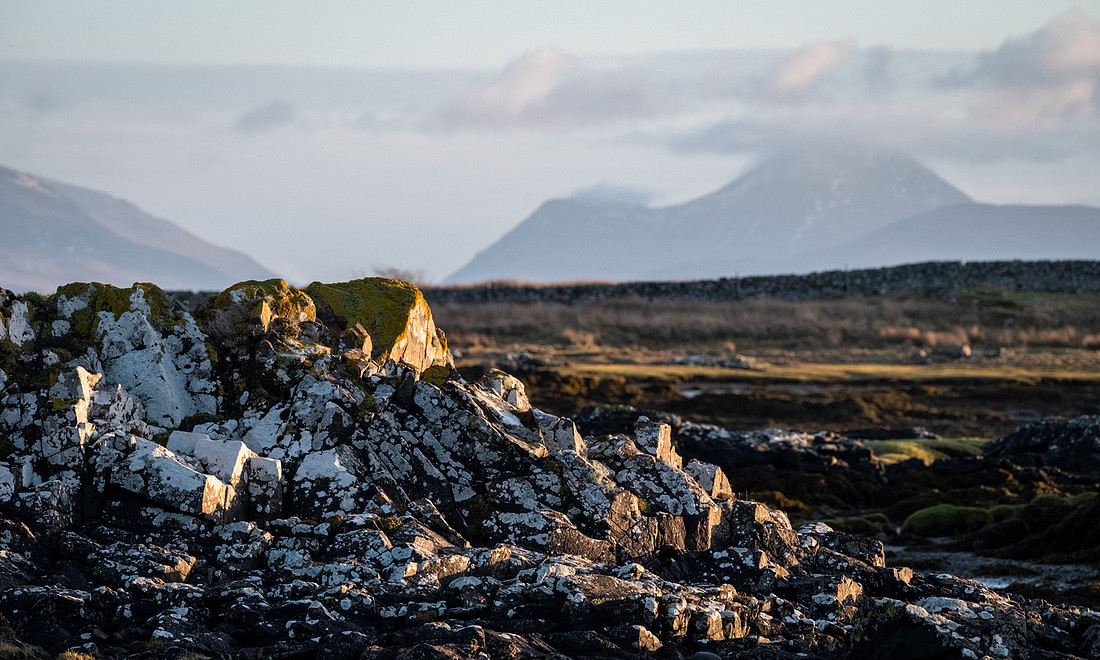
Elemental IV – Fire (An Teine)
Fire is not obvious here, yet it is everywhere—in the volcanic architecture of the Great Eucrite, in the gabbro hills that ring Glendrian, in the deep geological memory of Ardnamurchan’s Paleocene origins. This essay will descend into deep time, reading the peninsula as a cooled furnace, and reflect on how this fiery past shapes the present landscape and its imaginative pull.
Elemental V – Spirit (An Spiorad)
Spirit is the human element—the crofter’s hand on a gate latch, the voices at Kilchoan’s community garden, the stories salted into place-names. Here, I will write of continuity and change, of resilience and belonging, of how community sustains not just land but language. Expect portraits in words, fragments of oral history, and reflections on what it means to live at the edge of things.
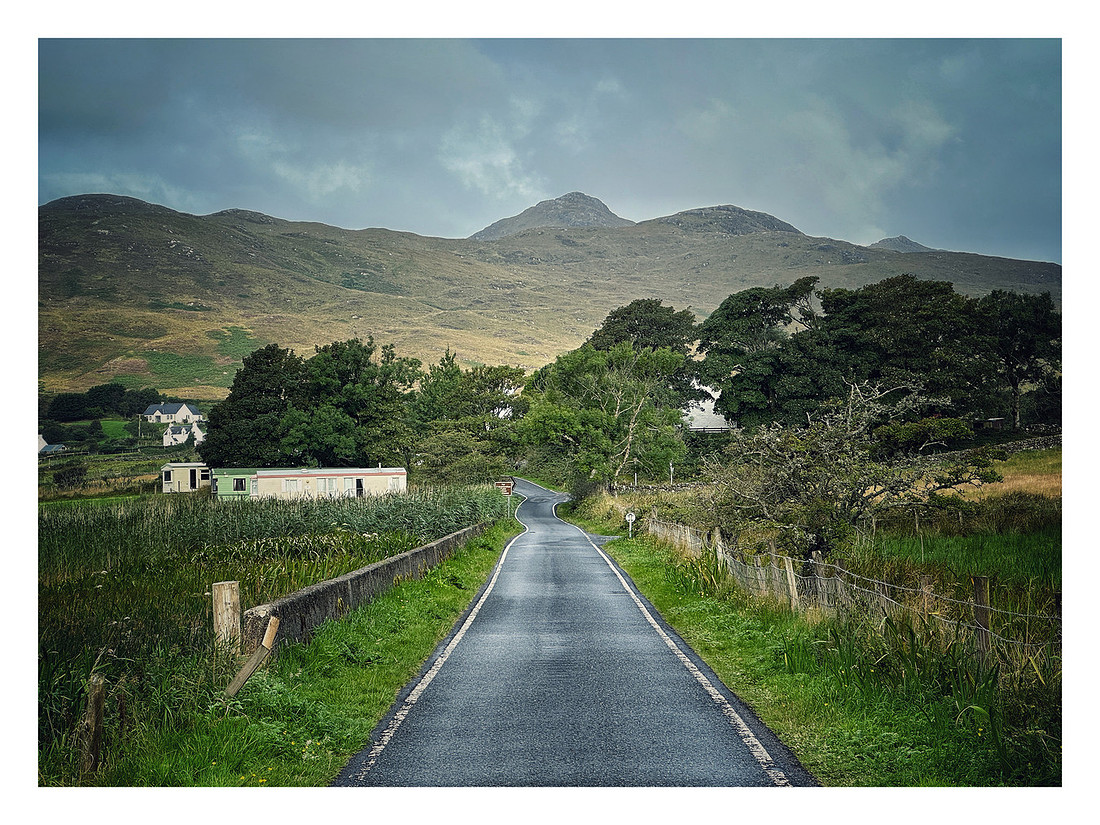
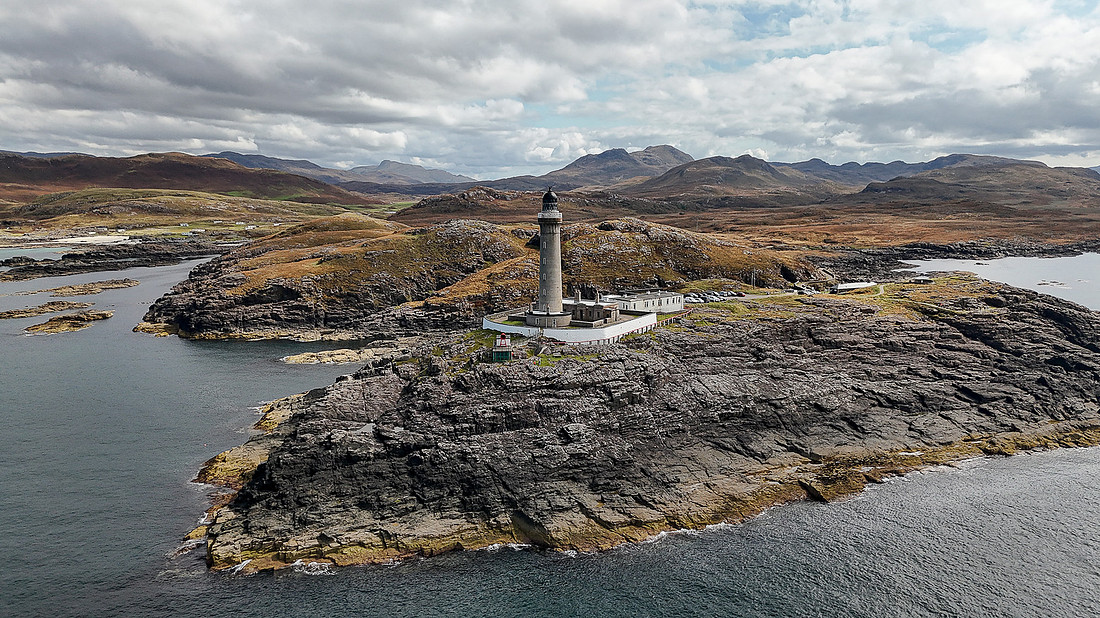
The Pulse of Elemental Ardnamurchan
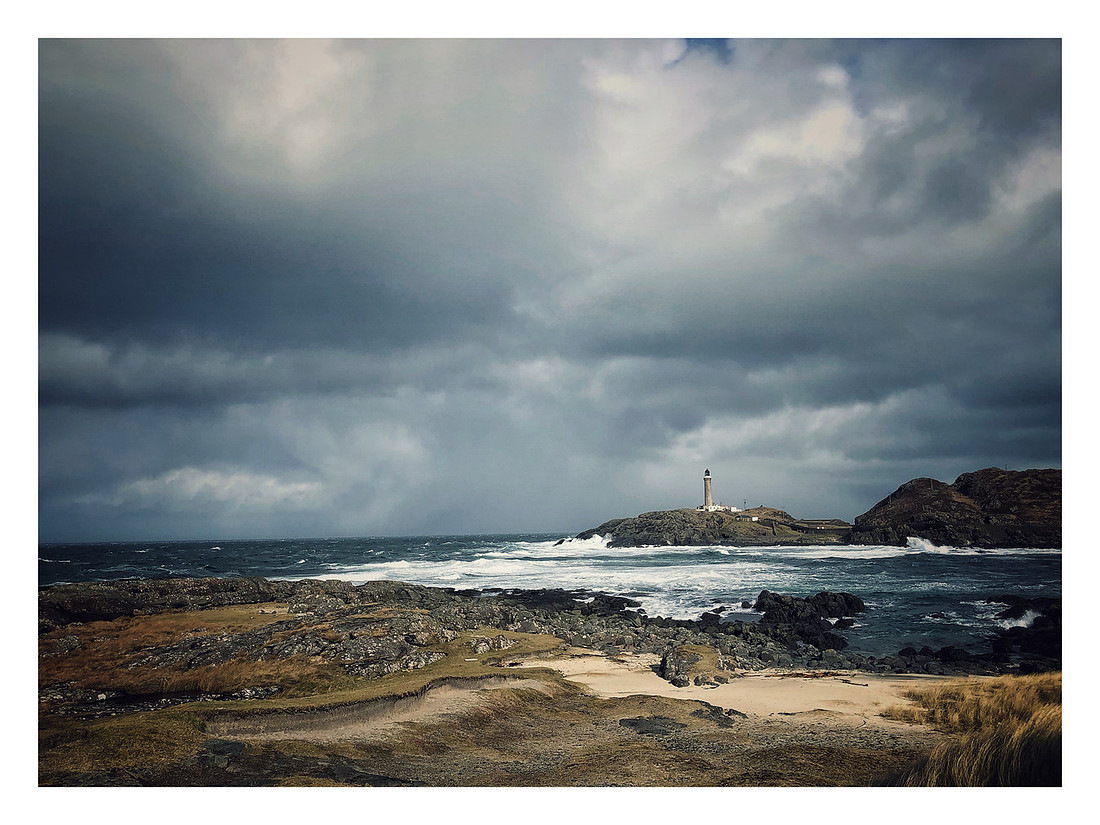
At the lighthouse, the land narrows to a thought.
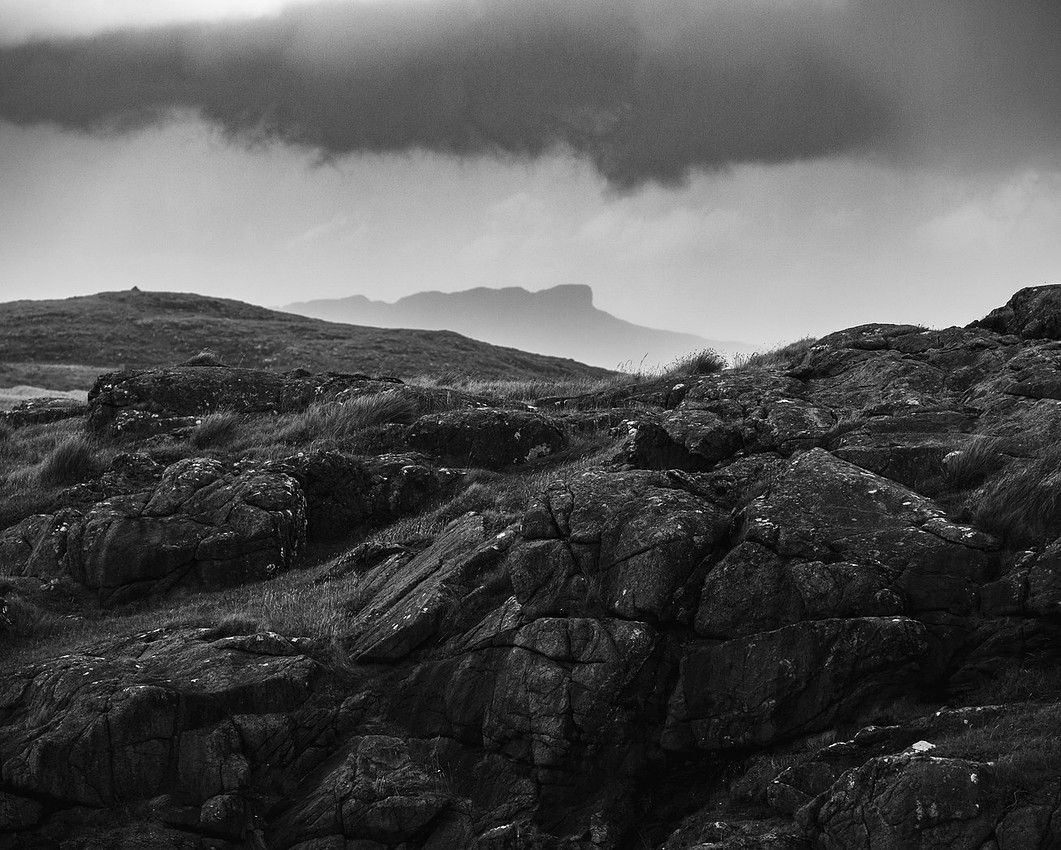
Rock shoulders the Atlantic, black and ribbed like the spine of something ancient.
Water presses in from three sides, restless, insistent, its surface inked with wind.
Above, the air is a shifting manuscript—clouds drafting and erasing their own sentences.
And beneath it all, fire sleeps in the bones of the hills, a memory of molten speech.
Yet what holds this place together is not stone or tide or weather, but spirit—the quiet human grammar of croft and community, of names spoken in Gaelic, of stories passed like hand tools from one generation to the next.
Here, at the far west, the elements do not compete; they conspire. They make a world that asks for attention, for stillness, for response.
And so I write, and so I listen.
Invitation
Over the next five weeks, I will share these elemental meditations—each a conversation with Ardnamurchan, each a piece of the larger mosaic that is Spiorad Àird nam Murchan. This elemental structure is the bridge from years of gathering to the act of completion—a way to honour the depth of this place and the creative journey it has shaped.
I invite you to walk with me in words and images, to listen to the soundscapes, to feel the textures of this edge-land. But more than that, I invite you to reflect on your own elemental landscapes. Where do Earth, Water, Air, Fire, and Spirit shape your sense of place? What stories do they hold? Share your thoughts, your ideas, your suggestions for future pieces—I would love to weave your voices into this ongoing dialogue.
References
Historic Environment Scotland (n.d.) Gaelic place names and meanings. Available at: https://www.historicenvironment.scot (Accessed: 12 October 2025).
Geological Society of London (n.d.) Ardnamurchan volcanic history. Available at: https://www.geolsoc.org.uk (Accessed: 12 October 2025).
Wild Ardnamurchan (n.d.) Geology of Ardnamurchan. Available at: https://www.wildardnamurchan.com (Accessed: 12 October 2025).
Heritage Ardnamurchan (n.d.) Crofting heritage and community traditions. Available at: https://www.heritageardnamurchan.co.uk (Accessed: 12 October 2025).
Clan MacIain Archives (n.d.) Historical records of Ardnamurchan communities. Available at: https://www.clanmaciain.org (Accessed: 12 October 2025).
Rockpool House (n.d.) Weather and climate of Ardnamurchan. Available at: https://www.rockpoolhouse.co.uk (Accessed: 12 October 2025).
Time and Date (n.d.) Climate data for Ardnamurchan. Available at: https://www.timeanddate.com (Accessed: 12 October 2025).