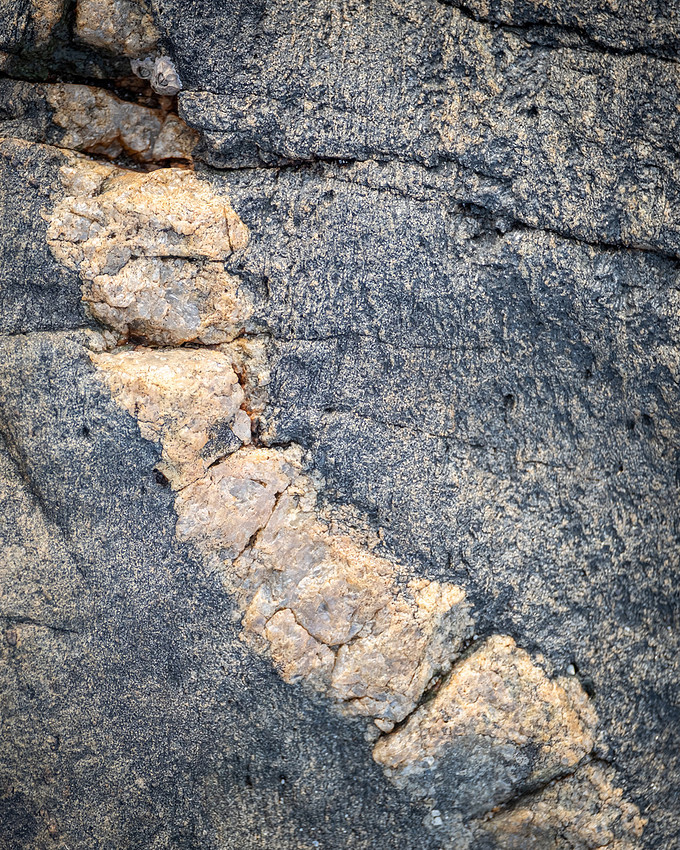
Spiorad Àird nam Murchan -Elemental IV Fire

Elemental IV — Fire (An Teine): Ardnamurchan’s Quiet Furnace of Creation
Part 19 of Spiorad Àird nam Murchan (Elemental · 4)
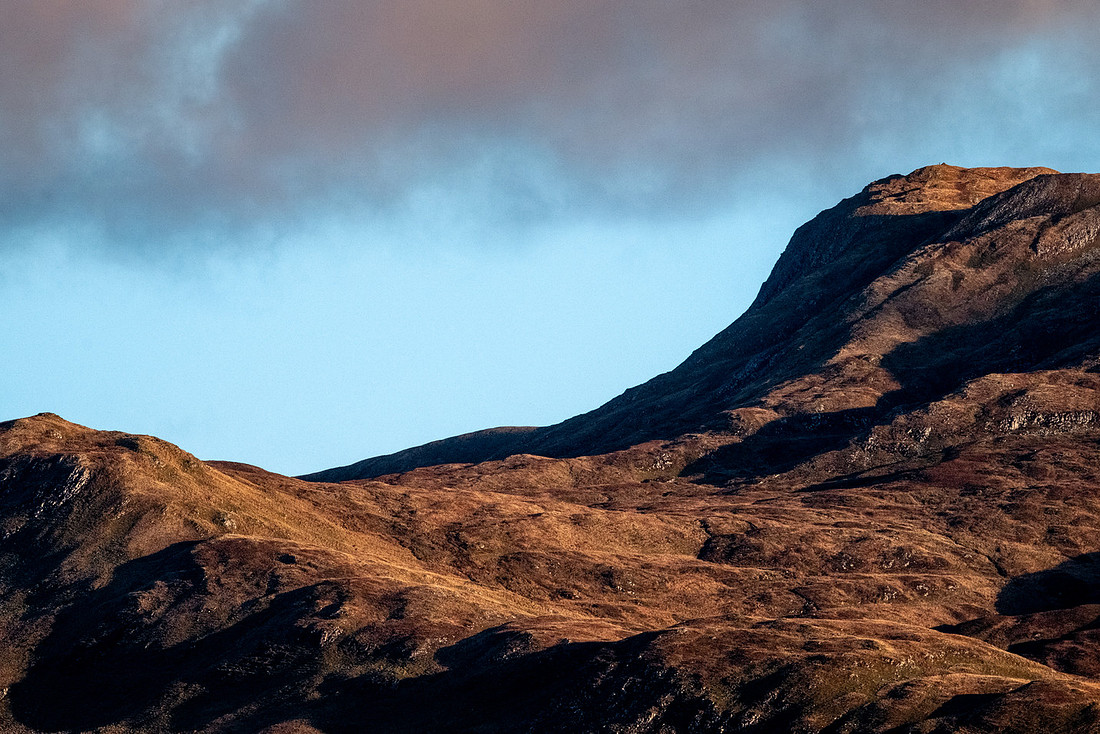

I came to Ardnamurchan for its fire, not the flame you cup with both palms, but the cooled fire that learned to endure. It’s the kind of fire that moves invisibly through stone, swells the ground into domes, presses sheets of molten rock into the frail scaffolding of older strata, and then falls silent for sixty million years while sea, ice, and weather sand it back to its thoughts.
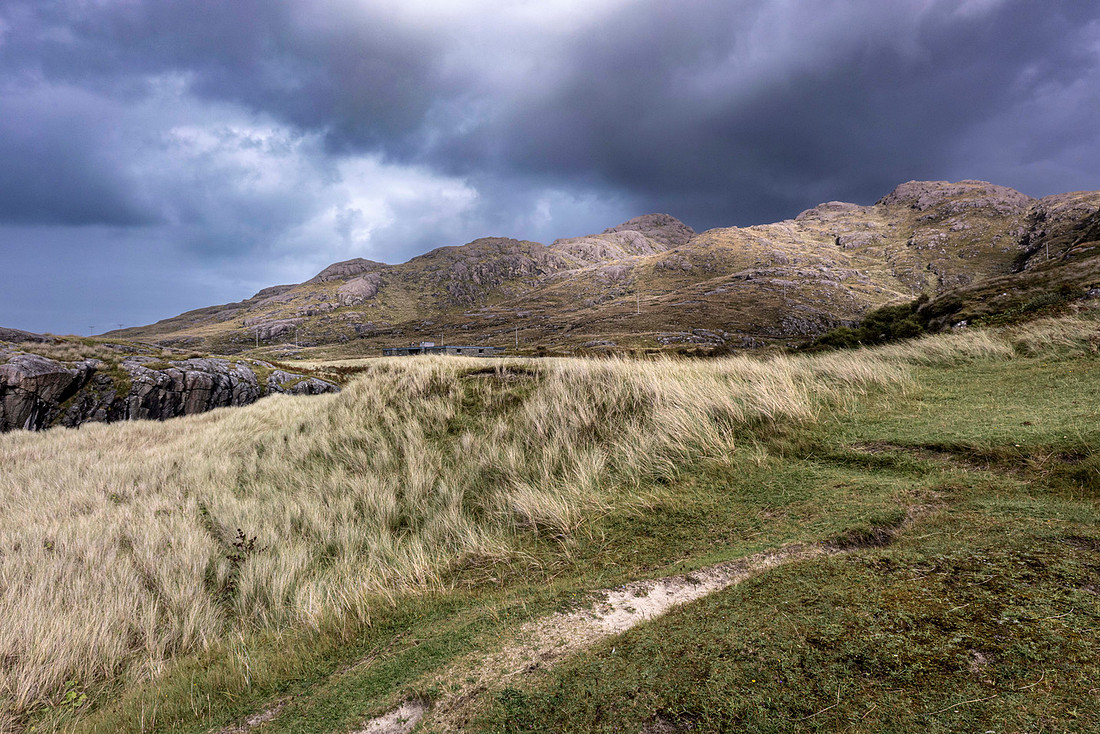
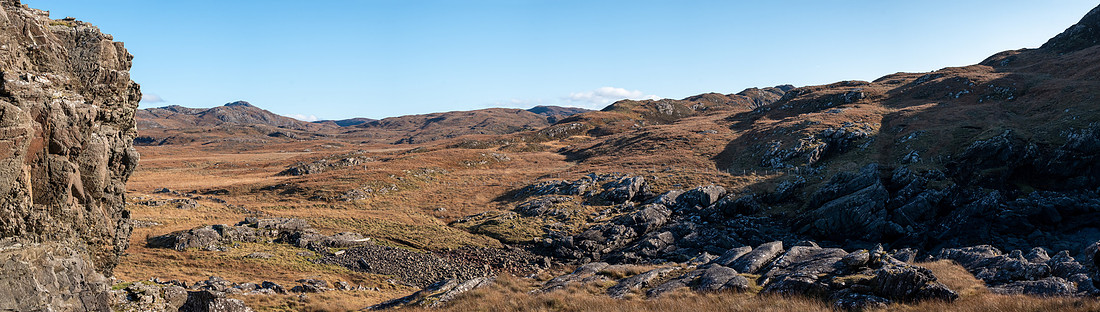
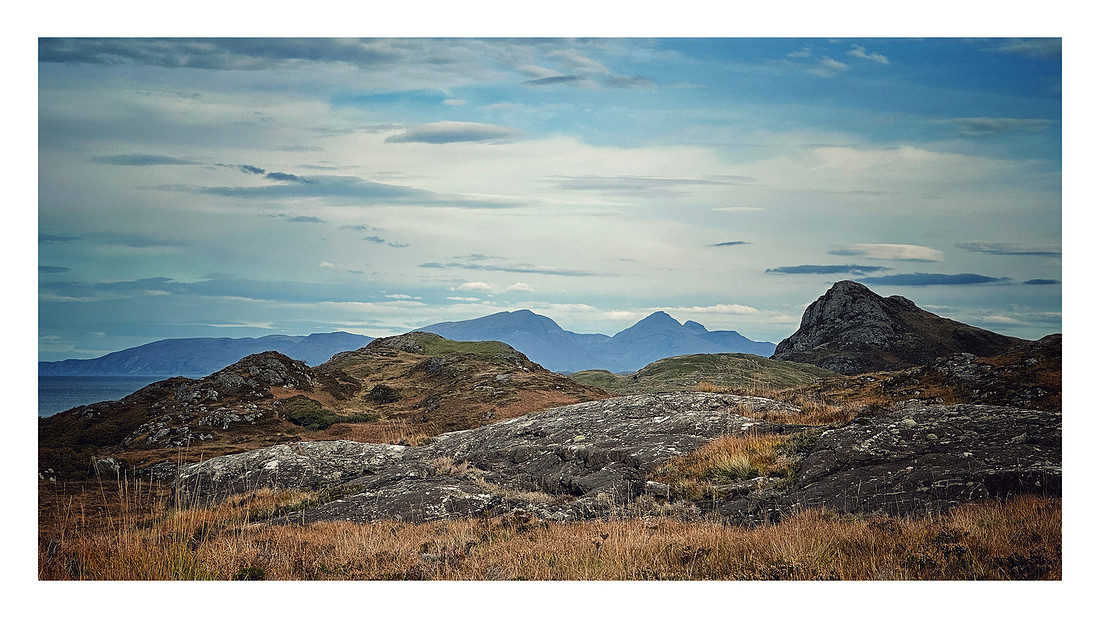
On the single‑track road beyond Kilchoan, the world suddenly levels. The rough, hummocked peninsula exhales into a broad, almost suspicious plain, ringed by dark, lumpy hills. The first time I crossed that threshold toward Sanna, I felt it before I understood it: I was walking through the cool anatomy of a volcano, the roof planed off by ice, the chamber’s rim made visible as a necklace of low ridges. If you climb the knolls near Achnaha, that ring gathers around you like an amphitheatre; aerial images show the near‑circle clearly enough that even the untrained eye whispers “crater.” The hush here is the hush of a fire gone inward, of a furnace that has learned patience (The Hazel Tree, 2015; Achnaha entry; Wild Ardnamurchan field guide).
This essay, the fourth in my Elemental sub‑series, stays faithful to the geology that drew me here, but it moves closer to the skin: more ekphrastic, more embodied, more attuned to how the cooled fires of Ardnamurchan kindle the imaginative life. I’ll keep the facts in one hand and the feeling in the other; the peninsula asks for nothing less (Richey & Thomas, 1930; Geological Society of London, 100 Great Geosites).
I. The Land that Remembers Heat
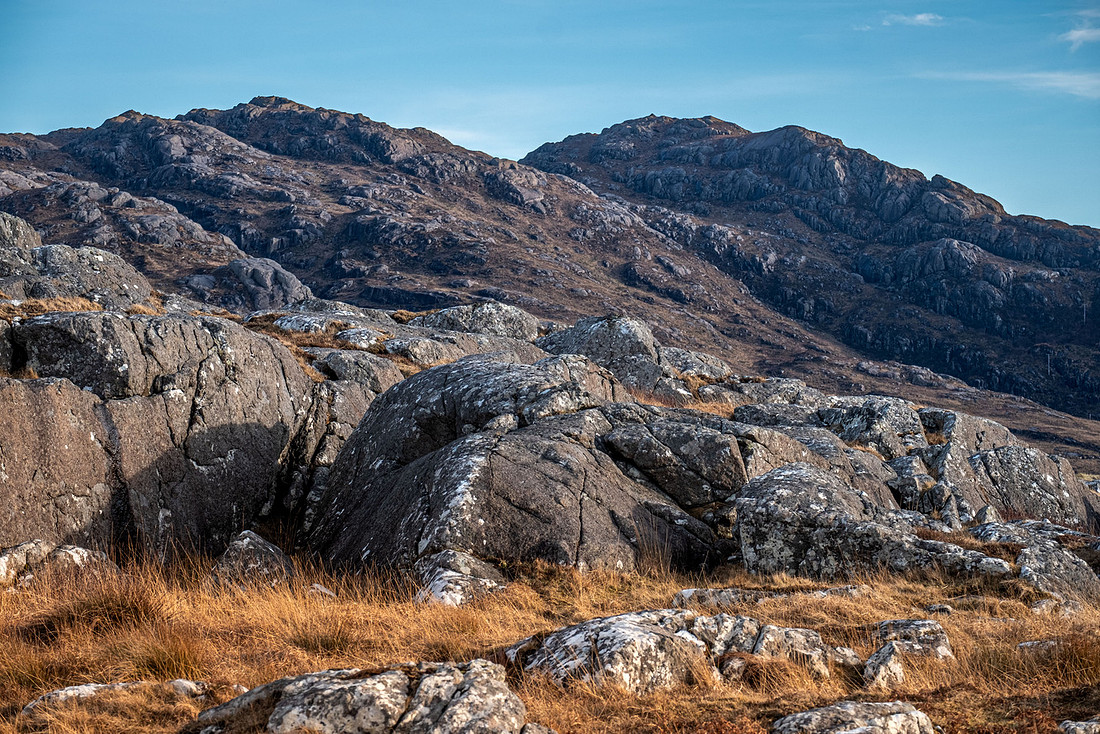
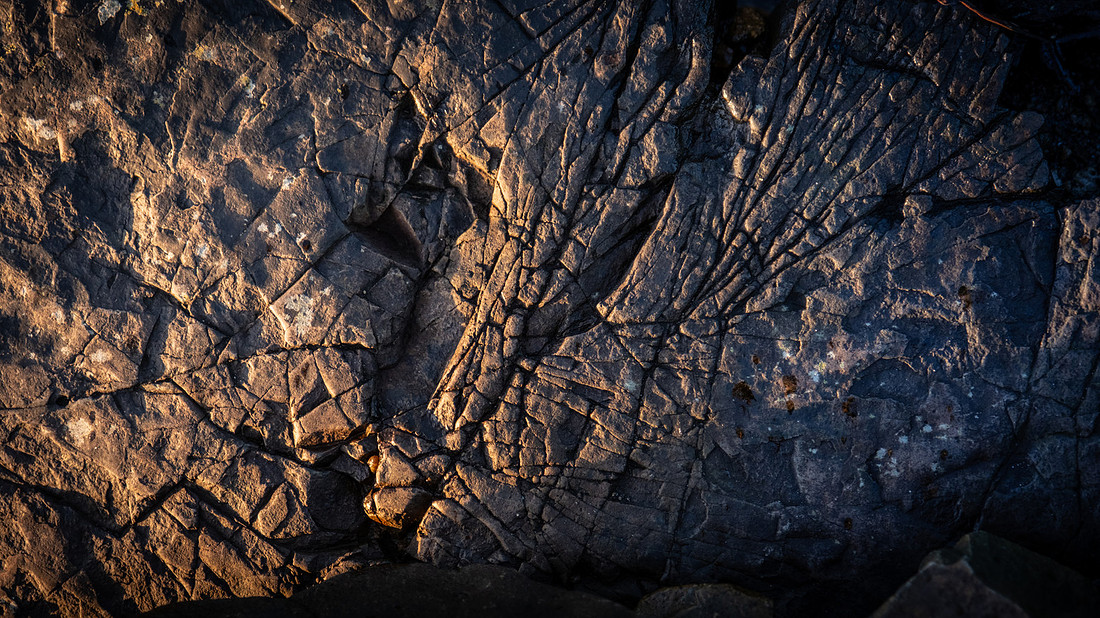
Even the light behaves differently in this volcanic room. On certain evenings it lands on gabbro the way a lingering coal holds colour: a dark, inward orange no camera can quite name. The ring of Centre 3, the famous Great Eucrite hills, doesn’t so much rise as brood around the moor. For decades geologists celebrated this body as a “type” ring‑dyke, the textbook annulus injected along a fracture when a central block subsides. Then, new field fabrics and magnetic lineations nudged the story: not a tidy bell‑jar ring after all, but a lopolith, a dish, a funnel, its crystals and fabrics dipping inward like the grain in worked wood. Far from spoiling the romance, that debate deepens it; Ardnamurchan is not a diagram on a whiteboard, but an argument held beautifully in rock (Geological Society of London; O’Driscoll et al., 2006).
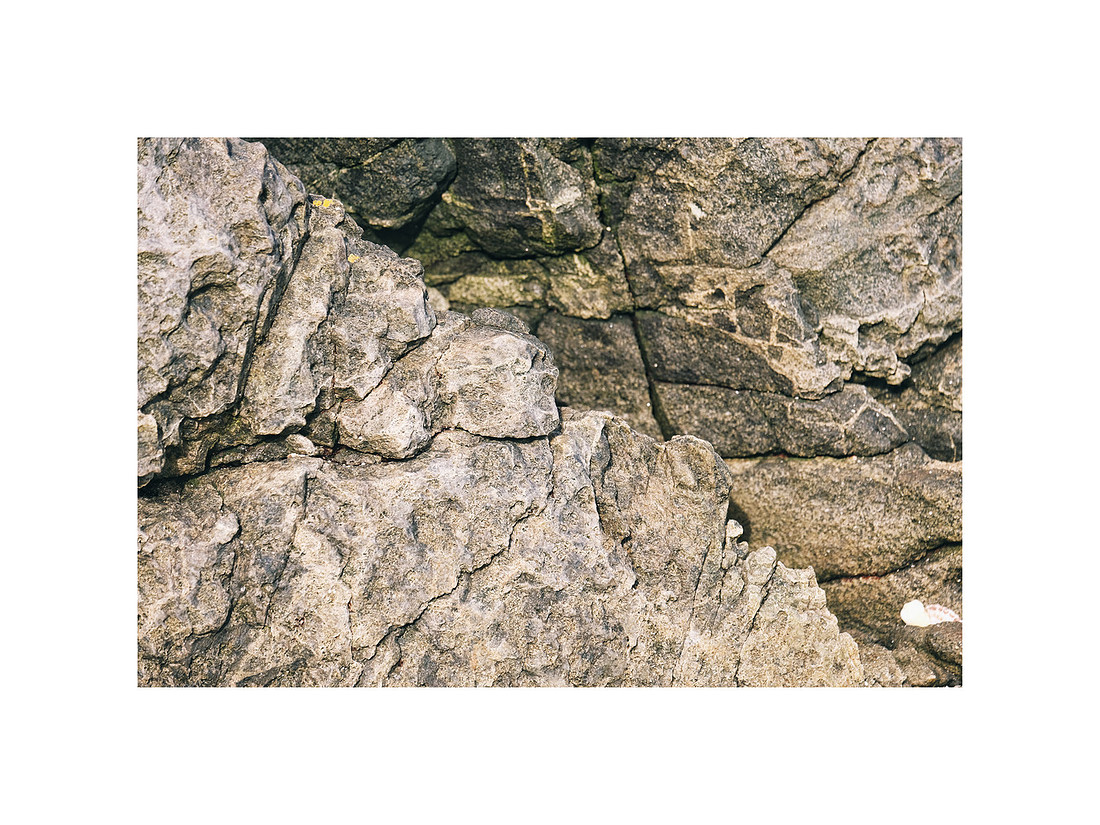
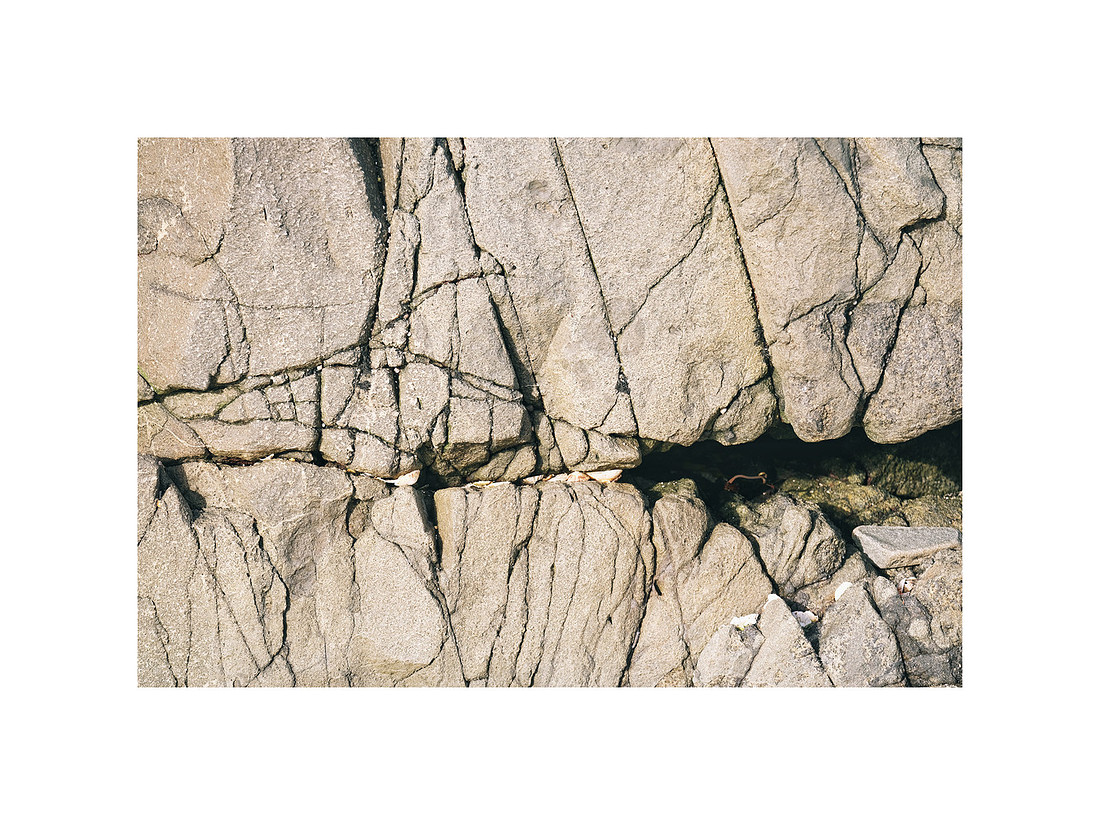
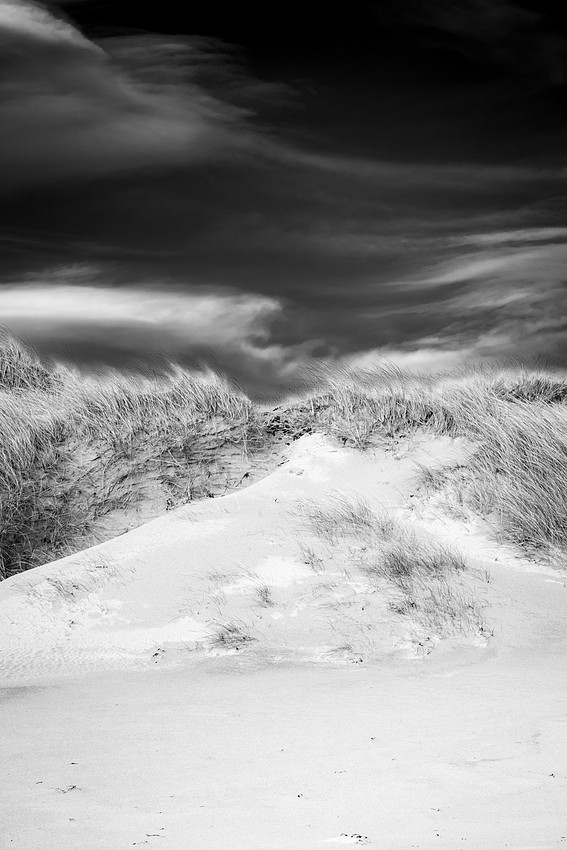
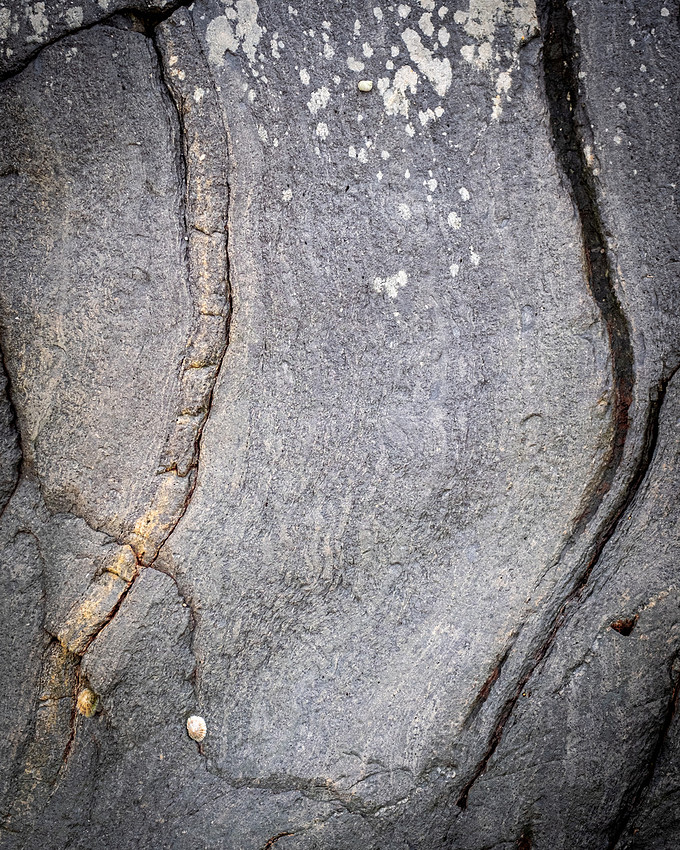
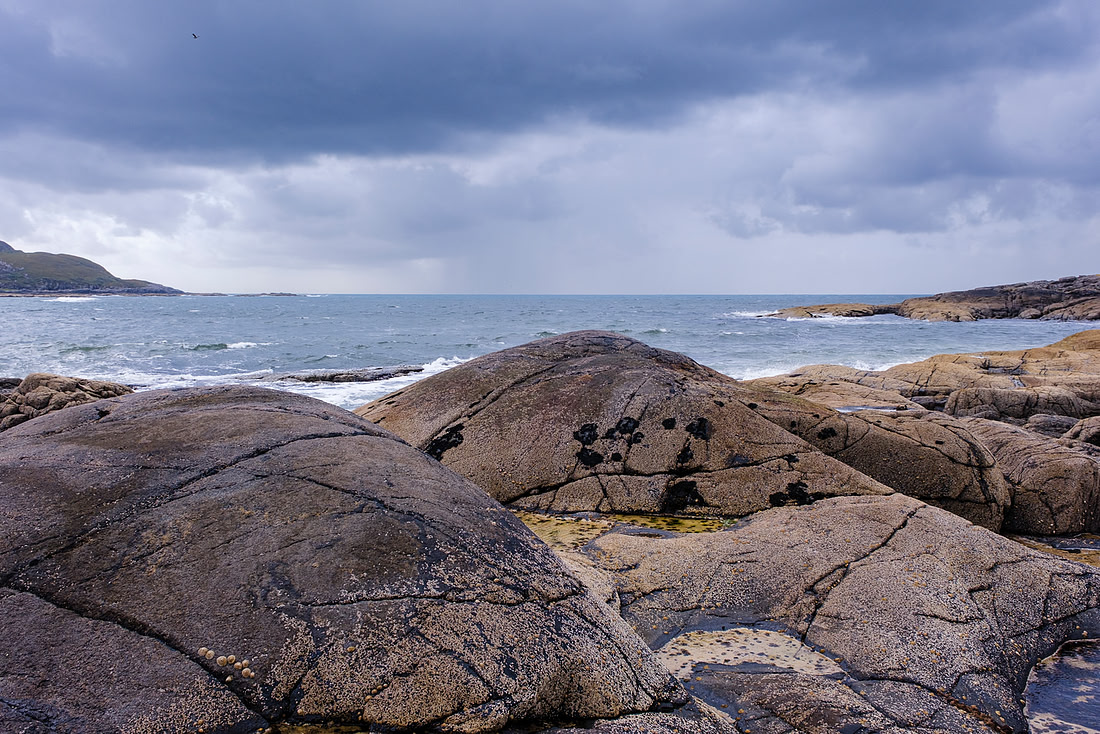
The peninsula persuades in long views, the ring from above Glendrian, the cone‑sheet ridges that pull your stride inward, but it also convinces in detail. At Mingary the castle perches on stacked sills, pale granophyre over dark dolerite, like old heat layered into a wall. On the foreshore the dykes stand up cleanly out of Jurassic limestone, vertical exclamation points in a page of sediment (Wild Ardnamurchan). At Sanna, the beach is all contradiction: white machair and brilliant surf, and then, sudden as an ink drop, a basalt outcrop shouldering through the sand. Every walk is a primer in igneous syntax: cone‑sheet, sill, dyke; gabbro, eucrite, granophyre (BGS Earthwise; The Hazel Tree, 2015).
And the older stories lie close to the skin. Ben Hiant’s steep shoulders cradle vent agglomerates and pitchstone lavas, arrested moments of eruption, and those are cut again by later intrusions. The hill is a palimpsest of fire: blast, deposition, intrusion; the rhythm of a volcano written at a human scale. You can read the sequence on a single ascent if you let your eyes slow down (GCR “Ben Hiant”; BGS Earthwise).
All of which is to say: here, “fire” isn’t metaphor. It’s the architect that raised the peninsula and then hardened into form; the land remembers heat the way a bell remembers the song of its casting (Richey & Thomas, 1930; GCR “Centre 3”).
II. Names that Glow: Gaelic Toponymy as Hearth
Language, too, keeps the ember. Àird nam Murchan.....“the headland of the sea‑hounds”, holds seals and otters in its very syllables. The name feels right in the mouth beside the lighthouse, sleek backs cutting the tide, the Atlantic licking the basalt toe of the mainland’s westmost point. The word is old; scholars have watched it changing shapes in the early medieval text of St Columba’s Life, but the spirit of it endures: a headland knit to the sea by creatures and tide (Historic Environment Scotland Blog; VisitScotland).
Smaller names burn hotter. Achateny is Achadh an Teine, the “field of the fire.” The name’s specificity is extraordinary: not just “field,” not just “burned,” but fire itself, teine. Was there a kiln? A charcoal stack? A need‑fire site? We cannot say for certain, but the plain meaning throws an orange glow over that patch of map (Scottish Gaelic place names; Am Faclair Beag).
A few bends away sits Achnaha—Achadh na h‑Àtha, “field of the kiln.” After you’ve walked the Achnaha crater, the pairing is irresistible: the land’s great kiln cooled into a level plain, and the human kiln named in the grass. Industrial or domestic, the kiln is the technology of tempered fire, the art of enough heat for long enough time, the same lesson the gabbros learned slowly underground (Scottish Gaelic place names; Achnaha entry).
Even the dictionary is luminous if you pause long enough. Teine is fire, of course, but it branches: teine‑adhair (air‑fire, lightning), teintean (fires), teine‑sionnachain (will‑o’‑the‑wisp), and the magnificent beinn‑theine, volcano, literally a “fire‑mountain.” Say the words aloud on a quiet track and watch what they do to the air in front of your face. Toponymy is not ornament; it is the community’s way of banking the coals of meaning so they can be blown back to life when needed (Dwelly/Am Faclair Beag).
III. Ritual Heat: Beltane, Need‑Fire, and the Pastoral Year
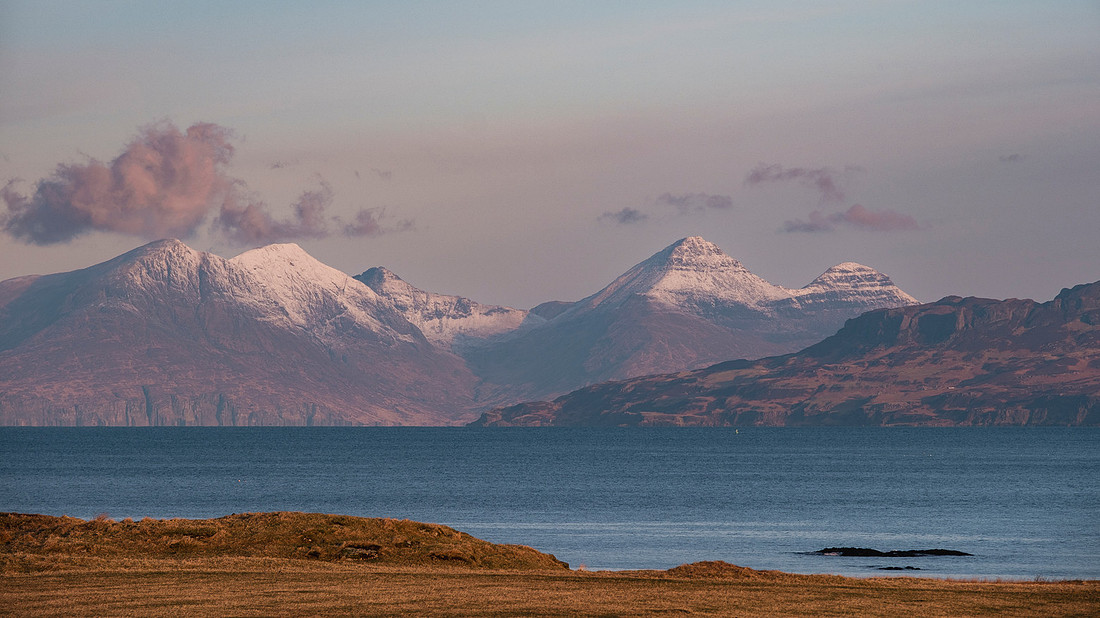
The seasonal year in the Highlands and Islands once turned around fire almost as surely as Ardnamurchan’s magma once turned in its chamber. Là Bealltainn, Beltane, the first of summer: all household hearths doused, the communal bonfire kindled. Cattle driven between twin blazes for protection, embers carried home to seed the relighting of the year. It was an economy of blessing written in smoke and spark: the herd’s health, the croft’s luck, the body’s bold leap across flame (Beltane: Wikipedia; National Geographic).
Most beguiling is the need‑fire, teine‑èiginn: a friction‑born, ritual flame raised in emergency or in communal rite on a knoll, from which all other hearths took their start. Alexander Carmichael heard of it across the west—Arran, Uist, Sutherland, well into the late nineteenth century. His notes are as vivid as peat smoke: hearths darkened, a single blaze born of effort and breath, folks streaming home with that shared ember cupped in crofting hands. Whether or not a particular glen in Ardnamurchan kept the rite, the peninsula sits culturally in its glow (Carmichael, Carmina Gadelica; Carmina Gadelica: NLS/Internet Archive).
This is the grammar of fire I find myself practicing on the peninsula—extinguish, kindle, carry, translated into creative work. There are seasons for banking what threatens to flare too bright, then climbing a knoll with neighbours and rubbing wood upon wood until the one necessary spark takes. And there are seasons for sharing what you’ve kindled, coal to coal, story to story (Carmichael; National Geographic).
IV. Walking the Volcano: A Psychogeographer’s Notebook
The ring at Achnaha encourages circles; the cone‑sheets, dipping inward like a shallow bowl, tug the eye toward imagined centres; the domed country rock, which once tilted away at roughly thirty degrees from the igneous heart, encourages outward walking, downstream, down‑dip, toward salt and quenching wind. This is not fanciful. The forms of the ground set up rhythms in the legs and tints in the mood; they choreograph the route as surely as a tide does a shoreline (BGS Earthwise; GCR “Centre 3”).
I often speak the names as I go, not as incantation but as calibration. Achadh an Teine warms the meadow. Achadh na h‑Àtha opens a dark oval between the heather stalks. Àird nam Murchan calls seal‑heads out of the Sound. The words are compasses that point to memory rather than to grid north. Every toponym is a local hearth: someone lit it for a reason; we can still warm our hands there if we know how to stand.
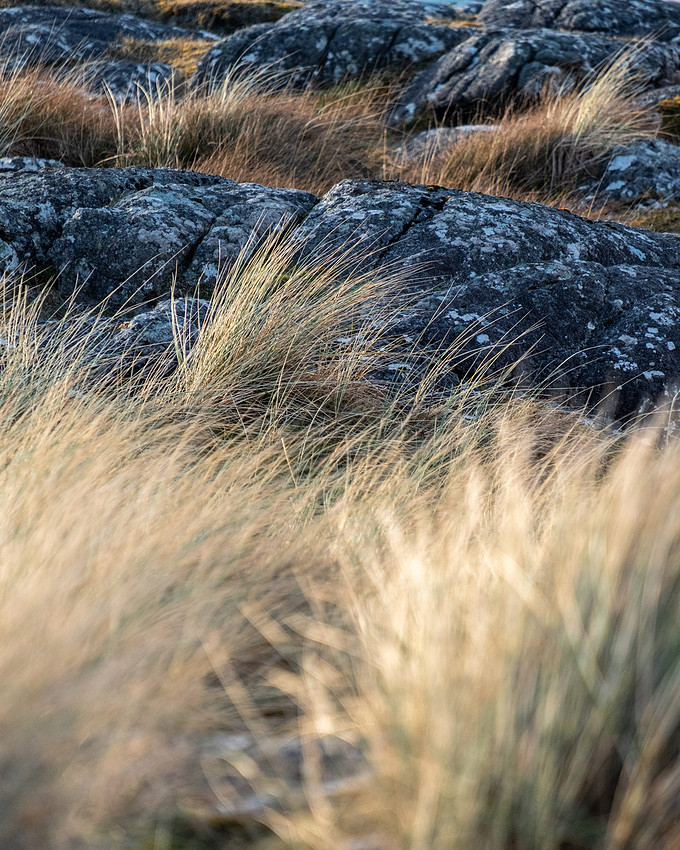
As a photographer, I learned to set the tripod where the old heat shows: on a eucrite rib that grips light, at the contact where dolerite writes itself into limestone, on the glacis that lets you see the ring as ring. As a writer and field‑recordist, I learned to stand still long enough to hear the land’s cooled crackle: the tiny sound of mica plates under the boot, the far thrum of surf turning basalt blacker, a curlew sewing its silver thread through the crater air (Wild Ardnamurchan; The Hazel Tree, 2015).
V. Fire’s Pedagogy
Creation and destruction are too tidy as opposites for this coast. Here the lesson is tempering. Explosive vents, ash, and bombs at Ben Hiant; then steady inward crystallisation of gabbros at Centre 3. Uplift and subsidence; brittle fracture and slow diffusion; a thousand hot decisions cooling into a single, patient form. It feels like instruction for any long work: let the quick energy of the draft throw sparks, but accept that the lasting structure will emerge when the melt finds its level and rests (GCR “Ben Hiant”; BGS Earthwise).
Even the scholarly re‑storying of Ardnamurchan—ring‑dyke archetype or lopolith, three neat centres or one evolving, elongate chamber, becomes a creative ethic. The land resists being locked inside our diagrams; a good theory is a staging post on a longer walk. My response, on the page and through the lens, is to hold contradictions kindly, to keep the edges porous, to let the cooled fire teach me not tidiness but poise (Geological Society of London; Burchardt et al., 2013).
VI. Cailleach of the Eucrite Ring
Late sun leans through the broken rim.
Gabbro keeps the light like black iron, heat turned memory.
A curlew unspools a silver stitch over Achnaha’s hush,
and the moor exhales peat and salt and something older...
a kiln’s ghost breath, the ash of kelp fires,
the hard glitter of dolerite lips wet with spray at Mingary.
I stand on a blister in a frozen lake of stone,
feel the chamber’s old bell tolling through the boot:
not a drum but a low glow, not blaze but ember,
the way coals think to themselves in a grate.
Achadh an Teine, say it and the grass warms.
Achadh na h‑Àtha, say it and a mouth opens in the turf,
dark oval where barley learned to keep.
Above Sanna the sea writes fire in white,
dunes recalling smoke, waves all flare then fall.
I touch the sheeted rock with four fingers, thumb to sky,
and count back sixty million breaths.
The peninsula breathes back....basalt‑dark, steady...
and I know my work is to carry this warmth carefully,
a coal cupped in both hands across a windy field.
VII. A Warm Ember for You
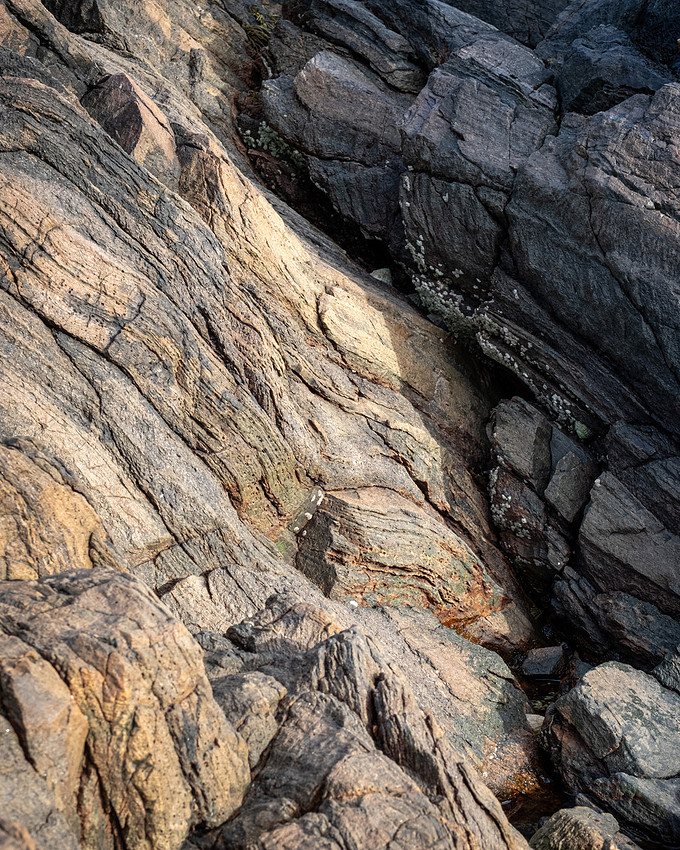
If fire is Ardnamurchan’s founding element, it is also a way of paying attention. The ring and the sheet are not just geology; they are invitations to move and notice. The names are not just labels; they are hearths left waiting for us to relight. The lore is not quaint; it is a manual for beginnings, quench, kindle, carry.
So here is your ember. Walk your own volcanic rooms, literal or figurative. Speak the old names where you have them, or learn the new names carefully if you don’t. Make a small teine‑èiginn for your practice: extinguish what no longer serves, kindle one honest flame, and share it coal‑to‑coal with those near you. Take a long look at a stone that glows when wet. Listen for the low bell of a cooled fire underfoot. Then respond, photograph, stanza, field note, map, sound. Fire, like place, lives in the making‑and‑the‑telling.
VIII. Closing Reflection — Holding Time in a Handful of Ash
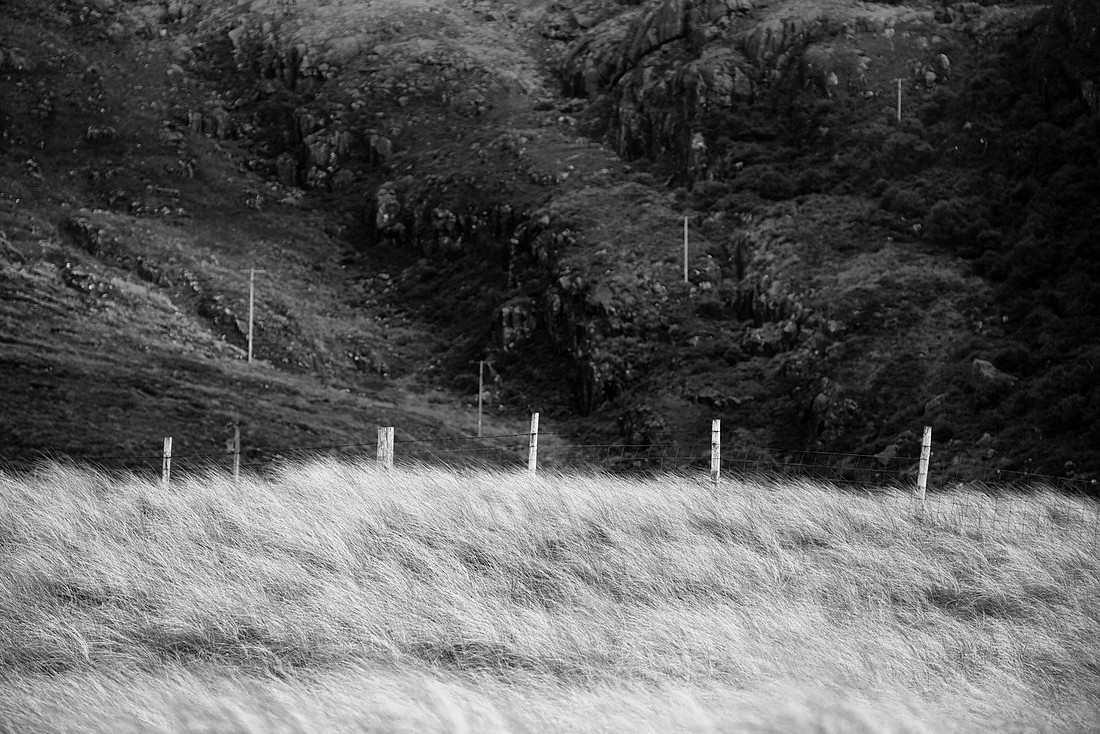
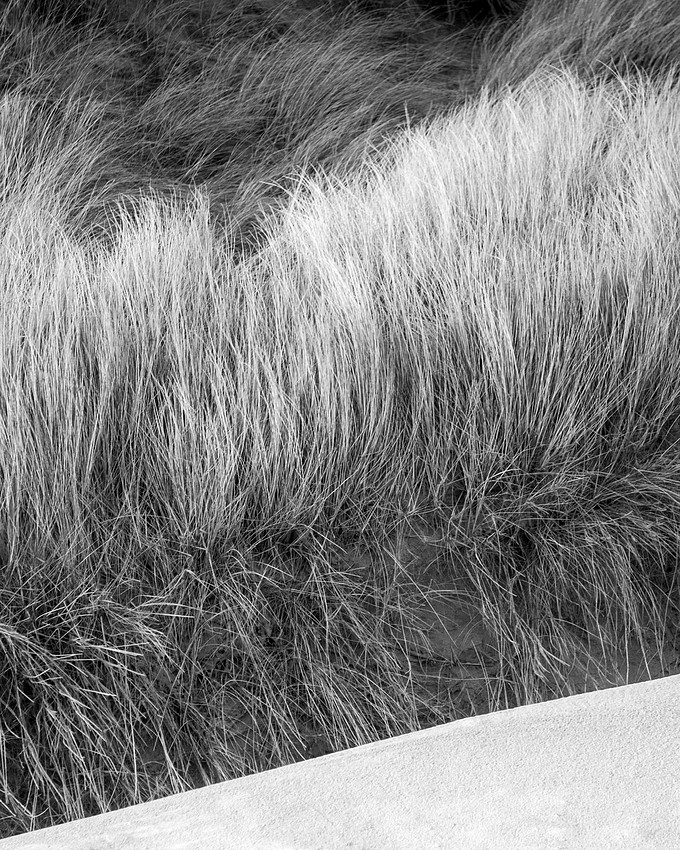
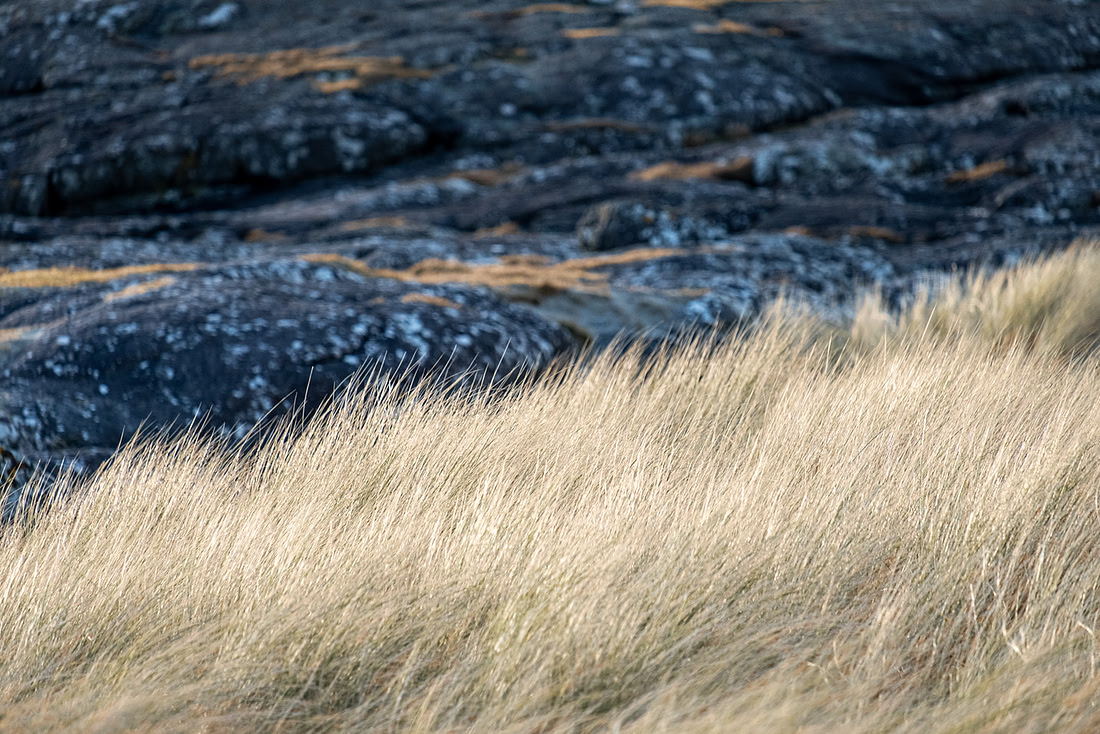
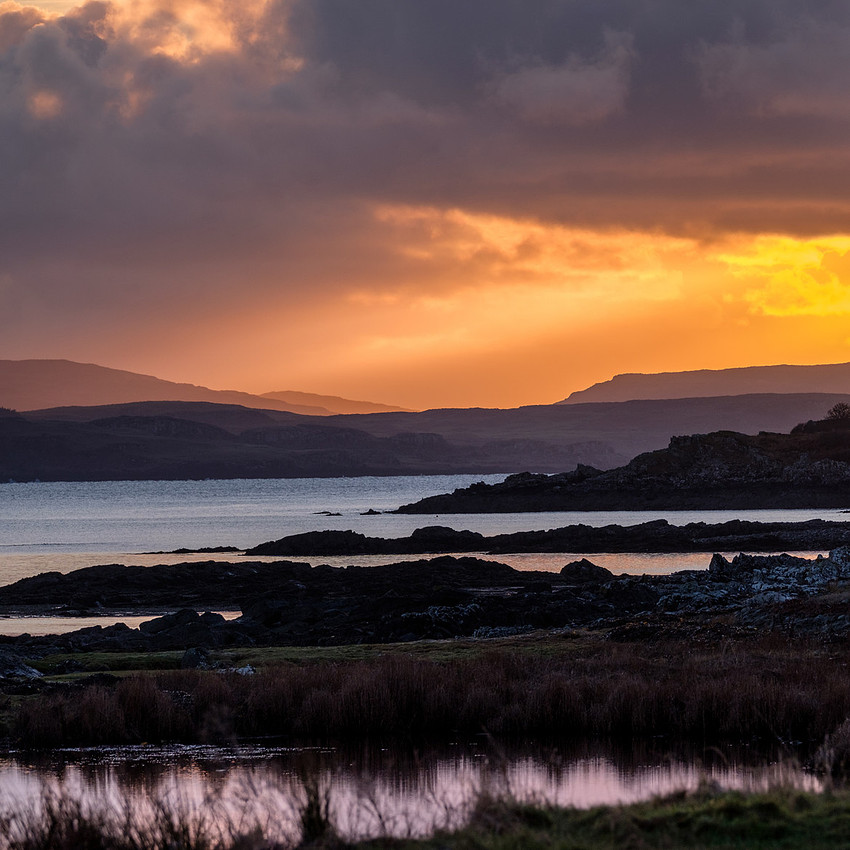
What keeps me returning to Ardnamurchan is not only its cooled fire, but its vast, patient clock. Sixty million years lie folded into these ridges, yet the land speaks in two tempos at once: the geologic and the immediate. I stand on a gabbro knuckle that once glowed like a furnace, and the wind threads through the heather with a sound so slight it could be gone in a breath. A tide lifts and falls against basalt lips at Mingary, rehearsing its old argument with stone. Grass leans against the eucrite edge, then rights itself. These are moments measured in fractions of a second, yet they happen on a stage built from molten time.
Here, scale is a lesson. The ring‑dyke’s arc is a sentence written in magma; the machair’s ripple is a syllable of weather; the curlew’s cry is a vowel of passing light. To walk this peninsula is to hold all three in mind: the deep time of fire, the seasonal time of storm and bloom, the human time of a single stride. It is to feel how our own stories.... our photographs, our essays, our brief lives, are sparks against a backdrop of aeons, and yet how necessary those sparks are for making sense of the dark.
This is why Ardnamurchan matters to my work. Its geology is not just subject matter; it is a tutor in humility and scale. It reminds me that every image I frame, every sentence I lay down, is a way of negotiating time: of setting a moment beside a million years and asking what they say to each other. It is a way of carrying cooled fire forward, not as spectacle, but as quiet warmth for the imagination.
And now, I hand the ember to you. Walk your own landscapes, whether volcanic or urban, coastal or inland, and ask what clocks they keep. Listen for the wind’s brief whistle and the bedrock’s long silence. Feel how your own pulse fits between them. Then respond: write, photograph, map, sing. Let the questions of time and place... what endures, what flickers, shape your craft. Fire, after all, is not only what made this land; it is what makes us attentive. Carry it carefully.

Bibliography
- Anderson, E.M., 1936. The dynamics of the formation of cone-sheets, ring-dykes, and cauldron-subsidence. Proceedings of the Royal Society of Edinburgh, 56, pp.128–156. (Discussed in Geological Society of London overview).
- BGS Earthwise (Emeleus, C.H. & Bell, B.R.), 2005. Ardnamurchan Central Complex, Hebridean Igneous Province. Available at: https://earthwise.bgs.ac.uk (Accessed Nov 2025).
- Burchardt, S., Troll, V.R., Mathieu, L., Emeleus, H.C. & Donaldson, C.H., 2013. Ardnamurchan 3D cone‑sheet architecture explained by a single elongate magma chamber. Scientific Reports, 3:2891. https://www.nature.com/articles/srep02891
- Carmichael, A., 1900–1971. Carmina Gadelica, Vols I–VI. Various editors and reprints. Digitised selections:
– SMO/UHI: https://www3.smo.uhi.ac.uk/gaidhlig/corpus/Carmina/
– NLS/Internet Archive: https://archive.org/details/carminagadelicah30carm
(Beltane and teine‑èiginn notes). - Geological Society of London, n.d. “Ardnamurchan ring complex” (100 Great Geosites). https://www.geolsoc.org.uk/science-and-policy/100-great-geosites/landscape/ardnamurchan-ring-complex/
- GCR (JNCC), “Ben Hiant (GCR Site 10)” and “Centre 3, Ardnamurchan (GCR Site 15).” PDFs via jncc.gov.uk (vent geology; Centre 3 sequence).
- Historic Environment Scotland Blog, 2017. “Early Gaelic names in Scotland—Àird nam Murchan.” https://blog.historicenvironment.scot/2017/03/early-gaelic-names-scotland-ainmean-aite-na-h-alba/
- National Geographic, 2025. “How Scotland is reviving an ancient pagan ritual” (Beltane). https://www.nationalgeographic.com/history/article/beltane-pagan-fire-festival
- O’Driscoll, B., Troll, V.R., Reavy, R. & Turner, P., 2006. The Great Eucrite intrusion of Ardnamurchan, Scotland: Reevaluating the ring‑dike concept. Geology, 34, pp.189–193. (Accessible PDF summary).
- Richey, J.E. & Thomas, H.H., 1930 (1987 repr.). The Geology of Ardnamurchan, North‑West Mull and Coll. Edinburgh: HMSO/BGS. Digitised extracts via Scottish Geology Trust GeoGuide.
- The Hazel Tree, 2015. “Ardnamurchan’s volcano.” https://thehazeltree.co.uk/2015/04/23/ardnamurchans-volcano/
- VisitScotland, “10 Gaelic place names & their meanings”—entry for Àird nam Murchan. https://www.visitscotland.com/
- Wild Ardnamurchan / Lochaber Geopark partners, “The Ardnamurchan Volcanoes” & “Ben Hiant.” https://www.wildardnamurchan.com/
- Wikipedia, “Beltane” (general overview with sources). https://en.wikipedia.org/wiki/Beltane
- Wikipedia, “Scottish Gaelic place names”—forms for Achateny (Achadh an Teine) and Achnaha (Achadh na h‑Àtha). https://en.wikipedia.org/wiki/Scottish_Gaelic_place_names
- Dwelly & Am Faclair Beag, s.v. teine, teine‑adhair, teine‑sionnachain, beinn‑theine. https://www.faclair.com/